
Eger Wine and History Guide: Bulls Blood, Baroque Beauty, and Castle Tales
When you mention Eger to Hungarians, they don’t just nod politely—they start talking about the siege. Their eyes light up. It’s not just a town, it’s not just history. It’s part of who they are.
This is a town where a wine called Bull’s Blood has been flowing from volcanic cellars for centuries, where Ottoman minarets stand beside Catholic basilicas as reminders of a 1552 siege that still defines the Hungarian spirit, and where baroque architecture whispers from every corner like a secret shared only with those who slow down enough to listen.
If you’ve read my Central & Eastern Europe travel guide and that mention of Eger intrigued you—the part about wine cellars, the 1552 castle defense, and the Valley of the Beautiful Women—this is where those stories come alive. This is the deep dive into a town that rewards curiosity with moments you won’t forget.
On this page
Why Eger Stops Time
Most travelers racing through Central Europe hit the obvious highlights: Budapest’s Castle District, Vienna’s Ringstrasse, Prague’s Castle. Eger gets skipped because it’s not on the circuit, not famous enough to justify the detour from bigger cities.
That’s exactly why you should go.
Eger is what happens when history, wine culture, and baroque architecture collide in a place too small to be spoiled by mass tourism but too special to be overlooked by travelers who understand travel. It’s a town of about 55,000 people where you can spend a morning walking through 18th-century courtyards, an afternoon tasting wine in cellars carved into volcanic rock by previous centuries, and an evening sitting in a baroque square while the light turns gold and the castle above glows in the dusk.

The tourists who visit Eger tend to be two types: wine enthusiasts who’ve heard about the wine region and come specifically for tastings, and history buffs drawn by the legendary 1552 siege. The smart travelers—the ones who get it—come for both, because the two are inseparable here.
The 1552 Siege: A Story That Still Burns
Before diving into the wine and the architecture, understand this: everything in Eger circles back to 1552 and what happened at the castle walls. It’s not a dusty historical event. It’s a living legend that shaped Hungarian identity, inspired novels and films, and still echoes in how Hungarians think of themselves.
What Happened
In September 1552, an Ottoman army of 35,000 to 40,000 troops under Kara Ahmed Pasha surrounded Eger Castle. Inside were approximately 2,100 soldiers and civilians led by Captain István Dobó. The fortress was undermanned, undersupplied, and strategically less important than more famous defenses. By any rational calculation, it should have fallen within days.
Instead, the defense lasted 39 days. The Ottoman siege ended on October 18, 1552, when Kara Ahmed Pasha, frustrated and losing soldiers to disease and the Hungarian defenders’ ingenuity, finally withdrew. The castle survived. Hungarian independence lived to fight another day.
The Genius of Desperation
What makes the 1552 siege legendary isn’t just that Eger didn’t fall. It’s how they defended it.
Lieutenant Gergely Bornemissza, serving under Dobó, became the engineering mastermind of the defense. With limited resources and no hope of reinforcement, he created weapons that read like something from science fiction: primitive hand grenades, powder-keg bombs rigged to explode on impact, even water-mill wheels packed with explosives that were rolled down the castle walls onto attacking Turks.
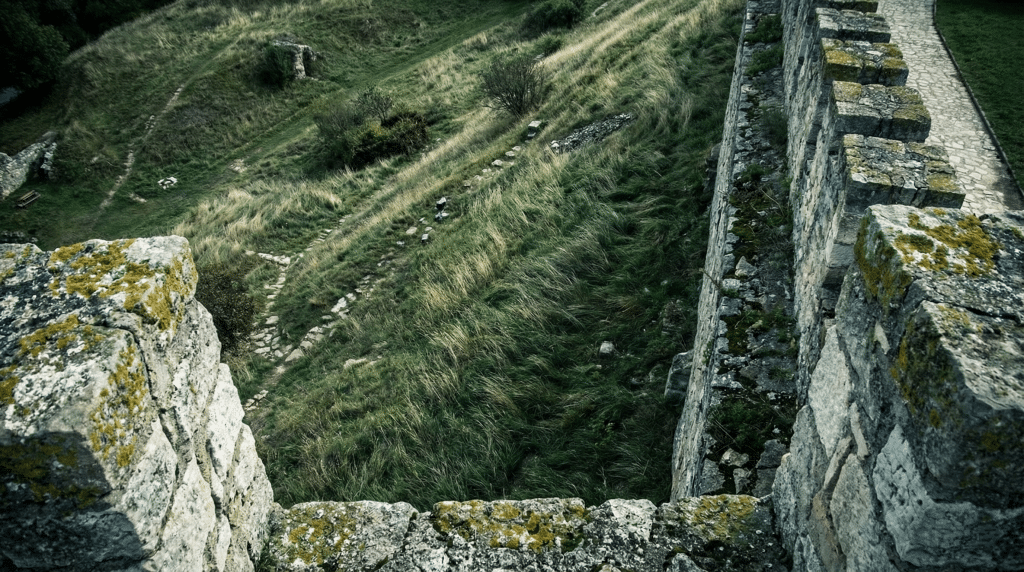
But here’s the detail that makes 1552 unforgettable: when the final, desperate assault came, it wasn’t just soldiers defending the castle. Women joined the fight. They threw stones. They poured boiling water down the siege ladders. One account mentions them pouring molten lead and bitumen on attackers. When you stand on those castle walls today and look down at the slopes Ottoman soldiers had to climb, you understand why women with boiling water made a difference.
Out of approximately 2,300 defenders, roughly 1,700 survived the siege. The Ottomans lost thousands. Eventually, exhaustion and disease ended the siege before the castle fell.
The Aftermath
Eger held for 44 more years. The castle finally fell to Turkish forces in 1596, and Eger remained under Ottoman occupation for 91 years until 1687. But 1552 was never forgotten.
The Austro-Hungarian writer Géza Gárdonyi immortalized the siege in his 1901 novel Egri Csillagok (Eclipse of the Crescent Moon), which became essential reading for Hungarian schoolchildren and helped transform the siege into something bigger than history—a statement about Hungarian character: outnumbered, outgunned, but never broken.
The novel has been adapted to film twice (1923 silent version, 1968 color version), and Gárdonyi’s narrative has become so interwoven with the actual history that you can’t fully separate the two. For Hungarians, that doesn’t matter. The story of 1552 is about more than what happened that year. It’s about identity, sacrifice, and an unwillingness to surrender even when surrender would be reasonable.
The Castle Today
When you visit Eger Castle, you’re not just looking at old walls and towers. You’re standing where those 2,300 people held a line.
The castle sits on top of Kálvária Hill, the highest point in Eger, offering unobstructed views across the town and all the way to the Bükk Mountains. Expect to pay around 4,800 HUF (approximately $15 USD) for entry, which includes museum access. The castle is generally open from 9:00 AM to 6:00 PM, with the ticket office closing around 5:00 PM, so plan accordingly if you want time to explore everything inside. For current pricing and hours, it’s highly recommended to check the official Eger Castle website.
What to see inside:
The Bishop’s Palace houses the main museum dedicated to the 1552 siege. You’ll see displays about Captain Dobó, weapons from the period, and interactive exhibits that bring the defense to life. There’s an entire exhibition called “Stars of Eger—novel and reality” that lets you examine a divided Ottoman bomb, understand how it worked, and virtually explode one yourself.
The Casemates (underground casamata system) are the heart of the castle experience. These are the tunnels where 16th-century border castle soldiers lived, defended, and died. Walking through them—where the air remains a constant 12°C (54°F) even in summer, so bring a jacket—you’re walking through the literal bones of the defense. Stone fragments from the old cathedral that was destroyed are still visible. Windows that Dobó may have looked through remain. You can stand in barracks where soldiers waited for the next assault.
The Wax Museum (Panoptikum) is a bit kitsch but effective. You’ll meet István Dobó face-to-face (or his wax figure anyway), stand before a Turkish soldier, and descend into the secret tunnel section—so old and intact that you’re literally walking on the hill itself, with no floor covering.
Pro tip from travelers who’ve visited: Arrive when the castle opens (9:00 AM) to beat the day-trip groups from other cities. You’ll have the courtyards and panoramic bastions nearly to yourself. And if you’re there at exactly 15:52—the time the final assault began—a cannon fires in honor of the siege. It’s dramatic theatre, and worth timing your visit around if you can manage it.
Climbing to the bastions and Calvary Hill at the castle’s highest point rewards you with 360-degree views of Eger, the Bükk foothills, and on clear days, all the way to Hungary’s highest peak. This is where the Hungarian defenders would have spotted Ottoman siege equipment being dragged up the hillside, where lookouts watched for the next attack wave, where people died defending something they believed was worth dying for.
It’s the kind of place where history stops being dates and names and becomes human.
Enter Bull’s Blood: The Legend and the Reality
If the 1552 siege created Eger’s historical identity, Bull’s Blood created its cultural identity. This wine—Egri Bikavér—carries a name that sounds like myth. And the best part? The myth is almost true, even though not quite.
The Legend (And Why It Matters)
The romantic story goes like this: During the 1552 siege, the Hungarian defenders drank wine made with bull’s blood to give them supernatural strength. The Ottoman soldiers, watching this fierce defense and seeing the red wine on the defenders’ lips, believed the Hungarians actually drank bull’s blood as a secret weapon. They grew demoralized. The legend spread across the Ottoman empire and eventually became the wine’s name.
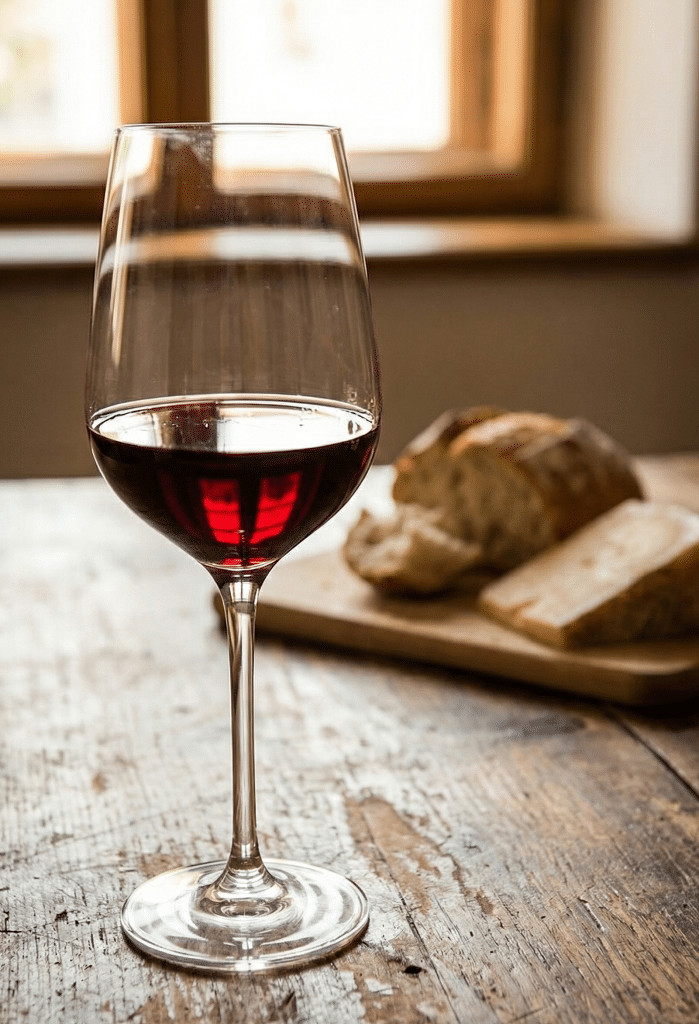
The problem: No red wine was being produced in Eger during the 1552 siege. The region made white wines and some lighter reds, but nothing like the deep, powerful Bikavér we know today.
The term “Bikavér” (which literally means “Bull’s Blood”) first appeared in written form in 1846 in a poem from Szekszárd, a different wine region entirely. It started as slang for red wines, then became associated specifically with Eger’s reds, and eventually morphed into the brand name. The connection to 1552? Brilliant marketing and storytelling, but not literal history.
And yet—this matters. Because the legend reveals something true about Eger: a town where wine and history, fact and folklore, are so entangled that separating them is both pointless and wrong. The legend exists because it feels true, because it captures something real about what Eger is.
The Wine: What Actually Makes It Special
Modern Egri Bikavér has been officially defined since 1997 as a Protected Designation of Origin (PDO) wine, and since 2017 it’s been recognized as a Hungarikum—a product UNESCO considers to be unique to Hungary and worth protecting.
Here’s what makes it official Bikavér:
The core grape: Kékfrankos (also called Blaufränkisch), which must make up 30% to 60% of any Bikavér blend. This is the backbone—a dark-skinned grape that gives the wine its structure and power.
The blend: Up to 13 additional grape varieties can join the Kékfrankos, but none can exceed 50% of the final wine. The classic blend historically included Kadarka (now less common), but modern Bikavér draws from varieties like Cabernet Franc, Cabernet Sauvignon, Merlot, Pinot Noir, Syrah, and several Hungarian varieties like Kékoportó and Blauburger.
Three quality tiers exist:
- Classicus — The everyday Bikavér, the wine you’ll find in most cellars in the Valley of the Beautiful Women. Minimum 6 months barrel aging. Accessible, food-friendly, honest.
- Superior — Stricter aging requirements, more carefully selected grapes, more complexity. The wine that makes you stop mid-sip and pay attention.
- Grand Superior — The top tier, made only in the best vintages, aged in premium oak, representing the region’s absolute best.
What it tastes like: Dry, complex, garnet red to deep ruby color. Spicy, fruity, velvety tannins. Nothing like the thin, oxidized bottom-shelf Bikavér that existed for decades and gave the wine a bad reputation among serious wine drinkers. Modern Bikavér from serious producers is genuinely excellent—the kind of wine that makes you understand why someone’s great-grandparents chose to make wine in volcanic rock cellars rather than do something easier with their lives.
Egri Csillag: The White Wine You Haven’t Heard Of
While Bikavér gets all the attention, the white Egri Csillag (“Star of Eger”) deserves equal appreciation. This is a dry white blend representing Eger’s other terroir expression, made from varieties like Leányka, Királyleányka, Olaszrizling (Welschriesling), and Tramini.
Where Bikavér is powerful and structured, Csillag is mineral-forward and crisp—a wine that tastes like volcanic soil, clean air, and careful winemaking. It’s less internationally known than Bikavér, which means it’s usually underpriced and overlooked. That makes it a find.

The Valley of the Beautiful Women: Where Wine Actually Happens
You can read about wine all day. Real understanding starts in a cellar, holding a glass poured by someone whose family has been making wine in that same spot for generations.
The Valley of the Beautiful Women (Szépasszonyvölgy) is where that happens.
What You’re Actually Looking At
Imagine roughly 200 wine cellars carved directly into volcanic rock hillside, each with its own entrance, its own character, and its own story. About 40-50 are open to the public. You don’t need reservations for most (though advance contact is appreciated for smaller operations). You don’t need formal wine knowledge. You just walk from cellar to cellar, taste wines, eat bread and cheese, and slowly understand why people have been making wine in this exact location for centuries.
Each cellar is family-run. Most have been in the same family for multiple generations. The wines vary wildly—some are exceptional, some are casual everyday wines meant to be enjoyed young and unseriously.
On my last visit to Thummerer Winery, the owner’s son poured me a 2018 Grand Superior Bikavér that stopped me mid-conversation. Dark fruit, volcanic minerality, this slow-building complexity that kept changing in the glass. When I asked the price, he smiled and said “Twenty-two euros.” I bought three bottles. That’s the moment you realize Eger’s secret: world-class wine at prices that make you feel like you’re getting away with something.
Walk into one cellar and you might find someone pouring a single-vineyard Bikavér that costs 6,000 HUF ($18 USD) and tastes like geology and history. Walk into another and find someone’s grandmother serving fresh young whites that cost 1,500 HUF ($4-5 USD) paired with homemade lángos (fried bread).
This is not a tourist park. This is an actual working wine region where tourism is secondary to the actual business of making and drinking wine. Which is exactly why it’s so good.
A Day in the Valley
Morning visit (10:00-13:00): Quieter, more intimate. You can have actual conversations with winemakers who aren’t juggling ten other visitors. Less crowded means more personal attention. You’ll taste younger wines, perhaps wines still in barrel, wines that haven’t been released yet.
Afternoon visit (14:00-18:00): The valley fills with local Hungarians and day-trippers. The energy shifts. It’s livelier, less intimate, but more fun in a communal way. Music might be playing. You’ll see groups of friends gathered in courtyards, locals popping in for their regular wine.
Evening visit (18:00-22:00): Peak atmosphere. This is when locals come after work, when tourists join them, when the valley becomes a genuine social center. Cellars serve grilled meats, lángos, local cheeses. Wine flows. The light gets golden. It’s magical without trying to be.
Each time of day is different and worthwhile. The key is not rushing. You’re not collecting cellars like checkmarks. You’re experiencing wine culture as it actually exists.
How to Explore Without Getting Lost (Or Drunk)
Take the Wine Bus: The Wine Bus typically operates on Saturdays, departing from Thummerer Wine Shop/Gál Tibor Fuzió wine bar in central Eger and making 90-minute loops through the Valley of the Beautiful Women, stopping at various cellars. Cost is usually around 2,000 HUF ($6 USD), which comes with vouchers for tastings at participating cellars—essentially free transportation plus spending money. Note: The schedule can expand in summer or contract in winter, so verify current days and times before planning your visit. If you miss the bus: The valley is about a 25-minute walk from the city center (2 kilometers), or a taxi costs around $5 USD.
Walk it yourself: The valley is compact and walkable. Pick 4-5 cellars and spend quality time at each rather than rushing through a dozen. This is wine tasting, not wine checklist.
Make contact in advance: If you have specific cellars you want to visit, particularly smaller family operations, send a message or call ahead. Most cellars are prepared for walk-ins during peak hours, but a heads-up ensures you get a warm welcome and the winemaker’s full attention rather than a rushed pour.
Bring: Cash (many smaller cellars don’t take cards), comfortable walking shoes, water, and realistic expectations about how much wine you can taste before tasting stops making sense.
Notable Cellars Worth Seeking Out
Toth Ferenc Cellar (Cellar 46) — A quality-focused winery that’s been making wine since 1983. They’ve got an impressive selection of whites and reds, and the proprietors actually know their wines inside and out. Located at 3300 Eger, Cellar 46. Hours: Monday 10:00-18:00, Wednesday-Thursday 12:00-20:00, Friday varies, closed Tuesday. Contact: +36 30 602 0372. Expect to spend 3,000-5,000 HUF ($9-15 USD) for a tasting that actually teaches you something.
Juhász Brothers Winery — The largest oak barrel capacity in the entire Eger Wine Region, which means they take aging seriously. They’re found on Kőlyuk Cellar Street. Opening hours: Monday-Friday 8:00-16:00, Saturday 9:00-18:00. Contact: borkostolo@juhaszvin.hu or +36 20 420 1409. This is a place to taste serious, well-aged Bikavér.
Molnár Pincészet (Cellar 16) — A traditional family operation with a cozy atmosphere and a strong focus on Egri wines. Known for their Muscat and Medina sweet wines that shouldn’t work but absolutely do.
Kovács Nimród Winery — One of the larger operations with multiple restored cellars open for tastings. They offer structured tastings at various price points: 5 wines for 5,600 HUF ($16 USD), up to their “Grand Extra” 8-wine tasting at 10,500 HUF ($30 USD). This is wine tasting at a professional level if you want education and structure rather than casual cellar-hopping.
Baroque Architecture: A Walking Tour Through Time
While Eger is famous for wine and history, its architecture might be its most underrated attraction. Walk the right streets and you’ll see baroque churches, rococo courtyards, bent iron balconies, and masterworks of wrought iron all within a few blocks. This is the section of Eger many day-trippers miss because they’re focused on the castle and wine. That’s their loss.
Start at Dobó István Square (The Heart)
The main square is small but perfectly formed. The István Dobó statue (created by sculptor Alajos Strobl in 1907) stands as the focal point—a bronze captain forever watching over the town he defended. Around the square, baroque and earlier period buildings form the perimeter, with cafés lining the edges where you can watch Eger’s daily life unfold. The Town Hall (Eclectic style, built in the late 19th century) provides the administrative anchor.
This is where evening light does magical things. Come at dusk and watch the square transform as shadows lengthen and the castle above begins to glow. Every travel writer will tell you this. Every travel writer is right.
The Minorite Church of St. Anthony of Padua (The Masterpiece)
On the south side of Dobó Square stands what many consider the finest baroque church in Hungary. Built between 1758 and 1773 (though the decision to build was made in 1745), it was designed by Kilian Ignaz Dientzenhofer, a renowned Bohemian architect.
The church is a single-nave design (one main chamber rather than divided sections), which makes the interior feel open and light-filled despite the baroque’s typical tendency toward visual complexity. The façade has elegant baroque details without being overwrought. It’s baroque restrained, baroque confident in its beauty without needing to prove it through excess.
The interior rivals some of Europe’s more famous baroque churches, but you’ll explore it nearly alone because American tourists are at Parliament and German tourists are at the castle. That solitude is part of its power.
Try to visit in late afternoon when light streams through the windows at that perfect angle where you can actually see the baroque details—the curves, the proportions, the intention behind every architectural choice.
Kossuth Lajos Street (The Treasure Hunt)
The main pedestrian walkway leading from the square is lined with dozens of baroque and rococo buildings—palaces, townhouses, former monasteries. This isn’t one impressive street like Vienna’s inner ring. It’s a collection of beautiful details you have to actually look for.

Hunt for the Fazola Gates—wrought-iron gates of extraordinary intricacy created by Henrik Fazola, a Rhineland master ironworker who settled in Eger in the mid-18th century and created multiple ornate gates throughout the city. These gates are sculptures in metal: baroque scrollwork, floral patterns, geometric precision, all hand-forged.
The largest and most famous Fazola gates are at the County Hall (built 1749-1756, designed by Mátyás Gerl). These gates are considered so artistically significant that they “superseded the minaret as symbol of Eger.” Seeing them, you understand why. They’re the kind of gates that make you forget they’re merely functional—objects you walk through rather than art you look at. Except they’re absolutely art.
Walk Kossuth Lajos slowly. Spend an hour here rather than ten minutes rushing through. Notice the balconies with bent iron railings. Notice how different buildings relate to each other despite the baroque’s overall similarities. Notice how light changes what you can see.
The Lyceum (The Scholarly Heart)
Built 1765-1785 in the Zopf style (late baroque), the Lyceum was created as an educational institution and remains one of Eger’s architectural masterpieces. The building sprawls across a large complex, and you can visit the library with its stunning trompe l’oeil ceiling fresco painted by Johann Lukács Kracker in 1778—a painted ceiling that creates the optical illusion of architectural space that isn’t actually there.
The library itself holds 160,000 volumes and remains a working academic library, so you can’t just wander through freely. But you can visit the main reading room, stand under that impossible ceiling, and feel the weight of centuries of scholarship.
Most visitors come to the Lyceum for the Astronomy Museum and Camera Obscura rather than the library. Both are worth your time.
The Camera Obscura—literally “dark room”—sits on the 9th floor of the Lyceum tower. It’s the oldest periscope in Europe still operating, installed in 1776 and called the “Eye of Eger.” In a darkened room, it projects a live, full-color, 360-degree image of Eger onto a white table using nothing but physics and optics. Stand there and you’re looking at real light bouncing through a lens to paint a picture of the city below. No digital anything. No technology younger than 250 years. Just geometry and light.
The Astronomy Museum occupies the 6th floor and contains original instruments from Miksa Hell (an 18th-century Hungarian astronomer) and a functioning planetarium with a 6-meter dome. There are interactive physics exhibits—”Magic Room” demonstrations where you can understand how light, motion, and force actually work.
Climb to the Panorama Terrace on the 8th floor (44 meters above street level, 314 steps up) and you get the city’s highest observation point with binoculars provided. On clear days you can see all the way to the Bükk Mountains.
Visit the Lyceum either early morning (fewer tourists) or late afternoon (better light for photography). Figure 2-3 hours if you’re doing the castle and something else. Figure 3-4 hours if the Lyceum is your main stop.
The Basilica (The Surprising Neoclassical Giant)
Eger’s Basilica—officially the Cathedral Basilica of St. John the Apostle—is massive: 40 meters high with a dome, seating capacity of 5,000 people, making it the second-largest church in Hungary after Esztergom. Built 1831-1837 by architect József Hild, it’s neoclassical, not baroque—important distinction.
The façade mimics a Greek temple with Corinthian columns 17 meters high. Inside, the three-nave basilica with transept feels vast and light-filled, decorated with lavish detail. There are organ concerts with 30-minute programs if you time your visit right—check locally for schedules.
The Basilica is currently undergoing restoration work, so check accessibility before you visit. Even if you can’t go inside, the exterior is impressive and worth photographing from multiple angles.
The Archbishop’s Palace (The Rococo Gem)
Built 1715-1732 by Bishop Gábor Erdődy as an episcopal residence, the Archbishop’s Palace is a baroque/rococo structure that was closed to the public for centuries. It only opened to visitors in 2016.
Inside, you can see the collections of baroque and rococo stoves, 18th-century frescoes, paintings, and vestments. The ornamental garden is free to visit during museum hours and offers a quiet respite from the town center—baroque formality in plant form.
Admission: Expect around 1,200 HUF ($3-4 USD) based on recent visitor reports. Hours typically 9:00 AM-5:00 PM. Worth 45 minutes if you have time, particularly if baroque interior decoration interests you.
The Minaret (The Ottoman Reminder)
In the middle of baroque Catholic Eger stands a 40-meter (131-foot) Ottoman minaret—the northernmost historical Ottoman architectural monument in Europe. Built in the early 17th century (shortly after the Ottomans occupied Eger in 1596), it originally belonged to a mosque called the Djami of Kethuda.
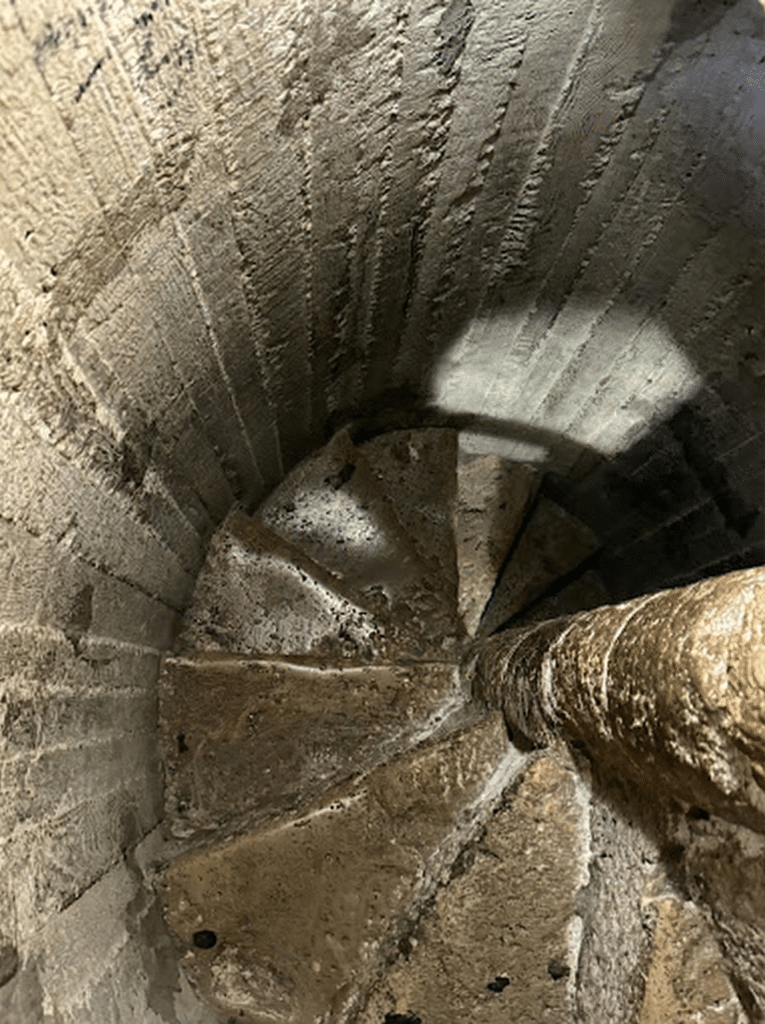
The minaret is 14-sided (an unusual construction that gave it remarkable structural strength), built of red sandstone, with 97-98 narrow spiral steps leading to a balcony at 26 meters up. Climbing it is claustrophobic, narrow, dizzyingly steep, and 100% worth doing if you can manage it.
At the very top, above the Islamic star and crescent: a Christian cross. Legend says 400 oxen couldn’t pull the minaret down after the Ottomans left, so instead of demolishing it, Eger’s Christians topped it with a cross. Whether that’s literally true matters less than what it represents—a town processing trauma and difference by incorporating rather than erasing.

Admission: 1,000 HUF (approximately $3 USD), cash only. The climb takes about 15-20 minutes total. Important: The staircase is extremely narrow—if someone is coming down while you’re going up, it’s a very tight squeeze, and there are points where you’ll need to wait or navigate carefully around each other. If you’re claustrophobic, acrophobic (fear of heights), or just prefer ground level, the minaret is impressive from below too.
Turkish Bath (Arnaut Pasha Bath)
While the minaret is the Ottoman military reminder, the Turkish Bath (Török fürdő) represents Ottoman contributions to Hungarian life that actually improved things. Built 1610-1617 during the 91-year Ottoman occupation, the bath still functions today with geothermal water that’s been flowing from beneath Eger for millennia.
The Turkish pool is the oldest part with the longest continuous history. Later additions included a gold mosaic ceiling, modern facilities, and (naturally) the kind of steam-filled environment Hungarians adore.
The Turkish occupation introduced Hungary to the thermal bath culture that now defines the country. The Ottomans built approximately 75 baths during their period of control—an architectural legacy that shaped Hungarian wellness culture. The Eger bath is one of a handful that survived and continues to operate.
Hours typically 10:30 AM-5:00 PM. Admission varies (check locally before visiting). For current pricing, maintenance schedules, and hours, visit the Eger Turkish Bath official website. Bring a swimsuit, towel, and flip-flops. The water is warm and healing—come here after wine tasting and castle walking to let geothermal water unknot muscles that have spent hours climbing stone stairs.
Practical Information for Actually Getting There and Staying
Understanding Eger’s layout: The town is compact and walkable. Eger Castle sits on top of Kálvária Hill overlooking the city center, where you’ll find Dobó Square and the baroque district. The Valley of the Beautiful Women wine cellars are about 2 kilometers (25-minute walk) southwest of the center. Everything else—minaret, basilica, thermal bath, restaurants—is within a 10-15 minute walk of Dobó Square.
From Budapest
Train: The most reliable option. Hourly departures from Budapest-Keleti station, journey time approximately 1 hour 52 minutes, cost 2,500-3,000 HUF ($7-9 USD). Book tickets at the Hungarian State Railways (MÁV) official website. For general advice on navigating European public transportation, including trains and ticketing, see my comprehensive guide. Trains arrive at Eger station about 20 minutes walk from the city center, or take a taxi via the Eger City Taxi app.
Bus: Hourly buses from Budapest’s Stadion station, journey time approximately 2 hours 8 minutes, cost around 1,500 HUF ($5 USD). Slightly longer than train but often cheaper, and many people prefer bus if they’re prone to motion sickness.
Rental car: If you’re comfortable driving in Hungary (which is fine if you follow rules and stay alert), it’s 82 miles (132 kilometers) from Budapest via the M3/M25 motorways, approximately 1 hour 21 minutes in light traffic. Parking in Eger is manageable—easier than Budapest.
Recommendation: Unless you’re extremely time-constrained, stay overnight rather than doing a day trip. The 2-4 hours of transit combined with jet lag/travel exhaustion means you’ll spend your Eger time tired. One night allows you to arrive late afternoon, spend the next full day exploring, and return refreshed. The accommodation is affordable enough that this makes economic sense.
Where to Sleep
Budget options are plentiful. You can find decent 3-4 star hotels centrally located for $50-100 USD per night. Guesthouses and apartments run $30-50 USD. Look for places near Dobó István Square or along Kossuth Lajos street—walkable to everything, close to wine and dining.
Imola Udvarhaz Dessert Hotel is a popular mid-range option (3-star) with free underground parking, balcony views of Eger Castle, and the Macok Bistro restaurant on-site (though you should book restaurants anyway). Located at Tinódi Sebestyén tér 4.
Honestly, the specific hotel matters less than location. Book somewhere central and you’re fine.
Where to Eat
Macok Bistro — This is the fine dining option if you want a Michelin-recognized experience. It holds the Michelin Bib Gourmand rating (2022-2025), which means “good quality, good price-to-value ratio”—essentially Michelin’s way of saying this is where locals and knowledgeable visitors go.
The bistro sources from local producers: trout from Szilvásvárad, cheese from Bükk mountains. The menu rethinks traditional Hungarian dishes with modern presentation and technique. Expect mains in the €15-25 USD range. Reservations essential. Contact +36-36-516-180 or +36-30-207-8085. Hours: Monday-Thursday and Sunday 12:00-22:00, Friday-Saturday 12:00-23:00.
Korzo Etterem (Around Dobó Square) — A strong local recommendation for authentic Hungarian food without the fine-dining price tag. Expect traditional goulash, pörkölt, and halászlé at reasonable prices. Good for lunch or casual dinner.
Valley of Beautiful Women cellars — Many cellars serve food: grilled meats, lángos (fried dough with garlic and sour cream), local cheeses. This is casual dining at its most authentic. Budget 3,000-6,000 HUF ($9-18 USD) for main + wine.
Budget eats: Look for “menü” or “napi ajánlat” (daily special) signs at casual restaurants. These are 3-course meals at excellent prices, typically 2,500-4,000 HUF ($7-12 USD).
Tipping: 10-15% is customary in restaurants, though not automatic. Service charge isn’t included, so add it yourself. Rounding up for taxi drivers and leaving small tips for hotel staff is appreciated.
When to Visit
Best time: Autumn (September-October). The harvest season is magical. Weather is pleasant, the atmosphere lively with harvest festivals, and Nagy-Eged’s vineyards “glow fiery red.” The wine is fresh, the grapes are coming in, and the whole region feels alive in a way it doesn’t other seasons.
Second best: Spring (April-May). Mild weather, cafe terraces opening, fewer crowds. Easter is particularly festive.
Summer (June-August): Hot, touristy, lively. Wine Festival typically runs mid-July. Lake Balaton is closer than Eger, so summer visitors often choose Balaton instead. Eger is quieter in summer than spring/autumn/winter.
Winter (November-December): Cold but atmospheric. Christmas markets, thermal baths especially appealing when it’s cold outside. Fewer tourists means more authentic interactions. Less ideal for walking the baroque streets, better for sitting in wine cellars.
Budget season: March-May offers the lowest hotel prices.
What to Bring
- Comfortable walking shoes (castle walls and baroque streets mean lots of steps)
- Cash (many wine cellars don’t accept cards; carry 20,000-30,000 HUF / $60-90 USD minimum)
- A light jacket (cellars stay cool year-round, around 12°C / 54°F even in summer)
- Swimsuit and flip-flops if you plan on the thermal bath
- Water bottle (you’ll be walking and wine tasting)
- Sunscreen and hat in summer, hat and layers in winter
How Much This Actually Costs
Using current pricing (2025-2026):
Accommodation: $50-100 USD per night for decent mid-range (budget options $20-30 USD, luxury $150+ USD)
Meals: Casual dining $8-15 USD, decent restaurants $15-30 USD, Macok Bistro €15-25 per main
Attractions:
- Eger Castle (4 museums included): 4,800 HUF ($15 USD)
- Minaret: 1,000 HUF ($3 USD, cash only)
- Lyceum/Camera Obscura: ~1,200 HUF ($3-4 USD) based on recent visits
- Turkish Bath: varies, typically 2,000-3,000 HUF ($6-9 USD)
- Wine tasting in Valley: 1,500-6,000 HUF ($4-18 USD) depending on cellar
- Wine Bus: 2,000 HUF ($6 USD) with spending vouchers included
Daily budget estimate: $100-150 USD for a comfortable day (accommodation, food, one major attraction, wine). Budget travelers can manage $60-80 USD. Luxury travelers will spend $200+ USD.
The wine is absurdly affordable. Quality Bikavér that costs $25-40 in Western Europe costs 4,000-6,000 HUF ($12-18 USD) in Eger. This is one of Europe’s genuinely good value wine destinations.
Sample Itineraries
Half-Day (4-5 hours) — Wine Focus
Morning (10:00-12:00): Arrive in Eger via train. Grab coffee. Head directly to Valley of Beautiful Women.
12:00-17:00: Take Wine Bus (2,000 HUF with vouchers) or walk cellars. Taste 4-5 wines at different cellars. Eat bread and cheese. Don’t rush.
17:00-18:00: Walk back to town center. Quick walk of Dobó Square and Minorite Church while light is good.
Evening: Train back to Budapest.
Not ideal, but doable for extremely time-constrained travelers.
Full Day (12 hours) — Culture + Wine
Morning (9:00-11:30): Arrive early. Go directly to Eger Castle. Spend 2-2.5 hours exploring castle, museums, climbing to bastions.
11:30-13:00: Lunch at Korzo Etterem or casual restaurant. Walk Kossuth Lajos street admiring architecture.
13:00-14:00: Climb minaret (if weather good and you’re willing) or visit Lyceum Camera Obscura.
14:00-18:00: Valley of Beautiful Women wine cellars. 3-4 cellars, proper tasting time at each.
18:00-19:00: Dinner at Macok Bistro (if you booked) or casual dining in Dobó Square.
Evening: Train back to Budapest or stay overnight.
This covers the main sights without feeling rushed.
Overnight (24 hours) — The Complete Experience
Day 1:
14:00-16:00: Arrive, check in hotel, rest briefly.
16:00-17:30: Explore Dobó Square and Minorite Church. Walk Kossuth Lajos street. Admire Fazola gates.
17:30-19:00: Early evening visit to Valley of Beautiful Women. Quieter, more intimate tasting.
19:00-20:30: Dinner at Macok Bistro or casual restaurant.
Evening: Walk castle ramparts as light fades. Watch it glow after dark if possible.
Day 2:
9:00-11:30: Eger Castle (morning arrival beats crowds).
11:30-13:00: Lyceum library and Camera Obscura.
13:00-14:00: Lunch.
14:00-16:00: Turkish Bath or additional time in wine cellars.
16:00-17:00: Any missed baroque architecture walks, shopping for wine to take home.
17:00+: Return to Budapest.
This is the ideal length—gives you time without feeling like you’re living in a hotel.
The Stories You’ll Take Home
Eger isn’t the kind of destination you visit and immediately forget. It’s not a checklist of sights. It’s a town where things happen—not manufactured moments, but genuine ones.
You’ll taste wine poured by someone whose grandmother made wine in the same cellar. You’ll stand on castle walls where people made impossible choices. You’ll walk through baroque courtyards where light and shadow play in ways that photographers can’t quite capture but your brain remembers. You’ll sit in Dobó Square at dusk and understand why Hungarians still talk about 1552 like it was last year.
You’ll climb 98 narrow steps in a Turkish minaret and emerge into air and light and a view that reminds you how small you are and how much history is the result of people making decisions in specific moments on specific hilltops.
You’ll taste wine that costs $12 and tastes like it should cost $40.
You’ll realize that “Bulls Blood” is a real wine made by real people with real skills, that the legend is less important than the reality, and that the best travel moments are usually the ones that weren’t on the official itinerary—the elderly couple in a wine cellar who pour you something special because your face changed when you tasted the right wine.
Eger rewards curiosity, patience, and an appreciation for details. It’s not famous because it doesn’t need to be. It exists for people who understand that travel isn’t about being somewhere famous—it’s about understanding why places matter to the people who live there.
Frequently Asked Questions About Visiting Eger
Is Eger, Hungary worth visiting?
Eger is defined by the legendary 1552 Castle siege and “Bull’s Blood” (Egri Bikavér) wine. Top attractions include the Valley of the Beautiful Women wine cellars , the Ottoman Minaret , and Baroque architecture. Located two hours by train from Budapest , it offers an affordable, authentic cultural
How much time do I need to visit Eger?
An overnight stay (24 hours) is ideal, giving you time to explore the castle, taste wine in the Valley of the Beautiful Women, and experience the baroque town center without rushing. Day trips from Budapest are possible but tight due to the roughly 2-hour each way travel time.
Is Eger worth visiting if I’m not interested in wine?
Absolutely. The 1552 castle siege history, baroque architecture, Turkish minaret, Lyceum library, and overall atmosphere make Eger worthwhile even if you skip the wine cellars entirely. That said, even non-wine-drinkers often enjoy the Valley of the Beautiful Women for its unique atmosphere and cultural experience.
Can I visit Eger’s wine cellars without a guide?
Yes. Most cellars in the Valley of the Beautiful Women welcome walk-in visitors. No appointment is needed for casual tastings, though some premium wineries like St. Andrea prefer reservations for guided experiences. Basic English is spoken at many cellars, and pointing works when language fails.
What’s the best way to get from Budapest to Eger?
Train is easiest and most comfortable. Trains depart hourly from Budapest Keleti station, take around 1 hour 52 minutes, and cost approximately 2,500-3,000 HUF. Buses are slightly cheaper but less comfortable.
Is Eger walkable, or do I need a car?
Eger’s city center is entirely walkable. The Valley of the Beautiful Women is about 2 kilometers from the center (a 25-30 minute walk), but the Wine Bus runs on Saturdays connecting the two. A car is unnecessary unless you’re planning to explore surrounding Bükk Mountain villages.
When is the best time to visit Eger?
Autumn (September-October) for harvest season atmosphere and ideal weather, or spring (April-May) for fewer crowds and blooming gardens. Summer is hot and crowded, winter sees many wine cellars reduce hours or close.
How much does it cost to taste wine in the Valley of the Beautiful Women?
Expect to pay around 1,500 to 6,000 HUF per cellar depending on the wines you taste and whether it’s a casual family cellar or premium winery. Some cellars waive tasting fees if you purchase bottles.
Can I climb the Turkish minaret if I have vertigo?
Not recommended. The 98 stone steps are narrow, steep, and spiral tightly in an enclosed space. The top balcony is small and open to the elements. If you have vertigo, claustrophobia, or mobility issues, skip the minaret and enjoy the views from Eger Castle instead.
Quick Reference: Practical Details
Train from Budapest: Hourly, 1h 52m, 2,500-3,000 HUF
Bus from Budapest: Hourly, 2h 8m, ~1,500 HUF
Best season: Autumn (September-October) or Spring (April-May)
Minimum time: Overnight stay (better than day trip due to travel time)
Main attractions & costs:
- Eger Castle: 4,800 HUF
- Minaret: 1,000 HUF (cash only)
- Wine tastings: 1,500-6,000 HUF depending on cellar
- Wine Bus (Saturday only): 2,000 HUF with vouchers
Where to eat:
- Fine dining: Macok Bistro (reservations: +36-36-516-180)
- Casual: Korzo Etterem
- Wine & food: Valley of Beautiful Women cellars
Where to sleep: Budget $50-100 USD for mid-range hotels in city center
Daily budget: $100-150 USD comfortable, $60-80 USD budget, $200+ USD luxury
Connecting to Your Larger Hungary Journey
If you’re following my Central & Eastern Europe travel guide and planning a multi-region trip, Eger makes sense as a 1-2 night extension to a Budapest-Tokaj wine country route, or as a standalone overnight from Budapest. The region fits well with:
- Before Budapest: Base in Eger, take day trips to smaller Bükk villages, then train to Budapest for final days
- After Budapest: Spend first 2 days Budapest, train to Eger for overnight wine experience, continue to Tokaj wine region
- Wine region focus: Both Eger and Tokaj in one trip creates a comprehensive understanding of Hungarian wine culture
The train connections are easy, the distances short, and the experience completely different from Budapest’s urban energy. Eger is Central Europe as it actually exists—small, manageable, historically layered, and unhurried.
This is where you go when you’re ready for more than sightseeing. When you want to understand a place, not just see it.
Explore more Central European hidden gems and authentic travel experiences on Pieterontour.com, where every journey is crafted for culturally curious travelers who want to understand places, not just see them.
For deeper exploration of Hungary’s thermal culture, wine regions, and authentic cultural experiences, explore the comprehensive Hungary travel guide. Or plan your broader Central European journey with information on getting around Central and Eastern Europe by train, bus, and rental car, creating the kind of travel that changes how you think about a region.
Related Guides on PieterOnTour.com:
- Budapest First-Timer’s Guide: Logistics, Costs & Secrets
- Budapest’s Castle District: A Journey Through Hungarian History
- 10 Authentic Cultural Experiences in Central Europe (That Aren’t Tourist Traps).
- Central & Eastern Europe Travel The Ultimate Guide for Culturally Curious Travelers.
- Central Europe’s Seasonal Calendar Best Times to Visit (Beyond Christmas Markets).
- Central & Eastern Europe Travel: The Ultimate Guide for Culturally Curious Travelers
- Getting Around Central & Eastern Europe Trains, Buses, and Rental Cars.
- How Much Does a Trip to Central Europe Cost A Realistic Budget Guide.