
Getting Around Central & Eastern Europe: Trains, Buses, and Rental Cars
This guide is for independent travelers planning multi-city trips through Central and Eastern Europe who want clear, practical advice on booking trains, choosing between buses and rail, and navigating the region’s confusing motorway vignette system.
Central and Eastern Europe is refreshingly easy to explore without flying. Modern trains connect the major capitals, long-distance buses fill in the gaps, and well-maintained highways let you reach rural corners at your own pace. The real challenge isn’t “Can I get there?” It’s choosing the right tool for each leg of your journey.
I’ve spent years guiding travelers through this region, and I’ve made most of these transport choices myself, sometimes getting them right, occasionally learning the hard way. This guide walks you through your main options: trains, buses, and rental cars. You’ll get clear booking advice, a bus-versus-train comparison for key routes, and a plain-English explanation of those confusing motorway vignettes and road tolls that can catch first-time visitors off guard.
A quick note on planning: Prices and opening hours are mentioned to help you budget and plan, but they can change often. I always recommend checking the official websites (which I’ll link to) for the most current information before your visit.
Trains: The Backbone of Your Trip
For most travelers, trains are the sweet spot. They’re comfortable, relatively fast, and far less stressful than driving into medieval city centers. Austria, Czechia, Hungary, Poland, and Slovakia all have dense networks and frequent cross-border services.
You’ll see these national operators again and again:
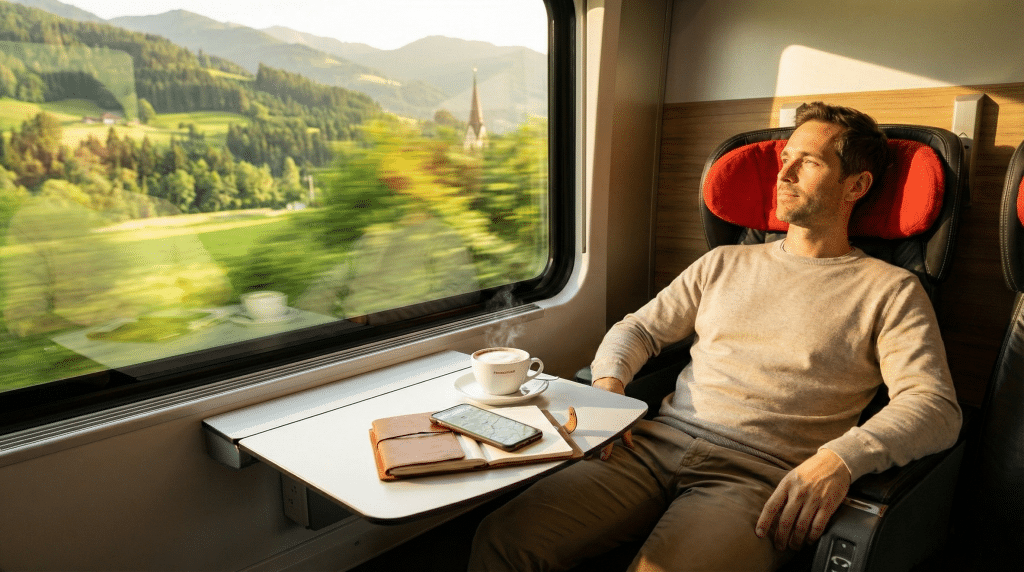
International Railjet and EuroCity trains connect Vienna, Prague, Budapest, Kraków, and beyond at speeds up to 230 km/h. I love the Railjet services particularly. There’s something satisfying about watching the Austrian countryside blur past your window while you work through a good coffee in the café car.
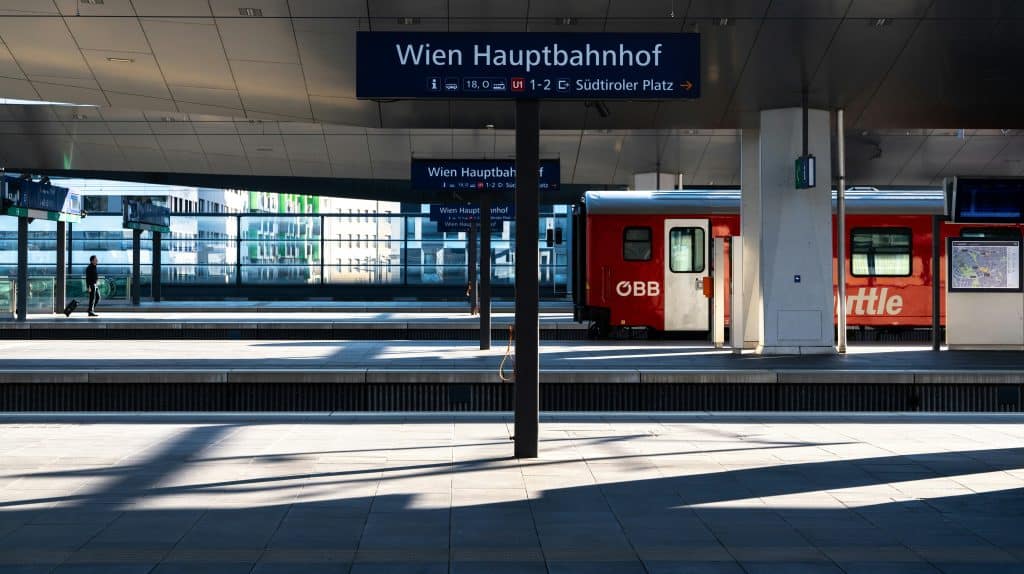
Typical example: Vienna to Budapest
- Fastest trains: Railjet, approximately 2 hours 20 minutes, covering about 214 to 216 kilometers
- Frequency: Around 10 to 17 trains per day depending on operator
- Advance fares: From about €10 to €12 if booked early; walk-up fares significantly higher
For the most current schedules and fares, check the official ÖBB website or MÁV website.
⚠️ Crucial Tip for Urban Transport: In Prague and Budapest, if you buy a paper ticket for the tram or metro, you MUST validate it (stamp it) in the yellow or orange machines upon boarding. An unstamped ticket is invalid, and inspectors specifically target tourists. I’ve watched too many confused visitors receive on-the-spot fines for simply not knowing this rule.
How to Book Trains: Direct Versus Aggregators
You have two main ways to buy tickets: directly from national railways or via aggregators like Rail Europe, Omio, or Trainline.
Direct via National Operators (Often Cheapest)
- ÖBB (Austria): Buy at oebb.at or in the ÖBB app. Step-by-step booking guides show how to select routes and discounted “Sparschiene” fares.
- ČD (Czechia): cd.cz offers competitive prices, often cheaper than bus alternatives for popular cross-border routes.
- MÁV (Hungary): jegy.mav.hu sells print-at-home or mobile tickets, with booking generally opening about 3 months in advance.
- PKP (Poland): PKP Intercity’s system covers intercity and international trains, now integrated with new Central Europe connections.
Pros:
- Often the lowest fares, especially for cross-border journeys
- Fewer “middleman” issues if you need refunds or changes
Cons:
- Interfaces can be clunky for first-timers
- Some sites are less intuitive for multi-country itineraries
Aggregators (Easier, Sometimes Slightly Pricier)
Trainline, Omio, and Rail Europe collect multiple rail networks into one interface. Independent tests show Trainline often finds cheaper or better routes than Rail Europe on complex international journeys, though both can be more expensive on some point-to-point routes.
Pros:
- User-friendly interface, English default, clear route comparisons
- Helpful for complex cross-border trips
Cons:
- Small booking fees per basket
- May cost more than booking direct on simple routes
Practical strategy: For simple routes (Vienna to Budapest, Prague to Vienna, Budapest to Kraków), I always check ÖBB, ČD, or MÁV first. You’ll save a few euros, and once you’ve done it once or twice, the interfaces become familiar. For more complex multi-country journeys, price-check on Trainline or Omio, then compare to direct sites. Sometimes the convenience is worth a small premium.
Step-by-Step: Booking Vienna to Budapest on ÖBB
Use this as a template for other routes.
- Go to oebb.at and select “Tickets & Timetables.”
- Enter “Wien Hbf” as departure and “Budapest-Keleti” as destination. Choose your travel date and time.
- Click “Search” and you’ll see a list of trains with times and prices. ÖBB typically shows the cheapest second-class price per departure.
- Look for “Sparschiene” (advance-discount) fares. These offer the lowest prices but are less flexible.
- Select your preferred train, choose class and seat reservation if desired, then continue to payment. Tickets are issued as PDF or mobile QR.
You can follow a similar process on cd.cz for Prague-based routes, or jegy.mav.hu for Hungary, using their English-language versions.
Buses Versus Trains: Key Routes Compared
Long-distance buses like FlixBus and RegioJet can be cheaper than trains and sometimes competitive on time, especially on shorter or less direct rail routes.
Here’s a comparison for common tourist legs (typical 2025 patterns; always check live schedules):
Vienna to Budapest
Train (Railjet/EuroCity):
- Time: Fastest approximately 2 hours 20 minutes
- Advance fares: From about €10 to €12
- Comfort: More legroom, café car, easy city-center stations
Bus (FlixBus):
- Time: From about 2 hours 50 minutes; up to 26 rides per day
- Fares: From about €14 to €15 if booked early
- Pros: High frequency, direct routes
- Cons: Dependent on road traffic; less space than trains
Prague to Budapest (via Vienna)
Direct train options often run 6 to 7+ hours. Some travelers choose a bus instead for cost reasons. Buses may be slightly faster on certain routes but are more affected by congestion.
General Pattern
Trains are usually better for:
- Comfort and space
- Scenic routes
- Predictability and punctuality
Buses are useful when:
- Rail connections are infrequent or require multiple changes
- You’re booking last-minute on a busy route and train fares are high
- You want overnight travel on routes without night trains
I’ve taken both FlixBus and RegioJet on the Vienna to Budapest route, and I found the extra legroom on the RegioJet worth the slight premium. The seats recline more, the buses tend to be newer, and there’s usually onboard WiFi that actually works. That said, both services can run late in heavy traffic, so build in a buffer if you have a tight connection.
For current schedules and fares, check FlixBus and RegioJet.
When to Choose Each Mode
Choose trains when:
- You value comfort, legroom, and the ability to walk around
- You’re traveling between major cities (Vienna, Prague, Budapest, Kraków)
- You’re carrying more luggage and want easier onboard storage
Choose buses when:
- Rail options are limited or significantly more expensive for your dates
- You’re connecting secondary cities that lack direct rail routes
- You’re flexible and willing to trade some comfort for lower cost
Rental Cars: Freedom with a Few Strings Attached
Renting a car opens up mountain valleys, hilltop villages, wine regions, and rural areas that trains and buses don’t reach easily. But Central and Eastern Europe adds two complicating factors: city parking and motorway vignettes.
When a car shines:
- Exploring the Austrian Alps, Czech and Moravian countryside, Slovak Tatra villages, Hungarian wine regions
- Multi-stop road trips across rural areas and national parks
When to avoid a car: For city-center stays in Vienna, Prague, Budapest, or Kraków, skip the rental. I learned this the hard way in Vienna’s 1st District, where parking costs a fortune and the one-way street system is designed to confuse invaders from the 13th century. Stick to the Park & Ride facilities on the outskirts and use public transport into the center. For short point-to-point hops between capitals, trains are easier and faster.
Vignettes and Road Tolls Explained (Austria, Czechia, Hungary & Neighbors)
In much of Central Europe, you can’t just drive onto the motorway and go. You need to pay a motorway fee, usually via an electronic or sticker vignette.
Countries using vignettes on motorways: Austria, Czech Republic, Hungary, Slovakia, Slovenia, Switzerland, Bulgaria, Romania (plus a few others outside this region)
The Basics
- A vignette is a time-based motorway fee (10 days, 1 month, 1 year, etc.)
- Fines for driving without a valid vignette can be steep, often €100 to €500
- Many countries have switched to digital vignettes linked to your plate; no sticker required
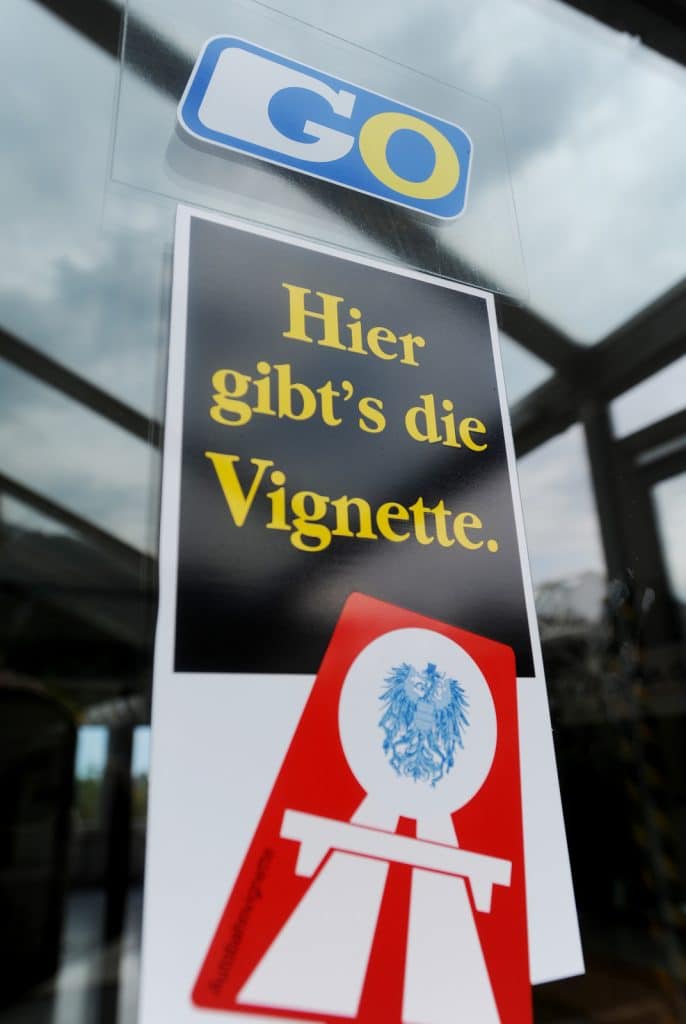
Example: Austria
Motorways and expressways require a vignette for vehicles up to 3.5 tonnes (standard cars). The 10-day vignette for cars typically runs around €11 to €12, while the 1-day vignette is approximately €9 to €10. Digital vignettes can be bought online via ASFINAG or authorized resellers and are checked electronically. Some specific roads and tunnels (certain alpine passes, for example) also charge additional route-based tolls.
If you’re caught without a valid vignette in Austria, you’ll face a replacement toll of approximately €120, plus potential additional fines if you argue with the authorities.
For the most current vignette prices, always check the official ASFINAG website before your trip.
Example: Czech Republic
Motorways require a digital vignette for vehicles up to 3.5 tonnes, linked to the plate number. Typical rates for petrol/diesel cars run around 270 to 290 CZK for a 10-day vignette (approximately €11 to €12) and around 210 CZK for a 1-day vignette. Vignettes are purchased via the official eDalnice website or authorized outlets.
Example: Hungary
Motorway vignettes (e-matrica) are required for passenger cars on most motorways. Typical D1 category (standard car) prices run around 5,320 HUF for a daily e-vignette and approximately 6,620 HUF for a weekly (10-day) e-vignette (roughly mid-20s in euros depending on exchange rate). Fines in Hungary range from approximately €50 to €200 depending on vehicle class and how long you’ve been driving without a valid vignette.
For the most current vignette prices and purchasing options, check ASFINAG (Austria), eDalnice (Czech Republic), and autovignet.hu (Hungary).
Key Points
- Buy digital vignettes only from official sites or well-reviewed authorized resellers to avoid extra fees and scams
- Always keep confirmation emails or SMS as proof
- If you’re driving a rental car, ask the agency which vignettes are already included and for which countries you need to purchase additional vignettes yourself
- Always carry your passport when crossing borders, even between Schengen countries. While internal border checks have largely disappeared, random spot checks still occur, and you’ll need ID if stopped by police
Quick Reference: 2025 Central Europe Vignette Prices
Prices listed below are for standard passenger cars (Category 2A/D1) as of December 2025. Always buy from the official link to avoid “service fees” from third-party resellers.
| Country | 10-Day / Weekly Price | Official Purchase Link | System Type |
|---|---|---|---|
| Austria | €12.40 (10-Day) | ASFINAG.at | Digital OR Sticker |
| Czech Republic | 290 CZK (~€11.50) | eDalnice.cz | Digital Only |
| Slovakia | €10.80 (10-Day) | eznamka.sk | Digital Only |
| Hungary | 6,620 HUF (~€16.50) | ematrica.nemzetiutdij.hu | Digital Only |
| Slovenia | €16.00 (7-Day)* | evinjeta.dars.si | Digital Only |
⚠️ Important Notes:
- Austria: As of December 1, 2025, the new “Fire Red” 2026 vignette is valid.
- Slovenia: Uses a 7-Day system, not 10-day. If you stay 8 days, you need a 1-month pass (€32.00).
- Czech Republic: Hybrids (emissions <50g CO2/km) can apply for a massive discount (paying ~25% of the rate), but fully Electric Vehicles are exempt (if registered).
Vignettes Versus Distance-Based Tolls
Some countries use both:
- Vignette: Time-based access to an entire motorway network (Austria, Czechia, Hungary, for example)
- Route toll: Pay per use on a specific section (certain Austrian tunnels or alpine roads, Croatian motorways)
Croatia example: No vignette required. You get a paper ticket when you enter a motorway and pay based on distance when you exit. This matters if your Central Europe trip extends to the Adriatic coast.
Practical Driving Tips for the Region
- Always check each country’s rules before crossing borders: speed limits, alcohol limits, required equipment (high-visibility vests, warning triangle, etc.)
- In cities, consider parking at edge-of-center garages or Park & Ride lots and using public transport to avoid low-emission zones and historic cores
- Use offline maps and watch for “Autobahn” or “Autopálya” signs indicating toll motorways
- If a police or toll authority stops you without a vignette, you may have to pay a “replacement toll” and possibly a fine. It’s cheaper than ignoring the issue, which can lead to higher penalties.
Putting It All Together: Mode-by-Mode Strategy
For most trips through Central and Eastern Europe:
Use trains for:
- Vienna, Prague, Budapest, Kraków, Bratislava and other major city pairs
- Comfortable medium-distance travel with scenery and minimal stress
Use buses for:
- Secondary routes where trains are slow, indirect, or expensive
- Last-minute bookings when rail fares have jumped
Use rental cars for:
- Alpine valleys, wine regions, rural villages, and cross-border countryside itineraries
- Flexible, off-the-beaten-path exploration (especially in Austria, Czech Moravia, Slovenia, and rural Hungary) while watching vignette and toll rules closely
With this logistics layer in place, you can now move confidently between the inspiring itineraries and cultural experiences throughout Central and Eastern Europe. For a complete picture of how to structure your journey, explore the 2-Week Central Europe Itinerary and Budget Planning Guide to see how these transport options fit into a real trip.
How far in advance should I book train tickets in Central Europe?
For the best fares, book 2 to 3 months in advance when advance-discount fares (like ÖBB’s “Sparschiene”) become available. Last-minute bookings are more expensive.
Are buses in Central Europe comfortable for long trips?
I’ve found RegioJet buses generally more comfortable than FlixBus, with better legroom and onboard service. Both can run late in heavy traffic, so plan accordingly.
Do I need to buy a vignette for every country I drive through?
Yes. Each country requires its own vignette or toll payment. Always check which countries you’ll pass through and purchase the necessary vignettes before you cross the border.
Can I buy a vignette at the border?
In some countries, yes, but digital vignettes are often more convenient and can be purchased online before your trip. Avoid buying from unofficial third-party sites that charge extra fees.
Is it cheaper to book trains directly or through an aggregator?
For simple routes, booking directly (ÖBB, ČD, MÁV) is usually cheaper. For complex multi-country journeys, aggregators like Trainline or Omio can save time and sometimes find better connections, but they may charge small booking fees.
What happens if I’m caught driving without a vignette?
Fines range from €100 to €500 depending on the country. In Austria, you’ll pay a replacement toll of approximately €120. In Hungary, fines range from €50 to €200 depending on circumstances. You may also have to pay the original vignette cost. It’s far cheaper to buy the vignette in advance.
Are night trains available in Central Europe?
Yes, ÖBB’s Nightjet and EuroNight services connect major cities overnight. These are a great way to save on accommodation and maximize daytime sightseeing.
Should I rent a car for a city-based trip?
No. If you’re staying in Vienna, Prague, Budapest, or Kraków, trains and public transport are far easier. Save the rental car for rural exploration and multi-stop countryside itineraries.
Do ticket machines and conductors speak English?
Almost universally yes on major international routes. Ticket machines in Austria, Czechia, Hungary, and Poland offer English-language options, and conductors on Railjet, EuroCity, and other international services are accustomed to English-speaking travelers. In rural areas, have Google Translate handy just in case.
What should I know about ticket validation for urban transport?
This is crucial and often overlooked. In Prague and Budapest, paper tickets for trams, metros, and buses must be validated (stamped) in the yellow or orange machines when you board. An unstamped ticket is considered invalid, and ticket inspectors specifically target tourists. The fines are immediate and non-negotiable.
How do you get around Central and Eastern Europe?
For major cities like Vienna and Prague, use trains for comfort and speed. Choose buses for secondary routes or budget fares. Rent a car only for rural areas , ensuring you buy digital vignettes in Austria and Czechia to avoid fines.
📚 Read This Next
Now that you know how to navigate the rails and roads, use these guides to build the rest of your journey:
- The Route: The Perfect 2-Week Central Europe Itinerary – See exactly how to chain these train connections together into a seamless 14-day trip.
- The Budget: How Much Does a Trip to Central Europe Cost? – A detailed look at what you should budget for transport, food, and accommodation in 2025.
- The Safety: Essential Tips for Solo Travel and Safety in Europe – Critical advice for staying safe at train stations and on night trains, especially if you are traveling alone.
Explore more Central Europe travel guides and itineraries on Pieterontour.com, where every journey is designed to be both practical and unforgettable.
- 10 Authentic Cultural Experiences in Central Europe (That Aren’t Tourist Traps).
- Central & Eastern Europe Travel The Ultimate Guide for Culturally Curious Travelers.
- Central Europe’s Seasonal Calendar Best Times to Visit (Beyond Christmas Markets).
- Central & Eastern Europe Travel: The Ultimate Guide for Culturally Curious Travelers