
Lake Balaton Travel Guide: Hungary’s Inland Sea for Every Season
This guide is for travelers planning a visit to Lake Balaton, Hungary’s largest freshwater lake, offering practical advice for choosing the right season, understanding costs, navigating the north versus south shore divide, and planning wine tours, thermal wellness escapes, or family beach vacations.
Most travelers think of Lake Balaton as Hungary’s summer beach playground, a place where families splash in shallow waters and the smell of fried lángos drifts across crowded shores. But stand on the shores in February, steam rising from thermal waters while snow dusts the volcanic hills, and you’ll understand why this inland sea rewards those who visit in any season.
I’ve watched Lake Balaton transform through the calendar more times than I can count, leading groups through lavender-scented summers and quiet autumn wine harvests. What I’ve learned is this: the lake’s magic isn’t confined to three months of beach weather. It’s in the way morning mist rises off Hévíz’s thermal waters in winter, how September light turns Badacsony’s vineyards to gold, and the rare thrill of ice skating across a frozen expanse that usually holds sailboats.
This guide takes you beyond the summer stereotype into all four seasons at Central Europe’s largest freshwater lake. Whether you’re planning a wine-soaked autumn weekend, a family beach vacation, or a thermal wellness escape when snow falls, Lake Balaton delivers, just differently than most guides will tell you.
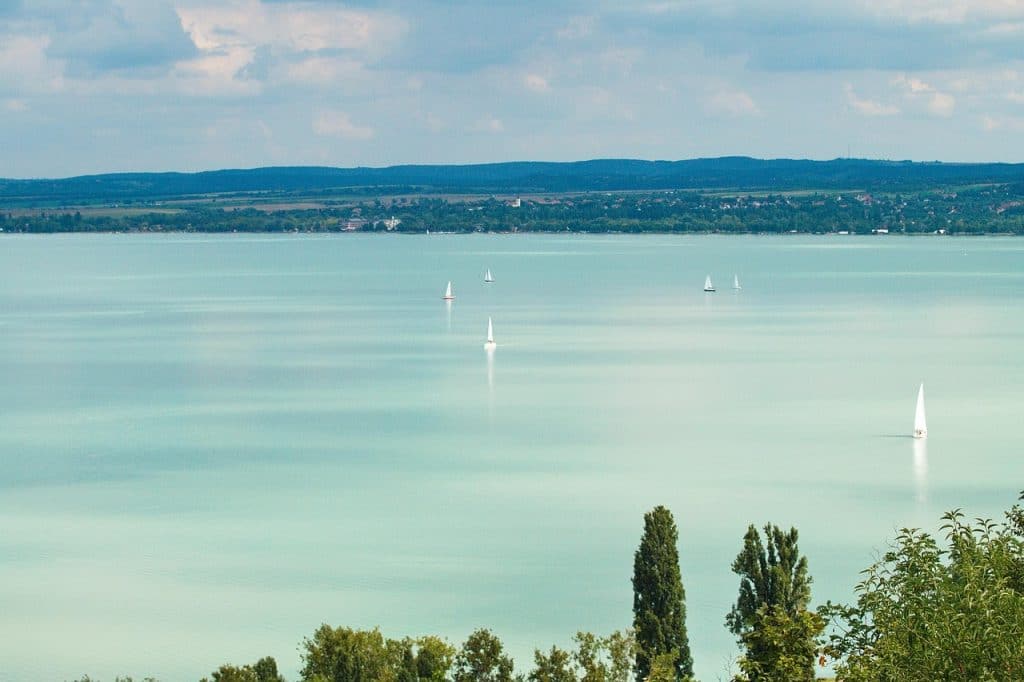
Quick Planning Overview
Best Time for Swimming: June-August (water 23-26°C)
Best Time for Wine Tours: September-October (harvest season) or April-May (quiet season)
Best Time for Thermal Wellness: November-March (winter magic at Hévíz)
Best Time for Cycling: April-May or September (ideal temperatures, fewer crowds)
Family Beach Season: Late June-August (full infrastructure open)
Budget-Friendly Periods: April-May, September-October (30-40% cheaper accommodation)
On this page
Why Lake Balaton Deserves Your Time
At 77 kilometers long and 14 kilometers at its widest point, Lake Balaton earns its nickname as the “Hungarian Sea.” The statistics are impressive (200-plus kilometers of shoreline, over 2,000 hours of sunshine annually), but numbers don’t capture what makes this place work its way into your memory.
The lake has two distinct personalities split by geography. The north shore rises in volcanic hills where ancient basalt soil produces wines that surprise people who thought they’d tasted everything Hungarian viticulture offers. Historic spa towns like Balatonfüred maintain their 19th-century elegance, and the Tihany Peninsula juts into the lake crowned by an abbey that’s been watching over these waters since 1055. This is where you come for cultural depth, wine cellars tunneled into hillsides, and thermal bath traditions going back two millennia.
The south shore sprawls flat and family-friendly, where water stays knee-deep for half a mile out and resort towns deliver beaches, water trampolines, and in Siófok’s case, nightlife that draws crowds from across Hungary. The contrast couldn’t be sharper, which means Lake Balaton can satisfy wine tourists and families with toddlers equally well. They just need to pick different shores.
What sets Balaton apart from other European lake destinations is the thermal culture woven through the region. Just west of the lake, Hévíz hosts the world’s largest swimmable natural thermal lake, where water maintains 24-36°C year-round and geological springs that have flowed for millennia create an experience impossible to replicate elsewhere.
The wine renaissance here deserves attention. Badacsony’s volcanic soil produces characterful, minerally whites that benefit from a microclimate created when the lake reflects sunlight back onto southern-facing slopes. Olaszrizling, Szürkebarát descended from 1300s plantings, and rare Kéknyelű varieties thrive in this specific terroir and rarely leave the region. Harvest season transforms the north shore into one long celebration of wine and tradition.
The 2026 Reality Check: Lake Balaton Is No Longer Budget-Friendly
Lake Balaton is no longer budget-friendly. Prices have climbed significantly, with beach admission now running around €4-6.50 for adults and a simple lángos costing approximately €6-7.50 instead of the budget-food pricing it once carried. That said, you’re still getting better value than comparable experiences in Austria, Switzerland, or Italy. Just adjust your expectations from “bargain” to “reasonable premium.”
A family of four should budget roughly €88-100 daily for beach admission, lunch, and snacks. Mid-range accommodation typically runs €30-35 per person nightly, higher in peak season. This isn’t necessarily expensive compared to Western European standards, but it represents a significant shift from Balaton’s historical reputation.
A quick note on planning: Prices and opening hours are mentioned to help you budget and plan, but they can change often. I always recommend checking the official websites (which I’ll link to) for the most current information before your visit.
Best Time to Visit Lake Balaton: A Season-by-Season Guide
Most Lake Balaton guides focus 90% on summer because that’s when beaches operate. But the lake’s character transforms with the seasons, and understanding these shifts helps you choose the right time for your interests.
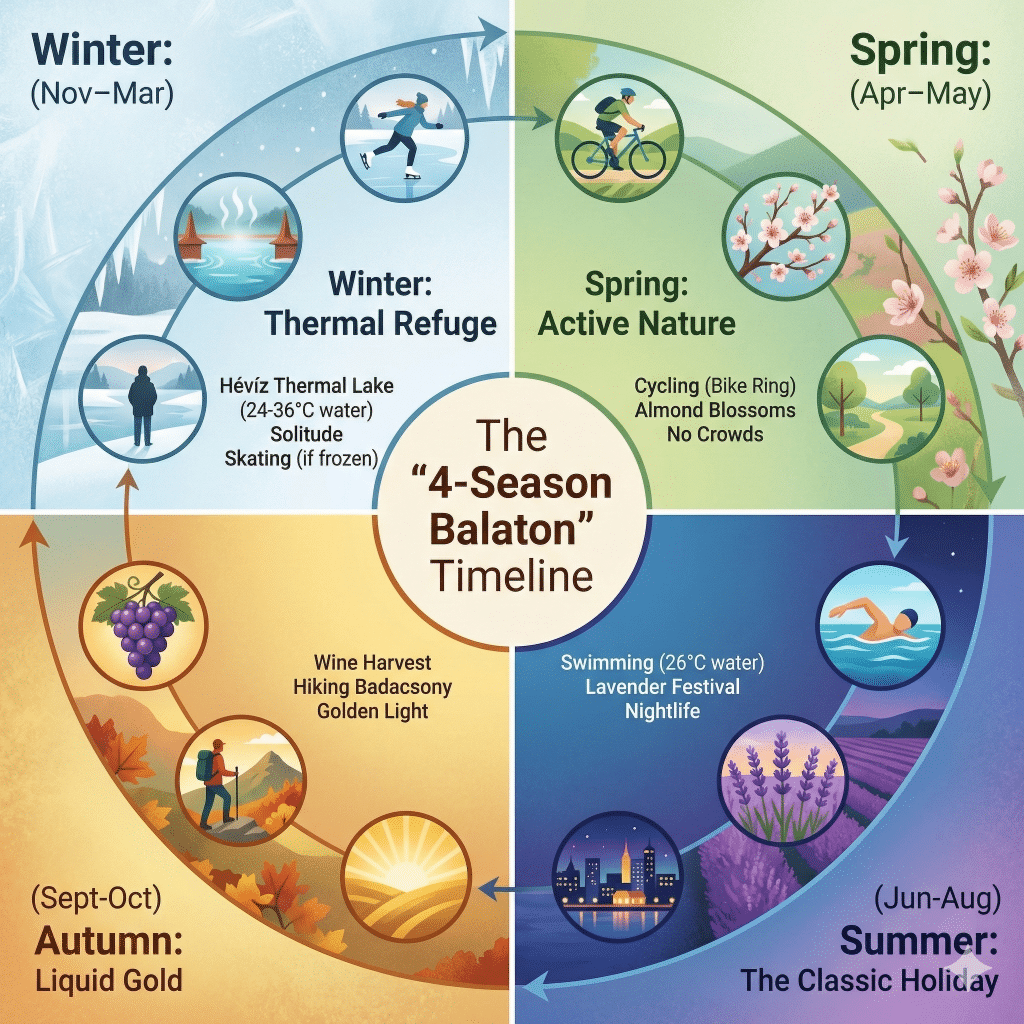
Summer (June-August): Energy and Full Infrastructure
Temperatures: 25-30°C air, 23-26°C water
Crowds: Peak season (book accommodation 2-3 months ahead)
Best for: Swimming, water sports, lavender fields, beach parties
Summer delivers everything the brochures promise: warm swimming, festivals, lavender fields in bloom, and infrastructure operating at full capacity. The Tihany Lavender Festival typically runs from mid-June through early July (in 2026, expect dates around June 17-July 2, though it’s best to verify on the official festival website closer to your visit). You’ll be invited to pick your own lavender, browse artisan markets selling oils and soaps, and watch essential oil distillation. Peak bloom hits mid-July to early August when fields turn completely purple.
Strand Festival usually takes place around Hungary’s St. Stephen’s Day national holiday (August 20) at Zamárdi’s free beach with Hungarian and international performers. Expected 2026 dates are approximately August 20-23, but confirm the schedule on the festival’s official site. Note that the famous Balaton Sound electronic music festival ended after 2024 when Zamárdi’s contract expired. Many older guides still reference it, but there’s no 2026 edition.
Water sports conditions peak with swimming temperatures reaching 23-26°C. Sailing, SUP, kayaking, and windsurfing centers operate full schedules. The south shore’s shallow water makes it ideal for learning, while the north shore’s deeper waters suit experienced sailors.
The challenges: Beaches get crowded, particularly on weekends. Siófok can feel overwhelmed. Parking becomes difficult. Prices hit their annual peak. Train cars on Friday afternoons and Sunday evenings pack with families heading to and from the lake.
Where to base: Siófok for nightlife and maximum beach amenities, Balatonfüred for elegant resort vibes and sailing culture, Tihany for cultural immersion and lavender.
Spring (April-May): Blooms, Solitude, and Ideal Cycling
Temperatures: 10-24°C, warming through the season
Crowds: 30-40% fewer visitors than summer
Budget: 30-40% cheaper accommodation
Best for: Cycling, wine tours, hiking, photography
Spring transforms Lake Balaton into a slow-travel paradise before summer crowds arrive. Late May brings early lavender blooms in Tihany. Cherry and almond trees blossom across the north shore’s hillsides. The Balaton Bike Ring runs ideal cycling conditions: mostly flat terrain (gentle hills on north shore), well-maintained dedicated paths, and perfect temperatures before summer heat makes midday rides punishing.
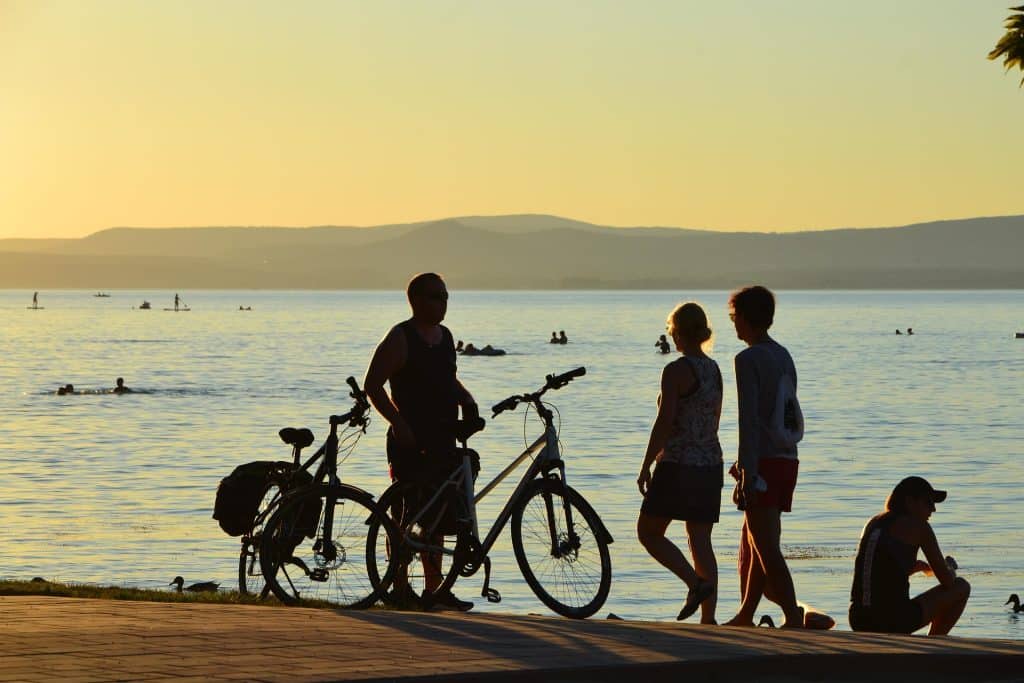
This is wine tour season without harvest crowds. Cellars operate on relaxed schedules, and winemakers have time for conversations. You’ll find better availability for tastings and tours.
Hiking conditions are perfect before summer heat. The Tihany Peninsula’s 8-10 kilometer loop showcases volcanic hills, early lavender, and panoramic lake views without the crowds photographing the same viewpoints.
Limitations: Swimming is chilly until late May, many beach facilities don’t open until June, and some restaurants maintain reduced hours. However, if you’re focused on wine, cycling, hiking, or cultural attractions rather than beach time, these limitations barely register.
Where to base: Balatonfüred for cycling access, Tihany for early lavender and hiking, Badacsony for unhurried wine touring.
Autumn (September-October): Wine Harvest and Golden Light
Temperatures: 15-24°C, with September averaging ideal 22.5°C
Crowds: Dramatically reduced after Hungarian schools resume
Best for: Wine harvest, hiking, photography
Budget: Moderate, better than summer
Autumn is remarkable at Lake Balaton. The golden and crimson transformation of vineyard-covered hillsides creates landscapes that painters struggle to capture accurately. September light has a quality that’s clear and warm without summer’s harsh intensity.
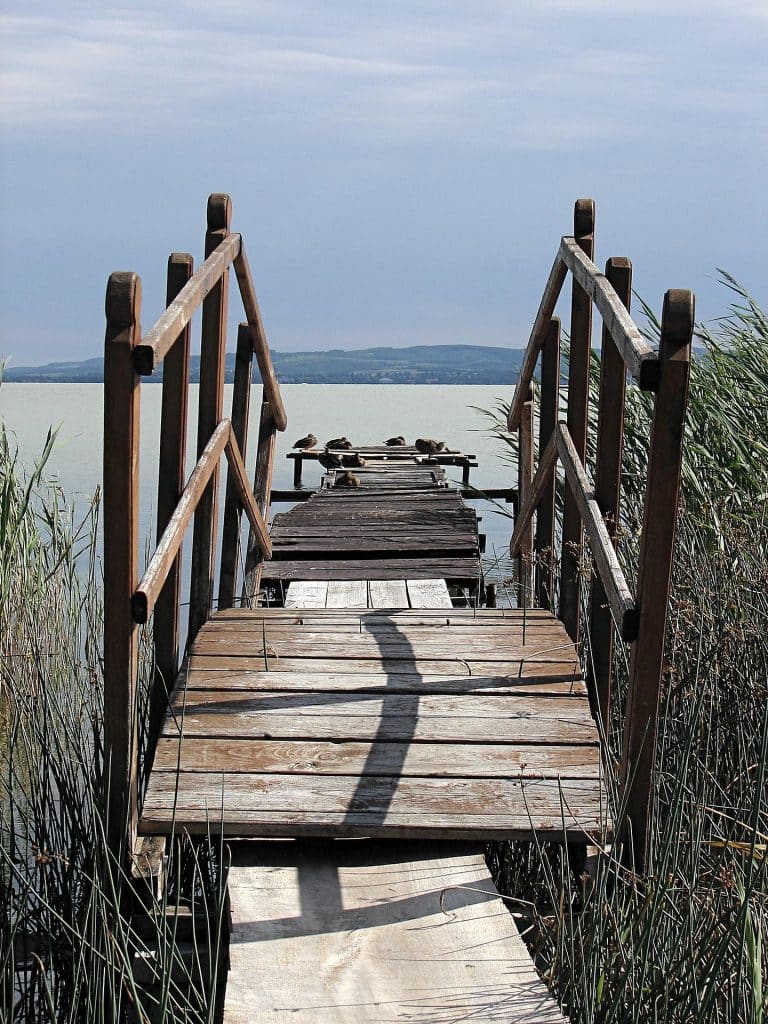
Wine harvest season (September-October) defines autumn. Badacsony and nearby towns host harvest festivals where you can participate in grape picking, watch traditional pressing, and taste the season’s first pressings. Family-run cellars that feel busy in summer have time for proper conversations about terroir and techniques.
Swimming remains possible through mid-September when water temperatures stay comfortable. The beaches empty dramatically after the first week of September when Hungarian schools resume, creating the strange experience of having long stretches of sand nearly to yourself on sunny weekdays.
Thermal baths become especially appealing as air temperatures cool. Floating in thermal waters while autumn air chills your face highlights why Hungarians have built wellness traditions around these geological gifts.
Where to base: Badacsony for harvest immersion, Keszthely for cultural attractions and proximity to Hévíz thermal lake.
Winter (November-March): Thermal Refuge and Authentic Solitude
Temperatures: Often below freezing, especially January-February
Crowds: Near-complete solitude, extreme off-season
Best for: Thermal wellness seekers, authentic experiences
Winter at Lake Balaton requires honest expectations. Infrastructure shuts down dramatically, most restaurants close, public transport reduces to skeleton schedules. This is not a season for casual visitors. It’s for those seeking specific experiences.

Hévíz thermal lake becomes magical in winter. The water maintains 24-26°C year-round, creating dramatic steam clouds when air temperatures drop below freezing. Swimming among floating water lilies while snow dusts the edges and steam obscures bathers into ghostly shapes feels otherworldly. If you’re drawn to winter traditions and celebrations in Hungary, combining Hévíz with Budapest’s Christmas markets creates an unforgettable seasonal experience.
Ice skating on frozen Lake Balaton is rare but unforgettable when conditions align. The lake froze regularly through the 1990s, but climate change has made complete freezing uncommon. The last major freeze was 2017. When it happens, entire communities emerge onto the ice for a celebration that feels medieval.
Balatonfüred ice rink (with 1-kilometer ice corridor) provides guaranteed skating even when the lake doesn’t freeze.
The harsh reality: Most beaches close completely. Many hotels shut down. Restaurants that operate year-round keep weekend-only winter hours. Public transport runs on reduced schedules.
Where to base: Hévíz for thermal focus (hotels operate year-round), Keszthely for cultural attractions and better restaurant options.
Getting to and Around Lake Balaton
From Budapest to Lake Balaton
By Train (Recommended):
Direct trains depart Budapest-Déli station regularly for major Balaton towns. Journey times run 1-2 hours depending on destination. Balatonfüred takes roughly 1 hour 45 minutes, Siófok about 1 hour 30 minutes, Keszthely 2-3 hours.
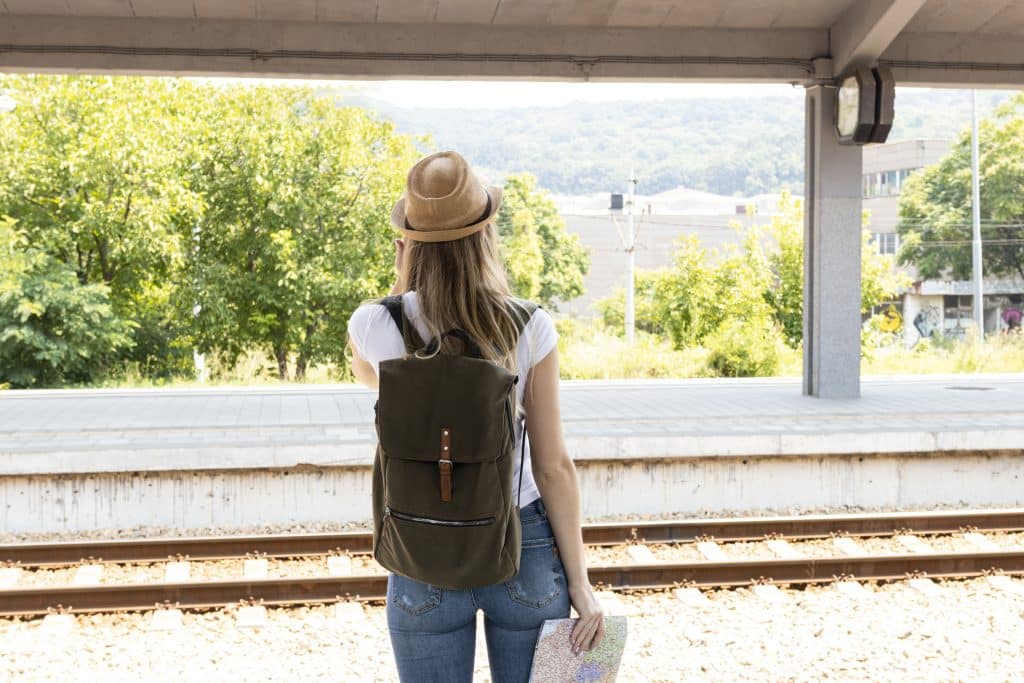
Purchase tickets at the station or through the MÁV-Start app. Second-class tickets typically cost approximately €6-8.50 one-way, though prices adjust annually. Reserve seats during summer weekends and holidays when trains fill with Hungarian families heading to the lake. For the most current schedules and fares, check the official MÁV (Hungarian State Railways) website before your trip.
By Car:
The M7 motorway connects Budapest directly to Lake Balaton’s south shore. Drive time runs 1.5-2 hours depending on your destination. North shore towns require exiting the M7 and taking regional roads that wind through villages and vineyards.
Parking challenges emerge during summer, particularly in Balatonfüred, Tihany, and Siófok. Many towns charge for parking (approximately €1.30-3.80 per day). Some accommodations include parking, many don’t. Confirm before booking.
By Bus:
FlixBus and Volánbusz operate Budapest-Balaton routes. Buses take longer than trains (2-3 hours) but sometimes cost less. Bus travel works well for reaching smaller villages not on rail lines.
Getting Around the Lake
By Train:
Local trains run along both shores connecting most major towns. Service frequency drops significantly outside summer months. Check schedules in advance during shoulder and winter seasons. The north shore line offers particularly scenic views.
By Car:
A rental car provides maximum flexibility for exploring wineries, small villages, and moving between shores. Roads are well-maintained. Navigation is straightforward. Fuel prices run similar to Western European averages.
Consider a car if you’re planning extensive wine touring or want to explore smaller villages. Skip it if you’re basing yourself in one town and making occasional day trips by public transport.
By Bike:
The Balaton Bike Ring circumnavigates the entire lake on dedicated cycling paths covering approximately 200 kilometers. The route is well-marked, mostly flat (gentle hills on north shore), and suitable for casual cyclists. Many accommodations offer bike storage and rental.
Spring and autumn provide ideal cycling conditions. Summer heat makes midday riding challenging. The south shore offers flatter, easier terrain. The north shore delivers more interesting landscapes and wine-stop opportunities.
By Ferry:
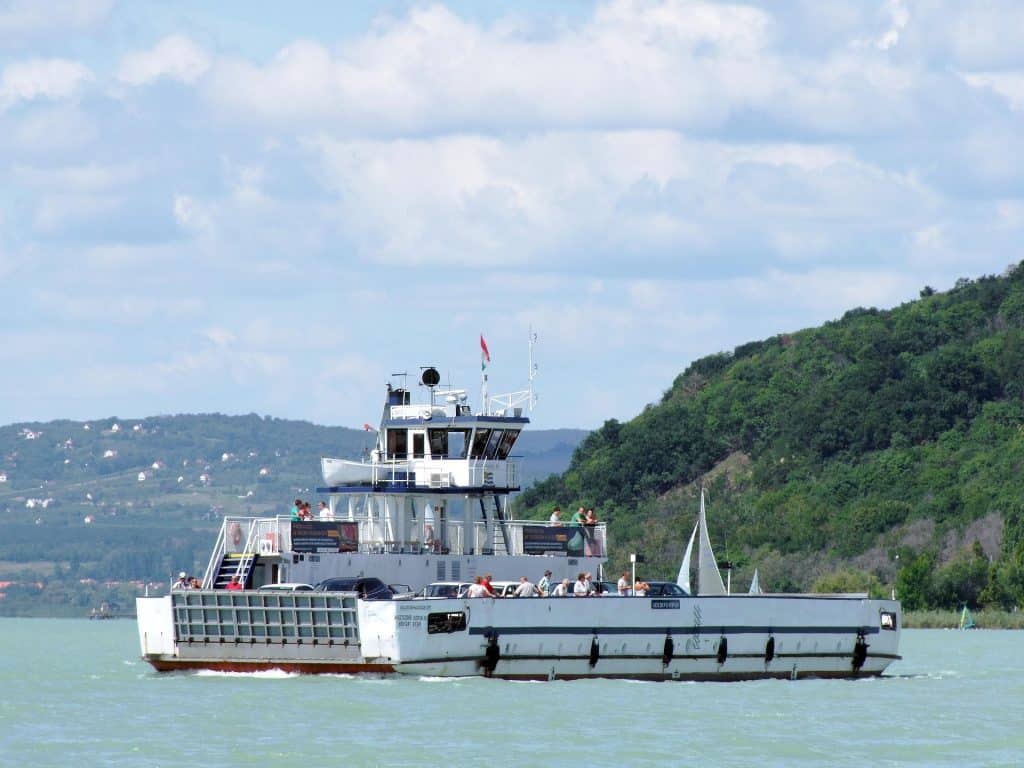
Ferries connect Tihany and Szántód across the lake’s narrowest point during the main season (typically April-October). The 10-minute crossing saves significant driving time when moving between shores. Ferries accommodate cars, bikes, and foot passengers. Service frequency varies by season. For current schedules and fares, check the BAHART ferry operator website before your visit.
North Shore vs. South Shore: Which to Choose
Understanding the differences between Lake Balaton’s two shores determines whether your trip feels perfectly matched to your interests or slightly off.
North Shore: Wine, Culture, and Volcanic Hills
Best for: Wine tourists, cultural travelers, couples, slow travelers, hikers
The north shore rises in volcanic hills where ancient basalt soil creates terroir that produces minerally white wines with character. Historic spa towns maintain 19th-century elegance. Villages feel authentically Hungarian rather than tourist-engineered.
Towns worth your time:
Balatonfüred serves as the north shore’s elegant anchor. The Tagore Promenade stretches along the waterfront lined with plane trees, 19th-century villas, and cafés where you can watch sailboats drift past. The town’s sailing culture dates back generations. Vaszary Villa hosts rotating art exhibitions. The State Hospital of Cardiology, established in 1810, created the spa town tradition that still defines the atmosphere.
Tihany Peninsula juts into the lake like a volcanic fist, crowned by an abbey founded in 1055. The village clustered around the abbey has become touristy (expect crowds during summer and lavender season), but the peninsula’s hiking trails, lavender fields, and volcanic formations justify dealing with fellow visitors. The ferry connection to the south shore makes Tihany a natural stopping point.
Badacsony and surrounding villages (Badacsonytomaj, Badacsonytördemic) form the heart of north shore wine country. Volcanic basalt formations rise dramatically. Wine cellars tunnel into hillsides where families have made wine for generations. This is where serious wine tourists base themselves during harvest season.
Keszthely anchors the western end of the lake with Festetics Palace, one of Hungary’s finest baroque mansions. The town feels more authentically lived-in than resort-focused. The City Beach offers swimming, and nearby Egregy wine cellars provide tasting opportunities. Proximity to Hévíz thermal lake (5 kilometers) makes Keszthely a practical base for combining cultural exploration and thermal wellness.
North shore practicalities:
Accommodation leans upscale with wellness hotels, boutique guesthouses, and family-run pensions. Beach infrastructure exists but focuses less on water slides and party atmospheres. Restaurants emphasize regional cuisine and local wines. The shore feels grown-up, sophisticated, and culturally engaged.
Transport between north shore villages requires more planning. Trains connect major towns but don’t reach smaller wine villages. A car provides maximum flexibility for wine touring.
South Shore: Beaches, Families, and Party Capital
Best for: Families with children, beach-focused vacations, budget travelers, party seekers (Siófok)
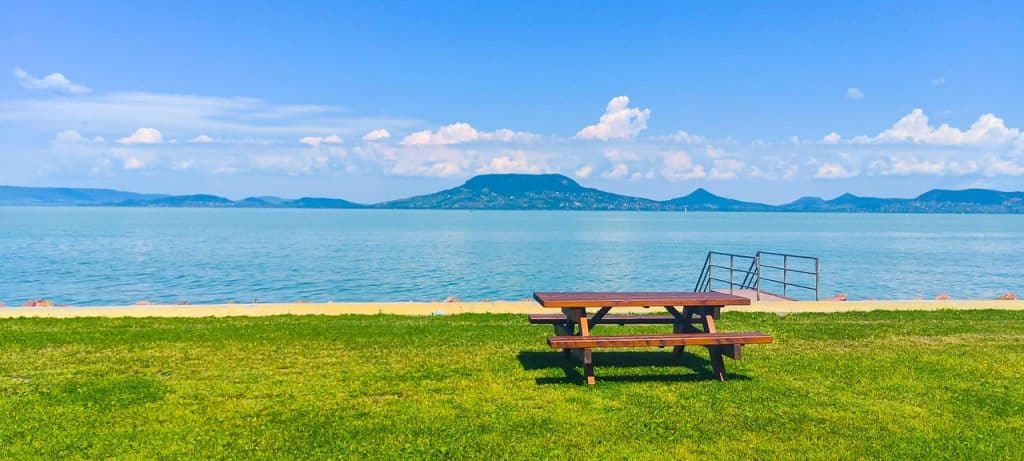
The south shore sprawls flat where water stays shallow for hundreds of meters out. This geography created perfect conditions for family beach tourism. The shore developed accordingly with water trampolines, beach volleyball, snack stands, and in Siófok’s case, clubs that operate until sunrise.
Towns to consider:
Siófok earned the nickname “party capital” for good reason. The town hosts the largest concentration of clubs, beach bars, and late-night energy around Lake Balaton. The Petőfi Promenade stretches along the waterfront lined with restaurants, souvenir shops, and ice cream vendors. Multiple beaches offer swimming, water sports, and beach clubs.
Siófok works brilliantly if you’re seeking nightlife and maximum beach amenities. It can feel overwhelming if you’re looking for quiet charm or cultural depth.
Balatonlelle and Balatonboglár offer family-friendly beaches with shallow water, playgrounds, and more relaxed atmospheres than Siófok. These towns feel traditionally Hungarian rather than international resort destinations.
Zamárdi hosts the annual Strand Festival and provides free beach access, making it popular with budget-conscious travelers. The town maintains a laid-back vibe compared to Siófok’s intensity.
South shore practicalities:
Accommodation includes everything from budget guesthouses to larger resort hotels. Beach infrastructure operates at full capacity during summer with water slides, rental equipment, and extensive food options. The atmosphere skews younger and more party-oriented, particularly around Siófok.
Train connections along the south shore run frequently during summer. The flat terrain makes cycling easy and pleasant.
Top Experiences at Lake Balaton
Tihany Peninsula and Abbey
The Tihany Peninsula remains Lake Balaton’s most iconic destination, where volcanic hills meet Benedictine history and fields turn purple with lavender each summer. The abbey, founded in 1055, sits at the peninsula’s highest point overlooking the lake from every direction.
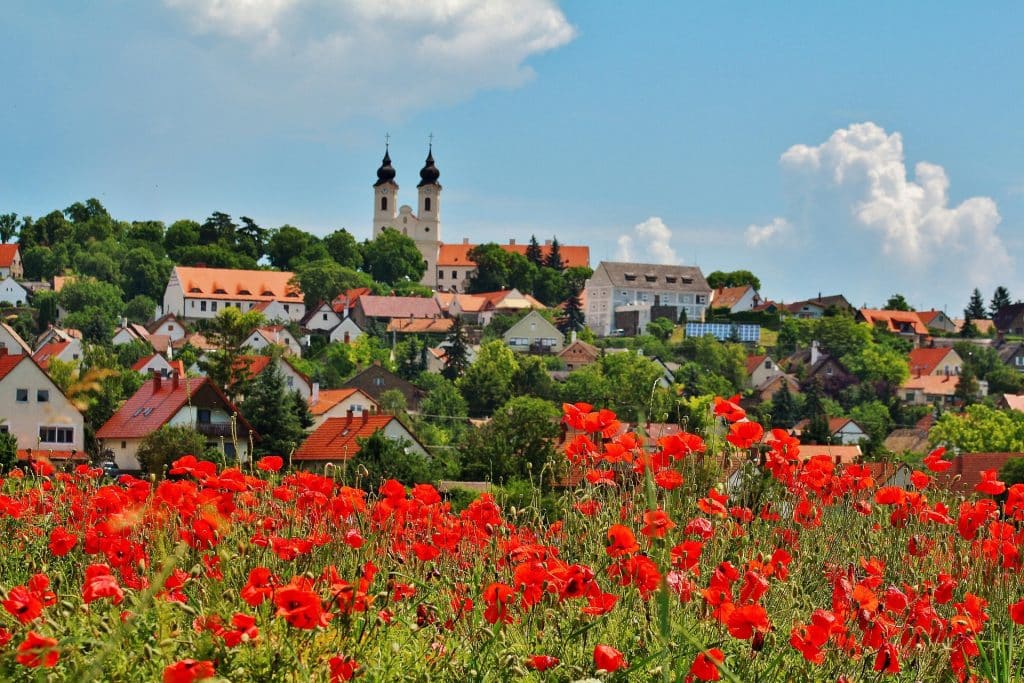
The abbey church’s baroque interior dates to the 18th century, but the crypt below contains the tomb of King Andrew I, who founded the monastery nearly a millennium ago. The church organ, built in 1872, hosts summer concerts. The terrace provides panoramic views across the lake toward Badacsony’s volcanic hills.
The village clustered around the abbey has grown touristy with souvenir shops and restaurants catering to day-trippers. This reality is unavoidable during summer and lavender season. However, the peninsula’s hiking trails, lavender fields (peak bloom July-early August), and geological features justify sharing the space with other visitors.
The peninsula hiking loop covers 8-10 kilometers depending on route variations. The trail passes lavender fields, basalt formations, wetlands, and multiple viewpoints. Spring brings wildflowers and bird migrations. Autumn delivers golden light and empty trails. Budget 3-4 hours for a leisurely walk with photo stops.

Getting there: Ferry from Szántód (10 minutes) or drive/bus from Balatonfüred (20 minutes). The ferry connection makes Tihany easily accessible from the south shore.
For current abbey visiting hours and organ concert schedules, visit the Tihany Abbey official website.
Badacsony Wine Region and Volcanic Hills
Badacsony rises from the north shore like a volcanic monument to terroir. The basalt soil, microclimate created by the lake reflecting sunlight onto south-facing slopes, and winemaking traditions going back centuries create wines that rarely leave the region.
The volcanic formation itself offers hiking trails to the summit (437 meters) where panoramic views stretch across the lake. The stone formations, particularly the basalt columns near Szent György Hill, look almost architectural in their geometric precision. Spring and autumn provide ideal hiking temperatures. Summer trails get busy and hot.

Wine touring strategy:
Visit 2-3 wineries in a day rather than rushing through more. Smaller family cellars offer intimate experiences where winemakers discuss terroir, techniques, and the challenges of working with difficult-to-cultivate varieties like Kéknyelű. Larger professional estates provide polished tours and established infrastructure.
Look for Olaszrizling, Szürkebarát, Kéknyelű, and other whites that thrive in volcanic soil. Red wines also grow here, though the region’s reputation rests on whites.
Many cellars require advance booking, particularly during harvest season. English is spoken at larger estates, less commonly at small family operations. Some basic Hungarian or German helps.
Getting there: Train to Badacsonytomaj station, then walk or taxi to hillside cellars. A car provides maximum flexibility for moving between villages and reaching cellar doors.
Hévíz Thermal Lake
Just west of Lake Balaton, Hévíz hosts the world’s largest swimmable natural thermal lake where geological springs create an experience impossible to replicate elsewhere. The lake maintains 24-36°C year-round, stays biologically active through mineral content and mild natural radioactivity, and supports floating water lilies that blanket the surface.
Winter transforms Hévíz into something otherworldly. Steam clouds rise when air temperatures drop below freezing. Swimming among obscured figures while snow dusts the edges feels like entering a dream. The contrast between warm water and cold air sharpens every sensation.
The lake’s medicinal properties have drawn visitors for over 2,000 years. Romans built baths here. Today’s spa infrastructure includes the lake itself plus surrounding wellness facilities offering mud treatments, massage, and therapeutic services.
Practical details:
Entry fees typically run around €15-25 depending on time spent and additional services, expect from about €8 for a basic 2‑hour ticket, up to roughly €20–25 for longer stays or packages, and always check the official website for current prices. It’s essential to check the Hévíz Spa Lake official website for current admission prices, opening hours, and any medical contraindications before visiting. Bring water shoes as the lake bottom can be muddy. Swimming time limits of approximately 30-40 minutes are recommended due to thermal effects. The facility is open year-round and includes changing facilities and lockers.
Getting there: Bus from Keszthely (5 kilometers, 15 minutes) or drive. Parking available near lake entrance.
Balatonfüred and the Tagore Promenade
Balatonfüred maintains the elegant spa-town atmosphere that developed when 19th-century nobility came to take the waters. The Tagore Promenade stretches along the waterfront for over a kilometer, lined with plane trees, historic villas, and cafés where you can watch sailboats drift past.

The town’s sailing culture remains strong. Hungary’s oldest yacht club, founded in 1867, operates from the harbor. Summer brings regattas and races. The sailing school offers courses for beginners.
Vaszary Villa, a 19th-century mansion turned art gallery, hosts rotating exhibitions focusing on Hungarian artists. The State Hospital of Cardiology, established in 1810, created the medical spa tradition. Its mineral spring pavilion still operates where visitors can taste the medicinal waters.
The town beach offers swimming and water sports during summer. The atmosphere skews sophisticated rather than party-focused. Balatonfüred works well as a base for exploring the north shore by combining cultural attractions, lakefront relaxation, and easy access to Tihany and Badacsony.
Keszthely and Festetics Palace
Keszthely anchors Lake Balaton’s western end with one of Hungary’s finest baroque palaces. The Festetics family completed the palace in 1745, expanded it through subsequent generations, and filled it with rococo furnishings, a library containing over 86,000 volumes, and art collections that rival Budapest’s finest museums.

The palace tour takes 2-3 hours covering state rooms, the baroque chapel, the Helikon Library with its hand-carved furnishings, and galleries displaying the family’s art collection. The English-style park surrounding the palace invites walking and provides lake views.
The town itself feels more authentically lived-in than resort-focused. The pedestrianized main street (Kossuth Street) offers cafés, restaurants, and shops catering to locals and visitors equally. The City Beach provides swimming access during summer.
Keszthely’s proximity to Hévíz thermal lake (5 kilometers) makes it a practical base for combining cultural exploration and thermal wellness without staying in Hévíz’s more spa-focused atmosphere.
Practical details:
Palace admission typically runs around €8-12 for adults, with audio guides available in multiple languages. The park entrance is free. Combined tickets with nearby attractions are sometimes available. Budget 2-3 hours for the palace and 30-60 minutes for exploring the park. For current opening hours, exhibition schedules, and admission prices, check the Festetics Palace official website before your visit.
Practical Planning Information
Accommodation Options and Budget Reality
Budget (€15-25/night per person):
Hostels exist in major towns but less commonly than in Budapest. Private rooms and panzió (guesthouses) offer better value. Expect basic but clean accommodations, often with shared bathrooms. Breakfast may or may not be included.
Mid-range (€30-60/night per person):
This category dominates Lake Balaton’s accommodation landscape. Family-run pensions, smaller hotels, and vacation apartments provide comfortable rooms, typically with breakfast included. Many have swimming pools. Standards vary widely, so read recent reviews carefully.
Upscale (€150-240/night):
Four and five-star wellness hotels concentrate around Hévíz and Balatonfüred. Anna Grand Hotel (Balatonfüred) and Lotus Therme Hotel & Spa (Hévíz) offer premium accommodations with thermal pools, spa services, and upscale dining.
Best bases for different interests:
- Wine touring: Badacsony or Balatonfüred
- Cultural travelers: Keszthely, Tihany, Balatonfüred
- Thermal wellness: Hévíz
- Party seekers: Siófok
- Peace and quiet: Smaller north shore villages (Örvényes, Csopak)
Food and Dining: Budget Reality and Regional Specialties
Regional specialties to try:
Halászlé (fisherman’s soup) is blazing red with hot paprika, made with river fish, served searingly hot. This is Hungary’s contribution to the world’s great fish soups, and Lake Balaton’s proximity to the Danube and its own fish populations make this the place to try it properly prepared.

Fresh Balaton fish appears grilled or fried, served with nokedli (small dumplings). Expect fogas (pike-perch), ponty (carp), and harcsa (catfish) depending on season and restaurant.
Lángos is essential Hungarian beach food: deep-fried dough topped with garlic water, sour cream, and grated cheese. Once a budget staple, lángos now costs approximately €6-7.50 but remains worth experiencing at least once during your visit.
2026 pricing expectations:
Current pricing trends suggest the following ranges, though it’s wise to budget slightly higher:
- Lángos with toppings: Around €6-7.50
- Grilled fish: Approximately €10-11.30
- Sit-down restaurant meal: Roughly €11.30-12.50+ per person
- Beer: Around €3.80-4.80
- Wine spritzer/cocktail: Approximately €5-8.80
North shore generally offers better quality and more interesting options. Mandilla (Köveskál) creates Tuscan-Mediterranean atmosphere with exceptional food. Balaton Restaurant and Taverna (both Balatonfüred) execute traditional Hungarian dishes well. Pántlika Bistro (Csopak) does excellent Neapolitan pizza paired with local wines.
Money-saving strategies:
- Bring picnic supplies for beach days (the single biggest food cost saver)
- Afternoon/off-peak dining for discounts
- Shop local markets for self-catering supplies
Understanding European dining hours helps you plan meals efficiently and avoid closed-kitchen frustrations. Also familiarize yourself with tipping etiquette in Europe to understand expected gratuities at Lake Balaton restaurants.
Currency, Cash, and Language Essentials
Hungary uses the Hungarian Forint (HUF), not the Euro. Exchange rates fluctuate, but as a planning guideline, expect approximately 390-400 HUF = €1 when budgeting for 2026. Always check current rates closer to your travel dates.
Cards vs. Cash: Contactless payment works throughout cities. Carry cash (10,000-20,000 HUF / approximately €25-50) for small museums, market vendors, and paid toilets (200-300 HUF per use).
ATM strategy: Use bank-affiliated ATMs (OTP Bank, K&H, Erste Bank). Avoid Euronet ATMs entirely. They use predatory exchange rates that cost 10%+ compared to bank ATMs. When prompted to “accept conversion,” always decline and choose HUF.
English proficiency is common in tourist areas but drops significantly in smaller villages and among older generations. German is widely spoken, particularly in the north shore wine region where German tourists have visited for decades.
Essential phrases:
- Hello: Szia (informal) or Jó napot (formal)
- Thank you: Köszönöm
- Please: Kérem
- Cheers: Egészségedre
When to Book Your Trip
Summer (July-August):
- Accommodation: 2-3 months ahead
- Lavender Festival period in Tihany: 4-6 weeks minimum
- Restaurant reservations: Not typically needed except upscale establishments
Shoulder seasons (May-June, September):
- Accommodation: 2-4 weeks generally sufficient
- Activities: 1-2 weeks ahead
Winter:
- Last-minute bookings often possible with better rates
Sample Itinerary: 3-4 Days North Shore Cultural Focus
Day 1: Balatonfüred Arrival
Morning arrival from Budapest (train 1-2 hours). Check into your hotel. Spend the afternoon exploring Balatonfüred: extended walk along the Tagore Promenade, visiting Vaszary Villa galleries if exhibitions interest you, relaxing at a café watching sailboats drift past. Evening wine tasting at a local wine bar paired with Lake Balaton fish dinner.
Day 2: Tihany Deep Dive
Morning ferry to Tihany, arriving when the abbey opens. Spend 1-2 hours at the abbey and terrace. Late morning walk through lavender fields (if season is right). Lunch in the village. Afternoon hiking the peninsula loop trail (8-10 km) or shorter walk to Echo Hill. Sunset from the abbey terrace. Return to Balatonfüred for dinner.
Day 3: Badacsony Wine Region
Drive or take bus to Badacsony village. Spend the day visiting 2-3 wineries, mixing professional estates and small family cellars. Lunch at one winery. Afternoon hike to Szent György Hill basalt formations if not wined-out.
Optional Day 4: Keszthely
Explore Festetics Palace (2-3 hours), stroll the palace park, spend the afternoon at City Beach or visit Egregy wine cellars before evening return to Budapest or onward travel.
Frequently Asked Questions
Is Lake Balaton worth visiting outside summer?
Absolutely, particularly if your interests lean toward wine, thermal wellness, or authentic cultural experiences rather than beach-focused vacations. Autumn delivers wine harvest season with golden light and empty trails. Spring offers ideal cycling and hiking conditions with 30-40% cheaper accommodation. Winter provides otherworldly thermal experiences at Hévíz.
What is the best time to visit Lake Balaton and is it expensive?
Visit Lake Balaton in September for wine harvest or June-August for swimming (23-26°C). In 2026, budget roughly €88-100 daily for a family of four, with lángos now costing €6-7.50. Choose the north shore for wine and culture, or the south shore for shallow beaches and nightlife.
How many days do I need at Lake Balaton?
A minimum of 3-4 days allows you to experience the lake without rushing. One week lets you explore both shores, dive deeper into wine touring, and combine cultural attractions with relaxation. Weekend trips from Budapest work for single-destination visits (Balatonfüred, Tihany, or Hévíz).
Which shore should I choose, north or south?
Choose the north shore for wine touring, cultural attractions, elegant spa towns, and sophisticated atmospheres. Choose the south shore for family-friendly beaches, shallow swimming, and if you’re seeking Siófok’s nightlife. The shores deliver completely different experiences.
Is Lake Balaton good for families with young children?
The south shore is specifically designed for families with shallow water extending hundreds of meters out, making it safe for young swimmers. The north shore works less well for beach-focused family vacations but offers cultural attractions and wine touring for families with older children.
How expensive is Lake Balaton in 2026?
Lake Balaton is no longer budget-friendly but remains reasonable compared to Western European standards. Expect approximately €30-35 per person nightly for mid-range accommodation, €6-7.50 for lángos, €11.30-12.50 for sit-down restaurant meals, and €4-6.50 for beach admission. Budget roughly €88-100 daily per family of four for beach days including admission, lunch, and snacks.
Can I visit Lake Balaton as a day trip from Budapest?
Technically possible but not recommended. Train travel takes 1-2 hours each way, leaving limited time to experience the lake meaningfully. Consider staying at least 2-3 nights to justify the journey.
What’s the best base for wine touring?
Badacsony or nearby villages put you at the heart of north shore wine country. Balatonfüred works well if you want to combine wine touring with cultural attractions and lakefront elegance. A car provides maximum flexibility for reaching hillside cellars.
Does Lake Balaton freeze in winter?
Rarely in recent years due to climate change. The lake froze regularly through the 1990s, but complete freezing has become uncommon. The last major freeze was 2017. When it happens, skating on the frozen lake becomes a community celebration. Balatonfüred’s ice rink provides guaranteed skating even when the lake doesn’t freeze.
Do I need to speak Hungarian to visit Lake Balaton?
No, but the language landscape varies significantly between resort towns and rural villages. In major tourist centers like Balatonfüred, Siófok, Tihany, and Keszthely, English is widely spoken at hotels, restaurants, and attractions. German is even more common, particularly on the north shore where German tourists have visited for decades. In smaller wine villages and rural areas, English proficiency drops significantly, though younger generations generally know some English. Basic Hungarian phrases help everywhere, and locals appreciate the effort. Most restaurant menus in tourist areas include English or German translations. For wine cellar visits in smaller villages, having some German or booking through your accommodation (who can help with translation) smooths the experience considerably.
Lake Balaton: An Inland Sea for All Seasons
Lake Balaton rewards travelers who see beyond the summer beach stereotype. Stand in a volcanic vineyard in October watching the harvest, or float in Hévíz’s steaming thermal waters while February snow falls, and you’ll understand why Hungarians have returned to this inland sea for generations.
The lake’s character transforms with the seasons as dramatically as vineyard colors shift. Summer brings energy and full infrastructure. Spring offers lavender blooms and solitude. Autumn delivers wine harvest and golden light. Winter provides thermal refuge. None is wrong. Each appeals to different travelers seeking different experiences.
Whether you base yourself on the elegant north shore with its wine cellars and cultural towns, or the family-friendly south shore with shallow beaches and party capital, Lake Balaton delivers: an inland sea where every season brings its own rewards.
For deeper exploration of Hungary’s thermal culture, wine regions, and authentic cultural experiences, explore the comprehensive Hungary travel guide. Or plan your broader Central European journey with information on getting around Central and Eastern Europe by train, bus, and rental car, creating the kind of travel that changes how you think about a region.
Related Guides on PieterOnTour.com:
- Budapest First-Timer’s Guide: Logistics, Costs & Secrets
- Budapest’s Castle District: A Journey Through Hungarian History
- 10 Authentic Cultural Experiences in Central Europe (That Aren’t Tourist Traps).
- Central & Eastern Europe Travel The Ultimate Guide for Culturally Curious Travelers.
- Central Europe’s Seasonal Calendar Best Times to Visit (Beyond Christmas Markets).
- Central & Eastern Europe Travel: The Ultimate Guide for Culturally Curious Travelers
- Getting Around Central & Eastern Europe Trains, Buses, and Rental Cars.
- How Much Does a Trip to Central Europe Cost A Realistic Budget Guide.