
Hungary Travel: The Definitive Guide for Culturally Curious Travelers
Updated 1/1/2026
This guide is for travelers who want to experience Hungary beyond the iconic Parliament building—covering the country’s diverse regions, authentic cultural experiences, practical travel wisdom, and insider perspectives from two decades of leading tours through everything from Tokaj’s ancient wine cellars to the steaming thermal waters of Hévíz.
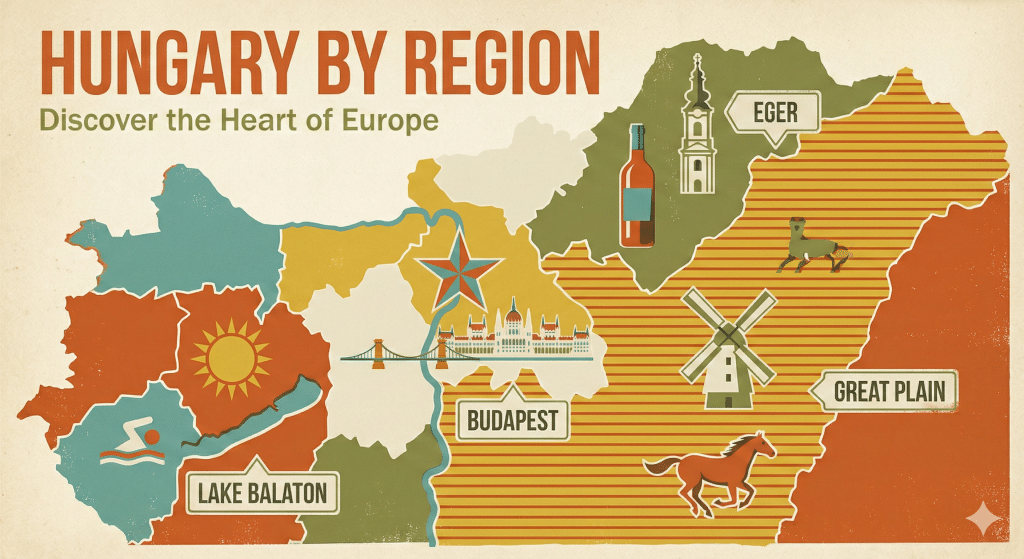
Hungary surprises almost everyone who visits. Most travelers arrive expecting Budapest’s grandeur, and while the capital delivers on every promise, the rest of the country offers something completely different. There’s an earthier magic here that reveals itself slowly: thermal water bubbling up from over a thousand natural springs, Lake Balaton stretching like an inland sea across the countryside, and the Great Plain extending to the horizon with stories of cowboys and rebels written into every mile.
What I’ve learned after countless visits is that Hungary rewards you for slowing down. This isn’t a place for ticking boxes on a sightseeing list. It’s about sitting in a thermal bath until your muscles forget they were ever tense, spending an afternoon learning the subtle differences between Kadarka and Kékfrankos wines in a cellar that’s been family-run for generations, or fumbling through your first attempt at köszönöm and watching someone’s face light up because you tried.
A quick note on planning: Hungary generally offers better value than its Western European neighbors, though recent inflation has been real. I’ve included 2026 budget estimates throughout this guide, but prices and opening hours change frequently. I always recommend checking the official websites (which I’ve linked) for the most current information before your visit.

Why Hungary Deserves More Than a Weekend
What Makes Hungary Special
Thermal Culture as Lifestyle: This isn’t tourism, it’s how Hungarians actually live. From Budapest’s palace-like bathhouses to natural cave pools in Miskolc, the thermal tradition runs deeper than anywhere else in Europe.
The Wine Renaissance: Twenty-two distinct wine regions producing world-class bottles that rarely leave the country. The locals drink the good stuff before it can be exported, which tells you everything you need to know.
Living Folk Traditions: In villages like Hollókő, traditional crafts aren’t museum pieces—they’re part of daily life. Women still embroider using patterns their great-grandmothers taught them.
Architectural Time Travel: Art Nouveau masterpieces stand blocks away from Ottoman minarets converted into churches and Habsburg palaces. Every era left its mark, and nothing got bulldozed to make room for modernity.
Premium Experiences at Human Prices: Opera tickets, fine dining, spa treatments—experiences that cost a fortune in Vienna or Paris are surprisingly accessible here. Quality hasn’t been compromised by affordability.
For detailed information about Hungarian Food read my guide to Traditional Hungarian Cuisine: From Gulyás to Lángos and Everything Between
On this page
Hungary by Region: Beyond the Capital
Budapest is the heart, absolutely. But the country’s soul lives in the regions, each with its own character and stories.
Budapest: Where History Lives on Both Sides of the River
The Perfect 2-Week Central Europe Itinerary: Vienna, Prague, Kraków & Budapest
The Danube splits the capital into two distinct personalities. Buda rises in gentle hills, medieval charm filling the castle district‘s winding streets. Pest sprawls across the flatlands with grand boulevards, eclectic energy, and the ruin bars that made Budapest famous among travelers half my age.
Don’t Miss: A sunset cruise when Parliament glows gold against the darkening sky. The Art Nouveau curves of Gellért Baths. The House of Terror Museum, which isn’t easy to visit but matters deeply.
Insider Perspective: Skip Váci utca for meals. It’s tourist central. In general I would say, head instead to Raday utca or deeper into the Jewish Quarter where locals actually eat and the food tastes like someone’s grandmother approved the recipe. However, over the years Ráday utca has started to fade in popularity compared to Bartók Béla út (Buda side) or the Palace District (Pest).
To find out more read my Budapest First-Timer’s Guide: Logistics, Costs & Secrets
Lake Balaton: Central Europe’s Inland Sea
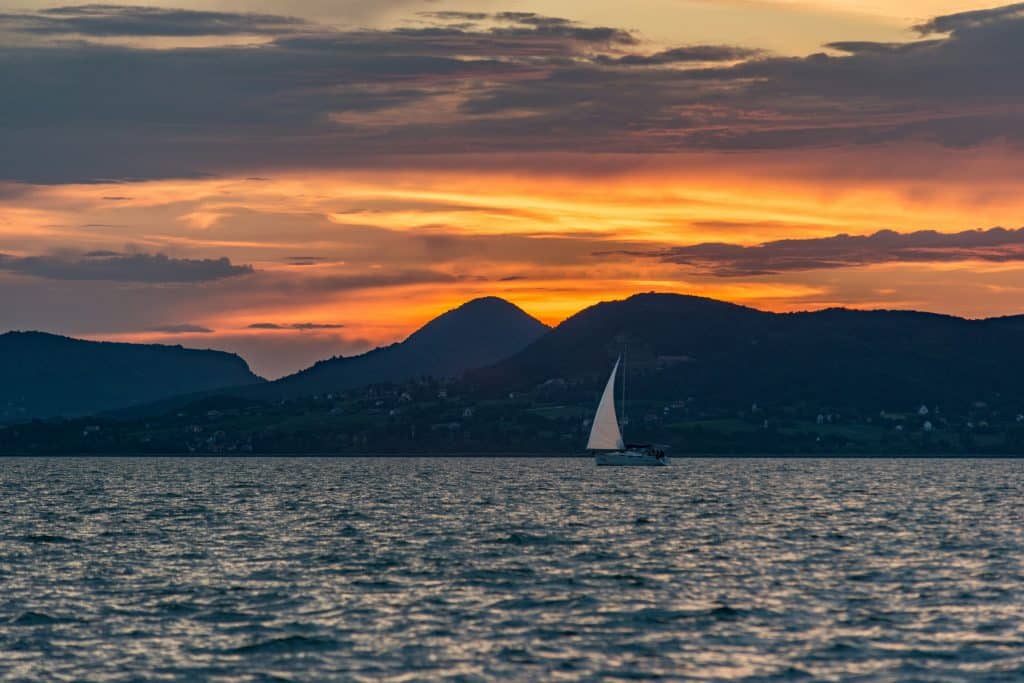
An hour southwest of Budapest, Central Europe’s largest freshwater lake stretches across the landscape like someone dropped the Mediterranean into Hungary.
North Shore Character: Hills, history, and aristocratic vibes. Tihany Abbey commands views that have stopped travelers in their tracks for centuries, surrounded by lavender fields that bloom purple in summer. Balatonfüred still feels like the 19th-century resort town it was, when Habsburg nobles came to take the waters.
Wine and Castles: Badacsony’s volcanic soil produces whites that surprise wine lovers who thought they’d tasted everything. Just up the road, the Festetics Palace in Keszthely rivals anything you’ll find in Vienna, but without the Vienna crowds.
Something Unique: Near the lake’s western tip, Hévíz hosts the world’s largest biologically active natural thermal lake. You can swim among floating water lilies even when snow dusts the surrounding hills.
Northern Hungary: Where Wine Meets History
For anyone who loves wine or history—especially both—this region isn’t optional.
Eger: A baroque jewel that stopped the Ottoman advance at its castle walls. The town produces Egri Bikavér, “Bull’s Blood,” a red blend with a warrior’s name and a gentleman’s taste. Walk down into the Valley of the Beautiful Women where dozens of wine cellars tunnel into the hillside, each one family-run, each pouring something slightly different.
I remember one afternoon in a cellar run by an elderly couple who spoke maybe ten words of English between them. They poured us samples of five different reds, explained nothing verbally, but watched our faces as we tasted. When we reacted to the third wine—a single-vineyard Bikavér with unexpected spice—the husband nodded and poured us proper glasses. We stayed for an hour, communicating mostly through gestures and appreciation. That’s how wine works in Eger.
Tokaj: UNESCO protects this wine region for good reason. It’s the world’s oldest classified wine region, and the sweet Aszú wine they make here earned Louis XIV’s famous praise: “the wine of kings, the king of kings.” The tradition goes back centuries, the methods haven’t changed much, and the results still astound.
Miskolctapolca: The Cave Bath here offers something remarkable when it’s open—floating through natural limestone passages formed over millennia. Important note: This bath has faced seasonal closures in recent years due to reconstruction following a 2024 fire. Always verify current operating status on the official Miskolctapolca Cave Bath website before making plans to visit.
The Great Plain and Southern Hungary
The vast Puszta defines something essential about the Magyar spirit—something about freedom, horizon, and belonging to land that stretches forever.
Hortobágy National Park: Watch the csikós (Hungarian cowboys) perform equestrian stunts that look impossible until you see them done. The Grey Cattle here are iconic, massive, and surprisingly calm around all the attention. For more information and current visiting details, check the official Hortobágy National Park website.
Szeged: They call it the City of Sunshine, famous for spicy fish soup that’ll clear your sinuses, the paprika that gives Hungarian food its character, and Art Nouveau architecture that includes the stunning Reök Palace.
Pécs: Down in the southwest, this city layers cultures like geological strata. Roman ruins including a UNESCO-listed necropolis sit beneath Turkish mosques that became churches after the Ottomans left. Every building tells a story about who lived here and what they left behind.
Authentic Cultural Experiences Worth Seeking
10 Authentic Cultural Experiences in Central Europe (That Aren’t Tourist Traps)
These moments define a Hungarian journey more than any monument ever could:
Soak in a Thermal Bath: This is the great equalizer in Hungarian culture. Széchenyi in Budapest is iconic, deservedly so. But Rudas, with its Ottoman-era architecture and steam-filled domes, offers something more atmospheric—like stepping through time into a scene from another century.
Discover a Ruin Bar: Unique to Budapest, these bars occupy pre-war buildings that survived destruction but not modernity. Furnished with mismatched chairs, strange art, and plants growing where bathrooms used to be. Szimpla Kert pioneered the concept, but Anker’t and Mazel Tov each offer different atmospheres worth exploring.
Join a Táncház (Dance House): This isn’t a performance staged for tourists. It’s where locals gather casually to learn traditional folk dance steps, usually in a community center or cultural house. The energy is vibrant, the music is loud, and everyone’s welcome regardless of skill level.
Experience Busójárás Carnival: If February brings you to Hungary, make your way to Mohács. Locals don frightening wooden masks and sheepskin coats to scare away winter in a UNESCO-recognized tradition that’s chaotic, ancient, and completely unforgettable. Dates vary from year to year so check www.mohacsibusojaras.hus before traveling.
Hungarian Gastronomy: Beyond the Tourist Menu
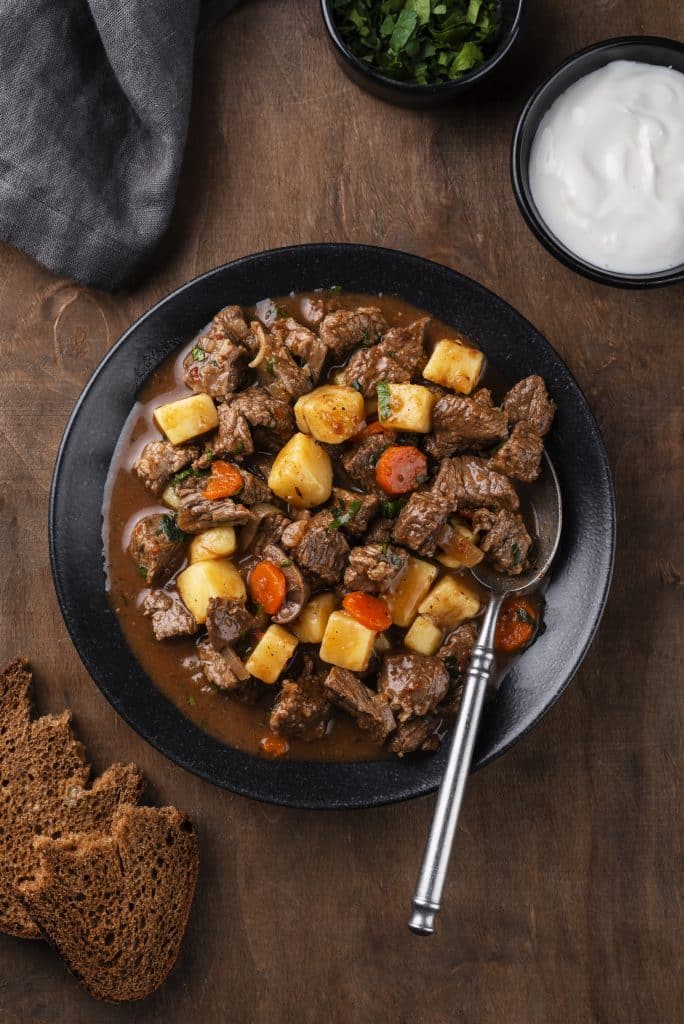
Hungarian cuisine is soulful and unapologetic—rich, spicy, and designed by people who worked physically demanding lives and needed food that could sustain them.
Pörkölt: What the world often mistakes for goulash is actually this: thick, rich meat stew served with nokedli dumplings. Real Gulyás is a soup, lighter and more broth-based.
Halászlé: Fisherman’s soup blazing red with hot paprika, made with river fish and strong opinions. Szeged and Baja have rival versions—locals will debate which is superior. Try both and form your own allegiance.
Lángos: The ultimate Hungarian street food. Deep-fried dough topped with garlic water, sour cream, and grated cheese. Best eaten fresh at a market hall while it’s still hot enough to burn your tongue slightly.
Sweets: Dobos Torte layers sponge cake with chocolate buttercream under a caramel top that cracks like glass. Kürtőskalács (chimney cake) is mandatory at Christmas markets—sweet dough wrapped around a cylinder, baked over open fire, rolled in cinnamon sugar while still warm.
Practical Travel Details for Hungary
Getting Around Central & Eastern Europe: Trains, Buses, and Rental Cars
By Train
The national railway, MÁV, centers everything on Budapest like spokes on a wheel. InterCity trains are reliable and comfortable for reaching Eger, Szeged, or Debrecen. The MÁV app works well for foreign travelers—buying tickets on your phone is straightforward once you’ve done it once.
Note: IC trains usually require seat reservations. The app handles this automatically when you book.
By Bus
Volánbusz coaches fill the gaps where trains don’t go, especially useful for smaller villages in the Matra mountains or around Lake Balaton where the train routes thin out.
Currency and Payment
How Much Does a Trip to Central Europe Cost? A Realistic Budget Guide
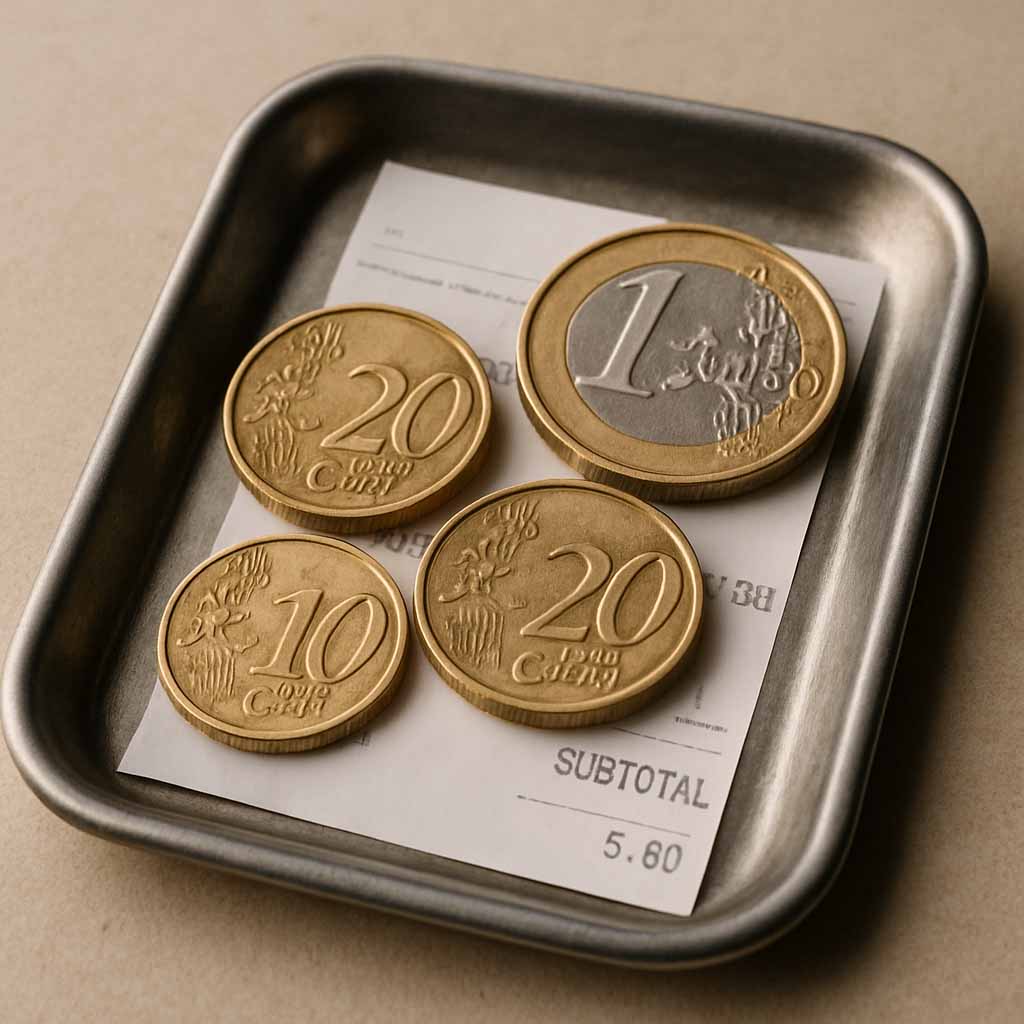
Hungary uses the Hungarian Forint (HUF), not the Euro, despite being an EU member.
Card versus Cash: Contactless payment works everywhere in cities. But you must carry cash for small rural museums, market vendors, and paid toilets (budget around 300-400 HUF per use).
Exchange Warning: Never exchange money at the airport or use Euronet ATMs—their rates are predatory. Use bank-affiliated ATMs and always decline the conversion offer when prompted. Let your home bank handle the exchange rate and you’ll save 10% or more.
Language Essentials
Magyar is famously difficult. It’s not related to any Slavic or Germanic language, making even basic phrases a challenge for most travelers.
- Hello: Szia (informal, sounds like “see-ya”) or Jó napot (formal)
- Thank you: Köszönöm (roughly “KUR-sur-nuhm”)
- Cheers: Egészségedre (good luck—it sounds approximately like “egg-ess-shay-ged-reh”)
When to Visit Hungary
Spring (April through May): Budapest Spring Festival fills the city with performances while mild weather makes walking comfortable. The city parks explode with blossoms, and café terraces open for the season.
Summer (June through August): Hot and lively. Lake Balaton operates at full capacity, and Sziget Festival transforms Budapest into one massive party for a week.
Autumn (September through October): My personal favorite. The harvest season in Tokaj and Eger feels magical—watching grapes come in, tasting the first pressings. Hiking in the Bükk mountains with fall foliage painting everything gold and crimson is spectacular.
Winter (November through December): Christmas markets here rival Vienna’s but cost less and feel more authentic. Thermal baths are especially wonderful when you’re sitting in steaming water while snow falls around you.
Frequently Asked Questions
How much should I budget per day in Hungary?
For mid-range travel in 2025, expect approximately 45,000–60,000 HUF ($120–$160) daily. This covers accommodation, meals at decent restaurants, museum entries, and local transport. Budget travelers can manage on less; luxury travelers will spend considerably more.
Do I need to speak Hungarian?
Not essential, especially in Budapest and tourist areas where English is common. But learning a few basic phrases improves your experience dramatically. Hungarians appreciate the effort, even if your pronunciation is terrible.
Is Hungary safe for solo travelers?
Generally very safe. Standard city precautions apply in Budapest (watch for pickpockets in crowded tourist areas), but violent crime against tourists is rare. The countryside feels remarkably safe.
Can I drink the tap water?
Yes, tap water throughout Hungary is safe and typically good quality. No need to buy bottled water unless you prefer it.
What is the etiquette for thermal baths regarding clothing and nudity?
Most public thermal baths in Hungary require swimwear in all areas—men and women bathe together in swimsuits. However, some traditional baths have gender-segregated days or sections where nudity is expected (often on specific weekdays). Always check the specific bath’s website beforehand. At major tourist baths like Széchenyi and Gellért, swimwear is mandatory throughout. Bring a towel, flip-flops, and consider a swim cap—some pools require them.
How far in advance should I book thermal baths?
Major Budapest baths like Széchenyi and Gellért don’t require advance booking most of the year, though weekends get crowded. Booking online also saves time in queues.
Are Hungarian trains reliable?
InterCity trains are generally reliable and comfortable. Local trains can be older and slower. The MÁV app shows real-time updates if delays occur, which helps with planning connections.
Should I tip in Hungary?
Tipping Etiquette in Europe: Your Essential Guide to Gratuity Customs Across the Continent
Yes, tipping 10-15% is standard in restaurants. Service charge isn’t automatically included, so tipping is expected unless service was genuinely poor. However, In Budapest, a 10–12.5% szervizdíj (service charge) is now automatically included in most restaurants. Check your bill for ‘szervizdíj’ before tipping to avoid paying twice. Round up for taxi drivers and leave small tips for hotel staff.
What’s the best way to see Lake Balaton without a car?
Trains run along the southern shore with good connections. Buses cover the northern shore more comprehensively. Many visitors base themselves in one town (Tihany or Balatonfüred work well) and take day trips from there
Closing Invitation
Hungary offers the kind of travel that changes how you think about a place. It’s not just about what you see, but what you taste, feel, soak in (literally), and carry home in your memory long after the photos fade.
If you’re ready to explore more of Central Europe’s hidden depths and authentic cultural experiences, you’ll find comprehensive guides and itineraries at Pieterontour.com—where every journey is designed around genuine connection rather than just crossing destinations off a list.
Related Guides on PieterOnTour.com:
- 10 Authentic Cultural Experiences in Central Europe (That Aren’t Tourist Traps).
- Central & Eastern Europe Travel The Ultimate Guide for Culturally Curious Travelers.
- Central Europe’s Seasonal Calendar Best Times to Visit (Beyond Christmas Markets).
- Central & Eastern Europe Travel: The Ultimate Guide for Culturally Curious Travelers
- Getting Around Central & Eastern Europe Trains, Buses, and Rental Cars.
- How Much Does a Trip to Central Europe Cost A Realistic Budget Guide.
- Budapest’s Castle District: A Journey Through Hungarian History
- Budapest First-Timer’s Guide: Logistics, Costs & Secrets