
Warsaw Unmasked: From Rubble to Europe’s Rising Star
This post is for travelers exploring Central Europe who want to understand how Warsaw transformed from WWII devastation into one of the continent’s most dynamic cities—and why it deserves a place alongside Budapest and Prague on your itinerary.
Warsaw isn’t a city you casually “add on” to a Central Europe trip. It is the story. Flattened in 1944 and written off as a lost cause, Poland’s capital has reinvented itself as one of Europe’s most underrated powerhouses. While Budapest charms with its thermal baths and Prague dazzles with its Gothic spires, Warsaw surprises with something different: a rebuilt Old Town hiding a tragic backstory, a booming skyline that rivals Western Europe, and a quality of life that keeps climbing international rankings.
If you’re already considering Hungary for your next adventure, let me show you why Warsaw deserves to share the stage.

From 85% Ruin to UNESCO Miracle
The Destruction: A City Erased on Purpose
Warsaw wasn’t just bombed in wartime chaos. It was systematically annihilated. After the 1944 Warsaw Uprising, Nazi Germany destroyed roughly 80 to 90 percent of the city’s buildings, including about 85 percent of the historic center. Tens of thousands died. Entire districts were dynamited block by block.
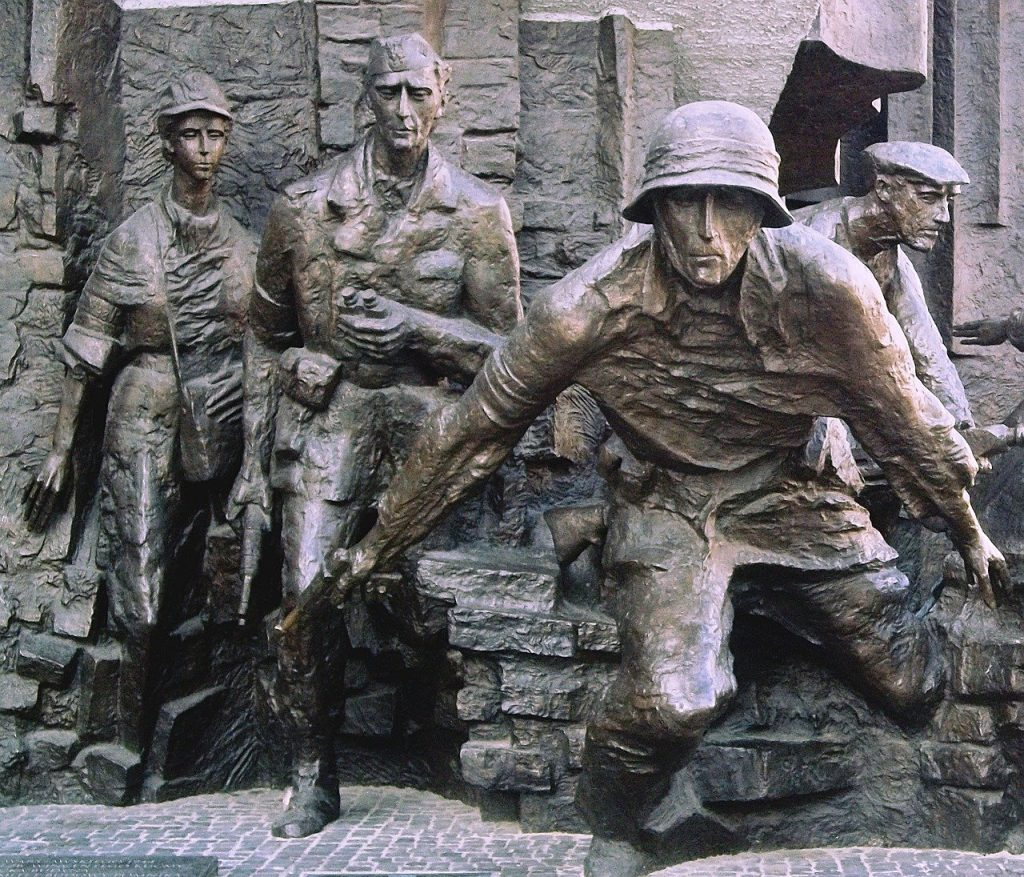
Walk around today and it’s hard to believe most of what you see is younger than many of the people strolling past you.
The Secret Blueprints of Resistance
The miracle of Warsaw’s rebirth began before the ruins cooled. During the occupation, Polish architects and historians secretly documented facades, street plans and architectural details, risking their lives to preserve the soul of the city on paper. After the war, they used archival photographs, historic maps and 18th-century paintings by Bernardo Bellotto to reconstruct entire streets and squares as they were and where they were.
Rebuilding the Old Town: A Global One-Off
The Warsaw Reconstruction Office, established in 1945, led a rebuilding effort on a scale the world had never seen. Within about 15 years, the Old Town was painstakingly reconstructed down to crooked alleyways and pastel facades. The Royal Castle took longer, finally completed in the 1980s, but today it anchors Castle Square as if it had always been there.

UNESCO took notice. In 1980, Warsaw’s Historic Centre earned World Heritage status, not because it’s original, but because it represents the best example of a meticulously reconstructed historic city core. It stands as a monument to cultural resilience and national will.
When you stand in the Old Town, you’re not just admiring charming cobblestones. You’re literally walking through a recreated memory.
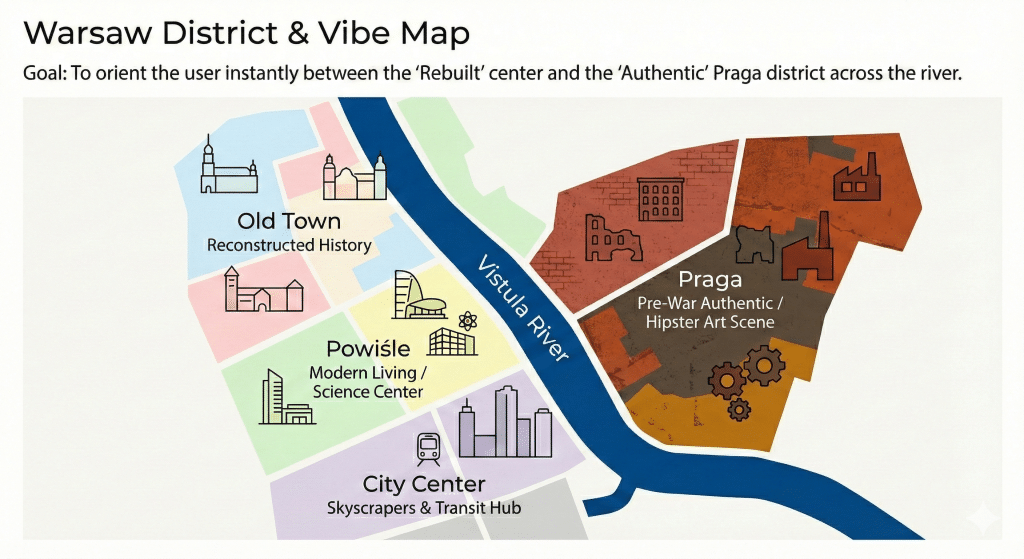
Warsaw Today: The Boom Behind the Skyline
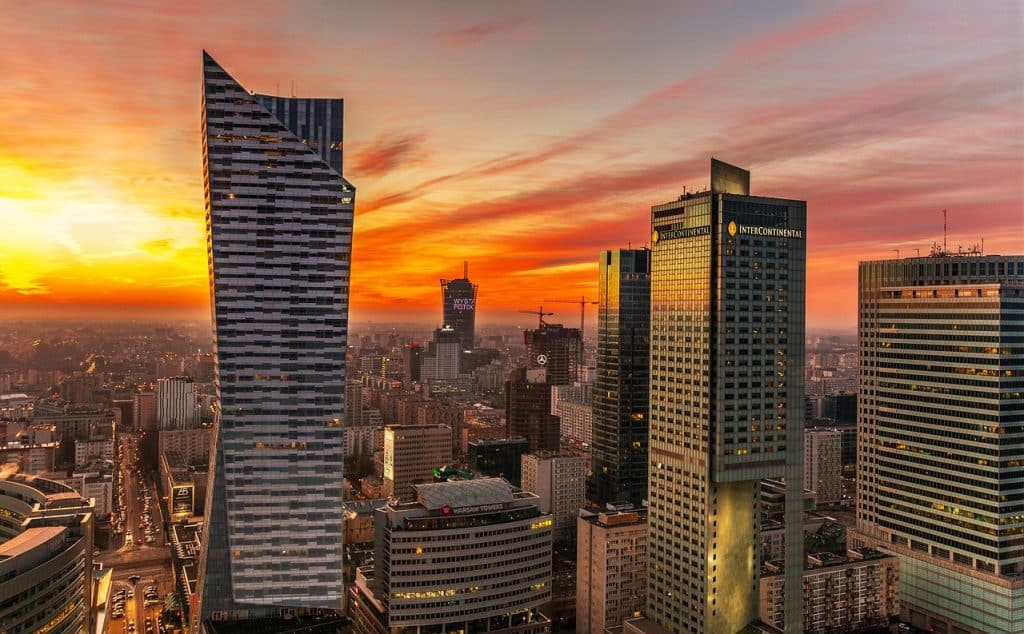
Fast-forward to now, and Warsaw has swapped rubble for glass, concrete and ambition. The skyline bristles with high-rises and modern office towers, tangible proof that this is no museum city.
Economic Engine of a Rising Poland
Poland is one of Europe’s growth stories, and Warsaw is its beating heart. Recent years have brought robust GDP growth in the 3 to 3.5 percent range, Warsaw ranked among the fastest-growing European cities in economic forecasts, and the Warsaw Stock Exchange operating as one of Central Europe’s largest financial centers.
Add in Poland’s 38-million-strong consumer market and strategic location between Western Europe and the Baltic states, and you have a city that feels much more like a forward-looking business capital than a post-Communist survivor.
Startup and Innovation Hub
Warsaw’s tech ecosystem has exploded. The city now hosts thousands of startups representing roughly half of Poland’s startup scene, a multi-billion-dollar ecosystem valuation, innovation hubs like CIC Warsaw, and increasing flows of early-stage funding.
In simple terms: if Budapest is the Danube beauty and Prague the storybook classic, Warsaw is the one hustling its way into Europe’s tech future.
Tourism Numbers Don’t Lie: Warsaw Is Having a Moment
For decades, Warsaw lagged behind Krakow, Prague and Budapest on tourist wish lists. That’s quietly changing.
Recent statistics show record-breaking visitor numbers with tens of millions of visitors annually, double-digit percentage growth in overnight stays, and a strong influx of foreign visitors from the USA, Germany, UK and neighboring countries.
Yet even with this growth, Warsaw still feels less overwhelmed by tourism than Prague and more authentic day-to-day than some parts of Budapest. You share the city with locals, not just tour groups.
Old Meets New: What to See in Reborn Warsaw
Warsaw Old Town: A Beautiful Illusion
Start where the rebirth is most visible: the Old Town (Stare Miasto).
You’ll find Castle Square with the reconstructed Royal Castle and Sigismund’s Column, the Old Town Market Square ringed with colorful townhouses hiding cafes and cellars, and narrow lanes leading to the Barbican and old city walls.

Knowing the history changes the way you see every brick. Those “medieval” houses? Rebuilt after 1945. The square? Re-paved over ruins. It’s all the more moving for it.
Practical details:
- Allow 1-2 hours for a leisurely walk through the Old Town
- Most areas are pedestrian-only and cobblestoned (wear comfortable shoes)
- Free to explore, though individual museums and the Royal Castle require entry fees
- For current Royal Castle opening hours and ticket prices, check the official website
Royal Route and Łazienki: Noble Warsaw
From Castle Square, follow the historic Royal Route down Krakowskie Przedmieście and Nowy Świat. It’s one of Central Europe’s great promenades, lined with elegant townhouses, university buildings, churches, and a mix of luxury shops and cafes perfect for people-watching.

Continue south toward Łazienki Park, Warsaw’s largest and most refined green space. Spread over roughly 80 hectares, it features the Palace on the Isle reflected in still waters, classical pavilions and monuments, and wide lawns home to surprisingly tame peacocks and squirrels.
From May to September, Sunday Chopin concerts by the park’s iconic Chopin monument fill the air with music. Bring a blanket, sit with the locals and enjoy one of Warsaw’s most magical free experiences.
Practical details:
- The walk from Castle Square to Łazienki takes about 30-40 minutes
- Park entry is free; Palace on the Isle tours typically cost 15-25 PLN (approximately $4-6 USD)
- Chopin concerts run Sundays at noon and 4 PM during season (free)
Palace of Culture and Science: Love It or Hate It, You Can’t Ignore It
The Palace of Culture and Science dominates the city center, a “gift” from Stalin in the 1950s that locals jokingly call “Stalin’s wedding cake.” Today it’s a symbol of Warsaw’s Communist past, a busy complex housing theaters and cinemas, and home to a great viewpoint with an observation deck overlooking the city.
For a “Warsaw Unmasked” angle, this building is perfect: an uncomfortable relic turned everyday landmark, flanked by gleaming new skyscrapers.
Practical details:
- Observation deck entry typically costs in the range of 30-40 PLN (approximately $7-10 USD)
- Open daily, generally 10 AM to 8 PM (verify current hours before visiting)
- Best visited at sunset for dramatic skyline views
POLIN Museum: A Thousand Years of Jewish Life
Warsaw once had one of the largest Jewish communities in the world. The Holocaust and the Warsaw Ghetto’s destruction are essential chapters of the city’s story.
The POLIN Museum of the History of Polish Jews stands at the former Ghetto site and is one of Europe’s most acclaimed museums. Inside, you’ll find a sweeping, interactive journey through 1,000 years of Jewish life in Poland, moving exhibits on pre-war vibrancy, the Ghetto and post-war memory, and stunning contemporary architecture including a reconstructed wooden synagogue roof.

Plan at least 2 to 3 hours. For many visitors, this is the emotional heart of their time in Warsaw.
Practical details:
- Entry typically costs 30-35 PLN (approximately $8-9 USD)
- Open Wednesday to Monday, closed Tuesdays (always verify current schedule on the official POLIN website)
- Audio guides available and highly recommended
- Allow minimum 2-3 hours, ideally longer
Praga: The “Real Warsaw” Across the River
For a reality check beyond the polished center, cross the Vistula to Praga, historically the city’s rougher, working-class district. Unlike the left bank, much of Praga survived WWII physically, though it decayed during the Communist period.
Today, Praga is in the middle of rapid transformation: restored tenement blocks and Art Nouveau architecture, the Koneser Center (a former vodka factory turned cultural hub), street art, indie galleries, craft beer spots and live music venues.
Praga still feels a bit scruffy in places, exactly why many consider it the most authentic slice of old Warsaw.
Practical details:
- Reach Praga via tram from the center (about 15-20 minutes)
- Best explored on foot for 2-3 hours
- Koneser Center open daily with free entry to common areas
- Evening visits recommended for food and nightlife scene
The Vistula: Warsaw Turns Back to the River
For decades, Warsaw largely ignored its river. That has changed dramatically.
The Vistula boulevards on the left bank have been redesigned into a contemporary waterfront featuring wide promenades perfect for walking or cycling, floating cafes and seasonal bars, urban beaches and play areas for families, and clever, flood-resistant landscaping and public spaces.
On summer evenings, this becomes one of Warsaw’s most vibrant social zones, lining up perfectly with Budapest’s Danube promenades for a “river cities of Central Europe” theme.
Eating and Drinking: From Milk Bars to Michelin Stars
Warsaw’s culinary scene has grown into one of Eastern Europe’s most exciting.
Traditional Bites: Milk Bars and Classics

For a taste of old-school Poland, drop into a bar mleczny (milk bar) for budget-friendly pierogi, soups and daily specials. These cafeteria-style, state-subsidized canteens survived from Communist times and are now beloved icons.

I still remember the first time I ordered żurek at a milk bar near the Old Town. The sour rye aroma hits you the moment you walk in, unmistakable and sharp. The soup arrived in a hollowed bread bowl, thick with sausage and hard-boiled egg, and tasted exactly like Poland feels: honest, warming, unapologetic. It’s the kind of meal that costs less than a coffee in Paris but stays with you far longer.
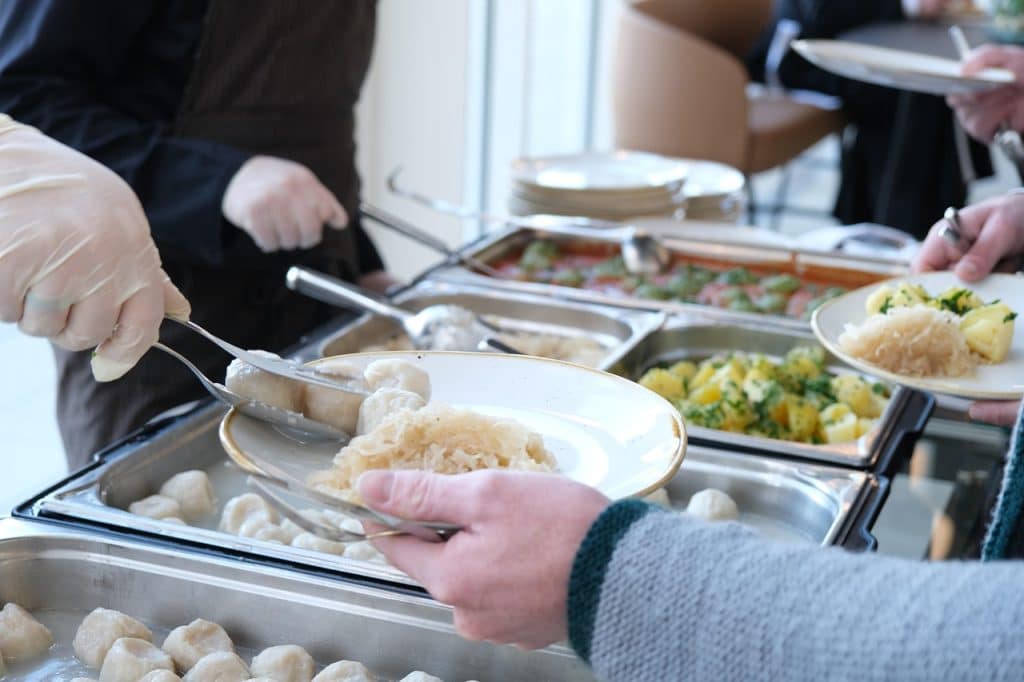
Try other classics like bigos (hunter’s stew), schabowy (breaded pork cutlet) and more varieties of pierogi than you knew existed.
Practical details:
- Expect to pay 15-25 PLN (approximately $4-6 USD) for a full meal
- Most milk bars open for lunch only, roughly 10 AM to 5 PM
- Cash preferred at traditional locations
Modern Polish and Creative Kitchens
At the other end of the spectrum, Warsaw now boasts Michelin-starred restaurants reinterpreting Polish cuisine with seasonal ingredients, creative bistros combining Polish traditions with global influences, and stylish food halls like Hala Koszyki offering everything from street food to upscale dining in a beautifully restored market hall.

This is a city where you can eat for a few euros at lunch, then sit down to a tasting menu dinner that would turn heads in Copenhagen or Paris.
Practical details:
- Mid-range restaurant meals typically cost 50-100 PLN (approximately $13-25 USD) per person
- Fine dining tasting menus range from 300-500 PLN (approximately $75-125 USD)
- Reservations recommended for popular restaurants, especially on weekends
Nightlife: High-Energy, Less Touristy
Warsaw’s nightlife has a reputation for being modern and unpretentious. Key zones include Mazowiecka Street for clubs and late-night energy, the Vistula riverfront with its seasonal bars and outdoor drinking zones, and Praga for edgier venues, live music and art spaces.
Compared with Budapest and Prague, Warsaw’s night scene is often described as more local and less tourist-driven, a big plus for travelers seeking authenticity.
Getting Around: Modern, Efficient, Easy
One of Warsaw’s major advantages over its Central European neighbors is infrastructure.
Metro and Public Transport
Warsaw’s metro and tram system is compact but highly efficient: two lines (north-south and east-west), clean modern trains, and clear signage with simple ticketing. Buses, trams and suburban trains fill in the gaps, making it easy to reach most neighborhoods without a car.
Practical details:
- Single tickets typically cost around 4.40-7 PLN (approximately $1-2 USD) depending on zone
- Day passes available for around 15-20 PLN (approximately $4-5 USD)
- Tickets valid across metro, buses and trams
- For current routes, fares and zone maps, check the official Warsaw Transport Authority website
Warsaw Chopin Airport: Gateway to Central Europe
Warsaw Chopin Airport handles over 20 million passengers a year with direct connections across Europe and long-haul routes, fast train connections (around 20 minutes) to the city center, and a compact layout that makes transfers straightforward.
Together with Hungary’s Budapest Airport, Chopin is an ideal entry point for a multi-country Central Europe itinerary.
Practical details:
- Airport train to city center: approximately 4.40 PLN (around $1 USD) with standard Zone 1 ticket (verify current fare structure on official transport website as airport pricing occasionally changes)
- Journey time: 20-25 minutes to Central Station
- Trains run every 15-30 minutes throughout the day
A quick note on planning: Prices and opening hours are mentioned to help you budget and plan, but they can change often. I always recommend checking the official websites (which I’ll link to) for the most current information before your visit.
Cost of Living and “Feel” Compared to Budapest and Prague
Travelers often ask: Is Warsaw expensive? The answer is that it’s increasingly prosperous but still offers strong value, especially compared with Western Europe.
Warsaw is generally cheaper than Prague, somewhat pricier than Budapest, but still very good value compared to Germany, Austria or Scandinavia. Salaries run higher than in Budapest on average, reflecting Warsaw’s role as a financial and business hub. Quality of life has climbed significantly in international rankings, now recognized for cleanliness, green spaces and safety. Tourist pressure remains far less intense than Prague, so you share the city with residents going about their daily lives.
For travelers who like the idea of living like a local and not feeling trapped in a tourism bubble, Warsaw scores highly.
When to Visit Warsaw
Warsaw’s continental climate means distinct seasons, each with its own character.
Late spring (May to June) offers an ideal balance with long days, mild temperatures, gardens in bloom and outdoor cafe life starting up. Summer (July to August) brings warm, sometimes hot weather perfect for riverfront life, parks and open-air events. Early autumn (September to early October) often delivers gorgeous weather with golden leaves in Łazienki, comfortable temperatures and fewer crowds. Winter (November to March) brings cold temperatures with potential snow and short days, but in compensation you get Christmas markets, cozy cafes and fewer tourists.
For American travelers pairing Warsaw with Hungary, May to June or September are particularly appealing for comfortable travel across the region.
Day Trips: Beyond the City Limits
If you’re staying several days, Warsaw also makes a handy base for excursions such as Żelazowa Wola, the birthplace of Frédéric Chopin set in a park about an hour away and perfect for music lovers, as well as historic towns, forests and palaces within easy reach by train or car that offer a softer counterpoint to the urban energy.
These pair well with similar day-trip concepts from Budapest, letting you theme an entire journey around “city plus countryside” contrasts in Central Europe.
How Warsaw Complements a Hungary-Focused Trip
For travelers already considering Budapest or a broader Hungary itinerary, Warsaw adds three crucial dimensions.
It offers a different WWII and Cold War narrative. Where Budapest emphasizes 1956, Warsaw centers on 1944 and total urban destruction, followed by the most ambitious reconstruction in Europe. It provides a modern business and tech capital vibe: think glass towers, startups and financial institutions, in contrast to Budapest’s romantic riverfront and historic baths. And it presents a powerful Jewish heritage story from the Warsaw Ghetto to POLIN, complementing visits to sites in Budapest and beyond.
In practical terms, you can fly into Warsaw (often with excellent fares from North America), spend 2 to 4 nights, then continue by plane or rail to Budapest. Or you can design a Central Europe “Rising Cities” itinerary connecting Warsaw, Krakow and Budapest through their parallel stories of hardship, survival and reinvention.
Frequently Asked Questions
How many days do you need to visit Warsaw?
Three days is the ideal duration to explore Warsaw’s essential sights, museums, and neighborhoods without rushing. A two-day visit covers the major highlights at a faster pace, while museum enthusiasts should budget four to five days to fully experience the Uprising Museum and POLIN
How much time do I need to explore Warsaw properly?
Three days provides ideal pacing for experiencing major attractions, key museums, essential neighborhoods, and authentic dining without rushing. Two days covers highlights at faster pace. Museum enthusiasts and those seeking deeper exploration should budget 4-5 days.
Is Warsaw safe for travelers?
Yes, Warsaw ranks among Europe’s safer capitals with a safety index of 74.6 (as of late 2024). Standard urban precautions apply: watch for pickpockets in crowded areas, keep valuables concealed, use licensed taxis or Uber/Bolt, stay aware of surroundings. Safety levels equal or exceed most Western European cities.
Do I need to speak Polish?
No. English is widely spoken in tourist areas, hotels, restaurants, and by younger generations. However, learning basic phrases (dzień dobry, dziękuję, przepraszam) earns enormous appreciation and opens doors. Milk bars and some traditional establishments operate Polish-only, but pointing and simple words work fine.
What’s the best way to handle money?
Use contactless credit/debit cards for most purchases—Warsaw leads globally in cashless payment adoption. Withdraw cash from ATMs as needed for milk bars, public toilets, and small vendors. Avoid airport currency exchanges entirely; rates are terrible. Notify your bank of travel dates to prevent card blocks
Can I travel comfortably as a vegetarian or vegan?
Absolutely. Warsaw ranks among the world’s most vegan-friendly cities with 40-53 fully vegan restaurants. Traditional Polish cuisine leans meat-heavy, but major cities offer excellent vegetarian and vegan options. Smaller towns have more limited choices. Pierogi ruskie (potato and cheese dumplings) and mushroom-based dishes are reliably vegetarian staples.
Should I buy a Warsaw City Card or similar tourist card?
Calculate costs carefully. These cards promise unlimited museum access and public transport but only pay off if you visit 4+ museums daily while using public transport constantly. If you prefer wandering neighborhoods, lingering in cafes, and selective museum visits, you’ll lose money. Individual jakdojade transport tickets and selective museum admissions often cost less
How crowded are tourist sites?
Major attractions (Royal Castle, Old Town, Palace of Culture) experience heavy crowds during peak summer months (July-August) and Christmas market season. Visit early morning (before 9 AM) or late afternoon (after 4 PM) for better experiences. Shoulder seasons (May, September-October) offer the best balance of pleasant weather and manageable crowds.
What about tipping?
Poland follows Western European norms. 10% tip is standard for good restaurant service, though Poles sometimes leave less. Tips are appreciated but not obligatory. Round up small bills or add 5-10% at your discretion. For comprehensive tipping guidance across the continent, see my Tipping Etiquette in Europe Guide.
Is Warsaw a good base for day trips?
Yes, Warsaw’s central location makes it an excellent base for exploring surrounding attractions. Żelazowa Wola (Chopin’s birthplace) sits just 50 kilometers west—an easy half-day trip. The direct train to Kraków takes about 2.5 hours, making it feasible as a long day trip though overnight stays are preferable. The medieval town of Kazimierz Dolny on the Vistula River (about 2 hours by bus) offers charming architecture and riverside scenery. Modlin Fortress, the massive 19th-century military complex, lies 30 kilometers north. Warsaw’s excellent train connections make it a practical hub for exploring central Poland.
Final Thoughts: Why Warsaw Deserves a Place on Your Map
Warsaw is not the easiest city in Central Europe to understand at first glance. It’s not as instantly pretty as Prague nor as theatrically romantic as Budapest. But give it time and a bit of historical context, and it reveals itself as one of Europe’s most compelling urban comeback stories.
A capital that was almost erased, then rebuilt by its own people. A modern metropolis with serious economic momentum. A cultural heavyweight from Chopin concerts and Michelin restaurants to POLIN and Praga’s street art. A clean, green, increasingly livable city that still offers good value and authenticity.
For curious travelers, especially those already drawn to Hungary and Central Europe, Warsaw is the missing chapter. The place where Europe’s 20th-century traumas and 21st-century ambitions collide in the most visible, walkable way.
Warsaw has unmasked itself. The question now is whether you’ll let it surprise you.
Practical Resource Links
Transportation & Booking:
- Jakdojade App: Real-time transit updates, route planning, digital ticket purchasing
- Koleo: Polish train booking platform for intercity travel
- Bolt/Uber: On-demand ride-sharing throughout Kraków
Museum & Attraction Information:
- Wawel Royal Castle: Current hours, ticket prices, exhibition details
- Auschwitz-Birkenau Memorial and Museum: Official tour booking, educational resources
- Schindler’s Factory: Timed entry tickets, exhibition information
- Wieliczka Salt Mine: Tour schedules, ticket purchasing, accessibility details
- National Museum branches: Multiple locations across Kraków
Current Information:
- Official Kraków Tourism: Festival calendars, current events, updated visitor information
- Kraków Public Transport: Ticket prices, route maps, service updates, Clean Transport Zone details
Offline Resources:
- Maps.me: Download Kraków offline maps before arriving for navigation without data
- Museum Free Day Schedules: Various museums operate different free days—check individual websites when planning visits
Explore more Central European city guides and itineraries on Pieterontour.com, where every moment of your journey is designed to be unforgettable.