
German Food Guide: Regional Dishes, Where to Find Them, and the Lunch Special Strategy
This guide is for travelers who want to experience authentic German cuisine beyond tourist stereotypes, discover regional specialties worth seeking out, and master the lunch special strategy that cuts dining costs by 40-60% while eating like locals.
I’ve been leading tours through Germany for over two decades, and I’ve learned something crucial: the country’s culinary landscape is far richer than the bratwurst-and-beer stereotype suggests. From Bavaria’s beer gardens to Berlin’s street food revolution, German food tells stories of geography, history, and community. But here’s what matters most for the savvy traveler: understanding when and where to eat like locals reveals both the soul of each region and the secret to stretching your travel budget significantly further.
Germany’s culinary identity reflects centuries of regional pride, agricultural tradition, and cultural memory. The Alps deliver Bavaria’s dairy and cattle specialties. Fertile valleys across the north produce grains and vegetables. Wine regions from the Rhine to the Moselle shape local cuisines. The Baltic coast influences maritime traditions. Each region’s food speaks to its landscape, climate, and history in ways no museum could capture.
A quick note on planning: Prices and opening hours are mentioned to help you budget and plan, but they can change often. I always recommend checking the official websites (which I’ll link to) for the most current information before your visit.
Quick Reference: Top Regional Dishes by Area

|
Region |
City Hub |
Signature Dishes |
Best For |
|---|---|---|---|
|
Bavaria |
Munich |
Schweinshaxe (pork knuckle), Weisswurst (white veal sausage), Obatzda (cheese spread), Käsespätzle |
Beer garden culture, hearty portions |
|
Baden-Württemberg |
Stuttgart |
Maultaschen (Swabian ravioli), Spätzle with cheese, Gaisburger Marsch stew |
Handmade pasta, vegetarian options |
|
Rhineland |
Cologne/Düsseldorf |
Rheinischer Sauerbraten, Himmel und Erde, Halve Hahn, Reibekuchen |
Sweet-sour flavors, Kölsch beer culture |
|
Central Germany |
Frankfurt |
Grüne Sauce, Handkäse mit Musik, Frankfurter Rippchen |
Spring herbs, apple wine pairings |
|
Eastern Germany |
Berlin/Leipzig |
Currywurst, Leipziger Allerlei, Döner kebab |
Street food, modern vegan scene |
|
Northern Germany |
Hamburg/Lübeck |
Labskaus, Matjes herring, Birnen Bohnen Speck |
Maritime traditions, fish dishes |
On this page
Why German Food Matters Beyond Sausages and Pretzels
The popular image of German cuisine captures only the surface. What you’re really tasting when you eat regional German food is something locals call Gemütlichkeit, a uniquely German concept meaning warmth, coziness, and easygoing togetherness, especially when sharing meals. Regional dishes represent agricultural heritage, historical influences, and local pride that connect you to the places you visit far more authentically than any monument or museum ever could.
I remember my first real Bavarian meal at a beer garden outside Munich. Not the tourist version near Marienplatz, but a wooden-tabled Biergarten where locals brought their own cheese and radishes while ordering beer. That’s when I understood: German food culture isn’t about Michelin stars or Instagram aesthetics. It’s about community, tradition, and the simple satisfaction of good ingredients prepared honestly.
Bavaria: Hearty Alpine Traditions
Bavaria’s food culture centers on that word again: Gemütlichkeit. The feeling of warmth and togetherness cultivated in beer gardens, Wirtshäuser (traditional inns), and family meals. Bavarian cuisine is unapologetically hearty, featuring pork, potatoes, dumplings, and cream sauces that warm you after mountain activities or long city walks.
Must-Try Bavarian Dishes
Schweinshaxe (Pork Knuckle)
This is Bavaria’s most iconic main course, and watching one arrive at your table is theater in itself. A pork knuckle slow-roasted for 2 to 3 hours until the skin turns crackling-crisp and the meat becomes tender enough to pull apart with a fork. Traditionally marinated in beer and spices, it emerges from the oven golden, glistening, and impressive.
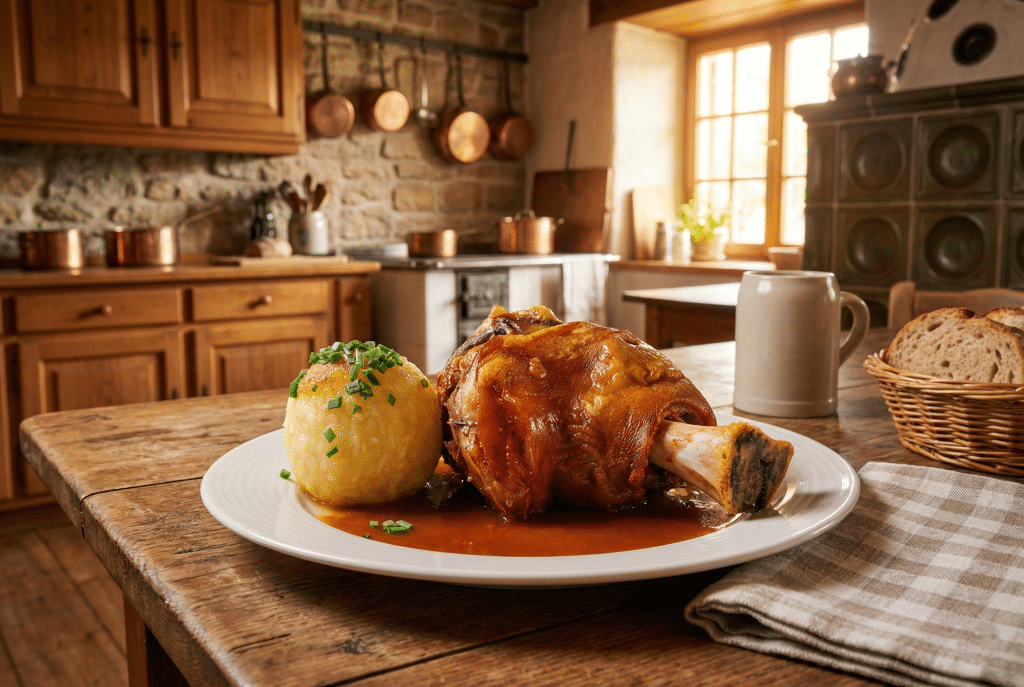
- Practical details: Expect to pay around €15-20 at traditional restaurants. Serves 1-2 people depending on appetite. Best enjoyed with a Helles or wheat beer.
Weisswurst (White Veal Sausage)
Munich’s contribution to German sausage culture, invented here in 1857. Made from finely ground veal, pork bacon, parsley, mace, onions, lemon zest, and cardamom, this delicate white sausage follows strict tradition: eat before noon, accompanied by sweet Bavarian mustard, soft pretzels, and wheat beer.

- Practical details: Usually around €4-6 for a pair. Breakfast/brunch item only. Peel before eating (cut lengthwise, peel skin away).
Obatzda (Bavarian Cheese Spread)
Bavaria’s addictive cheese spread served in beer gardens everywhere. Combine ripe Camembert or Brie with butter, fresh beer, paprika, caraway seeds, and finely chopped onions. Serve with crispy pretzels and radish slices.

- Practical details: Often a free snack if you bring your own container to certain beer gardens and purchase drinks.
Leberkäse (Liver Cheese)
The name confuses everyone. It contains neither liver nor cheese in most modern versions. Instead, it’s a finely ground mixture of beef, pork, and bacon baked in a loaf until golden. Sliced warm and served with sweet mustard and a Semmel (white bread roll), it’s pure comfort food.

Käsespätzle (Cheese Noodles)
This showcases Swabian influence in Bavaria. Soft egg noodles are topped with melted cheese and fried onions, creating a crispy contrast that makes this dish irresistible. Think German mac and cheese, but better.

Where to Eat Bavarian Food in Munich
- Augustiner Klosterwirt: Has served traditional food since 1294. The historic brewery restaurant maintains authentic beer garden atmosphere. Official Website
- Zum Dürnbräu: Has operated since 1487, making it one of Munich’s oldest restaurants. Traditional Bavarian fare in an intimate setting.
- Pfistermühle: Family-run since 1904. Excellent Schweinshaxe and regional specialties in a warm atmosphere.
- Spatenhaus an der Oper: Sits right at Marienplatz, perfect for people-watching while eating traditional fare.
- Wirtshaus Maximilian: Offers upscale traditional cuisine with excellent wine pairings.
Beer Garden Culture: Understanding the Rules
- Self-Service: Wooden tables without tablecloths indicate self-service areas where you fetch your own beer.
- Communal Seating: Strangers join your table. Embrace it; this is where Bavarian culture comes alive.
- Mitbringsel: Many beer gardens allow you to bring your own food if you purchase drinks. This is a money-saving strategy locals use regularly.
For more deatail read my Munich Travel Guide: Insider Beer Gardens & Day Trips
Baden-Württemberg: Swabian Soul Food
Swabia represents Germany’s culinary underdog. Its hearty, creative food deserves far more international attention than it receives. The region’s cuisine balances agricultural simplicity with surprising sophistication, featuring handmade noodles and clever use of local ingredients.
Must-Try Swabian Dishes
Maultaschen (Swabian Ravioli)
Often called “German ravioli,” these large pasta pockets contain fillings of meat, spinach, onions, and spices. Legend claims monks invented Maultaschen to hide meat from God during Lent, earning them the nickname “Swabian Herrgottsbescheißerle” (roughly, “fooling God”).
- Practical details: Usually around €8-12. Served in hot broth or pan-fried with eggs.
Spätzle (Soft Egg Noodles)
These require hand-rolling or special equipment, creating a texture thicker and chewier than pasta. Käsespätzle tops them with melted cheese and crispy onions. Linsen mit Spätzle combines lentils with Spätzle and Vienna sausages.

Gaisburger Marsch (Swabian Stew)
This hearty stew combines beef, potatoes, vegetables, and Spätzle in one bowl. Created by Stuttgart workers who needed substantial meals from affordable ingredients, it represents Swabian ingenuity at its finest.

Sauerbraten (Swabian Style)
Unlike their Rhineland cousins, Swabian versions skip the sweetness and raisins. Large beef pieces marinate 3 to 4 days in a vinegar-water mixture with spices, then braise until impossibly tender.
Where to Eat Swabian Food in Stuttgart
- Weinstube Schellenturm: Traditional wine tavern serving excellent Maultaschen and local wines.
- Gasthof zur Sonne: Historic inn featuring regional specialties prepared the way they’ve been made for generations.
- Markthalle Stuttgart: Operates as a daily market offering prepared Swabian dishes for quick, budget-friendly meals.
Rhineland: Sweet-Sour Heritage
The Rhineland encompasses North Rhine-Westphalia and Rhineland-Palatinate, both shaped by Rhine River traditions and wine culture. Rhineland food reflects both agricultural abundance and industrial heritage, featuring hearty preparations and beer culture centered on Cologne’s unique Kölsch beer.
Must-Try Rhineland Dishes
Rheinischer Sauerbraten
This differs significantly from Swabian versions. Large beef pieces (or historically, horse meat) marinate in spicy vinegar-water for days. The sauce grows tangy-sweet through raisins, gingerbread spices, and vinegar.
- Practical details: Usually around €14-18. Often served with potato dumplings and red cabbage.
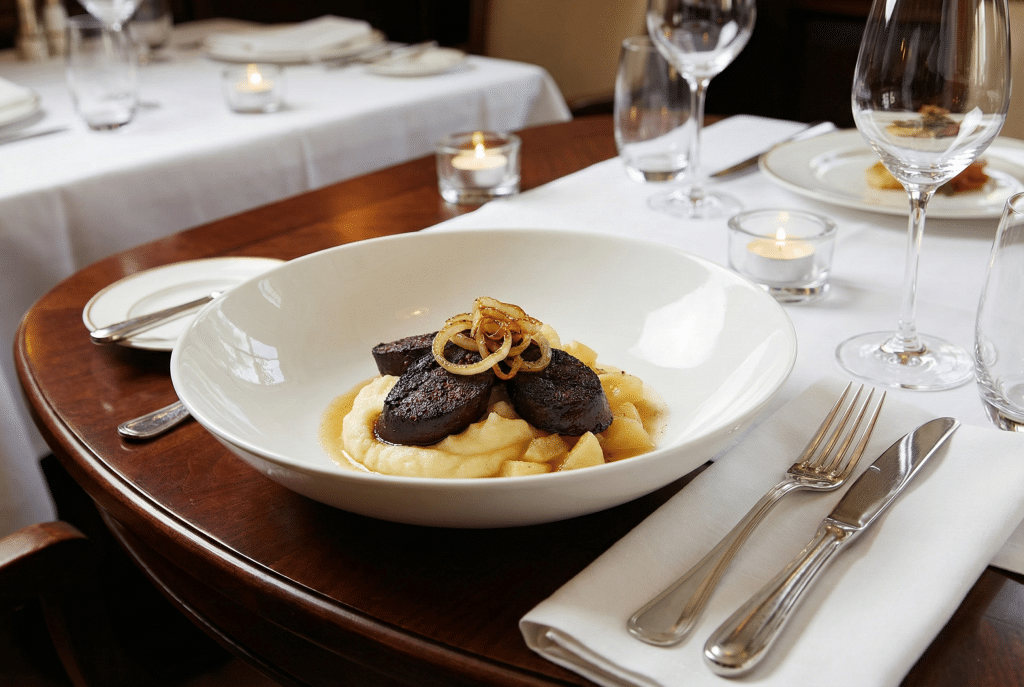
Himmel und Erde (Heaven and Earth)
Combines mashed potatoes with stewed apples and fried blood sausage. The name references potatoes growing underground (earth) and apples from trees (heaven).
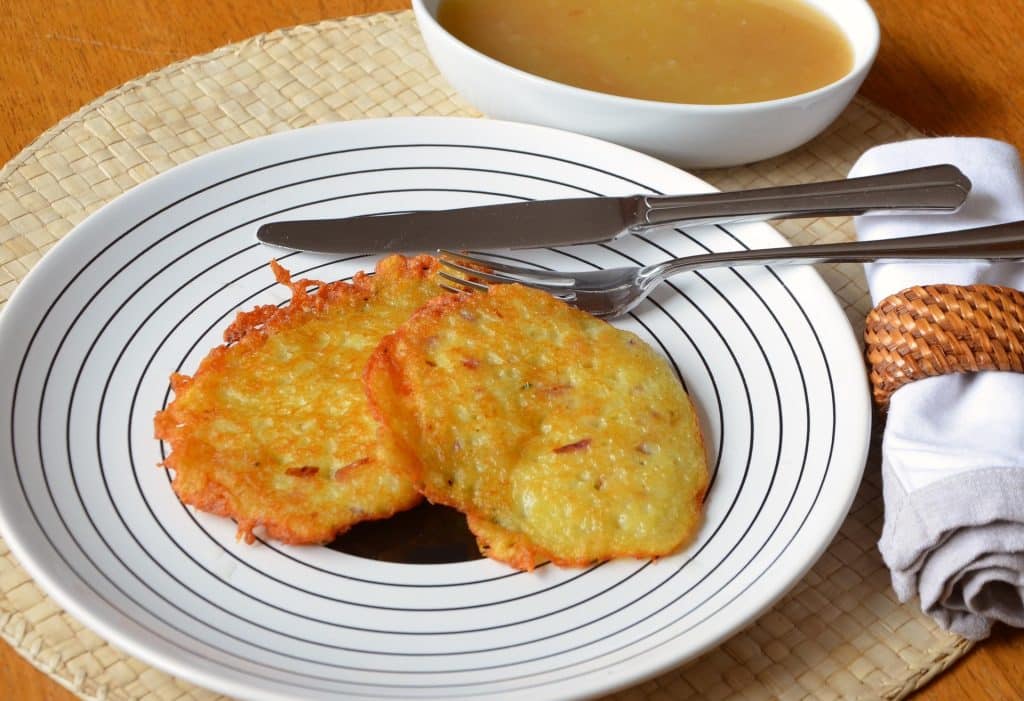
Reibekuchen (Potato Pancakes)
Crispy-edged, tender-centered pancakes made from grated potatoes, eggs, flour, and salt. Sold at street stalls throughout Cologne, most famously outside Cologne Central Station.
Halve Hahn (Half Cockerel)
Despite the name, this contains no chicken. It’s a Cologne specialty: a buttered rye roll topped with mature Gouda cheese, mustard, pickles, and onions.

Where to Eat Rhineland Food in Cologne
- Brauhaus Sion: Has served traditional Cologne fare since 1318.
- Em Krützche: Offers excellent Sauerbraten and regional specialties in a cozy setting.
- Früh am Dom: Sits near the cathedral and serves traditional food alongside their famous Kölsch beer.
Central Germany (Hesse): Frankfurt’s Green Heritage
Frankfurt’s cuisine reflects both sophisticated urban culture and hearty rural traditions.
Must-Try Central German Dishes
Grüne Sauce (Green Sauce)
Frankfurt’s most famous dish features seven herbs (borage, sorrel, garden cress, chervil, chives, parsley, and salad burnet) blended with sour cream, yogurt, oil, vinegar, and mustard. Serve cold over boiled eggs and potatoes. It has protected geographical status under EU law.

- Practical details: usually around €9-13. Traditional spring/summer dish.
Handkäse mit Musik (Marinated Cheese)
Small rounds of sour milk cheese marinated in oil, vinegar, onions, and caraway seeds. The “Musik” refers to the digestive consequences

Where to Eat in Frankfurt
- Adolf Wagner: Famous for Apfelwein (apple wine) and traditional Frankfurt dishes.
- Apfelwein Solzer: Offers traditional Frankfurt cuisine with local apple wine.
- Zum Gemalten Haus: Serves regional dishes in a historic building decorated with painted murals.
Eastern Germany (Saxony): Leipzig and Berlin’s Evolution
Eastern German cuisine reflects centuries of agricultural tradition, post-war simplicity, and recent culinary evolution.
Must-Try Eastern German Dishes
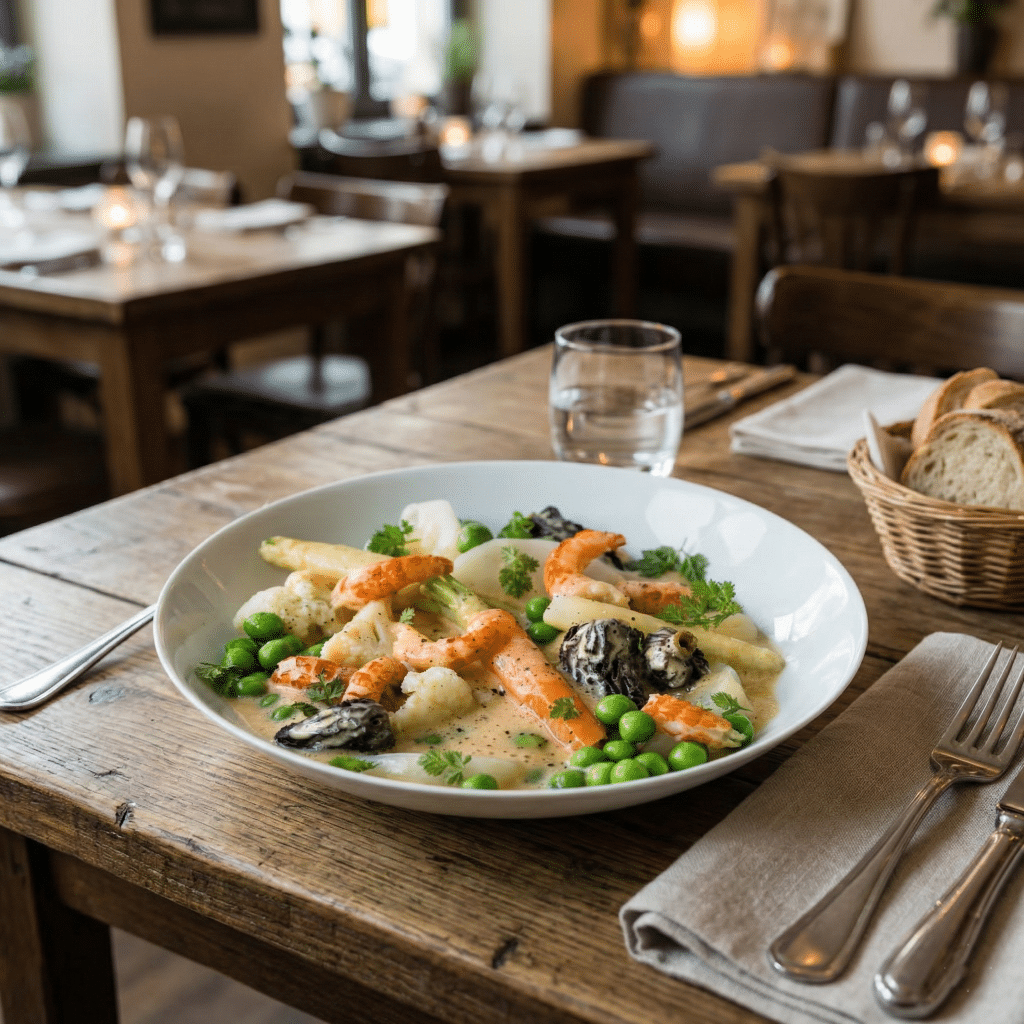
Leipziger Allerlei
This refined vegetable dish combines peas, carrots, asparagus, morel mushrooms, and crayfish tails in a light sauce. The name literally means “Leipzig miscellany.”
Currywurst (Curry Sausage)
Berlin’s most famous street food: grilled or fried pork sausage cut into slices, covered in curry ketchup sauce, and sprinkled with curry powder.
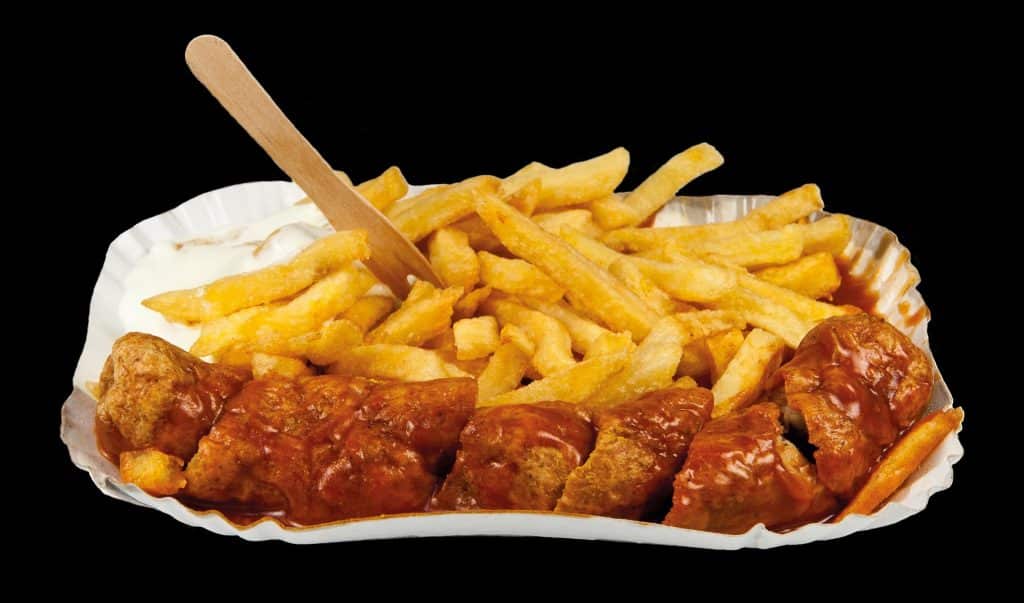
- Practical details: Usually around €5-7 at street stands. Order “mit Darm” (with casing) or “ohne Darm” (without).
Döner Kebab (Berlin Style)
Berlin’s Turkish community transformed döner into something distinctly Berlin. Thin-sliced seasoned meat served in flatbread with vegetables, yogurt sauce, and hot sauce.

- Practical details: Around €5-7 at most shops. Available 24/7.
Where to Eat in Leipzig and Berlin
- Auerbachs Keller (Leipzig): One of Germany’s most famous restaurants, featured in Goethe’s Faust. Official Website
- Zur Letzten Instanz (Berlin): Berlin’s oldest restaurant, serving traditional food since 1621. Official Website
- Curry 36 (Berlin): Serves arguably Berlin’s best Currywurst.
Northern Germany: Maritime Traditions
Northern German cuisine reflects Baltic and North Sea influences, featuring fish, hearty stews, and dishes shaped by maritime trade.
I’ll never forget a February afternoon in Hamburg when a bitter wind off the Elbe cut right through my coat. I ducked into a traditional restaurant near the Fischmarkt, and the server recommended Labskaus. That pink-red stew, served steaming hot with a fried egg on top, transformed the entire day.
Must-Try Northern German Dishes
Labskaus (Sailor’s Stew)
Combines corned beef, potatoes, onions, and beets mashed together into a pink-red mixture. Top with fried egg, pickles, and rollmops (pickled herring).
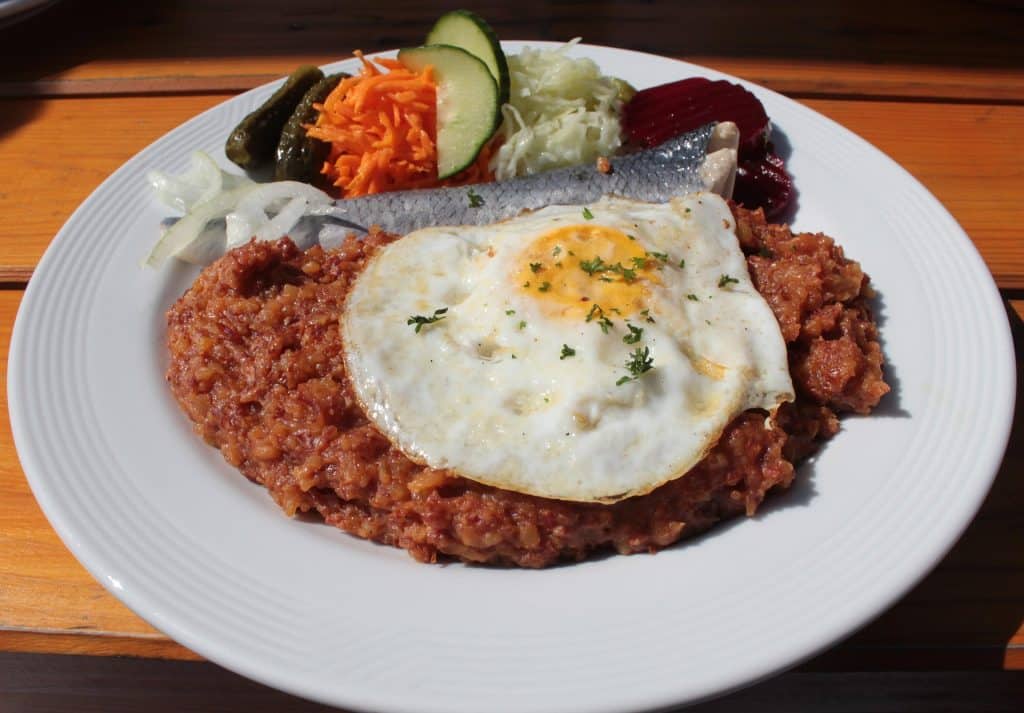
- Practical details: Around €10-14. Originally sailor food created from ship provisions.
Matjes (Young Herring)
Tender young herrings filleted and served with onions, apples, and cream sauce. Matjes season runs from May to July.

Birnen, Bohnen und Speck
Combines green beans, pears, bacon, and potatoes in one pot. The sweet pears balance the salty bacon.

Where to Eat in Hamburg
- Fischereihafen Restaurant: Specializes in fresh fish and traditional North German dishes.
- Alt Hamburger Aalspeicher: Serves traditional Hamburg food in a historic eel warehouse.
- Schifferbörse: Offers authentic sailor food in Hamburg’s harbor area.
The Lunch Special Strategy (Mittagsmenü): Save 40-60% on Every Meal
This is the single most important tip for eating well in Germany while controlling costs. Understanding the Mittagsmenü (lunch menu) strategy transforms your entire trip.
How Mittagsmenü Works
German restaurants traditionally serve substantial lunches and lighter dinners. To attract locals during lunch hours (typically 11:30 AM to 2:30 PM), restaurants offer fixed-price menus featuring the same dishes that cost significantly more at dinner.
- Example: A Schweinshaxe that costs €18-20 at dinner might appear on the Mittagsmenü for €9-12, including soup or salad.
Practical Implementation Strategy
- Timing: Arrive between 11:30 AM and 1:30 PM.
- Look for signs: Look for chalkboards saying “Mittagsmenü,” “Mittagstisch,” or “Tageskarte.”
- Savings: Over a two-week trip, this strategy can save €168-224 per person compared to dinner pricing for equivalent meals.
German Bread Culture
Germany produces over 3,000 varieties of bread. Bread (Brot) isn’t just food here; it’s cultural identity.
- Vollkornbrot: Whole grain bread.
- Pumpernickel: Very dark rye bread, slightly sweet.
- Brötchen: Fresh breakfast rolls. Buy them at a bakery (Bäckerei), not a supermarket, for €0.30-0.60.
Practical Dining Tips and Cultural Etiquette
- Greetings: Enter saying “Guten Tag” and leave with “Auf Wiedersehen.”
- Seating: In casual places, seat yourself unless a sign says otherwise. Communal tables are common.
- Water: Tap water (Leitungswasser) is safe but rarely served free. You usually must order bottled water.
- The Bill: Servers won’t bring the check until you ask (“Die Rechnung, bitte”).
- Tipping: Round up to the nearest Euro or add 5-10%. Say “Stimmt so” (keep the change) when paying. For more details on tipping etiquette throughout Europe, including regional variations, see our comprehensive guide.
- Drinking Age: Germany has a tiered system: beer and wine at 16, spirits at 18.
Frequently Asked Questions
What are the best regional German dishes to try?
Authentic regional German food varies by area: Bavaria offers Schweinshaxe and Weisswurst, while Baden-Württemberg features Maultaschen. The Rhineland serves Sauerbraten, and Northern Germany specializes in Labskaus. Tour directors recommend the “Mittagsmenü” (lunch special) to enjoy these traditional meals at 40-60% off dinner prices.
How much time do I need to eat lunch at a German restaurant?
Traditional restaurants serve lunch efficiently, typically taking 30 to 45 minutes.
Is German food spicy?
Generally no. German cuisine emphasizes herbs, salt, and pepper. If you want heat, try the mustard or visit a Turkish/Asian restaurant.
Can I find good German food in small towns?
Absolutely. Small-town Gasthäuser often serve the most authentic regional food.
Are German restaurants expensive?
No, especially using the Mittagsmenü strategy. Expect to pay €9-13 for lunch and €15-25 for dinner.
Is tipping required in Germany?
Not required, but expected for good service (10%).
Can I drink tap water in Germany?
Yes, it is excellent and safe, though restaurants typically charge for bottled water.
Related Reading
Explore these related guides to enhance your German experience:
- Germany Travel Guide: Your Gateway to Exploring Deutschland’s Rich Tapestry – Comprehensive country overview
- Ludwig II of Bavaria and His Castles: A Guide to Bavaria’s Fairytale King – Deep dive into Neuschwanstein and beyond
- Berlin First-Timer Guide: Logistics, Areas & “Real” Tips – Comprehensive City overview
- The Ultimate Guide to European Christmas Markets: History, Food, and Traditions – Master Christmas market experiences
- Tipping Etiquette in Europe: Your Essential Guide to Gratuity Customs Across the Continent – Navigate service and payment customs
Planning your Central Europe journey?
- Central Europe Travel Guide – Comprehensive planning resource
- Solo Travel in Germany: Safety and Cultural Tips – Essential advice for independent travelers
- Vienna Christmas Markets Guide – Compare German and Austrian market traditions
Regional Deep Dives:
- Munich Travel Guide
- Berlin First-Timer Guide
- Hamburg Travel Guide: Port City Culture and Northern Germany
Cultural Context:
For more regional food guides and travel strategies, visit the German National Tourist Boardor browse our complete archives at Pieterontour.com.