
Central & Eastern Europe Travel: The Ultimate Guide for Culturally Curious Travelers
This guide is for travelers seeking authentic cultural experiences across Central and Eastern Europe—covering top destinations, cultural experiences, practical travel tips, and insider perspectives from someone who’s explored the region extensively.
Central and Eastern Europe unfolds like a living history book, where every cobblestone square and castle ruin whispers stories of empires, revolutions, and resilience. From the baroque splendor of Prague to the thermal baths of Budapest, from alpine villages tucked into the Carpathians to the amber-lit streets of Kraków, this is a region that rewards the curious traveler with authenticity, affordability, and unforgettable experiences.
I’ve spent years exploring these countries, most recently through late 2024, and what strikes me most is how they balance European refinement with a palpable sense of local pride and tradition. The region feels both timeless and vibrantly modern, offering travelers a chance to step off the well-worn Western European circuit and into something deeper.
A quick note on planning: Prices and opening hours are mentioned to help you budget and plan, but they can change often. I always recommend checking the official websites (which I’ll link to) for the most current information before your visit.
Why Central & Eastern Europe Should Be on Your Travel List
Quick Overview:
- Cultural richness: Centuries-old traditions, UNESCO heritage sites like Bucovina’s painted monasteries and Prague’s historic center, and living folklore
- Exceptional value: Typically 30-50% less expensive than Western Europe
- Seamless connectivity: Well-developed rail networks and modern infrastructure
- Seasonal magic: Christmas markets, spring festivals, lakeside summers, and autumn vineyard harvests
- Authentic experiences: Fewer crowds, more local interaction, genuine hospitality
The appeal of this region lies in its diversity. Each country carries the weight of complex histories—Habsburg empires, Soviet legacies, medieval kingdoms—yet today they pulse with creativity, resilience, and pride. You’ll find yourself in grand capitals one day and tucked into mountain valleys the next, always welcomed with warmth and curiosity.
On this page
Exploring Central & Eastern Europe by Region
Central Europe: Imperial Grandeur Meets Modern Energy
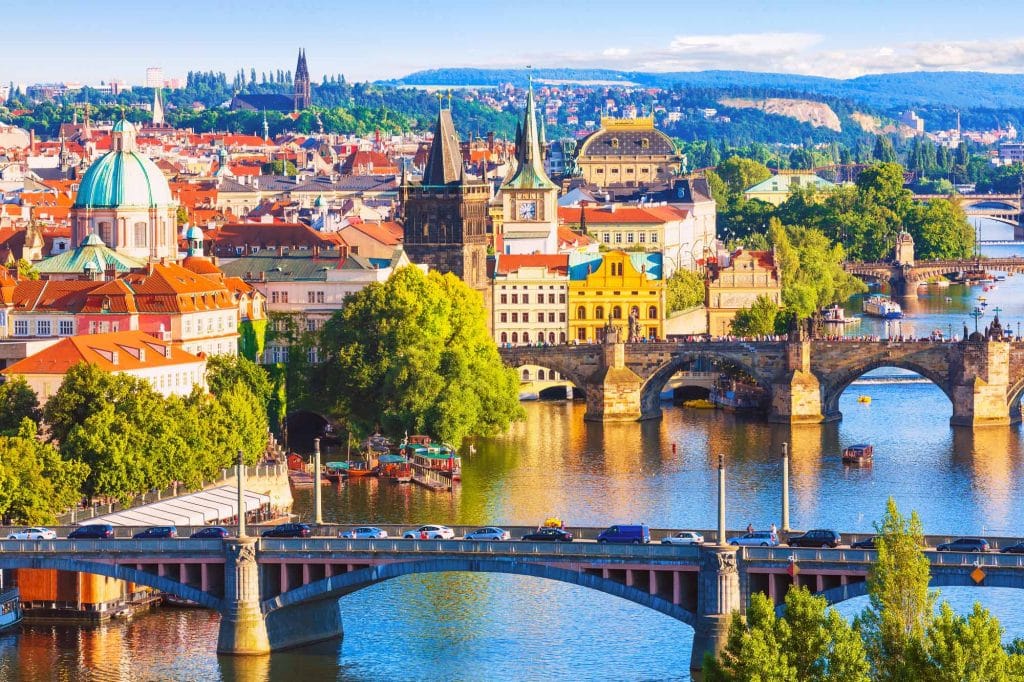
Czech Republic
Prague’s fairy-tale skyline never fails to take my breath away, especially when the morning light catches the spires of Old Town. Beyond the capital, the painted Renaissance facades of Český Krumlov feel almost too beautiful to be real, while Moravian wine country offers a quieter, earthier side of Czech culture.
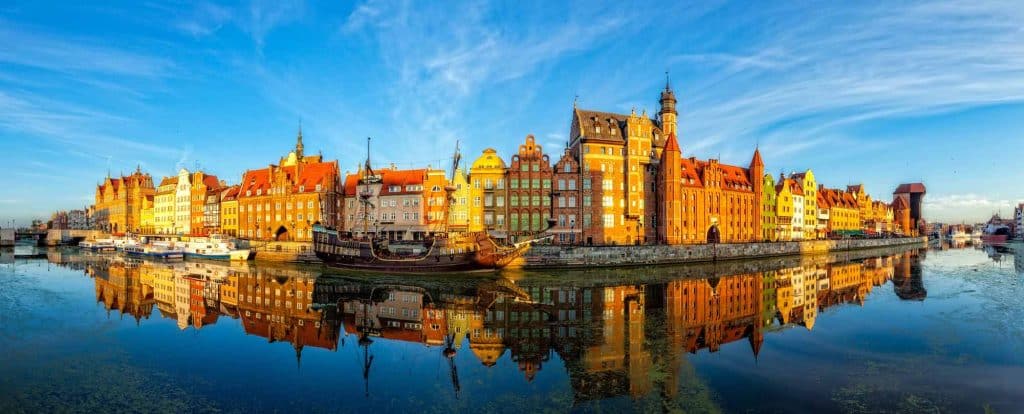
Poland
Kraków’s Rynek Główny (Main Market Square) is one of Europe’s most atmospheric public spaces, alive with street musicians and the scent of roasted chestnuts. I’ll never forget my first pierogi-making class in Kraków’s Kazimierz district, a memory that proves the culture is as rich as the history. Warsaw tells a different story—one of destruction and determined rebirth—while Gdańsk’s amber-lit streets along the Baltic coast offer maritime charm and Hanseatic history.

Austria
Vienna’s imperial elegance is matched only by its café culture, where afternoons unfold over Sachertorte and Melange coffee. My personal tip: skip the line at the Sacher Hotel and try the one at Demel; it’s a centuries-old rivalry, and you must pick a side. The Tyrolean Alps deliver postcard-perfect villages and hiking trails, while the Salzkammergut lake district offers quieter beauty—think turquoise waters reflecting mountain peaks.
Hungary
Budapest is a city that gets under your skin. The Chain Bridge at twilight, the steam rising from Széchenyi Baths, the ruin bars tucked into crumbling courtyards—it’s a place where history and hedonism coexist beautifully. Beyond the capital, the Tokaj wine region and the thermal lake of Hévíz offer restorative escapes. Read my post on Hungarian Christmas traditions for winter ideas!

Eastern Europe: Authentic, Resilient, and Welcoming
Slovakia & Ukraine
The High Tatras rise dramatically from Slovakia’s landscape, offering alpine adventures without the Alpine price tag. Medieval towns like Bardejov and Košice preserve centuries of architecture, while Ukraine’s Lviv enchants with its café culture and artistic soul.
Romania
Transylvania isn’t just about Dracula myths—it’s about Saxon villages, fortified churches, and the Carpathian wilderness. Bucharest surprises visitors with its Belle Époque architecture and lively arts scene, while Bucovina’s painted monasteries—UNESCO World Heritage sites showcasing vivid biblical frescoes—are masterpieces of medieval Orthodox art.
Bulgaria
The Rila Monastery’s striped arches and mountain setting create an almost otherworldly atmosphere. Bulgaria blends Black Sea beach resorts with the rose-filled Valley of the Roses and the Ottoman-influenced streets of Plovdiv, Europe’s oldest continuously inhabited city.
The Balkans
Belgrade’s riverside Savamala district pulses with creativity and nightlife. Sarajevo’s streets tell layered stories of Ottoman, Austro-Hungarian, and Yugoslav history. Montenegro’s Bay of Kotor rivals any Mediterranean fjord, while Slovenia’s Lake Bled offers Alpine beauty in miniature perfection.
Cultural ExperiencesWorth Seeking Out
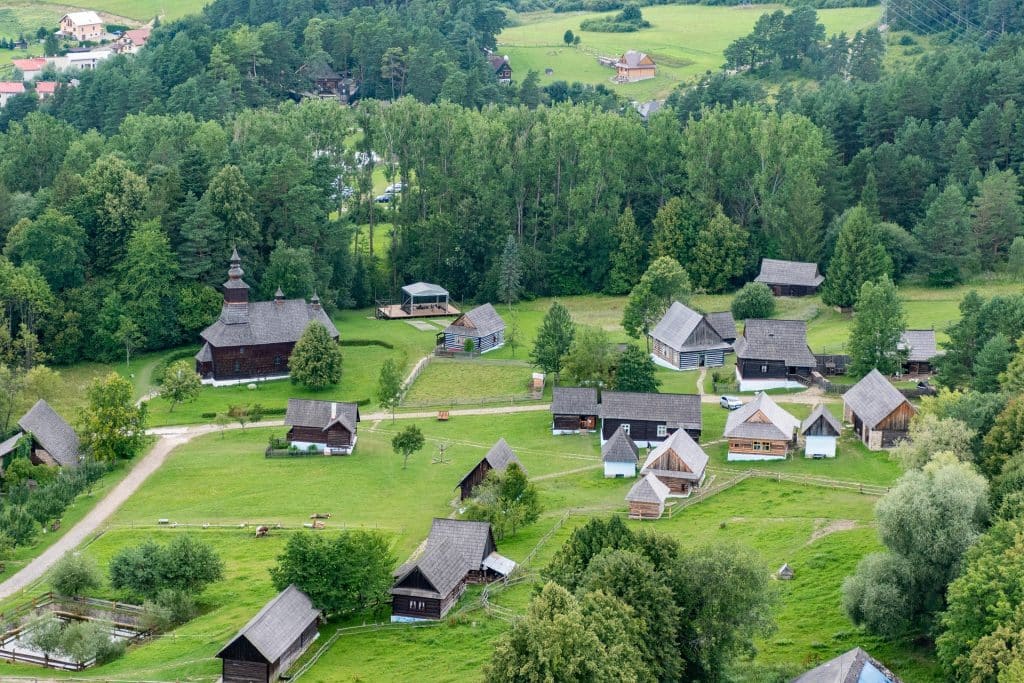
These Cultural Experiences are the moments that transform a trip into a journey:
- Attend a classical concert in Vienna’s Musikverein or Prague’s Municipal House, where the acoustics alone are worth the ticket price
- Sample regional cuisines that vary dramatically from country to country—Polish pierogi, Hungarian goulash, Austrian Wiener schnitzel, Czech svíčková
- Visit open-air folk museums in Poland or the Village Museum in Bucharest, where traditional wooden architecture is preserved
- Explore castle routes that wind through the countryside—the Castles of Transylvania, Bohemian castle trail, or Slovak castle ruins
- Discover thermal spa culture in Hungary, Slovakia, and Slovenia, where hot springs have been treasured since Roman times
Practical details:
Many concerts offer standing-room tickets for around 5-15€, making classical music surprisingly accessible. Folk museums typically charge 5-10€ for entry and are open year-round, though outdoor sections may have seasonal hours. For the most current concert schedules and ticket prices, check venue websites directly before your visit.
Practical Travel Tips for Central & Eastern Europe
By Train:
Rail networks connect major cities efficiently and affordably. Expect to pay between 15-40€ for journeys of 2-4 hours depending on the country and train class. The Eurail Global Pass or Interrail pass can be cost-effective for multi-country trips. For the most current timetables and booking options, check the official national railway websites like ÖBB (Austrian Railways) and České dráhy (Czech Railways).
By Bus:
Companies like FlixBus and RegioJet offer comfortable, budget-friendly connections between cities and smaller towns, often for 10-25€ per journey.
By Car:
Renting a car opens up rural areas and mountain regions beautifully. Expect daily rental rates between 25-50€ depending on season and location. Be aware that some countries require highway vignettes (road toll stickers).
Budget Planning
Daily costs vary by country and travel style, but here’s a rough breakdown:
- Budget travelers: 50-70€ per day (hostels, local eateries, public transport)
- Mid-range travelers: 80-120€ per day (comfortable hotels, restaurant meals, some tours)
- Comfort travelers: 150€+ per day (boutique hotels, fine dining, private experiences)
Currency & Payment
The region mixes euro and local currencies:
- Euro zone: Austria, Slovakia, Slovenia
- Local currencies: Czech koruna (CZK), Polish złoty (PLN), Hungarian forint (HUF), Romanian leu (RON), Bulgarian lev (BGN)
Cards are widely accepted in cities, but carry some cash for markets, small towns, and traditional establishments. Notify your bank of travel plans to avoid card blocks.
Best Times to Visit
- May–September: Prime season for cultural festivals, hiking, and outdoor exploration. Expect warmer weather and more crowds in major cities.
- November–December: Christmas market season transforms squares into twinkling wonderlands. Colder temperatures but magical atmosphere.
- April & October: Shoulder season offers pleasant weather, fewer tourists, and lower prices.
- January–March: Quietest period, best for budget travel, winter sports in mountain regions, and thermal spa indulgence.

Visa & Entry Requirements
Most Central and Eastern European countries are part of the Schengen Area, allowing free movement once you’ve entered. Standard tourist visits allow 90 days within any 180-day period for most nationalities.
Important for 2025: The European Travel Information and Authorization System (ETIAS) requires travelers from visa-exempt countries (including the US, Canada, Australia, and UK) to obtain electronic pre-authorization before entering the Schengen Area. This online application costs approximately 7€ and is valid for three years. Always verify current entry requirements based on your citizenship well before travel—requirements can change.
Sustainable & Slow Travel in Central & Eastern Europe
This region lends itself beautifully to thoughtful, low-impact travel:
Choose Regional Trains Over Flights:
The rail network makes country-hopping both scenic and sustainable. A Prague-to-Vienna train journey offers riverside views that no flight can match.
Stay in Locally Owned Accommodations:
Family-run pensions and guesthouses provide authentic experiences while keeping tourism euros in local communities. Look for “penzión,” “hospoda,” or “pensjonat” signs in villages.
Discover Lesser-Known Destinations:
Instead of only Prague, consider Olomouc. Beyond Budapest, explore Pécs. Rather than just Kraków, venture to Toruń. These smaller cities offer genuine cultural experiences with far fewer tour buses.
Support Traditional Crafts & Food Tours:
Join community-led experiences—folk craft workshops in Maramureș, wine tastings in Tokaj, food tours in Kraków’s Kazimierz district—that directly benefit artisans and producers.
Inspiring Itineraries for Different Travel Styles
Classic Capitals Route (10-14 days)
Vienna → Prague → Kraków → Budapest
Perfect for first-time visitors, this route connects four of Central Europe’s most captivating cities by train, each requiring 2-3 days to appreciate properly.
Cultural Crossroads (14-21 days)
Warsaw → Lviv → Bucharest → Sofia
For travelers seeking less-visited paths and deeper cultural immersion, this route traverses Eastern Europe’s diverse traditions and complex histories.

Alpine & Lakes Escape (7-10 days)
Salzburg → Ljubljana → Lake Bled → High Tatras
Ideal for nature lovers, combining Austrian baroque beauty with Slovenian charm and Slovak mountain wilderness.
Baltic to Balkans Odyssey (3-4 weeks)
Tallinn → Vilnius → Warsaw → Kraków → Budapest → Belgrade → Sarajevo → Dubrovnik
The ultimate Central and Eastern European journey, spanning from medieval Baltic towns to Adriatic coastlines.
Frequently Asked Questions
How much time do I need to explore Central & Eastern Europe properly?
A minimum of 10-14 days allows you to experience 3-4 major cities meaningfully. Three weeks opens up slower travel and lesser-known destinations. Most travelers find 2-3 weeks ideal for balancing depth and breadth.
Is it safe to travel in Central & Eastern Europe?
Yes, the region is generally very safe for travelers. Standard precautions apply—watch for pickpockets in crowded tourist areas, use licensed taxis or rideshare apps, and stay aware of your surroundings. Safety levels are comparable to Western Europe.
Do I need to speak the local languages?
English is widely spoken in tourist areas, hotels, and restaurants in major cities. Learning basic phrases (hello, thank you, excuse me) is appreciated and opens doors. Younger generations typically speak good English, while older residents may know German or Russian.
What’s the best way to handle money while traveling?
Use a no-foreign-transaction-fee credit card for most purchases and withdraw local currency from ATMs as needed. Avoid airport exchange bureaus and hotel currency exchanges, which offer poor rates. Notify your bank of travel dates to prevent card blocks.
Can I travel comfortably as a vegetarian or vegan?
Major cities offer excellent vegetarian and vegan options, with awareness growing rapidly. Traditional cuisine is meat-heavy, but you’ll find vegetable soups, salads, cheese dishes, and increasingly dedicated plant-based restaurants. Smaller towns may have limited options—research ahead.
Are Christmas markets worth visiting?
Absolutely. Central and Eastern European Christmas markets combine tradition with genuine local culture. They’re less commercialized than many Western European markets and offer better value. Vienna, Prague, Budapest, Kraków, and Zagreb all host spectacular markets typically running from mid-November through December.
What’s the best travel pass for the region?
The Eurail Global Pass (for non-Europeans) or Interrail Pass (for European residents) offers flexibility for multi-country rail travel. These passes increasingly align with sustainable travel initiatives under the European Green Deal, making rail the most eco-conscious way to explore multiple countries. Calculate costs based on your planned routes—sometimes individual tickets are more economical for shorter trips.
How crowded are tourist sites in Central & Eastern Europe?
Major attractions in Prague, Budapest, and Kraków can be crowded during peak summer months and Christmas market season. Visit early morning or late afternoon for better experiences. Lesser-known cities and rural areas rarely feel crowded.
Your Journey Through Central & Eastern Europe Awaits
Travel through Central and Eastern Europe offers more than stunning architecture and affordable adventures. It’s an immersion into the soul of the continent, where every city square holds centuries of stories, where thermal waters have soothed travelers since Roman times, and where the warmth of local hospitality transforms visitors into friends.
Whether you’re drawn to imperial capitals, alpine villages, medieval castles, or vibrant cultural scenes, this region rewards curiosity with authenticity. The traditions run deep, the landscapes vary dramatically, and the experiences linger long after you return home.
Ready to start planning your Central & Eastern European adventure? Browse my collection of , cultural insights, and practical travel resources designed for travelers who seek depth, authenticity, and memorable experiences on Pieterontour.com
Related Posts
Essential Phrases That Make Locals Smile: Your Key to Authentic European Connections
European Dining Hours and Table Manners: A Guide to Eating Like a Local
The Art of Cultural Immersion: How to Travel Like a Local in Europe
Solo Travel & Safety in Europe: Your Complete Guide to Confident Independent Exploration
Guided Tours vs Independent Travel: A Tour Director’s Honest Perspective