
Beyond the Big Bus: Understanding Small Group, Boutique, and Special Interest Tours
This guide is for mature travelers and cultural enthusiasts who’ve moved beyond traditional coach tours and want to understand the full spectrum of small-group, boutique, and special-interest tour options in Europe. After two decades of leading tours across Central and Eastern Europe, I’ve watched the guided tour landscape transform from a choice between “big bus or nothing” into a sophisticated menu of travel styles, each designed for different types of travelers with different priorities. If you’re weighing whether guided travel makes sense at all, I explore that question in depth in my comprehensive guide comparing guided tours versus independent travel.
A quick note on planning: Prices and opening hours are mentioned to help you budget and plan, but they can change often. I always recommend checking the official websites (which I’ll link to) for the most current information before your visit.
Defining the Tour Spectrum: Size Really Does Matter
Before diving into who these tours serve and how to choose, let’s establish clear definitions. The tour industry uses “small group” loosely, but there are meaningful distinctions that dramatically affect your experience.
True Small Group Tours: 12 to 16 Travelers
This is the sweet spot size that defines authentic small-group touring. Adventure-style and cultural small-group operators built their reputations on maintaining this maximum. At 12 to 16 people, groups fit in Mercedes Sprinter vans or luxury mini-coaches, dine at family-run restaurants without overwhelming the kitchen, and maneuver through narrow medieval streets without creating congestion. Your guide learns everyone’s name by day two and can adjust commentary to the group’s interests.
Mid-Size Groups: 18 to 24 Travelers
Some operators market tours of 18 to 24 as “small group,” but this size crosses a threshold. You’ll need a full-size coach (even if it’s only half full), many intimate venues won’t accommodate you, and the group dynamics shift from intimate to social. These tours still offer advantages over 40-passenger coaches, but they’re not truly small group experiences in the industry sense.
Boutique Tours: 6 to 12 Travelers
Boutique travel designers and custom journey architects maintain even stricter maximums, typically 6 to 8 for city-based trips and 10 to 12 for regional tours. At this size, you’re not just traveling with a group—you’re traveling with what feels like friends. Every element can be personalized, schedules remain fluid, and you gain access to experiences that don’t work with even 16 people.
Tour Style Comparison: What Changes as Groups Shrink
Element | Classic Coach (35-50) | Small Group (12-16) | Boutique (6-12) |
|---|---|---|---|
Group Size | 35 to 50 travelers | 12 to 16 travelers | 6 to 12 travelers |
Vehicle Type | Full-size motorcoach (50+ seats) | Mercedes Sprinter or luxury minibus | Premium minivan or local transport |
Accommodation Style | Chain hotels at city edges with coach parking | Boutique hotels in walkable neighborhoods | Curated properties (boutique hotels, historic inns, family estates) |
Hotel Location | Suburbs or highway corridors | City center or historic districts | Heart of old towns, often pedestrian-only zones |
Dining Approach | Large restaurant bookings, often tourist-oriented | Mix of restaurants and local favorites | Private dining, chef’s homes, family-run establishments |
Pace | Efficient sightseeing, 4-5 cities per week | Immersive experiences, 2-3 destinations per week | Slow travel, often multi-night stays in single locations |
Access | Major monuments during opening hours | Skip-the-line access, some after-hours visits | Private viewings, closed-to-public experiences, artisan workshops |
Flexibility | Fixed itinerary, published 18 months ahead | Some adjustments possible based on group interests | Highly flexible, can change daily plans |
Guide Style | Professional narration and logistics | Cultural interpretation with personal insights | Intimate mentorship, often founder-led |
On this page
Understanding the Industry Tiers
The European tour industry organizes itself into distinct tiers, each serving different traveler priorities and budgets.
Large Legacy Coach Operators define the Classic Coach category, offering well-organized tours with professional guides and reliable logistics across dozens of European destinations. These pan-European operators have been operating for 50+ years, maintain extensive hotel contracts, and publish itineraries 18 months in advance. Some also run budget subsidiaries and have introduced smaller independent travel packages that provide some included experiences without full group travel.
Premium Touring Brands bridge Classic and Boutique categories. Their group sizes typically range from 24 to 30 (smaller than traditional coaches but not true small group), with luxury accommodations, exclusive dining experiences, and signature events. These upscale coach operators deliver refined experiences within established infrastructure, offering more legroom, better hotels, and enhanced amenities compared to standard coach tours.
Adventure and Cultural Small-Group Operators define the authentic Small Group category, maintaining strict maximums of 12 to 16 travelers and emphasizing cultural immersion over luxury amenities. These grassroots tour companies often focus on responsible travel, local community partnerships, and off-the-beaten-path experiences.
Boutique Travel Designers and Custom Journey Architects craft itineraries from scratch, typically for 6 to 10 travelers, with founder involvement and hyper-personalized experiences. These ultra-private tour specialists don’t sell set departures—they build journeys around client conversations and specific interests.
The Vibe Check: Who’s on the Bus?
Understanding who typically chooses each tour style helps you gauge whether you’ll find your tribe.
Classic Coach Tours
The demographic: Predominantly retirees and seniors (60+), multi-generational families traveling together, first-time visitors to Europe who want comprehensive coverage with minimal stress, and travelers prioritizing value and efficiency over intimacy.
The vibe: Social but not necessarily intimate. You’ll make friendly acquaintances during the trip, share meals and excursions, but the group is large enough that you can also maintain privacy. Expect a range of mobility levels and travel experience. The atmosphere tends toward organized and predictable rather than spontaneous.
Small Group Tours
The demographic: Solo travelers (often 60% or more of participants), active couples in their 30s to 50s, culturally curious seniors who want depth without crowds, and travelers who’ve done the major sights and now seek authentic experiences.
The vibe: Collaborative and engaged. Groups this size develop real camaraderie—you’re having dinner conversations, not just sharing a table. Expect fellow travelers who ask thoughtful questions, want to understand local culture, and are comfortable with some unstructured time. The average age typically ranges from 45 to 65, with a healthy mix of generations.
Boutique Tours
The demographic: Culture-focused travelers who hate lines and crowds, couples celebrating significant occasions, seasoned travelers who’ve exhausted standard itineraries, professionals with limited vacation time who want maximum impact, and anyone who values personalization over savings.
The vibe: Refined and intellectually curious. These groups attract travelers who appreciate nuance, want access to experiences they couldn’t arrange independently, and don’t mind paying a premium for exclusivity. Conversations tend toward art, history, food, and design rather than logistics. The pace feels relaxed because nothing is rushed—you’re never waiting for stragglers or negotiating restaurant bills for 40.
Who These Tours Serve Best
Mature Travelers Seeking Depth Without the Crowds
Small group tours (12 to 16 travelers) create a completely different rhythm than traditional coach tours. This size allows for real conversations, personal attention from guides, and access to experiences that simply don’t scale to larger numbers. You can dine at family-run restaurants where the owner knows your guide by name, explore ceramic workshops tucked behind Budapest’s Matthias Church, or attend private concerts in Viennese palaces that wouldn’t accommodate 40 people.
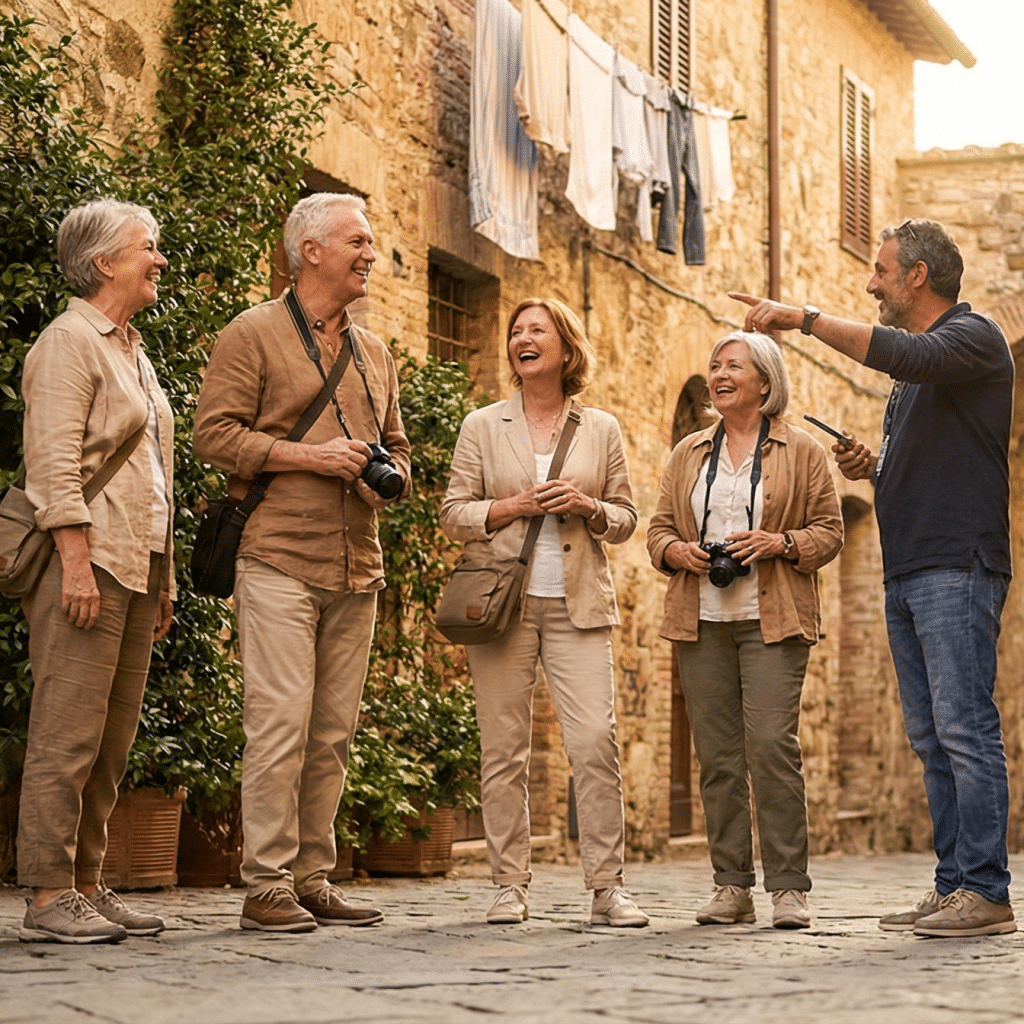
For travelers in their 50s, 60s, and beyond (who often have more time, resources, and appreciation for cultural nuance) these tours deliver intellectual engagement without physical exhaustion. Many operators now report that 60% or more of their small-group participants are solo travelers, with an average age range of 55 to 70. These aren’t first-time visitors rushing through capitals. They’re travelers who’ve already seen the major sights and now crave access to Kosovo’s family-run wineries in the Rahovec Valley or cooking classes in farmhouses where recipes have been passed down for generations.
Special Interest Enthusiasts
Special interest tours represent perhaps the fastest-growing segment, built around travelers whose passions drive their itineraries. The categories are remarkably diverse, and I’ll explore these in depth in the next section.
Travelers Navigating Specific Considerations
Small group tours particularly benefit travelers managing mobility considerations, dietary restrictions, or language barriers. A group of 12 can accommodate a member who needs a slower pace far more easily than a group of 40 can. Boutique operators excel at arranging gluten-free cooking classes in Italy, accessible vineyard tours in Portugal, or sign-language-interpreted museum visits.
For solo travelers (especially women traveling alone) the safety and instant community aspects are invaluable. Rather than navigating unfamiliar cities alone, you join a temporary family of like-minded explorers while maintaining more personal space than large-group tours allow.
The Rise of Niche and Passion Tours
This is where the tour industry gets genuinely exciting. Passion tours don’t just visit places—they pursue specific interests with depth and expertise that general cultural tours can’t match.
Culinary Immersion: From Street Food to Michelin Stars
Culinary tours go far beyond restaurant visits. These programs range from half-day cooking schools in Tuscan farmhouses to multi-day explorations of Sicily’s street food culture, where you learn to prepare arancini and sfincione while understanding how Arab influences shaped Sicilian cuisine.

Specialized food tour operators offer full-day walks through Paris’s immigrant neighborhoods, tasting Chinese canteens and North African bakeries while exploring how global influences transformed modern French food. Rome-based culinary tour companies run Trastevere experiences that skip the one-hour waits at award-winning eateries, while Florence food tours explore ancient wine windows and include Negroni demonstrations. Sicily-focused culinary operators combine street food tastings with hands-on cooking classes and cheese-making demonstrations.
In France, food-focused walking tour companies offer Montmartre experiences with eight stops and Eiffel Tower views, while luxury travel specialists arrange intimate chef’s home dinners in Parisian apartments. Northern Portugal tours blend Douro Valley wine estates with family-run farms, including fado music dinners and cellar tastings.
Photography and Visual Arts: Capturing Europe Through Your Lens
Photography tours provide technical instruction alongside cultural access. You might shoot sunrise over Mont Saint-Michel, document traditional crafts in Hungarian villages, or receive portfolio reviews from professional photographers. The educational component distinguishes them from standard sightseeing tours.

These experiences work for both serious amateurs wanting to improve their skills and professionals seeking fresh perspectives. Tours typically include golden-hour shoots in Croatian hill towns, technical instruction in Slovenia’s Julian Alps, and critique sessions that help you return with portfolio-quality images rather than just holiday snapshots.
History Deep Dives: Walking Where History Happened
History and heritage tours focus on specific eras or themes, attracting travelers who’ve read extensively and now want to stand on the grounds they’ve studied.
World War II tours follow specific units and campaigns. A 101st Airborne-focused tour might trace the path from England training bases to Normandy beaches, through the Netherlands (Operation Market Garden), to Bastogne during the Battle of the Bulge, ending at Berchtesgaden and the Eagle’s Nest. These tours attract history buffs who can engage with nuanced discussions about strategy, leadership, and the war’s lasting impact.
Jewish heritage tours explore former shtetls across Poland, Lithuania, and Ukraine, visiting synagogues, cemeteries, and memorial sites while understanding both the vibrant pre-war culture and the Holocaust’s devastation. These tours require sensitivity and expertise that general tours can’t provide.
Art and architecture tours might focus solely on Art Nouveau, tracing the movement from Paris to Brussels, Vienna, Prague, and Budapest, with expert guides who understand not just the visual style but the social and philosophical movements that shaped it.
Historical tour operators specializing in Central Europe offer “Imperial” journeys through Slovenia, Croatia, Hungary, Slovakia, Czech Republic, and Austria, connecting historical threads across modern borders by following the rise and fall of the Habsburg Empire through palaces, battlefields, and cultural institutions.
Christmas Market Tours: Seasonal Magic Across Borders
Christmas market tours capitalize on Europe’s most atmospheric season, visiting multiple countries during their holiday celebrations. A typical tour might start in Nuremberg (Germany’s most traditional market), continue to Rothenburg ob der Tauber’s medieval festivities, cross into Prague for Old Town Square’s illuminations, visit Vienna’s palace markets at Schönbrunn and Belvedere, and finish in Budapest’s Vörösmarty Square market.
These tours work because they concentrate experiences that independent travelers would spend weeks arranging, navigating optimal timing, crowd management, and the logistics of moving between cities during the holiday season.
Active and Wellness: Movement as Cultural Connection
Active tours combine physical activity with cultural immersion, attracting travelers who explore through doing rather than just observing.

Adventure travel operators specializing in active experiences offer tours like “Mountains and Villages of Corsica” combining moderate hiking with local culinary experiences. Fitness levels are clearly defined (light, moderate, challenging), ensuring participants share similar capabilities and pacing preferences.
Semi-independent active tour specialists craft experiences where daily activities are arranged but pacing remains flexible. A Provence cycling tour might include vineyard visits, medieval village explorations, and cooking classes, with route options for different fitness levels.
Yoga and wellness retreats in Portuguese monasteries, Croatian coastal villas, or Tuscan farm estates combine daily practice with cultural excursions, spa treatments, and locally sourced organic cuisine.
Combining Passion Tours with Independent Travel
Many sophisticated travelers discover that mixing a passion-based tour with solo travel creates the ideal balance. You might book a week-long culinary tour through Lyon and Provence to gain expertise and local connections, then spend independent days in Paris before or after, armed with restaurant recommendations from your tour chef and confidence from your immersive experience.
This hybrid approach lets you leverage expert guidance where it adds most value (complex logistics, specialized access, cultural interpretation) while maintaining freedom where you’re comfortable exploring independently.
How to Choose and Use These Tours Strategically
Evaluating Tour Operators: Beyond the Brochure
Not all “small group” labels are equal. A strategic approach requires digging deeper.
Group size matters more than you think. “Small group” can mean 8 travelers or 28 travelers, and the difference is profound. Confirm the actual maximum (not just “small” or “intimate”) before booking. Groups of 12 to 16 are the true small-group sweet spot. Groups approaching 20 to 24 start losing the key advantages while still charging premium prices.
Local guide quality determines everything. The best operators employ guides who are genuine specialists. For history-focused tours, look for guides with academic credentials (archaeologists leading Pompeii tours, art historians in Florence). For cultural immersion experiences, prioritize guides with deep local roots: the chef in Lyon who grew up in the city’s bouchons, the Budapest guide whose family has lived in the Castle District for generations.
Verify what matters for your tour type. Does the operator employ guides licensed by regional authorities? For academic or historical tours, do guides hold relevant degrees? For culinary tours, do they have professional cooking backgrounds or family food traditions? How long have their guides worked with them, and what ongoing training do they provide?
Itinerary architecture reveals priorities. Examine not just where tours go, but how long they stay and what’s included. A quality small-group tour might spend three full days in a single region rather than rushing through five countries in two weeks. Look for “signature experiences” (home-hosted meals, private concerts, artisan workshops) that indicate genuine local partnerships rather than commission-based shopping stops.
Strategic Timing and Booking
Shoulder season sweet spots: Small group tours offer particular value during April to May and September to October. Operators maintain consistent departure dates while crowds thin and prices drop 20% to 30%. The weather remains pleasant, and local guides have more time for unscheduled discoveries.
Booking lead times: Unlike large coach tours that release schedules 18 months ahead, many boutique operators finalize itineraries 6 to 12 months out. However, the best departures fill quickly (sometimes 8 to 10 months in advance) because group size limitations create scarcity. For special interest tours tied to festivals like Siena’s Palio or Munich’s Oktoberfest, book a year ahead.
Hybrid approaches: The most sophisticated strategy combines tour types, a concept I explore fully in my guide to hybrid travel strategies. Consider booking a small-group cultural tour through Central Europe’s complex historical sites, then adding independent days before and after in cities where you feel comfortable exploring solo. This “bookending” approach provides orientation and confidence while preserving freedom.
Maximizing Value from Specialized Tours
Understand the pricing structure: Small group tours typically cost around 200€ to 300€ per day, while boutique and special interest tours can reach 400€ to 600€ daily. This premium reflects smaller economies of scale but also includes experiences impossible to arrange independently. That private Douro River cruise with an overnight stay at a family-run quinta, or dinner in a chef’s Parisian apartment—these have genuine value that mass-market tours cannot replicate.
It’s worth noting that boutique tours cost 30% to 50% more than standard small-group tours, but are often comparable to luxury large-coach pricing from premium touring brands. The difference is that with boutique tours, you’re paying for personalization and exclusivity rather than five-star hotel chains and motorcoach amenities.
Leverage included meals strategically: Most tours include breakfast daily and some dinners. Use included dinners for group bonding and local guide insights, but strategically skip some to explore restaurants that match your specific tastes. Good tour directors will recommend neighborhood spots for your independent meals.
Participate actively: The small group dynamic means your engagement level shapes the experience. Ask questions, share observations, and express interests. Guides can often adjust on the fly, adding an extra stop at a hidden gem or lingering at a site that captivates the group.
A Detailed Breakdown of Tour Types
Small Group Cultural Tours (12 to 16 Travelers)
These tours use luxury mini-coaches or local transport, stay in boutique accommodations, and maintain flexible schedules. Groups are small enough that guides learn individual interests and can customize commentary.
What to look for: Operators specializing in small-group cultural tours typically feature maximum group sizes of 16 passengers, emphasize locally-based guides with deep regional knowledge, and select hand-picked accommodations in walkable neighborhoods. Look for itineraries that balance structured experiences with free time, and verify that the operator actually owns or charters smaller vehicles rather than using full-size coaches with empty seats.
Best for: First-time visitors to complex regions, solo travelers wanting community, and mature travelers prioritizing comfort with cultural depth. Multi-country tours covering the Balkans, for instance, efficiently cover seven countries in two weeks while maintaining intimate group dynamics that would be impossible with larger groups.
Boutique Tours: The Personalization Premium
Boutique travel designers don’t sell tours—they craft journeys. These custom journey architects start with client consultations, building itineraries from scratch rather than modifying templates. Every element reflects individual preferences, from accommodation style (boutique hotels versus historic castles) to activity pace.
What makes them boutique:
- Maximum group sizes of 6 to 8 for city-based trips, 10 to 12 for regional tours
- Direct founder or owner involvement in itinerary design and guide selection
- Exclusive access to private museum viewings, meetings with artisans, after-hours castle tours
- Flexibility to adjust daily schedules based on group energy and interests
- Local partnerships with family wineries, private homes, and artisan workshops
Price points and value: Boutique tours cost 30% to 50% more than standard small-group tours, though they’re often comparable to luxury large-coach operator pricing. The key difference is where the money goes: boutique tours deliver experiences impossible to replicate independently. A week-long Provence tour might include a private cooking class in a chef’s home, visits to artists’ studios closed to the public, and wine tastings at estates that don’t advertise to tourists.
Luxury versus Premium versus Mid-Range Within Specialized Categories
Luxury tier (around 500€ to 800€ per day): Ultra-private tour specialists provide five-star accommodations, private transportation, and exclusive access. These tours include experiences like private jet travel between destinations, Michelin-starred dining, and meetings with notable locals.
Premium tier (around 300€ to 500€ per day): Upscale coach operators offer “boutique-style” experiences within larger infrastructure. Group sizes typically range from 24 to 30 (smaller than traditional coaches but not true small group). You get superior hotels and signature experiences, but with the reliability and departure frequency of established operators.
Mid-range specialized (around 200€ to 300€ per day): Adventure-style and grassroots tour companies deliver authentic experiences with comfortable three-star accommodations and local transport. The focus is on cultural immersion rather than luxury, making these excellent value for experienced travelers who prioritize experiences over amenities.
Choosing Your Place on the Spectrum
The modern guided tour spectrum offers no single “best” option, only the best fit for your travel personality, budget, and objectives. Small group tours (12 to 16 travelers) provide the sweet spot of community and intimacy for most mature travelers. Boutique tours (6 to 12 travelers) deliver unparalleled personalization for those willing to pay the premium. Special interest tours transform passions into expertise.
The strategic question isn’t whether to take a tour, but which tour serves your specific goals. Are you seeking logistical ease while maintaining independence? A small-group tour with built-in free time works best. Do you want experiences impossible to arrange yourself? Boutique operators justify their cost. Is deepening a particular skill or knowledge base your priority? Special interest tours deliver focused expertise.
After two decades guiding travelers through Europe’s complexities, I’ve learned that the most satisfied guests are those who chose their tour style deliberately, understanding both its advantages and limitations. The beyond-the-bus options aren’t just alternatives to mass tourism. They’re entirely different categories of travel experience, designed for travelers who know what they want and are willing to invest in getting it.
Your journey through Europe deserves an approach that matches your sophistication as a traveler. The spectrum is wide. Choose wisely.
Frequently Asked Questions
How far in advance should I book a small group or boutique tour?
For most small-group tours, booking 6 to 8 months in advance secures your spot on popular departures. Boutique tours and special interest experiences tied to festivals often fill 8 to 10 months ahead due to limited group sizes. If you have specific travel dates or want to travel during peak season (April to May, September to October), earlier booking is always safer.
What’s the real difference between a “small group tour” and a “boutique tour”?
Small group tours (12 to 16 travelers) follow set itineraries with some flexibility built in. Boutique tours (typically 6 to 12 travelers) start with client consultations and craft custom itineraries from scratch. Boutique operators also tend to have direct founder involvement, more exclusive local partnerships, and higher flexibility to adjust schedules based on group interests. The trade-off is that boutique tours cost 30% to 50% more than standard small-group tours, though they’re often comparable to luxury large-coach pricing.
Are small group tours suitable for solo travelers?
Absolutely. Many operators report that 60% or more of their small-group participants are solo travelers. The smaller group size creates an instant community without the anonymity of large coach tours. You’ll find it easier to connect with fellow travelers, and guides have time to ensure everyone feels included. For women traveling alone, the safety and social aspects are particularly valuable.
How do I verify a tour operator’s quality before booking?
Check three things: guide qualifications (for history-focused tours, look for academic credentials; for cultural tours, prioritize deep local roots), group size limits (12 to 16 is the sweet spot for small group), and itinerary details (do they include “signature experiences” or just standard attractions?). Read recent reviews focusing on guide knowledge and group dynamics rather than just hotel quality. Ask the operator directly about their relationships with local communities and how long their guides have worked with them.
Can small group tours accommodate dietary restrictions or mobility limitations?
Yes, and they’re often better suited for this than large coach tours. Groups of 12 can more easily accommodate someone who needs a slower pace, frequent rest stops, or specialized meals. When booking, communicate your needs clearly and early. Good operators will work with restaurants and venues in advance to arrange gluten-free cooking classes, accessible vineyard tours, or other accommodations.
What’s included in the daily cost of specialized tours?
Most small group and boutique tours include accommodations, breakfasts, some dinners, local transportation, entrance fees, and guide services. What distinguishes premium and boutique tours is the quality and exclusivity of these elements (boutique hotels instead of chain properties, private museum access instead of regular admission, chef’s home dinners instead of restaurant reservations). Always review what’s specifically included and excluded before comparing prices across operators.
How do I choose between a cultural tour and a special interest tour?
If you’re visiting a region for the first time or want a balanced overview covering history, culture, and local life, choose a small-group cultural tour. If you have a specific passion (photography, food, history, active travel) and want to develop expertise or skills while traveling, a special interest tour will be more satisfying. Many experienced travelers do both, alternating between broad cultural explorations and deep dives into particular interests.
Are boutique and small group tours worth the extra cost compared to independent travel?
The value depends on what you prioritize. These tours excel at providing access to experiences difficult or impossible to arrange independently (private concerts, artisan workshops, home-hosted meals with local families). They also eliminate the stress of logistics, language barriers, and planning. If you value your time highly, appreciate expert guidance, and want guaranteed access to unique experiences, the premium is justified. If you’re comfortable with uncertainty, enjoy planning, and prioritize budget over convenience, independent travel might suit you better.
Practical Details
Average Tour Lengths:
- Small group cultural tours: 7 to 14 days
- Boutique tours: 5 to 10 days
- Special interest tours: 5 to 12 days (varies widely by focus)
Typical Daily Costs:
- Mid-range small group: approximately 200€ to 300€ per day
- Premium small group: approximately 300€ to 500€ per day
- Boutique tours: approximately 400€ to 800€ per day
- Special interest tours: approximately 250€ to 600€ per day (depending on specialization)
Best Booking Windows:
- General small group tours: 6 to 8 months in advance
- Festival or event-based tours: 10 to 12 months in advance
- Boutique custom tours: 6 to 9 months for planning and booking
- Last-minute options: Some operators offer reduced rates 4 to 6 weeks before departure for unfilled spots
How to Find Quality Operators:
To find small-group cultural tours throughout Europe, search for keywords like “Small Group Cultural Tours Europe 12-16 travelers” or “Boutique Europe Tours.” Professional trade associations like ETOA (European Tour Operators Association) and USTOA (United States Tour Operators Association) maintain member directories that can help you identify established, reputable operators.
For culinary-focused experiences, search “Food Walking Tours [City Name]” or “Culinary Immersion Europe” to find specialized operators in your destination.
For active and wellness tours, use search terms like “Hiking Tours Europe Small Group” or “Active Cultural Tours [Region]” combined with specific fitness level requirements.
When researching, always verify:
- Actual maximum group size (get the number, not just “small”)
- Guide credentials and experience
- Accommodation locations (city center vs. suburbs)
- What’s included vs. excluded in pricing
- Cancellation and flexibility policies
Related Reading:
- Guided Tours vs Independent Travel: A Tour Director’s Honest Perspective
- Hybrid Travel Strategies: Combining Guided and Independent Experiences
- How to Choose the Right Tour Operator for Your European Journey
- Understanding Tour Pricing: What You’re Really Paying For
Explore more European travel guides and insider perspectives on choosing the right tour style for your journey at Pieterontour.com, where every recommendation comes from two decades of experience leading travelers through Europe’s most fascinating destinations.