
Zugspitze: Germany’s Highest Mountain Guide
This guide is for travelers planning a visit to Germany‘s highest peak, Zugspitze, covering the best routes to the summit, practical tips for your visit, and what to expect at 2,962 meters above sea level.
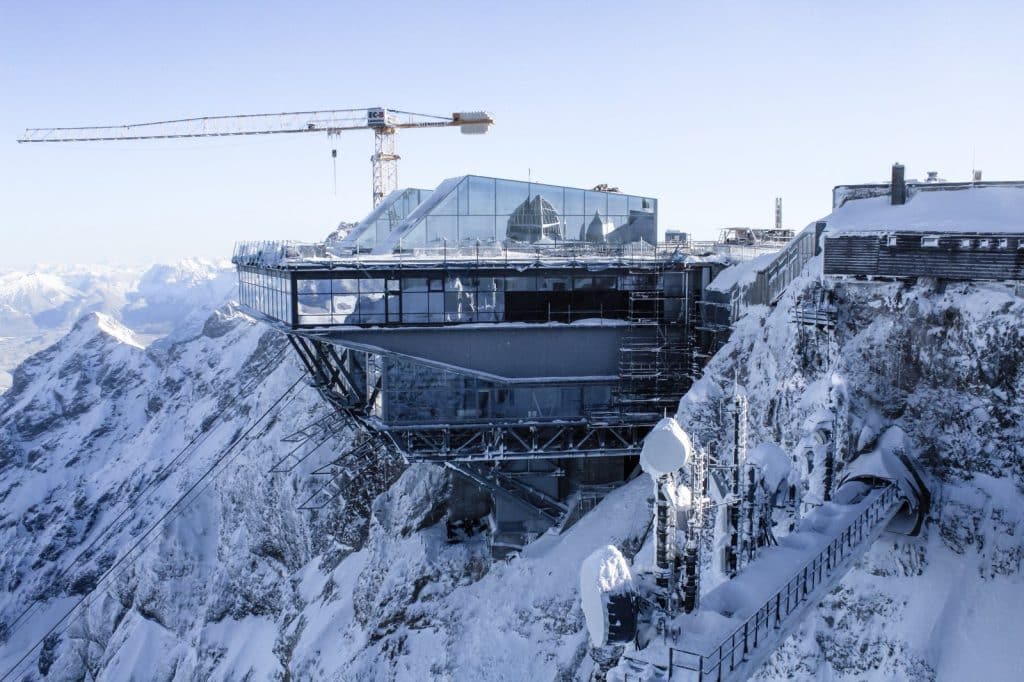
Let me take you to a building site… For many years, that’s how I used to start my introduction to Zugspitze. The new cable car station crowning this beautiful mountain was, for a while, the highest building site in Europe.
If you’ve traveled with me before, you know my feelings about construction work and its inevitable disruptions. Yet it speaks volumes about the stunning beauty and the thrill of the cable car ride that I still love bringing people up here to soak in the panoramic views and warm their hands around a hot chocolate.
On this page
Why Visit Zugspitze
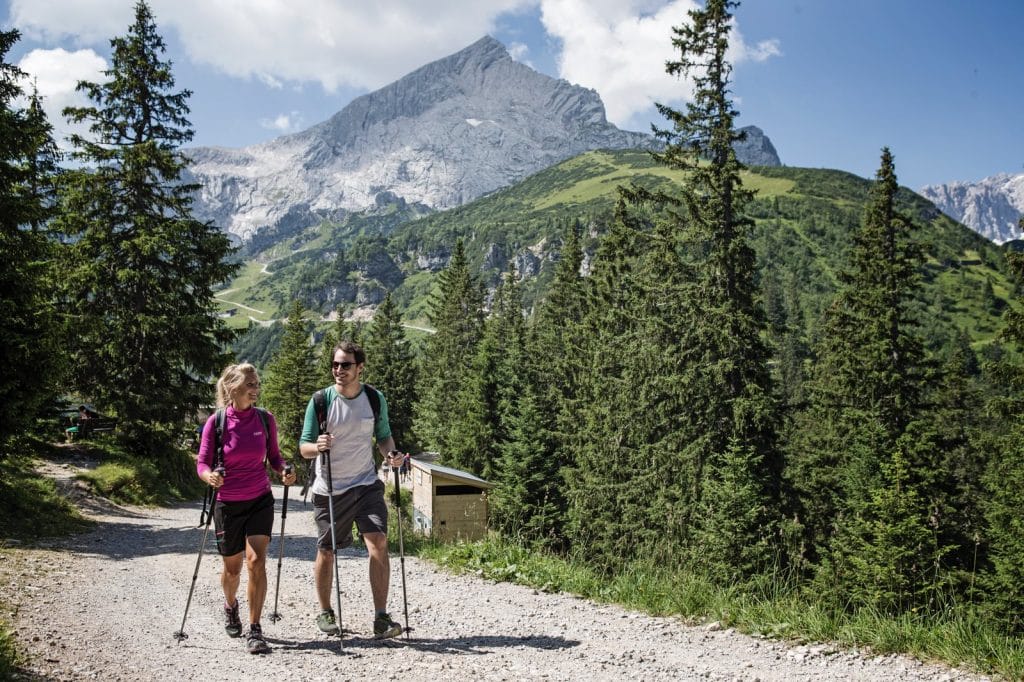
About a 45-minute drive south of Garmisch-Partenkirchen, straddling the border with Austria, rises Zugspitze, Germany’s highest mountain. At 2,962 meters (9,718 feet) above sea level, it crowns the Wetterstein mountain range, which stretches from Ehrwald in Tyrol (Austria) to Mittenwald in Bavaria. The summit itself marks the border between the two countries.
In summer, mountain climbers, day-trippers, families, and seniors all find something to enjoy here. Winter transforms the landscape into a playground with 60 kilometers of skiing slopes, snow parks, children’s areas, toboggan runs, and lively après-ski huts.
A Brief History of Zugspitze
Evidence suggests that local guides knew the mountain routes around Zugspitze at least 50 years before the first official ascent.
The first recorded climb happened on August 27, 1820, when Lieutenant Josef Naus, his mountain guide Johann Georg Tauschl, and survey assistant Maier reached the summit.
The northern part of the mountain became Bavarian in 1854, a wedding gift from Kaiser Franz Joseph of Austria to his wife Elisabeth (Sissi). Since then, it has remained Bavaria’s and Germany’s highest peak.
In 1883, the Munich Alpine Club built the Münchener Haus near the summit. Today’s version offers accommodation for up to 30 people.
During the Second World War, part of the summit was cleared for an anti-aircraft battery. Targeted Allied attacks destroyed the base station for the train and a hotel on the slopes below.
Three Ways to Reach the Summit
To help you visualize your options, here’s how the three routes connect to Zugspitze:
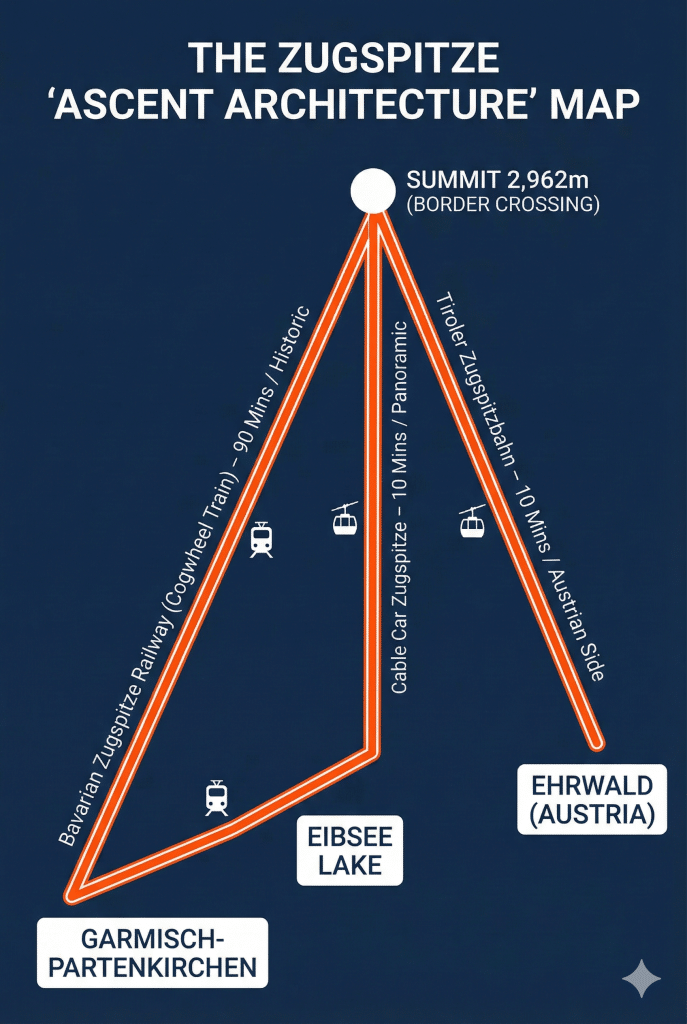
- Garmisch-Partenkirchen (starting point for German routes)
- Eibsee lake (connection point for both railway and cable car)
- Railway route (historic cogwheel train path)
- Cable car route from Eibsee (modern gondola)
- Ehrwald, Austria (starting point for Austrian route)
- Summit (2,962m) marking the German-Austrian border
On foot: Allow around ten hours on one of three traditional hiking routes from the valleys below.
For those of us not walking, three main routes using rail and cable cars from both the Austrian and German sides make the summit accessible to everyone.
Option 1: The Bavarian Zugspitze Railway (Most Historic)
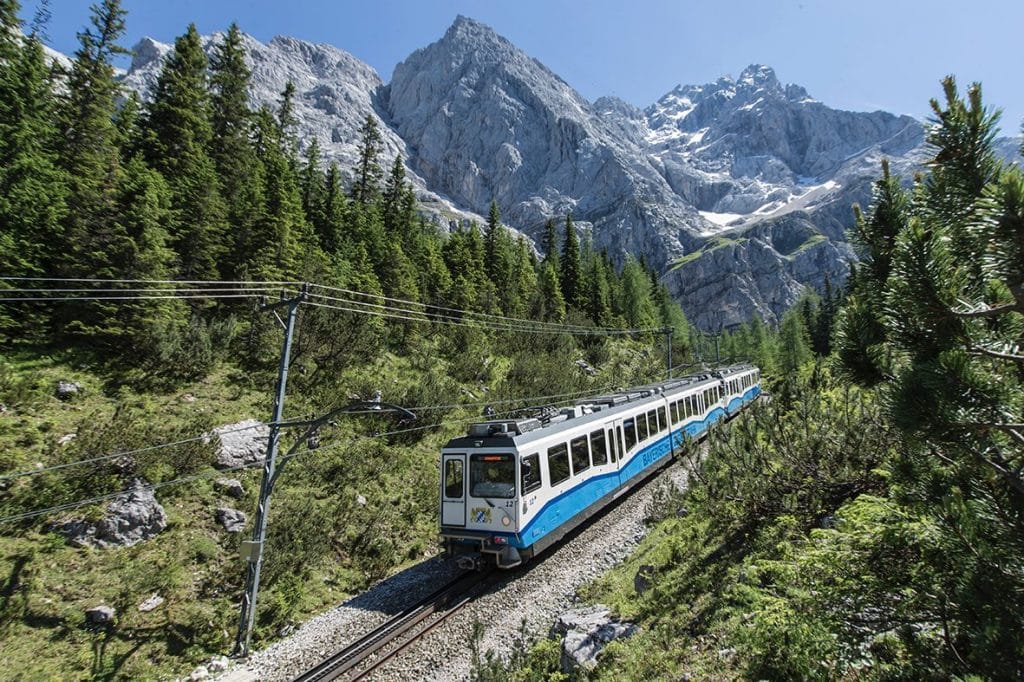
The Bavarian Zugspitze Railway runs from Garmisch-Partenkirchen to the top, stopping at Eibsee in the valley below. Built between 1928 and 1930, it remains one of only four surviving rack railways in Germany. The meter-gauge line terminates at 2,650 meters (8,695 feet) just below the summit, making it Germany’s highest railway and Europe’s third highest.
Practical details:
- Journey time: Approximately 90 minutes from Garmisch-Partenkirchen
- Elevation gain: 2,650 meters (8,695 feet)
- Operates year-round, weather permitting
For current schedules and ticket information, check the official Bavarian Zugspitze Railway website.

Option 2: Zugspitze Cable Car from Eibsee (Most Modern)
The ultra-modern Zugspitze cable car from Eibsee on the German side offers spectacular 360-degree views during the ascent. This engineering marvel holds the world record for the longest free span of any cable car, with a single unsupported section stretching 3,213 meters. The cabins seem to float above the landscape with nothing but alpine air between you and the valley below.
Practical details:
- Journey time: Approximately 10 minutes
- Capacity: Up to 120 passengers per cabin
- Operates year-round, weather permitting
For the most current operating hours and pricing, visit the official Zugspitze cable car website.
Option 3: Tiroler Zugspitzbahn from Austria (Best Austrian Route)
On the Austrian side, the Tiroler Zugspitzbahn in Ehrwald features panorama cars that take a different route with equally spectacular views.
Practical details:
- Departure point: Ehrwald, Austria
- Journey time: Approximately 10 minutes
- Panorama cabin design for optimal viewing
Check the official Tiroler Zugspitzbahn website for current schedules and cross-border travel requirements.

What to Expect at the Summit
The summit offers restaurants, observation decks, and informational displays about the mountain’s history and geology. Weather stations and scientific equipment share the peak with visitors enjoying the views across four countries on clear days.
When I’m up here, I usually grab a Kaiserschmarrn at one of the mountain restaurants. This shredded sweet pancake dusted with powdered sugar and served with applesauce or plum compote is the perfect reward after the ascent, especially on a crisp morning when the views stretch all the way to the Italian Alps.
Summit facilities include:
- Multiple viewing platforms
- Restaurants and cafés
- Gift shops
- Weather station (visible to visitors)
- Historical exhibits
A quick note on planning: Prices and opening hours are mentioned to help you budget and plan, but they can change often. I always recommend checking the official websites (which I’ll link to) for the most current information before your visit.
My Personal Tips for Visiting Zugspitze
I’m often asked about my favorite route up Zugspitze, and honestly, it’s a difficult question to answer. My father was a train enthusiast, and for him, it would have been unthinkable not to take the historic train. For me, though, the panorama and views matter most, so I lean toward the cable cars. I often combine one of the cable cars with the train, but availability, time, and your specific route all play a part in finding the best combination for your visit.
Weather Considerations
Weather plays an important role in your ability to enjoy the trip. You can usually check conditions before ascending and decide whether it’s worth it that day. While the summit can be surprisingly warm, always prepare for temperature drops.
What to bring:
- A warm jacket (essential, even in summer)
- Sensible, closed-toe shoes with good grip
- Sunglasses and sunscreen (alpine sun is intense)
- Layers you can add or remove
A Work in Progress
I started this piece talking about the building site, so it’s only fitting to close with this thought. Throughout the years I’ve been bringing groups to Zugspitze, it has remained a work in progress. Panorama restaurants, shops, new cable stations, displays where you can read about and visualize the history of this special place—each season brings new experiences and stories for my guests. I can only hope they keep making this place more special with each improvement.
Frequently Asked Questions About Zugspitze
What are the ways to reach the Zugspitze summit?
Visitors can reach the Zugspitze summit (2,962m) via three routes: the historic cogwheel train from Garmisch-Partenkirchen, the modern Eibsee cable car, or the Austrian Tiroler Zugspitzbahn. For the best experience, combine the train and cable car. Allow 4-5 hours for the full round trip.
“Is the Zugspitze summit wheelchair accessible?
Cable cars are accessible, but some summit viewing platforms have stairs/terrain challenges
How much time should I allow for a Zugspitze visit?
Plan for at least 4-5 hours total, including travel time to and from the summit. This allows 1-2 hours at the top to explore, enjoy the views, and perhaps have a meal.
Can I visit Zugspitze year-round?
Yes, Zugspitze operates throughout the year, though weather can affect cable car operations. Summer (June-September) offers the clearest views, while winter (December-March) is ideal for skiing.
Is Zugspitze suitable for families with children?
Absolutely. The cable cars make the summit accessible for all ages, and children often love the dramatic ride up. Just ensure everyone has warm layers.
Do I need special equipment to visit the summit?
No special equipment is needed if you’re taking the cable car or train. Warm clothing and sturdy shoes are sufficient. Hikers attempting the ascent on foot require proper mountain gear and experience.
Can I visit both the German and Austrian sides in one day?
Yes, the summit station connects both sides. You can ascend from one country and descend via the other, though this requires coordinating tickets and potentially crossing international borders.
What’s the best time of day to visit for photography?
Morning typically offers the clearest views, especially in summer. Late afternoon can provide dramatic lighting, but clouds often roll in by mid-afternoon in warmer months.
Are there restaurants at the summit?
Yes, several restaurants and cafés operate at the summit, serving everything from quick snacks to full meals. Expect prices to be higher than valley restaurants due to the location. Budget approximately 25-35€ per person for a meal with drinks at Panorama 2962.
How cold is it at the summit?
Temperatures at the summit typically run 15-20°C (27-36°F) colder than the valley below. Even on warm summer days when valleys reach 25°C (77°F), the summit might be just 5-10°C (41-50°F).
Related Zugspitze Experiences
Exploring Zugspitze is just one way to experience the Bavarian Alps. Consider these related guides for a complete mountain adventure:
- Germany Travel Guide: Your Gateway to Exploring Deutschland’s Rich Tapestry
- Austria Travel: Your Complete Guide to Imperial Cities, Alpine Adventures, and Authentic Experiences
- European Dining Hours and Table Manners: A Guide to Eating Like a Local
- Getting Around Central & Eastern Europe: Trains, Buses, and Rental Cars
Discover more alpine adventures and expert travel insights at Pieterontour.com, where every journey is crafted with over 20 years of experience guiding travelers through Europe’s most remarkable destinations.
Thanks to The Bayerische Zugspitzbahn Bergbahn AG for the pictures by Mattias Fend, as well as to Tiroler Zugspitzbahn for the video – copyright (c) Runimation / Tiroler Zugspitzbahn.