
European Coach Tours: A Tour Director’s Complete Guide to Group Travel
This comprehensive guide helps travelers understand European coach tours, evaluate operators objectively, and decide if group travel suits their style, drawing from my two decades leading tours across Central and Eastern Europe.
There’s a moment that happens on every coach tour I’ve led. Usually around day three, when the morning fog lifts over the Rhine Valley or the Swiss Alps come into view for the first time. The entire coach falls silent. Forty strangers who met just days ago suddenly share something profound, and you can feel the magic settling in. After twenty years as a tour director, I still get goosebumps.
But let me be honest with you: coach tours aren’t for everyone. They’re a specific way of experiencing Europe that works brilliantly for some travelers and feels restrictive to others. My job here isn’t to sell you on them, it’s to help you understand exactly what they involve so you can make the right choice for your journey.
This guide serves as your command center. For deep dives into packing, choosing an operator, or solo travel, follow the links to our dedicated detailed guides.
On this page
What European Coach Tours Really Are
Practical Overview:
- Pre-planned bus journeys covering multiple European destinations
- Duration: Typically 7 to 26 days
- Coverage: 3 to 12 countries depending on itinerary
- Group size: 20 to 50 passengers
- Everything organized: accommodation, transportation, many meals, guided activities
- Popular routes: Amsterdam, Paris, Rome, Venice, Munich, Vienna connections
When you book a European coach tour, you’re essentially joining a traveling community. Picture this: you board a modern coach in Amsterdam, and over the next two weeks, that coach becomes your mobile base as you explore everything from Dutch canals to Italian piazzas. Your tour director handles the logistics while professional drivers navigate those narrow medieval streets that would terrify most tourists. You focus on the experience.
The beauty of this system lies in its simplicity. No wrestling with train schedules in languages you don’t speak. No hauling luggage through cobblestone streets searching for hotels. No standing in ticket lines for three hours at the Vatican. Everything flows according to plan, which means you spend your energy on what matters: experiencing Europe.
How the Daily Rhythm Actually Works
Your Rolling Hotel: Modern Coach Features
The coaches used today are nothing like school buses. Think leather reclining seats with genuine legroom, panoramic windows that turn every journey into a scenic route, onboard restrooms (trust me, essential on those Alpine passes), USB ports at every seat, and climate control that actually works. Some operators include WiFi, though I’ve noticed others deliberately skip it, encouraging passengers to engage with the scenery and each other instead of their screens.

Life on the Road: It’s a Logistical Ballet
The modern coach tour isn’t boot camp; it’s a well-oiled machine. Mornings typically start at 8:30 AM, seat rotation ensures everyone gets a view, and onboard Wi-Fi keeps you connected (mostly).
Read the Full Guide: First Time on a Coach Tour? Daily Life, Etiquette, and Seat Rotation
Understanding What You’re Actually Paying For
Budget vs. Luxury: Decoding the Brochures
Not all tours are created equal. A “Budget” tour often uses hotels on the city outskirts (adding commute time), while “Premium” tours guarantee city-center stays and “Business Class” legroom on the coach. Understanding the code words in brochures, like “Visit” vs. “View,” is the only way to compare prices accurately.
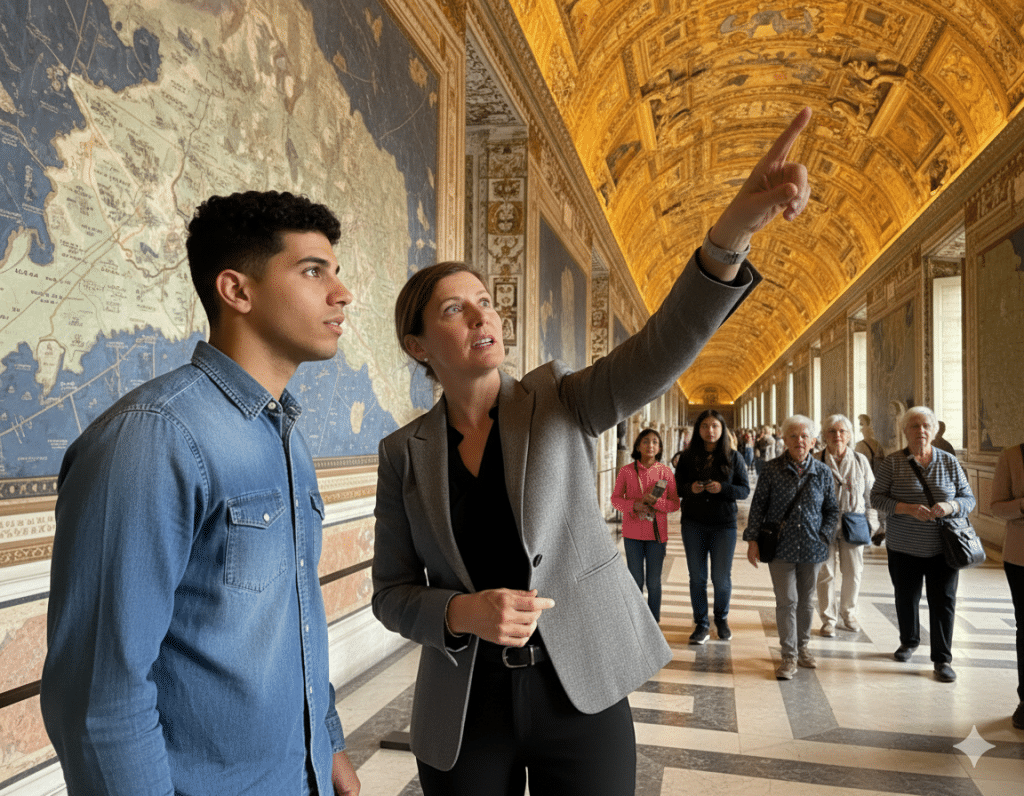
Your package includes entrance to major attractions, and more importantly, skip-the-line access at places like the Vatican Museums, Colosseum, Eiffel Tower, and Louvre. I’ve watched independent travelers wait three hours in Vatican lines while our groups walked straight in. That alone can justify the tour cost.
Classic European Coach Tour Route
Which Route is Right for You?
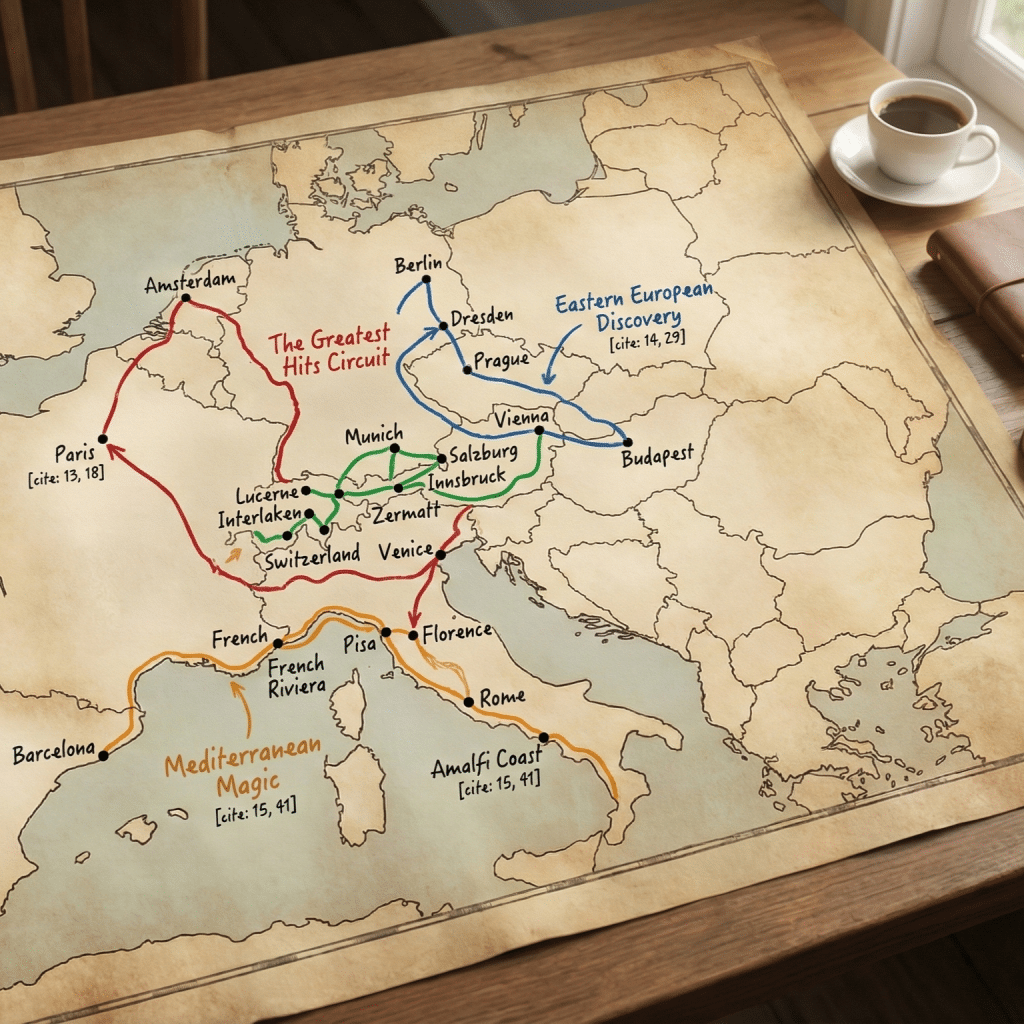
Most itineraries follow one of four classic tracks:
- The Greatest Hits: (London to Rome) for first-timers
- Eastern Discovery: (Berlin to Budapest) for history buffs
- Mediterranean Magic: (Spain to Italy) for sun seekers
- Alpine Adventure: (Switzerland/Austria) for scenery lovers
Read the Full Guide: The 4 Classic European Coach Tour Routes The Real Economics of Coach Touring
The Real Cost of Touring
While the base price looks fixed, hidden costs like optional excursions, gratuities (approximately €50-100 per week), and single supplements can add up. It is vital to do the math on inclusions before booking.
For a breakdown of pricing tiers and hidden costs, see our [Brochure Decoding Guide].
Best Booking Windows
Book 6-12 months ahead for optimal selection and pricing. Last-minute deals occasionally appear, but popular departures sell out, especially May through September. If you’re planning to travel during December, consider booking even earlier for popular Christmas market tours, which fill up quickly.
Summer offers warm weather and long days but brings crowds and premium prices. Spring (March-May) and autumn (September-October) deliver mild weather, fewer tourists, and better value. I personally prefer September: warm days, cool evenings, harvest season in wine country.
The Honest Advantages of Coach Touring
Stress-Free Logistics Someone else handles the overwhelming coordination of multiple countries, languages, currencies, and booking systems. You focus on experiencing rather than organizing.
Expert Context Professional guides transform sightseeing into understanding. They share stories, provide historical context, and offer insights that bring destinations alive in ways guidebooks cannot.
Economic Efficiency Group rates on hotels, attractions, and transportation often beat independent travel costs, especially when you factor in included meals, skip-the-line access, and professional guidance.
Built-In Security Traveling with a group provides safety, particularly valuable for solo travelers or those unfamiliar with European destinations. Professional drivers navigate while you relax.
Social Connections Coach tours attract like-minded travelers. Many participants maintain friendships long after tours end. For solo travelers, it’s instant community.
Time Maximization Pre-planned itineraries efficiently connect major attractions without wasted time on logistics. Skip-the-line access saves hours at popular sites.

The Real Disadvantages to Consider
Limited Flexibility Fixed itineraries leave minimal room for spontaneous discoveries or extended stays at places that captivate you. If flexibility matters, coach tours may frustrate.
Faster Pace Covering multiple destinations means early mornings, long travel days, and sometimes insufficient time for deep exploration. Some find this exhausting.
Group Dynamics You’re spending extended time with the same people. While most groups gel beautifully, personality clashes can affect enjoyment.
Less Personalization Tours cater to broad interests, potentially including activities that bore you while missing niche attractions you’d prefer.
Tourist-Track Experiences Groups often eat at restaurants equipped for large parties rather than intimate local spots. Some authentic experiences get sacrificed for logistics.
Coach Tours Versus Independent Travel: The Honest Comparison
Choose coach touring if you:
- Have limited planning time
- Prefer stress-free logistics
- Want expert commentary and context
- Value group camaraderie
- Seek cost predictability
- Travel solo but want companionship
- Are visiting Europe for the first time
- Prefer not managing details
Choose independent travel if you:
- Crave spontaneous adventures
- Prefer slower, deeper exploration
- Want complete itinerary control
- Enjoy trip planning
- Seek off-the-beaten-path discoveries
- Value maximum cultural immersion
- Have specific niche interests
- Need unlimited flexibility
Many travelers combine approaches: taking a coach tour for an overview, then returning independently to favorite destinations.
Practical Wisdom for Coach Touring Success
The One-Suitcase Rule
Coach space is strictly limited to one bag per person (plus a small carry-on). This requires a specific strategy: the “5-4-3-2-1” capsule wardrobe. Trust me, dragging a heavy bag up a Venetian staircase is a mistake you only make once.

Read the Full Guide: Mastering the One Suitcase Challenge for Coach Tours
Coach Tours for Different Travelers
Solo Travelers: Avoiding the Single Supplement
Over 50% of coach passengers now travel solo. While the “Single Supplement” can be pricey, strategies like “Guaranteed Share” matching or booking dedicated solo-only departures can save you thousands.
Read the Full Guide: Solo Travel on Coach Tours: Single Supplements & Roommates
Families with Children
Age requirements vary. Most tours welcome children 5-8 and older, though some specify minimum ages of 8-12. Family collection itineraries incorporate hands-on activities, animal encounters, and sites connected to popular stories.
Consider activity levels and daily schedules when bringing children. Early mornings and long travel days challenge young travelers.
Travelers with Disabilities
Specialized operators offer fully accessible tours featuring coaches with wheelchair ramps or lifts, secure wheelchair spaces, accessible hotels with adapted rooms, vetted attractions, and experienced support staff.
Standard tours have limited accessibility. Most coaches accommodate only one wheelchair, and many historic European sites lack elevators. Contact operators directly about specific needs.
Senior Travelers
Most coach tour passengers are 50+, with many tours designed specifically for mature travelers. Tours accommodate various fitness levels, though most require moderate walking ability.
Look for slower-paced itineraries with longer hotel stays and fewer travel days between destinations.
Frequently Asked Questions
How much walking is involved in a typical coach tour?
Most tours involve 2-4 hours of walking daily, often on uneven surfaces like cobblestones. You’ll encounter stairs in historic buildings and sometimes steep inclines in hill towns. Tours typically specify fitness levels required.
Can I leave a tour early or skip certain days?
Generally no. Once tours begin, you’re committed to the full itinerary. Leaving early usually forfeits remaining tour value without refund. If you need flexibility, independent travel suits better.
What happens if I miss the coach departure?
You’re responsible for catching up with the group at the next destination at your own expense. Tour directors provide emergency contact numbers, but punctuality is crucial.
Are coach tours suitable for travelers with dietary restrictions?
Most operators accommodate vegetarian, vegan, gluten-free, and allergy-related needs with advance notice. Kosher and halal options are less common but possible with some operators. Always confirm during booking.
How do bathroom breaks work during long coach rides?
Coaches have onboard restrooms for emergencies, though they’re small and basic. Scheduled comfort stops happen every 2-3 hours at service stations with full facilities.
Will I have WiFi throughout the tour?
Most hotels offer WiFi, sometimes free, sometimes for a fee. Some coaches include WiFi, others don’t. Don’t expect consistent connectivity, especially in rural areas.
What if I don’t like my roommate in a twin-share arrangement?
Tour directors can sometimes reassign rooms if others are willing to switch, but it’s not guaranteed. Single supplements avoid this issue but add cost.
What happens if I get sick during the tour?
Every European pharmacy displays a green cross sign, and your tour director can help locate the nearest one. If you need a doctor, I’ll assist with language barriers and help you navigate the local healthcare system. The coach has comfortable seats where you can rest during travel days, and we always work to accommodate travelers who need extra recovery time. This is why travel insurance is so essential.
Is travel insurance necessary for coach tours?
Absolutely essential. Tours are significant investments, and insurance covers trip cancellation, medical emergencies, and travel delays. Many operators require proof of insurance. Finding the right policy can be complex; I’m in the process of writing a complete guide on how to choose the best travel insurance for your needs.
The Bottom Line
European coach tours offer an excellent introduction to the continent, particularly for first-time visitors, busy professionals, solo travelers seeking community, or mature travelers preferring hassle-free logistics. While sacrificing some flexibility and personal control, they deliver unparalleled convenience, expert knowledge, efficient sightseeing, and often better value than independent travel when you calculate all inclusions.
Success lies in choosing the right operator based on objective criteria: verifying inclusions, evaluating track record, assessing guide quality, and understanding your travel style. Focus on what matters most to you, whether pace, comfort, group size, authentic experiences, or value, then seek operators delivering specifically on those dimensions.
I’ve watched thousands of travelers discover Europe from coach seats, and here’s what I know: the right tour with the right operator creates magic. Not because of the destinations, though they’re spectacular, but because of how the journey unfolds. The friendships formed over shared adventures. The moment when history becomes real standing where it happened. The confidence gained navigating a continent with support.
Whether you’re marveling at the Matterhorn, gliding through Venice, or watching sunset from the Eiffel Tower, the right coach tour lets you focus on what matters: experiencing the magic of Europe.
Ready to explore Europe by coach? Visit Pieterontour.com for more destination guides and travel insights from the road.