Kutná Hora Day Trip from Prague: A Medieval Masterpiece Just One Hour Away
Where Gothic grandeur meets mortality’s artistry—discover Central Europe’s most compelling day trip from Prague.
Looking for more Czech adventures? Check out my complete Czech Republic travel guide for comprehensive coverage of the entire country.
The Medieval Town Prague Doesn’t Want You to Know About

While crowds jostle for position on Charles Bridge and queue for hours at Prague Castle, a UNESCO World Heritage town sits virtually empty just 50 minutes away by train.
Kutná Hora built its fortune on silver—so much silver that medieval kings established royal mints here, and the coins struck in this hilltop town became Europe’s standard currency for two centuries.
The wealth flowing from underground created two architectural marvels that remain virtually unmatched in Central Europe. St. Barbara’s Cathedral stands as a monument to Gothic ambition, its five naves and flying buttresses representing a 517-year building campaign that outlasted empires.
The Sedlec Ossuary transforms 40,000 to 70,000 human skeletons into devotional art—a bone chandelier, skull garlands, and architectural elements that force visitors to confront mortality with unexpected grace.
Most travelers experience Kutná Hora through rushed group tours that allocate four hours total, barely enough time for photographs before herding everyone back to coach buses.
Independent travelers discover something different: a medieval town that reveals itself slowly, streets that empty as afternoon light angles across stone facades, and the rare luxury of experiencing masterpieces without crowds pressing from behind.
This guide shows you how to maximize your day while spending half what tour operators charge.
On this page
Transportation: Getting There Without the Tour Bus

Train Travel: The Superior Option
Direct trains from Prague Main Station (Praha Hlavní Nádraží) deliver you to Kutná Hora in 50 minutes for 150 CZK ($6-7 USD) one way. Departures leave at :04 past each hour—8:04, 10:04, 12:04, 14:04—running every two hours throughout the day. Note: Some timetables show hourly departures with alternating direct and transfer-via-Kolín services; verify the current schedule at cd.cz for your specific travel date.
New to European train travel? My guide to getting around Central & Eastern Europe covers everything you need to know about trains, buses, and transportation throughout the region.
The financial case is compelling: Guided tours cost 1,800 CZK ($55 USD) minimum and provide just four hours onsite. Independent train travel costs 300 CZK round-trip plus 360 CZK for combined entrance tickets—a total of 660 CZK versus 1,800 CZK. That difference covers a leisurely lunch, local beer, and artisan souvenirs while giving you twice the exploration time.
Ticket purchasing: Walk to the ticket office at Prague Main Station and buy tickets the day of travel. Advance booking is unnecessary except summer weekends. Return tickets cost the same as purchasing two one-way tickets—no discount applies. When departing Kutná Hora for Prague, buy tickets at the station or from conductors aboard (no surcharge if ticket offices are closed). Important: Train schedules change annually in December—verify current departure times at cd.cz before your trip.
Return flexibility: The last direct train departs Kutná Hora at 21:01, with indirect connections via Kolín available until 22:20. You control your schedule completely.
Indirect Trains via Kolín
Hourly trains connecting through Kolín add only 15-20 minutes to your journey while maintaining the same 150 CZK fare. This option provides departure flexibility when direct trains don’t align with your preferred schedule.
Bus Service: The Budget Alternative
Bus 381 from Háje Metro Station (Line C terminus) reaches Kutná Hora for 60-80 CZK ($2.50-3.50)—half the train cost—but requires 1 hour 40 minutes and makes 45 stops between Prague suburbs and Kutná Hora. The bus terminates at Kutná Hora-Haje, five minutes walking from the historic center.
In my experience as a tour director: The modest train premium buys you time and comfort. Use the 50-minute journey to mentally prepare for what awaits rather than enduring nearly two hours of frequent stops through suburban streets.
The Bone Church: Confronting Sedlec Ossuary
When Holy Soil Created Europe’s Most Desired Cemetery
In 1278, King Ottokar II dispatched Cistercian Abbot Henry to the Holy Land with specific instructions: return with sacred soil from Golgotha. Henry followed orders precisely, returning with earth from Christianity’s most hallowed ground. He scattered it ceremonially across the Sedlec monastery cemetery with full liturgical reverence.
Word spread through medieval Europe’s interconnected religious networks. Nobility and clergy across the continent requested burial in soil blessed with earth from Christ’s crucifixion site. Thousands paid handsomely for interment rights.
Then catastrophe arrived in waves. The Black Death claimed tens of thousands in the mid-14th century. The Hussite Wars added more dead during the early 15th century. When workers constructed a new church over the cemetery in 1400, excavations revealed mass graves requiring immediate processing. A Gothic chapel was built above ground level, creating an ossuary beneath—initially a practical solution for storing excavated bones that would become one of Europe’s most extraordinary artistic statements.

František Rint’s 1870 Transformation
For centuries, the ossuary functioned as intended: a solemn repository where bones were stacked with basic organization. Legend suggests a half-blind monk maintained the space. In 1870, the aristocratic Schwarzenberg family commissioned František Rint, a woodcarver by trade, to organize the chaotic bone heaps into aesthetic coherence.
Rint created something unprecedented:
The Central Chandelier: A massive hanging sculpture incorporating at least one specimen of every bone type in the human skeleton. Skull garlands drape from ceiling vaults, creating visual movement that simultaneously unsettles and mesmerizes.
Schwarzenberg Coat of Arms: Executed entirely in bone, this heraldic achievement demonstrates both aristocratic patronage and Rint’s artistic audacity.
Four Pyramidal Monuments: Bell-shaped structures occupy each chapel corner, rising from floor to vault as monuments containing remains from the 40,000-70,000 individuals whose bones compose the installation.
Bone Architecture: Piers flank the altar with religious dignity. Monstrances frame liturgical spaces. Everything structural or decorative derives from human skeletal remains.
Rint’s Signature: Near the entrance, the artist signed his masterwork in bone letters—a permanent declaration of authorship that echoes through 150 years.
Practical Visitor Information
2025/2026 Hours:
- April-September: 9:00-18:00
- October & March: 9:00-17:00
- November-February: 9:00-16:00
- Closed December 24-26 and January 1
Location: Zámecká 279, 284 03 Kutná Hora | +420 326 551 049 | sedlec.info
Admission:
- Adults: 220 CZK ($11 USD)
- Students/Seniors: 150 CZK ($7 USD)
- Children: 80 CZK ($ 4 USD)
- Combined tickets with Cathedral of Assumption available
- Note: Czech attraction prices typically increase annually—verify current rates at sedlec.info
Important Notes:
- Accessed via stairs descending beneath Cemetery Church of All Saints
- Not wheelchair accessible due to narrow staircase and compact interior
- Interior lighting deliberately dim; high ISO photography or tripod required
- Morning visitors encounter minimal crowds before tour buses arrive
Beyond the Macabre: Understanding the Spiritual Purpose
While marketed as “bone church” or sensationalized as macabre tourism, the Sedlec Ossuary serves profound theological purpose. Medieval Christianity confronted death directly rather than avoiding it the skeleton throughout Christian iconography symbolizes memento mori, the imperative to remember mortality and salvation’s urgency.
Rint’s arrangements don’t mock death; they dignify it through artistic mastery. Each bone represents a human life lived with hopes, struggles, loves, and spiritual yearnings. By transforming individual mortality into collective artistic expression, Rint created something approaching prayer rendered in calcium phosphate, a meditation on how individual lives compose something transcendent.
St. Barbara’s Cathedral: Five Centuries of Ambition in Stone

From Silver Wealth to Gothic Masterpiece
Construction began in 1388 under Johann Parler, son of Peter Parler (architect of Prague’s St. Vitus Cathedral). St. Barbara’s was conceived as monument to Kutná Hora’s silver prosperity and miners’ devotion to their patron saint.
The 517-Year Building Timeline:
- 1388-1419: Initial Gothic construction under the Parler dynasty
- 1419-1481: Sixty-year halt during Hussite Wars religious upheaval
- 1481-1511: Revival under masters Matěj Rejsek, Benedikt Rejt, Mikuláš Parler
- 1550s-1588: Three-peaked roof completion; provisional wall construction; Jesuit occupation
- 1626-1773: Baroque modifications gradually alter Gothic purity
- 1880s-1905: Neo-Gothic restoration under J. Mocker and L. Labler; final completion
Architectural reality versus vision: Original designs envisioned a cathedral perhaps double the current size. As silver mining declined and Kutná Hora’s prosperity waned, construction budgets shrank proportionally. The result demonstrates how economic realities shape artistic vision—a beautiful cathedral constrained by changing fortunes rather than the original megalomaniac ambition.
Late Gothic Innovation at Its Peak
St. Barbara’s represents Late Gothic architecture’s apex—stone construction pushed to technical limits before Renaissance philosophy would revolutionize building entirely.
Five-Nave Design: Rather than traditional cruciform plans, St. Barbara’s features five parallel naves creating remarkable interior spaciousness and light. This unusual configuration, inspired by French Gothic cathedrals, makes the entire interior feel unified and transcendent.
Double-Arched Flying Buttresses: These architectural innovations support the choir, enabling walls to rise higher and thinner than otherwise possible. Walk the exterior perimeter to study these buttresses—they’re masterclasses in Gothic engineering principles.
Helical Vaulting: Interior vault features helical ribs creating visual movement and spatial complexity, making the ceiling appear to spiral gently upward toward heaven.
Radial Chapels: Originally eight radial chapels with trapezoidal interiors (modeled on French cathedral design) extend from the main structure, providing additional altar spaces and natural light sources.
Interior Treasures Worth Extended Study
Medieval Frescoes: Remarkably preserved paintings depict both religious themes and secular scenes of medieval mining and town life—offering modern visitors visual windows into 14th-century daily existence rarely preserved in European churches.
Renaissance-Baroque Pulpit: The main pulpit illustrates architectural evolution, combining Renaissance sculptural sophistication with Baroque decorative excess.
Neo-Gothic Stained Glass (1880s-1906): Commissioned during 19th-century restoration, these windows by František Urban depict Christian narratives alongside contemporary historical events, including Emperor Franz Joseph I’s 1906 cathedral visit.
2014 St. Agnes Window: The most recent artistic intervention honors the Czech saint, demonstrating the cathedral’s continued evolution as living spiritual space rather than static museum.
Visiting Details
2025/2026 Hours:
- January-February: 10:00-16:00
- March: 10:00-17:00
- April-October: 9:00-18:00
- November-December: 10:00-17:00 (closed December 24)
Admission:
- Adults: 180 CZK ($8 USD)
- Students/Seniors: 140 CZK ($6 USD)
- Children 6+: 60 CZK ($2.50 USD)
- Children under 6: Free
Special Experiences:
- Roof tours: 6,000 CZK for groups of 10 (60-minute architectural presentation with town views)
- Organ concerts: 2,500 CZK organist fee (inquire about schedules)
- Private guided tours: 600 CZK regular hours; 1,500 CZK after hours
Accessibility: Fully wheelchair accessible with discounted admission; reserved parking on Kremnická Street.
The Perfect Independent Itinerary
Morning Departure Strategy
Success depends on early departure, arriving before tour buses unload their passengers.
8:04 AM – Prague Departure Board the direct train from Prague Main Station. First class is optional but recommended for comfort during your 50-minute journey. Use this time to review what awaits—meditation enhances the experience significantly.
8:56 AM – Kutná Hora Arrival The station sits in suburban surroundings. Follow signage toward “Sedlec” or “Kostnice” (Czech for ossuary), walking approximately 15 minutes.
9:15 AM – Sedlec Ossuary You’re among the first visitors, arriving before or as guided tours begin. Queue times are minimal. Spend 45-60 minutes exploring the Cemetery Church of All Saints and ossuary beneath. Morning light illuminates the chapel differently than afternoon light—subtle but meaningful.
10:30 AM – Transit to Historic Center Take local bus (20 CZK / $0.80) from train station to town center, or follow the scenic “red tourist trail” (3 km, mostly flat, 45 minutes) winding through parks and countryside connecting Sedlec to historic Kutná Hora.
11:15 AM – Palackého Square Exploration The historic center deserves unhurried attention. The Italian Court (Vlašský dvůr)—where silver was minted and tested—offers tours. The Stone House (Kamenný dům) showcases Gothic residential architecture. Narrow medieval streets are proportioned for horses and carts, not modern vehicles.
12:30 PM – Lunch Restaurant Ruthardce offers garden seating with cathedral views. Alternatives include Café Malá Strana or local pubs (hospoda) serving Czech goulash and pilsner. Most mains cost 200-300 CZK ($9-13 USD).

2:00 PM – St. Barbara’s Cathedral Most tour groups have departed by now. You’ll have space to study architecture without crowds pressing past. Sit inside for 15-20 minutes observing how light passes through windows, how perspective shifts through naves, how vaulted ceilings create spatial movement.
3:30 PM – Extended Exploration Visit the Jesuit College (often hosting exhibitions), climb to cathedral rooftop for valley views, or explore side chapels and artistic details you initially rushed past.
4:30 PM – Return to Station Most shops and attractions close by 5 PM. The town becomes peaceful—nearly empty. This is actually ideal time for photography and contemplation if your train schedule allows.
5:45 PM or Later – Prague Return Choose any evening train. You’ll arrive in Prague between 6:35 PM and 10:00 PM depending on which service you select.
Cost Comparison: Independent vs. Guided

Why Independence Wins
Timing advantage: You arrive with morning trains, before 11:00 AM coach tours. The ossuary has completely different atmosphere without crowds jockeying for bone-chandelier photographs.
Schedule flexibility: Guided tours allocate 4-6 hours total. Independent travel lets you stay until 4 PM or later, experiencing the town as locals do and revisiting favorites without time pressure.
Economic sense: Nearly 50% savings compared to tour operators while gaining significantly more onsite time.
Authentic interactions: Restaurants and locals recognize train travelers as serious visitors rather than tour package participants. You’ll receive genuine recommendations, conversation, and different quality of interaction.
Deeper understanding: Rather than absorbing scripted guides, you explore organically. This slower, self-directed approach creates more memorable experiences and genuine comprehension.
Photography Guide: What You Can (and Can’t) Capture
Important Photography Policy Updates
Sedlec Ossuary Photography: As of 2025, photography policies at the Sedlec Ossuary have become increasingly restrictive out of respect for the human remains. Before your visit, verify current rules at sedlec.info as policies can change seasonally or without advance notice. Some visitors report complete photography bans, while others note that photography is permitted without flash or tripods. Always ask staff upon entry and respect posted signage.
If photography is not permitted, embrace the experience without a camera—the ossuary’s impact often deepens when you’re not viewing it through a lens.
St. Barbara’s Cathedral Photography
Exterior shots:
- Best time: Early morning (7-9 AM) when sunlight illuminates the façade with dramatic shadow contrast
- Best angle: From Jesuit College courtyard across the square—this vantage shows how five-nave interior expresses through exterior varied roof heights
- Flying buttresses: Photograph from east side in afternoon light to demonstrate architectural engineering clarity
Interior photography:
- Avoid midday crowds; go during shoulder hours (9-10 AM or after 2 PM)
- High ISO required (1600-3200); tripod or brace camera against stone pillars
- Stained glass: Shoot backlit near windows with afternoon sun for dramatic color differentiation
If Ossuary Photography Is Permitted
Technical challenges:
- Very low light requires ISO 3200+ and tripod (if allowed)
- Chandelier photographs best from chapel rear where altar cross provides compositional context
- Pyramids require wide-angle lens (16-35mm equivalent) to capture apex-to-base proportions
Detail work:
- Rint’s bone-letter signature requires macro capability; smartphone macro mode works
- Bone garlands and skull arrangements photograph best when camera is perfectly level—distortion otherwise appears unpleasant
Atmosphere over perfection: If photography is allowed, remember that slightly underexposed or high-ISO grainy images often enhance the mood. Don’t obsess over technical perfection—capture the feeling of the space while respecting its sacred nature.
Historical Context: Why Kutná Hora Mattered
Silver, Mints, and Geopolitical Power
Kutná Hora’s wealth derived not merely from silver deposits but from royal minting privileges. In the 14th century, miners and minters here produced the Prague groschen—a silver coin of such purity and consistency it became standard currency across Central Europe for nearly 200 years. The gold ducat followed as another Kutná Hora mint creation.
This represented geopolitical power. Whoever controlled Kutná Hora’s mints controlled regional financial networks. Kings invested lavishly in infrastructure. The wealth generated by brutal underground mining labor funded the very cathedrals inspiring spiritual awe today.
St. Barbara’s dedication to miners’ patron saint wasn’t ceremonial—it reflected miners’ central importance to kingdom economy and power.
The Hussite Wars’ Lasting Impact
Construction interruption during 1419-1481 wasn’t random scheduling. The Hussite Wars represented religious revolution shattering medieval Catholic orthodoxy. Bohemia became the crucible of Protestant reformation—100 years before Luther.
Jan Hus, executed in 1415, sparked movements that consumed the kingdom. Religious iconoclasts destroyed artwork. Construction halted. Certainty evaporated. When peace returned and construction resumed, it occurred under reformed religious atmosphere—partly Catholic, partly Hussite-influenced.
This historical turbulence literally shaped cathedral architecture. Stylistic discontinuities visible in St. Barbara’s reflect ideological ruptures in the society building it.
UNESCO Recognition and Modern Challenges
UNESCO’s 1995 designation recognized Kutná Hora’s “Historical Town Centre with the Church of St Barbara and the Cathedral of Our Lady at Sedlec” as World Heritage. This acknowledged Kutná Hora represents complete medieval mining town ecosystem—not isolated masterpieces but entire urban fabric showcasing how wealth, community, labor, spirituality, and artistic expression interweave.
The designation increased tourism substantially (over 900,000 annually), presenting both opportunity and challenge. The town faces pressure accommodating visitors while preserving authenticity.
Pre-Trip Preparation Checklist
Planning an independent day trip requires thoughtful preparation. If this is your first time organizing European travel without a tour operator, my complete guide on how to plan an independent European trip provides a comprehensive roadmap—this Kutná Hora itinerary serves as a practical case study of those principles in action.
Before Leaving Accommodation:
- Check current train schedules at Czech Railways (cd.cz) – timetables update each December
- Carry 500-1,000 CZK cash (not all vendors accept cards)
- Wear comfortable walking shoes; cobblestone streets and hills throughout
- Bring layers; cathedral interiors remain cool year-round
Physical Considerations:
- Sedlec Ossuary requires stair descent; limited mobility visitors should plan accordingly
- St. Barbara’s Cathedral has 50+ interior steps
- Total walking distance approximately 8-10 km for full exploration; 4-5 km for abbreviated itinerary
Photography Equipment:
- Ensure phone/camera fully charged; minimal charging stations in town
- High-capacity memory card; ossuary interior photography requires multiple shots
- Tripod optional but significantly improves cathedral interior photography
Cultural Respect:
- Both sites are active religious spaces; dress modestly (covered shoulders/knees)
- Photography restrictions vary by site and season—always ask staff before photographing
- Respect the spiritual significance of human remains at the ossuary—maintain contemplative tone
- For more guidance on visiting sacred spaces respectfully, see my complete guide to religious customs and church etiquette in Europe
Seasonal Timing Considerations
Spring (April-May)
Advantages: Moderate crowds, pleasant weather, blooming gardens around cemetery Disadvantages: Weekend capacity exceeded; pack layers for temperature fluctuations Ideal for: Photography enthusiasts seeking optimal light with manageable crowds
Summer (June-August)
Advantages: Maximum daylight hours, fully staffed attractions Disadvantages: Peak tourist season; expect Prague-level crowds; hotter cathedral interiors Ideal for: Family/group travel with summer schedule flexibility
Autumn (September-October)
Advantages: Excellent weather, autumn light transforms cathedral photography, substantial post-Labor Day crowd reduction Disadvantages: Heating not yet activated; cool interior temperatures Ideal for: Optimal balance of weather, aesthetics, and crowd management
Winter (November-February)
Advantages: Minimal crowds; intimate exploration possible; ossuary’s cool stone feels appropriately solemn Disadvantages: Reduced daylight (sunset 4-5 PM); cold; some restaurants close Mon-Wed Ideal for: Dedicated travelers prioritizing solitude over comfort
Extended Exploration Opportunities
Mint House (Vlašský Dvůr)
The castle where silver was tested, weighed, and coins minted. Gothic architecture combines with functional workshop design. Tours available in Czech; English-speaking guides by arrangement.
Stone House (Kamenný Dům)
Medieval residential architecture preserved to demonstrate wealthy merchant living conditions. Period furnishings offer context for daily medieval life beyond nobility and clergy.
Jesuit College
Baroque architecture representing Counter-Reformation influence. Often hosts exhibitions; check current programming.
Countryside Trails
Tourist trails marked with colored blazes connect Kutná Hora to surrounding countryside, creating gentle loops through agricultural fields and forests. Maps available at tourist information office on Palackého Square.
Frequently Asked Questions
How to do a day trip to Kutná Hora from Prague independently?
Take the direct train from Prague Main Station (Praha Hlavní Nádraží) to Kutná Hora. Trains depart every two hours (e.g., 8:06, 10:06) and take 50 minutes. The total cost is approximately 660 CZK ($29)—saving 50% compared to guided tours while allowing 6-8 hours for the Sedlec Ossuary and St. Barbara’s Cathedral.
Is photography allowed inside the Sedlec Ossuary in 2026?
Photography policies at the Sedlec Ossuary have become increasingly restrictive in recent years. As of 2025, some visitors report complete photography bans while others note photography is permitted without flash or tripods. Always verify current policies at sedlec.infobefore your visit and ask staff upon entry. These rules exist to respect the human remains and sacred nature of the space. If photography isn’t allowed, experience the ossuary without a camera—many visitors find this actually deepens the impact.
Can you do Kutná Hora in a half-day trip?
Yes, but you’ll miss significant aspects of the town. A compressed itinerary visiting only the Sedlec Ossuary and St. Barbara’s Cathedral takes approximately 4-5 hours including train travel. However, I recommend allocating 6-8 hours to experience Kutná Hora properly—this allows time for the historic center, lunch at a local restaurant, and exploration without feeling rushed. The early morning train (8:06 AM) with an early afternoon return (2-3 PM) provides a minimal but functional half-day experience.
Is the Kutná Hora train station close to the Bone Church?
No. Kutná Hora Main Station sits approximately 15 minutes walking distance (1.2 km) from the Sedlec Ossuary. The walk is straightforward with clear signage pointing toward “Sedlec” or “Kostnice” (Czech for ossuary). Alternatively, local buses run from the station to both the ossuary and the historic town center for 20 CZK ($0.80). If arriving by train, I recommend walking to the ossuary first, then taking the bus or following the scenic red tourist trail (3 km, 45 minutes) to the historic center.
Is the terrain difficult for seniors or those with mobility challenges?
The terrain presents moderate challenges. Both the Sedlec Ossuary and historic center involve cobblestone streets, uneven surfaces, and hills. Specific considerations:
Sedlec Ossuary: Accessed via narrow stairs descending beneath the Cemetery Church—not wheelchair accessible. Visitors with limited mobility should assess their comfort with stairs before planning this visit.
St. Barbara’s Cathedral: Fully wheelchair accessible with discounted admission and reserved parking on Kremnická Street. Interior includes 50+ steps to upper galleries, but the main level is accessible.
Walking distances: Full exploration involves 8-10 km walking; abbreviated itineraries reduce this to 4-5 km. Comfortable walking shoes are essential. Local buses help minimize distances between major sites.
What’s the best time to visit Kutná Hora to avoid crowds?
Best months: September-October and April-May offer excellent weather with moderate crowds—especially weekdays outside Czech school holidays.
Best times of day: Arrive before 10:00 AM to experience the Sedlec Ossuary before tour buses arrive. Visit St. Barbara’s Cathedral after 2:00 PM when most group tours have departed.
Avoid: July-August weekends when tourism peaks, and December 24-26 when attractions close.
How much should I budget for a day trip to Kutná Hora?
For independent travel, budget 910-1,180 CZK ($40-52 USD) per person:
Round-trip train: 300 CZK ($13)
St. Barbara’s admission: 180 CZK ($8)
Sedlec Ossuary admission: 90-160 CZK ($4-7)
Local bus transfers: 40 CZK ($2)
Lunch: 300-500 CZK ($13-22)
This is approximately half the cost of guided tours (1,600+ CZK) while providing twice the onsite time and complete schedule flexibility.
Final Reflection: Why Kutná Hora Endures
Kutná Hora isn’t Prague. It lacks the capital’s restaurants, nightlife, cosmopolitan energy. What it offers instead is rarer in contemporary Europe: an authentic medieval town not entirely reconstructed for tourism.
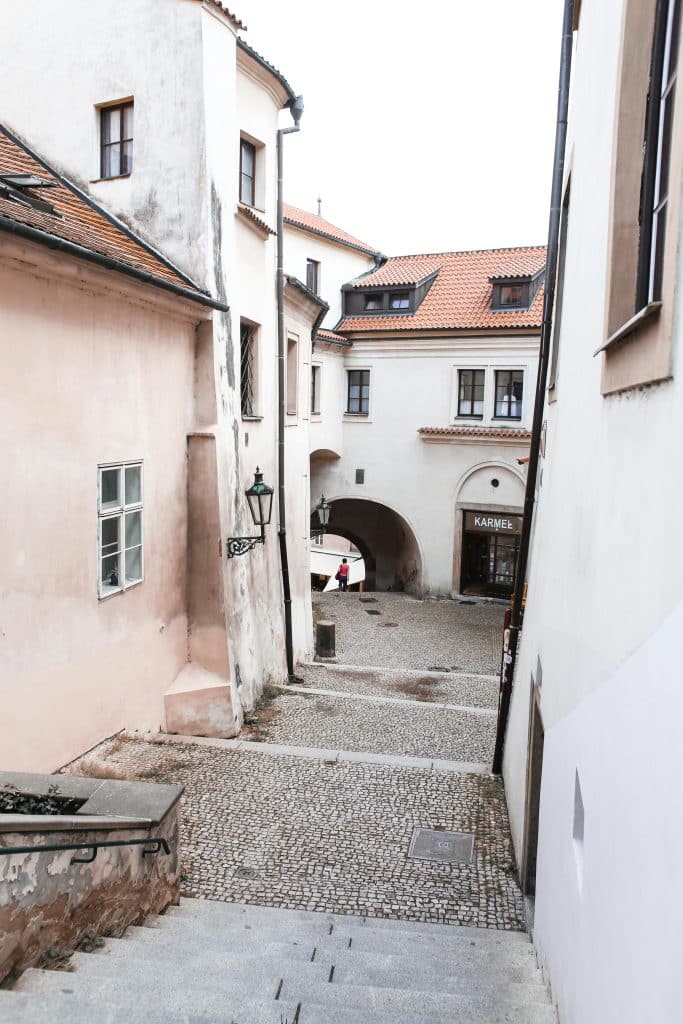
Streets are cobblestone because cars weren’t imagined when they were laid. The cathedral rises at specific angles because structural limitations required aesthetic compromise. The ossuary contains actual human remains because medieval people related to death differently than we do.
In a continent where authenticity often surrenders to restoration and commercialization, Kutná Hora retains the particular texture of real history—flawed, incomplete, still bearing marks of the people who inhabited it centuries ago.
That’s worth a 50-minute train ride. That’s worth several hours of your travel time. That’s worth the modest cost of admission and train fare.
Stand beneath St. Barbara’s five naves and sense the miners’ hands that built it. Walk beneath the bone chandelier and confront what every person eventually becomes. Return to Prague carrying something more than photographs: you’ll carry the strange, specific magic of a place where medieval ambition, human labor, artistic genius, and spiritual devotion remain present—not distant abstractions but tangible, visitable, real.
Have you visited Kutná Hora? Share your experience in the comments. What surprised you most? What would you tell first-time visitors?
This guide reflects current information as of January 2026. Ticket prices, hours, and train schedules are subject to change—Czech Railways updates timetables each December. Always verify via official websites before travel: Czech Railways (cd.cz), St. Barbara’s Cathedral (chramsvatebarbory.cz), and Sedlec Ossuary (sedlec.info). Train frequency noted as departures at :04 past every two hours should be confirmed for your specific travel dates.