Karlovy Vary Spa Guide: How to Actually Experience Czech Spa Culture
This guide is for travelers who want to move beyond postcard-pretty colonnade photos and actually understand how to participate in Czech spa culture—whether you have one afternoon or three days in Karlovy Vary.
By the time you leave, you shouldn’t just have a porcelain cup and a few Instagram shots. You should know which springs to taste, how to book a proper mineral bath, what happens in a Czech sauna, and exactly how this all fits into your broader journey through Bohemia.
At a Glance: Your Essential Karlovy Vary Spa Moves
If you only read one section, make it this:
- Buy a porcelain spa cup and taste 3–4 different springs at the Market and Mill Colonnades
- Treat the drinking cure as a cultural ritual: sip slowly, walk gently, stay quiet
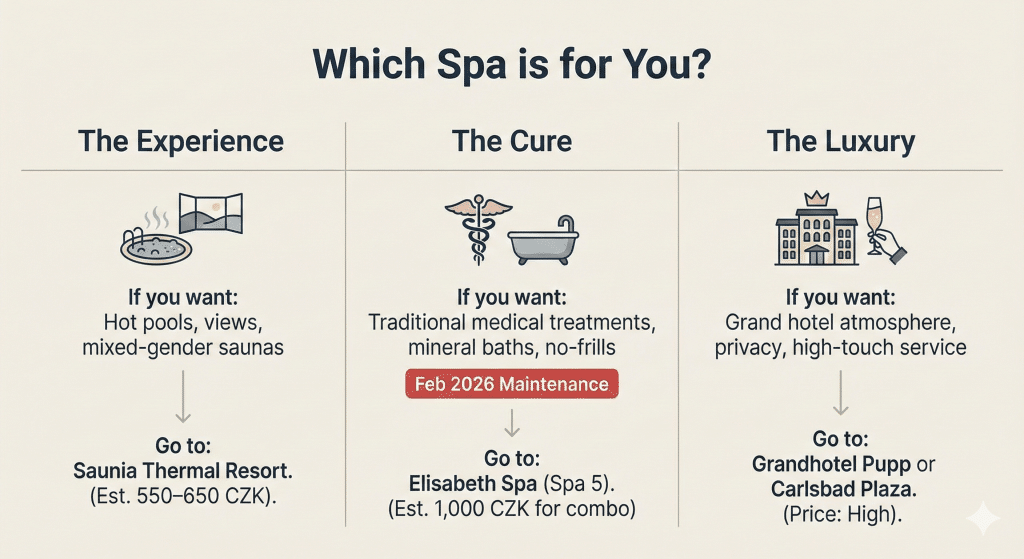
- For your first real treatment, book one mineral bath plus a 20-minute partial massage at Elisabeth Spa (Spa 5)
- If you love hot pools with mountain views, get a 3-hour pass at Saunia Thermal Resort on the terrace of Hotel Thermal
- In pools, wear proper swimsuits. In saunas, expect towel-only or nude protocols (completely standard in Central Europe)
- With 2–3 days, consider a mini-cure where a spa doctor prescribes which springs to drink and which treatments to focus on
- Slot Karlovy Vary into your Czech trip as a reset stop between city sightseeing and castle-hopping
Everything below deepens and supports these core moves.
On this page
Why Karlovy Vary Became the Czech Republic’s Spa Capital
Karlovy Vary’s story begins in the 14th century, when Holy Roman Emperor and Bohemian king Charles IV allegedly discovered the hot springs while hunting. Legend says the waters healed his injured leg, and he granted the settlement town rights along with his name: Karlovy Vary (Carlsbad in German).
Over the following centuries, this modest thermal village evolved into one of Europe’s premier spa destinations. By the 18th and 19th centuries, aristocrats, writers, and composers arrived for multi-week stays, following doctor-prescribed regimes of drinking hot mineral water, taking thermal baths, and walking in the forests above town. This wasn’t leisure. It was preventive and curative medicine dressed in elegant architecture.
That architecture is precisely what you see today: pastel Neo-Baroque and Art Nouveau facades, grand hotels, and a chain of ornate colonnades lining the Teplá River. In 2021, Karlovy Vary earned recognition as part of the “Great Spa Towns of Europe” UNESCO World Heritage listing, alongside Bath, Baden-Baden, and Vichy, for the completeness and continuity of its spa landscape.
Walking these colonnades today, you’re not visiting a museum. You’re stepping into a living tradition that still operates on the same principles it did two centuries ago.
Understanding Czech Spa Culture: Medical Cure vs. Modern Wellness
Most North American travelers hear “spa” and picture massages, fluffy robes, and a glass of prosecco by the pool. Czech spa culture sits on entirely different foundations.
Spa as Medicine
Czech spas grew out of balneology, the medical use of mineral waters, gases, and peat or mud in treating chronic conditions. Historically, patients came to Karlovy Vary because their doctor sent them, not because they wanted a treat-yourself weekend.
Two parallel models coexist today:
Medical spa stays (lázeňská léčba)
Length: typically 2–3 weeks or longer. You have an intake consultation with a spa physician, who prescribes specific springs (by number), exact volumes to drink and when, plus types of baths, packs, inhalations, and physiotherapy. For Czech and some EU citizens, these stays can be partly covered by public health insurance when medically indicated.
Wellness stays
Length: usually 2–7 nights. Focused on prevention, regeneration, and relaxation rather than treating a diagnosed condition. Guests choose à la carte treatments (massages, baths, saunas) or buy pre-designed packages. This is what most international visitors actually book.
What matters for you is this: even if you come for “wellness,” you’re stepping into an environment engineered around structured, cumulative care, not one-off pampering. The rhythm is slower, quieter, and more methodical than a typical resort spa. If you arrive expecting to be entertained, you’ll be confused. If you arrive ready to participate, you’ll understand why people return year after year.
The Drinking Cure: How to Experience Karlovy Vary’s Springs
If you do nothing else, join the drinking cure ritual. It’s the most distinctively Czech thing you can do here, and once you understand how it works, the entire town suddenly makes sense.

The Colonnades and Springs
Karlovy Vary has 12 main springs used for drinking cures, each with slightly different mineral composition, CO₂ content, and temperature. They’re captured and cooled to drinkable levels at taps housed under five principal colonnades along the Teplá River:
Market Colonnade (Tržní kolonáda)
An ornate white wooden pavilion with three springs, including the Charles IV Spring. It’s intimate, atmospheric, and the perfect place to start tasting.
Mill Colonnade (Mlýnská kolonáda)
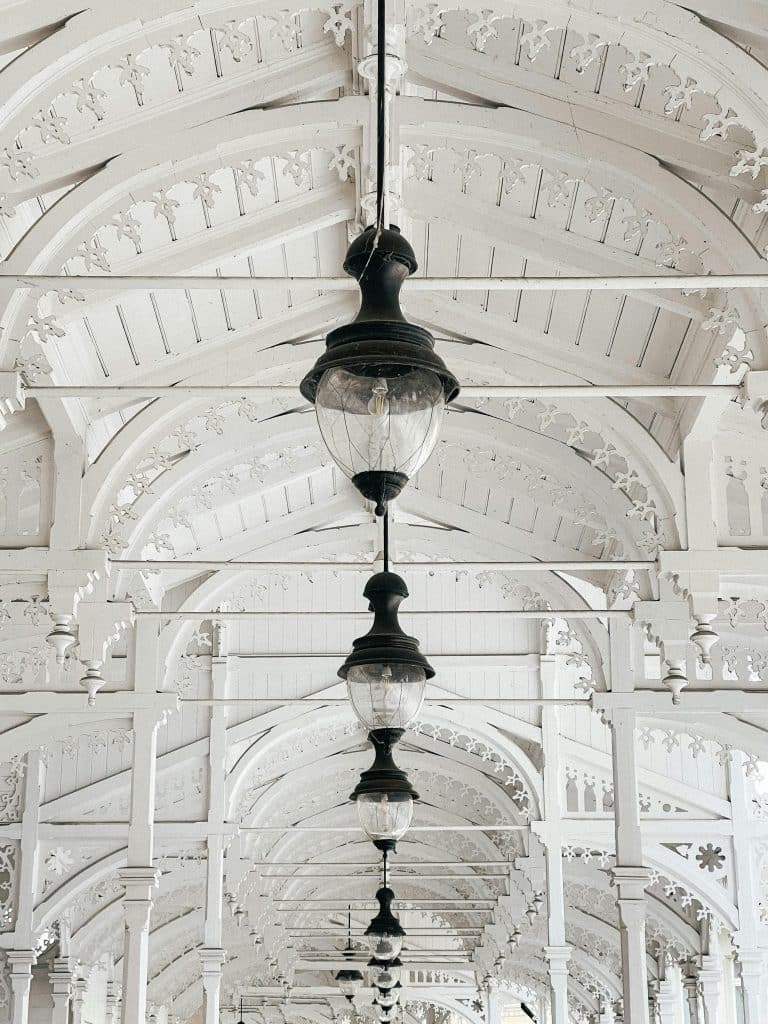
A grand Neo-Renaissance structure over 130 meters long with five springs. This is the archetypal image of Karlovy Vary: an arcade lined with classical columns and people sipping from porcelain cups.
Park Colonnade (Sadová kolonáda)
Delicate cast-iron structure in landscaped gardens, home to the Snake Spring and others.
Hot Spring Colonnade (Vřídelní kolonáda)
A modernist glass-and-concrete hall enclosing the Vřídlo geyser, whose 72°C water shoots up to about 12 meters and supplies much of the town’s thermal water.
Castle Colonnade (Zámecká)
Above the Market Colonnade, connected to the Castle Spa, with more restricted springs used primarily by spa guests.

How to “Take the Waters” Like You Belong There
Here’s exactly how to participate without looking like you’re guessing:
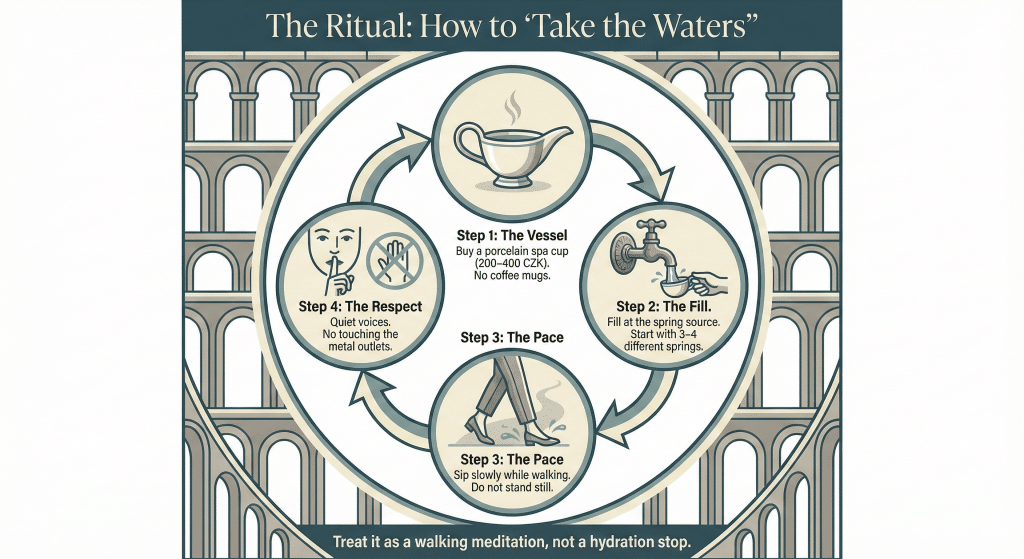
Buy a proper spa cup.
Kiosks and souvenir shops throughout the spa zone sell porcelain cups with integrated spouts. Expect roughly 200–400 CZK (around €8–16, though prices vary). It’s not just kitsch. Locals use them too, and you’ll understand why the moment you try sipping hot mineral water from a regular coffee mug.
Start at the Market and Mill Colonnades.
Fill your cup at one spring, take a small sip, and then walk slowly along the colonnade. Don’t chug. Don’t stand blocking the tap. This is closer to a walking meditation than grabbing a drink.
A spa nurse at Elisabeth Spa once corrected my pace when I rushed through my first drinking cure, gently explaining that the walking between sips is as important as the water itself. She was right. The rhythm matters.
Taste 3–4 springs and notice differences.
Some waters are relatively mild. Others taste distinctly salty or sulfurous. They vary in temperature, too. Treat it as a sensory experience and a conversation starter, not a magic potion that’s going to fix decades of poor habits in fifteen minutes.

Follow unspoken rules.
No touching the metal outlets directly. No pouring water onto plants or the ground. Keep voices low. Many of the people around you are on serious medical regimes. Don’t treat it as a quick “hydration stop” before running off to the next photo opportunity.
A quick note on planning: Prices and opening hours are mentioned to help you budget and plan, but they can change often. I always recommend checking the official websites (which I’ll link to) for the most current information before your visit.
Tourist Sampling vs. Real Cure
For a real drinking cure, a spa doctor prescribes which springs to use and in what order, how much to drink (commonly 150–200 ml at a time), how many times a day (often 3–4), and when to drink relative to meals (for example, 30–45 minutes before eating).
Instructions also emphasize walking during and after drinking, avoiding alcohol and smoking, and continuing the regime consistently for at least a couple of weeks.
On a 1–2 day visit, think in terms of cultural participation rather than expecting medical results. If you have 3+ days and chronic digestive or metabolic issues, it can be worth booking a doctor consultation at a spa facility to design a simplified mini-regime. But don’t pretend a few casual sips will fix years of neglecting your health.
Soaking, Swimming, and Treatments: What to Actually Book
Once you’ve joined the colonnade ritual, the next question is simple: where do I actually get into the water?
Saunia Thermal Resort: Thermal Pools with a View
If your mental image of Karlovy Vary includes steaming hot pools with hillside views, Saunia Thermal Resort is what you’re thinking of.
Perched above the town on the terrace of Hotel Thermal, Saunia offers:
- A large outdoor thermal pool (around 38°C) with panoramic views over the spa quarter
- Additional pools and whirlpools indoors and outdoors
- A full sauna world with multiple Finnish, bio, and steam saunas
- Relaxation rooms, sun terraces, and a bar/restaurant
You buy a time-limited pass (commonly 3 hours) priced in recent seasons around 550–650 CZK (approximately €22–26), depending on day and season. Prices vary by season and day of the week, so always check the current rates on the official Saunia Thermal Resort website before you go.
How to use it effectively:
Bring your swimsuit for all pools and lounging areas. Expect the sauna section to be nude or towel-only, which is very standard for Central Europe. You sit and walk with a towel or sheet. Swimsuits are considered unhygienic in saunas.
A simple beginner’s cycle: mild sauna, cool-off (shower or plunge), outdoor thermal pool soak, rest, repeat if you like.
For many first-time visitors, a late-afternoon 3-hour Saunia session overlooking the valley becomes the single most memorable part of Karlovy Vary. It’s where the place stops being “pretty” and starts feeling genuinely restorative.
Elisabeth Spa (Spa 5): Classic Treatments Without the Hotel Stay
If you want to experience traditional Czech treatments (mineral baths, peat packs, classic massages) without staying in a spa hotel, Elisabeth Spa (Spa 5) is your best starting point.
This 1906 spa, named after Empress Elisabeth (“Sisi”), sits near the lower end of the spa zone and offers à la carte procedures plus relaxation programs.
⚠️ Traveler Alert: Elisabeth Spa is scheduled for annual maintenance in February 2026. If you’re traveling this month, check the official Elisabeth Spa website for exact closure dates and alternative treatment facilities.
Indicative prices from recent seasons:
Mineral baths (20-minute bath + 10-minute rest)
- Pearl bath (mineral water with air bubbles): around 420–510 CZK
- Herbal bath: approximately 490 CZK
- Carbon dioxide bath: approximately 490 CZK
- Peat bath: approximately 510 CZK
Massages
- Partial classical or aroma massage (20 minutes): around 450 CZK
- Full classical or aroma massage (45–50 minutes): approximately 890 CZK
Extras
- Salt cave (approximately 45 minutes): around 120 CZK
- Infrared sauna: approximately 250 CZK
- Inhalations, oxygen therapy: roughly 190–290 CZK
Relaxation programs (2–3 procedures bundled): typically 922–1,245 CZK
For current pricing, operating status, and to book treatments, visit the official Elisabeth Spa website.
Treatments are short, quiet, and matter-of-fact rather than “spa theatre.” Staff are professional. You’ll usually be called by surname. The environment feels more medical than decorative, which is precisely the point.
For a first visit, a solid combination is:
- 1 × mineral bath (pearl or herbal)
- 1 × 20-minute partial classical massage
This gives you a clear sense of Czech balneology in about 90 minutes for around 1,000 CZK (roughly €40).
Other Spa Hotels with Day Access
Several upscale spa hotels open their wellness centers to non-guests for a fee, often including pools, whirlpools, saunas, and optional treatments. Examples include:
Grandhotel Pupp
Heritage luxury with an elegant spa, pool, and classic treatments. More “grand hotel” atmosphere.
Carlsbad Plaza Medical Spa & Wellness
Medical-grade balneology plus modern wellness in a 5-star setting.
Luxury Olympic Palace
Beautifully restored Art Nouveau building with an intimate, high-touch spa.
These are ideal if you prioritize design, service, and atmosphere and don’t mind paying more than at Spa 5.

Spa Etiquette: How Not to Embarrass Yourself
Etiquette is where many visitors feel off-balance. A few clear rules smooth everything out.
What to Wear (and When You Might Be Naked)
Pools and common wet areas:
Proper swimsuits are mandatory. No street clothes, no underwear as swimwear.
Saunas and steam rooms:
Expect textile-free zones. You’ll be nude or wrapped in a towel. Always sit or lie on the towel for hygiene. Mixed-gender spaces are standard.
If nudity is a deal-breaker, simply skip the sauna world, or ask if the facility has specific swimsuit hours. No one will pressure you, but the norms themselves are not negotiable.
Behavior, Phones, and Alcohol
Spas treat quiet as part of the therapy. That means:
- Speak softly. Avoid group chatter and laughter in treatment and relaxation areas.
- Assume no phones and no photos in pools, saunas, and treatment zones unless clearly allowed.
- Avoid alcohol and heavy meals before and immediately after treatments and serious drinking cures, both for safety and therapeutic effectiveness.
Think “calm clinic meets sanctuary,” not “hotel pool bar.”
Children and Families
Many spas allow children only in certain pools or only until early evening, and restrict kids from sauna and quiet relaxation zones.
Karlovy Vary can work for families, but for a serious spa experience, schedule family-friendly pool time earlier in the day and reserve quieter evening sessions for adults.
One Day in Karlovy Vary: A Spa-Focused Itinerary
If you’re doing a day trip from Prague or passing through, this structure gives you maximum impact without rushing.
Morning: Colonnades and Springs
Arrive mid-morning and walk the Teplá riverfront, visiting Market, Mill, and Hot Spring Colonnades. Buy a spa cup and taste 3–4 springs, following the etiquette: small sips, slow walk, no blocking taps, no loud conversation. Watch the Vřídlo geyser inside the Hot Spring Colonnade and take time simply observing how locals move through their routines.
Midday: Lunch and a Short Walk
Have lunch at a café or restaurant overlooking the river or colonnades. Understanding European dining customs will help you relax into the slower pace that spa culture requires.
Optional: take a short funicular ride or walk up into the forests for a viewpoint over the town, echoing the historic “fresh-air” component of spa cures.
Afternoon: Choose Your Experience
Option A: Saunia Thermal Resort (3 hours)
Head to Saunia via Hotel Thermal and buy a 3-hour pass. Suggested beginner’s flow: shower, mild sauna (if you choose), cool shower or plunge, long soak in the outdoor thermal pool, rest, repeat. Finish with quiet rest in a relaxation room and a non-alcoholic drink.
Option B: Spa 5 Classic Treatment Combo
Pre-book a mineral bath plus partial massage at Elisabeth Spa (checking February maintenance dates if traveling then). Check in 15–20 minutes early, follow staff instructions, and allow time for the post-treatment rest. If time and energy permit, add a short salt cave session as a low-effort extra.
Early Evening: Becherovka and One Last Stroll
Make a final pass through the colonnades as the light softens and day-trippers thin out. Sit with a coffee or small glass of Becherovka, the herbal liqueur invented here in 1807. It’s strongly associated with Karlovy Vary and makes a fitting endnote to your day.

A Three-Day Mini Spa Stay: Dipping into a Real “Cure”
With 2–3 nights, you can move from “tourist tasting” into a credible short-form version of the Czech spa cure.
Day 1: Arrival and Orientation
Check into accommodation near the spa zone (spa hotel or central guesthouse). Book or attend a spa doctor consultation at a facility that offers medical programs. Take an unhurried afternoon colonnade walk and turn in early.
The consultation will produce a simple prescription: which springs to drink, roughly how much and when, plus recommended treatment types (for example, mineral baths for circulation and digestion, peat packs for joints).
Day 2: Structured Morning, Open Afternoon
Follow your prescribed drinking cure in the morning: small cups of specific springs at set intervals before meals, combined with walking. Undergo 1–2 treatments at a spa facility (bath plus partial massage, or bath plus pack). Rest properly after treatments. This rest period is considered part of the therapy.
Afternoon: light activity (forest paths, quiet sightseeing, or a Saunia session). Evening: simple dinner, gentle stroll, early bed.
Day 3: Integration and Departure
Repeat the morning routine (springs plus one treatment). Spend remaining time in a pool or sauna, or simply walk the riverfront with one last spa cup in hand. Depart later in the day, ideally without stacking travel stress immediately after treatments.
Three days is enough to feel the difference between “wellness-themed sightseeing” and genuinely structured rest. It won’t replicate a 3-week medical stay, but most travelers notice changes in sleep, digestion, and nervous-system calm after just a short immersion.
Where to Stay: Spa Hotels vs. Regular Hotels
Your accommodation choice determines how immersive versus flexible your spa experience feels.
Medical Spa Hotels
Traditional sanatoria where most guests are on doctor-prescribed regimes. Packages include accommodation, full or half board, and multiple treatments per week. Atmosphere: functional and clinical. Service is professional but not necessarily “hospitality-focused.” Best for serious health goals and longer stays.
Wellness-Focused Spa Hotels
Upscale properties like Grandhotel Pupp, Carlsbad Plaza, or similar. Offer 2–7 night wellness packages with more design, comfort, and culinary focus. Atmosphere: polished, romantic, clearly geared toward leisure travelers with wellness ambitions. Best for couples’ getaways and comfort travelers wanting spa experiences anchored in a luxury setting.
Regular Hotels Plus Public Spas
Stay in a standard hotel or pension in or near the spa quarter. Use Spa 5 for treatments and Saunia for pools and saunas. Atmosphere: independent. You design your own spa schedule. Best for first-time visitors, day-trippers who stay overnight, and budget-conscious travelers who still want depth.
For many travelers exploring the Czech Republic, the third model (regular hotel plus Spa 5 plus Saunia) is the sweet spot: high flexibility, authentic experiences, and excellent value.
Budgeting Your Karlovy Vary Spa Experience
Prices will change over time, but current ranges give useful anchors. Always confirm the latest rates directly with spa facilities before you visit.
Typical ballpark figures from recent seasons:
- Porcelain spa cup: 200–400 CZK (approximately €8–16)
- Saunia Thermal Resort 3-hour pass: around 550–650 CZK (approximately €22–26)
- Spa 5 (Elisabeth Spa):
- Mineral bath: approximately 420–510 CZK
- Partial 20-minute massage: around 450 CZK
- Full 45–50 minute massage: approximately 890 CZK
- Relaxation programs with 2–3 procedures: typically 922–1,245 CZK
Putting this into traveler terms:
Half-day sampler:
Springs walk plus one mineral bath plus partial massage: roughly 1,000–1,400 CZK (approximately €40–56) in spa costs.
Full spa afternoon:
Saunia pass plus drinks or snack, or a 3-procedure package at Spa 5: typically under 2,000 CZK (approximately €80) in total spa spend.
2-night mini-stay:
Mid-range guesthouse, two simple treatment days, and food will usually come in well below what a comparable spa weekend in Western Europe or the US would cost.
If you’re wondering about tipping etiquette in Europe, spa treatments in Czech spas typically don’t require tips, though rounding up or leaving small change for exceptional service is appreciated.
How Karlovy Vary Fits into Your Czech Itinerary
Karlovy Vary works best as a deliberate pause in a broader Czech journey.
As a Day Trip from Prague
Roughly 2.5 hours each way by bus. A single day allows: colonnades plus drinking cure ritual, lunch, and one substantial spa experience (Saunia or Spa 5). Late return to Prague.
If you’re weighing guided tours vs. independent travel, note that many tour companies include Karlovy Vary as a stop. This can work well if the itinerary allows sufficient time for a proper spa experience rather than just a rushed photo stop.
As a 2–3 Night Reset
Slot Karlovy Vary after a few full days in Prague or Pilsen. Use it as a “recovery” segment: early nights, light structured activity, treatments, and quiet. Continue onward to South Bohemia or Moravia refreshed.
I’ve seen travelers try to squeeze Karlovy Vary into a rushed half-day between other destinations, cramming it between a morning castle visit and an evening arrival somewhere else. They inevitably regret it. One couple on a tour I led attempted to “do” the springs, lunch, and shopping in 90 minutes before racing back to the bus. They missed the entire point. The town rewards slowness. If you can’t give it at least a full afternoon, save it for another trip.
Frequently Asked Questions
How do you experience the Karlovy Vary spa culture?
To experience Karlovy Vary authentically, purchase a porcelain spa cup to taste 3–4 springs at the Mill or Market Colonnades. Walk slowly while sipping; do not stand still. For treatments, book a mineral bath at Elisabeth Spa (Spa 5) or visit Saunia Thermal Resort for outdoor pools and saunas.
How much time do I need in Karlovy Vary?
A full day (8–10 hours) lets you experience the colonnades, one substantial spa treatment or thermal pool session, and a proper meal. For a mini-cure with structured treatments, plan 2–3 nights.
Is Karlovy Vary worth visiting if I’m not into spas?
The architecture and setting are beautiful, but without participating in the spa culture, you’re essentially visiting a pleasant town that looks nice. The spas are the reason Karlovy Vary exists.
Can I visit the springs without buying a spa cup?
Technically yes, but you’ll look conspicuously out of place and miss the whole ritual. The cup costs less than a coffee and instantly makes you part of the experience.
Are the springs safe to drink?
Yes. They’re regularly tested and maintained. The taste might surprise you (some are quite mineral-heavy or sulfurous), but they’re perfectly safe for healthy adults in moderate amounts.
Do I need to book spa treatments in advance?
For Elisabeth Spa (Spa 5) and other popular facilities, booking 1–2 days ahead is smart, especially on weekends or during summer. Saunia Thermal Resort usually has walk-in availability, but check during peak season.
What if I’m uncomfortable with nudity in saunas?
Skip the sauna areas and focus on pools and treatment rooms. Most spa hotels and Saunia clearly mark which areas require what dress code.
Is Karlovy Vary suitable for families with children?
Many spas restrict children in certain areas or times. Family-friendly accommodations exist, but for a true spa experience, consider leaving younger kids with a sitter or planning separate adult and family time.
What should I pack for a spa day?
Proper swimsuit, flip-flops, an extra towel, lightweight cover-up or robe, and a water bottle. Leave valuables at your hotel.
Do I need a car to visit Karlovy Vary?
No. The spa zone is compact and walkable, with most colonnades, treatment facilities, and hotels within easy walking distance. The historic center is also largely car-free. Regular bus service connects Karlovy Vary to Prague and other Czech cities.
How do I communicate with spa staff if I don’t speak Czech?
Most spa facilities catering to tourists have staff who speak at least basic English or German. Learning a few essential phrases that make locals smile goes a long way: “Dobrý den” (good day), “prosím” (please), and “děkuji” (thank you) will earn you warm responses.
Final Checklist Before You Go
- Decide: day trip sampler or 2–3 night mini-stay
- Book key spa elements in advance:
- Spa 5 treatments or packages (check February 2026 maintenance dates)
- Saunia time slot if required in peak season
- Doctor consultation if you want a mini-cure
- Check current information on the official Karlovy Vary tourism website for any spring closures or special events
- Pack: proper swimsuit, flip-flops, an extra towel, and a lightweight cover-up
- Plan your colonnade walks for early morning or late afternoon (better light, fewer crowds, more atmosphere)
- Treat the springs and spas with the same respect you would a church or clinic: quiet, attentive, intentional
If Prague is where you fall in love with the Czech Republic’s beauty, Karlovy Vary is where you understand its relationship with health, ritual, and time. It’s not just a pretty day trip. Done right, it becomes the part of your journey that actually changes how you feel.
Ready to explore more of the Czech Republic beyond Prague? Discover hidden gems, castle towns, and regional specialties in my complete Czech Republic Travel Guide (where cultural depth meets practical planning).
Related Reading
- Český Krumlov Overnight Guide: Logistics & Itinerary 2026
- Kutná Hora Day Trip from Prague: A Medieval Masterpiece Just One Hour Away
- Prague 3-Day Itinerary: A Tour Director’s Strategic Guide
- Central & Eastern Europe Travel: The Ultimate Guide for Culturally Curious Travelers
Ready to explore more of Central Europe? Visit Pieterontour.com for in-depth destination guides, insider tips from decades of tour directing, and itineraries designed to help you experience Europe like a local, not a tourist.