
This post is for travelers who want to understand how cafés function as social institutions across Europe—here’s exactly how to navigate café culture in different countries and why it matters for authentic cultural immersion. Explore European Café Culture: More Than Just Coffee.
For a broader look at how to blend in across all aspects of European culture, from dining etiquette to conversation customs, read my Ultimate Guide to The Art of Cultural Immersion: How to Travel Like a Local in Europe.
Why Cafés Matter
If you want to understand European culture, spend time in cafés. Not because the coffee is exceptional (though it often is), but because cafés in Europe occupy a completely different cultural space than coffee shops in North America.
These aren’t Starbucks. They’re social institutions where locals have spent hours reading newspapers, writing novels, conducting business deals, falling in love, and watching city life unfold for centuries. The café where you grab your morning espresso in Rome has probably witnessed more human drama than most theaters.
Coffee first arrived in Europe during the 17th century through trade routes with the Ottoman Empire. Venice opened the first European coffeehouse in 1645, and from there, these establishments spread rapidly across the continent. In England, they earned the nickname “penny universities” because for the price of a coffee, you could engage in debates, read newspapers, and conduct business. The legendary Café Procope in Paris, founded in 1686, became a meeting spot for Enlightenment thinkers including Voltaire, Rousseau, and Diderot.
Here’s what I mean. In Vienna, coffee houses aren’t just places that serve coffee. They’re living museums of a way of life so significant that UNESCO granted Vienna’s coffee house culture Intangible Cultural Heritage status in 2011. In Paris, boulevard cafés with their wicker chairs facing the street have hosted everyone from Hemingway to Sartre, and the tradition of settling in for hours with a single café crème continues today. In Italy, the morning ritual of espresso at the bar is as deeply embedded in daily life as morning showers are in ours.
Understanding café culture as part of cultural immersion means understanding a fundamental aspect of how Europeans live. And café customs vary dramatically. What works in Vienna will mark you as confused in Rome. Parisian café behavior differs entirely from Amsterdam’s. But certain principles apply broadly across the continent.
Cafés are places to linger, not grab-and-go operations. You’re paying for the space and time as much as the beverage. Rushing through your coffee, checking your watch, treating the café like a pit stop—these behaviors signal you don’t understand the culture. The waiter who seems slow by American standards isn’t being inefficient. They’re giving you the gift of time and space.
On this page
Vienna: Where Coffee Is an Art Form
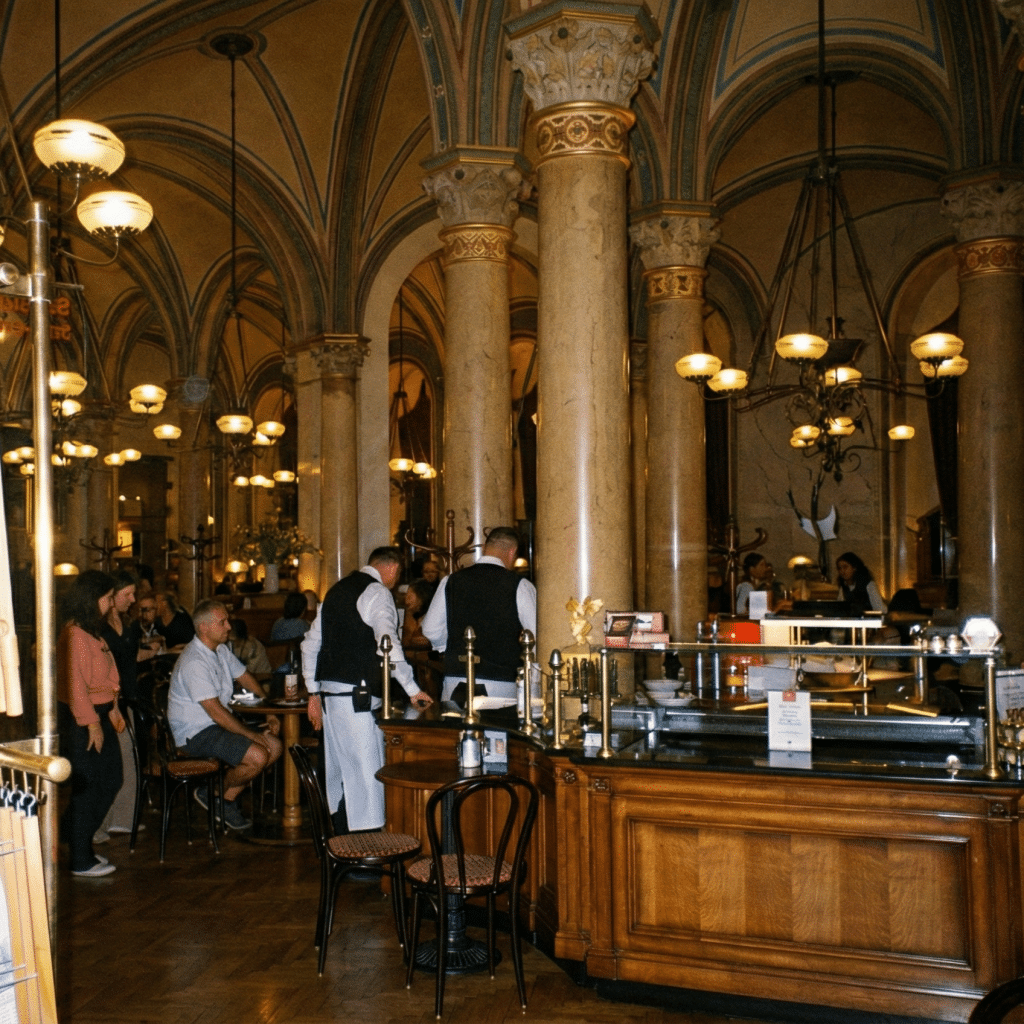
Viennese coffee house culture earned UNESCO Intangible Cultural Heritage status in 2011, recognizing these establishments as living institutions rather than simple cafés. I’ve spent countless afternoons in Café Sperl, one of Vienna’s classic coffee houses, where the interior hasn’t changed substantially since the early 1900s. Wood-paneled walls, marble-topped tables, bentwood Thonet chairs that have supported generations of Viennese posteriors, newspapers displayed on wooden holders like art in a gallery. In the back room, locals play billiards. The waiters wear formal black and white, move with practiced efficiency, and remember your order if you become a regular.
Writer Stefan Zweig once described the Viennese coffeehouse as “an institution of a special kind that cannot be compared with any similar one in the world.” By 1900, Vienna had over 600 coffee houses, and this tradition remains vibrant today. These establishments feature distinctive characteristics: those marble-topped tables where coffee is served on silver trays, the iconic Thonet chairs, alcoves for private conversation, newspaper tables displaying publications from around the world, and interiors designed in Historicism style. Large mirrors line the walls, allowing patrons to discreetly observe other guests.
This is how Viennese coffee houses work, and it matters.
How to order
The coffee menu at a traditional Viennese coffee house looks deceptively simple until you realize each drink has its own precise identity. A Melange is espresso lengthened with hot water and topped with hot milk and foam—similar to a cappuccino but distinctly Viennese. A Brauner is espresso with just a splash of milk (order “kleiner” for small, “großer” for large). An Einspänner arrives in a glass with mokka topped with whipped cream. A Schwarzer is black coffee, straightforward and strong. A Mokka is pure espresso, often served with cream and water on the side.
Cultural protocol
You order at the table from a waiter. Always. Never at a counter, because there isn’t one. Your beverage arrives with a glass of water on a small silver tray. Occupy your table as long as you wish. Seriously. I’ve watched Viennese settle in with newspapers for three hours over a single Melange. No one will rush you. No one will hover with the check. This isn’t inefficiency—it’s ritual, and locals take it seriously.
Reading a newspaper (traditional houses have them available) for hours is completely normal. The waiters wear formal attire and expect to be treated with respect. Tipping typically involves rounding up or adding 5-10%, never leaving money on the table and walking out.
The secret of Vienna’s success was adding sugar and milk to coffee—innovations that made the beverage more palatable to European tastes. Coffee house owners roasted their own beans and produced unique blends, proudly calling themselves “kaffeesieder” (coffee settlers).
I once watched an American couple finish their coffee in about eight minutes, look around impatiently for the check, finally flag down the waiter with obvious annoyance, and leave in a huff about “terrible service.” The elderly Viennese gentleman at the next table, who’d been there when they arrived and remained long after they left, caught my eye and smiled. He didn’t need to say anything. We both understood. They’d missed the entire point.

Practical details: – Classic coffee houses: Café Central, Café Sperl, Café Hawelka – Expect to pay around 4-6€ for a Melange – Time needed: Minimum 30 minutes, though locals stay for hours – For current prices and menus, check official café websites
Italy: The Espresso Ballet
Italian coffee culture moves faster than Vienna’s but follows equally strict rules. The classic experience happens at the bar—“al banco”—where locals stand for a quick espresso, consumed in seconds, before continuing their day.
Here’s how it works, and this matters more than you might think. You enter the café. You walk to the cashier first, not the bar. You tell the cashier what you want and pay. They give you a receipt called a “scontrino.” You take this receipt to the bar, order again, place the receipt on the counter, and the barista makes your coffee. You drink it standing there. The whole operation takes perhaps three minutes.
How to order
Ask for a caffè, never “espresso” (Italians don’t call it that). A cappuccino is espresso with steamed milk foam, but here’s the critical cultural rule: morning only, never after 11am. Tourist areas will still serve it at 3pm, but locals won’t order it. After morning hours, ordering a cappuccino marks you as a tourist as clearly as wearing socks with sandals. Italians believe milk-heavy beverages should only accompany breakfast, as they’re considered difficult to digest after meals.
A caffè macchiato is espresso “stained” with a spot of milk. A caffè americano is espresso diluted with water, essentially conceding that you want “regular coffee” like tourists do. A caffè corretto is espresso “corrected” with liquor—grappa or sambuca. A shakerato is chilled espresso shaken with ice, perfect for hot summer days.
Cultural protocol
Pay at the cashier first. Always. Drink standing at the bar for the cheapest price. Sitting costs significantly more—this isn’t just preference, it’s economical. Most Italians consume their espresso while standing at the counter, exchanging a quick word with the barista before continuing their day. In Rome and other tourist cities, a €1 coffee at the bar might cost €3 or more at a table.
Coffee to-go barely exists outside tourist take-away cafés. Most coffee is consumed exactly where it’s made, in about thirty seconds, then you leave. There is no drip coffee in Italian bars—the most basic order is a caffè normale, which is a single espresso shot.
If you sit at a table, understand the coperto (table charge) that covers bread and service. This is standard Italian restaurant practice, not a tourist trap.
I love watching the morning ritual play out in Roman neighborhood bars. Locals stop for espresso and cornetto (Italy’s answer to a croissant), standing at the bar in their work clothes. They exchange greetings with the barista who knows them by name. Someone reads La Gazzetta dello Sport (the pink-paged sports newspaper). Conversation happens in rapid Italian. The whole scene takes maybe five minutes, then everyone continues their day. It’s social, efficient, and deeply habitual.
The first time I ordered a cappuccino at 3pm in a small town outside Florence, the barista looked at me with such concern that I thought I’d accidentally offended his mother. “Cappuccino? Now?” He made it, but with visible reluctance, and I understood I’d violated something important. Now I know better.
Practical details: – Legendary coffee bars: Sant’Eustachio Il Caffè (Rome), Caffè Florian (Venice) – Expect to pay around 1-1.50€ at the bar, 3-5€ at a table – Time needed: 3-5 minutes at the bar, longer if seated – Learning essential Italian phrases helps you order with confidence

France: Peoplewatching as Performance Art
Parisian café culture exists somewhere between Viennese leisure and Italian efficiency. Cafés serve as living rooms for people-watching, reading, and lingering over a single coffee for hours. The classic experience happens at boulevard cafés with outdoor seating facing the street—you sit facing outward, watching Paris flow past like a river of humanity.
French café culture is practically a religion, with café etiquette sacred to the French way of life. Parisian cafés have served as the center of social and culinary life since the 17th century, intrinsically linked to daily Parisian existence.
How to order
Un café means espresso. Café crème is espresso with steamed milk, but like Italy’s cappuccino, it’s considered a morning drink. Café allongé is the French version of Americano—a longer espresso. A noisette is espresso with just a dash of milk.
Cultural protocol
Here’s what I’ve learned after years of Parisian café sitting. Greet with “Bonjour”—it’s customary and expected to acknowledge your arrival with a greeting to the staff. Similarly, say “au revoir” as you depart. Skipping this simple courtesy can result in poor service and label you immediately as a tourist.
Seating yourself is acceptable at most cafés. Once seated, time belongs to you. No one will rush you. I’ve occupied tables for entire afternoons with a single coffee, reading or writing or just watching people, and the waiter never once suggested I should leave or order more.
Understand the pace. The French don’t “eat out”—they dine. The timing and pace reflect that philosophy: sit back, relax, and enjoy the people-watching. Unlike American coffee culture with its grab-and-go mentality, French cafés are about savoring the moment. Raucous laughter, loud voices, and boisterous behavior are not the norm.
Know the seating rules. Sitting outside (en terrasse) costs more than inside at a table, and inside at a table costs more than at the bar. If a table has silverware or a place setting, it’s typically reserved for diners rather than those having just a drink. Never move chairs between tables—each table’s configuration is intentional, and moving furniture is considered rude.
Waiters bring menus but won’t hover. Catch their eye when you’re ready to order. They’ll come. Eventually. This isn’t bad service—it’s respect for your time and space. Smoking remains common on outdoor terraces. When you’re ready to pay, ask for “l’addition” and wait for the bill at your table.
About tipping: the menu usually notes “service compris” (service included). If it’s included, adding a small extra amount (€1-€5, with at least a €1 or €2 coin) is a nice gesture, not an obligation.
Never ask for takeaway. Traditional French cafés see to-go cups as an American thing. If you need coffee quickly, stand at the bar like a local.
The Parisian café ritual
Order your café. Pull out a book or just watch people pass. Settle in. Make eye contact with passersby if you like—it’s normal here. This is where you practice the art of being a “flâneur,” Baudelaire’s leisurely urban observer. You’re not wasting time. You’re inhabiting a centuries-old tradition of Parisian life.
I remember sitting at Les Deux Magots in Saint-Germain-des-Prés, the café where Sartre and Simone de Beauvoir held court for years. A young American couple next to me ordered coffee, checked their phones for ten minutes, paid, and left. They’d occupied a seat where existentialism was debated, where literary history was made, and they treated it like a Starbucks. The waiter watched them go with an expression of weary tolerance. Another day, another group of tourists who didn’t understand that cafés in Paris aren’t about coffee. They’re about time, and time is what we’re always running out of.
Practical details: – Historic literary cafés: Café de Flore, Les Deux Magots, Café de la Rotonde – Expect to pay around 3-4€ for un café at the bar, 5-8€ at a terrace table – Time needed: As long as you like—that’s the point – For current prices at specific cafés, check their official websites

Spain: Coffee and Conversation at Volume
Spanish café culture blends leisure with intense social interaction. Step into a café during the afternoon and you’ll notice the conversation volume immediately. Spaniards don’t whisper in cafés. They debate, they laugh, they gesticulate. The noise level that would seem rude in a German coffee house is completely normal here.
In Spain, coffee is used as an excuse to meet with friends, family, or colleagues—the phrase “ir a tomar un café” (to go have a coffee) is synonymous with socializing. Coffee is drunk throughout the day, not just in the morning, and is always present in Spanish daily routine.
How to order
Café solo is espresso. Café con leche—half coffee, half steamed milk—is Spain’s morning staple. Cortado is espresso with a small amount of steamed milk. Café con hielo is coffee served with a glass of ice, perfect for hot Spanish afternoons.
The torrefacto tradition
Many newcomers to Spain find the coffee unusually bitter, sometimes described as “burnt.” This characteristic comes from torrefacto—a unique roasting method where sugar is added to coffee beans during roasting. This technique helped preserve coffee during times of scarcity, particularly the Spanish Civil War. While gradually giving way to specialty coffee, torrefacto remains embedded in Spanish coffee culture, especially outside major cities.
Cultural protocol
Cafés welcome lingering, especially during the afternoon break between lunch and evening activities. Conversation volume is higher than northern European cafés, and this is completely normal, not rude. Many Spaniards consume coffee standing at the bar like Italians do. Late afternoon “merienda” (snack time) often involves coffee and pastry, bridging the gap between lunch and the very late dinner hour (9-11pm is normal for dinner in Spain).
Coffee timing matters. Drinking coffee before or during lunch is considered unusual in Spain—coffee usually follows the meal, never something heavy like a latte or cappuccino at lunchtime.
I once made the mistake of arriving at a café in Seville at 4pm expecting quiet. The place erupted with conversation, laughter, the clatter of cups, animated debates about football. At first, I found it overwhelming. Then I realized I was experiencing Spanish café culture exactly as it’s meant to be—loud, social, fully alive.
Practical details: – Traditional cafés: Café de Chinitas (Madrid), Els Quatre Gats (Barcelona) – Expect to pay around 1.50-2.50€ for café solo – Time needed: 15-30 minutes minimum, though afternoon merienda can last hours – For current café hours and menus, check official websites
A quick note on planning: Prices and opening hours are mentioned to help you budget and plan, but they can change often. I always recommend checking the official websites (which I’ll link to) for the most current information before your visit.

Portugal: The Bica and Pastelaria Culture
The Portuguese were crucial actors in expanding the coffee industry during the 18th century, introducing coffee plants to Brazil and later to African colonies. Today, the average Portuguese adult drinks at least two espresso coffees daily, and the relationship between Portuguese people and their neighborhood pastelaria runs deep.
The Pastelaria Experience
A pastelaria defies easy classification—not quite a café, though you can sit with coffee; not exactly a bakery, though the counter overflows with pastries. It’s where the community gathers: coworkers decompress, grandparents treat grandchildren, and teenagers try to look cool.
Most pastelarias open around 7 a.m. and operate continuously, adapting to the clientele throughout the day—from Portuguese-style breakfast through lanche, the mid-afternoon ritual of coffee and a pastry similar to Swedish fika or German Kaffee und Kuchen.
How to order
The legendary Portuguese bica is a small, potent coffee using an earthier blend of Arabica and Robusta beans. Portugal has peculiar regional expressions for the same drink—what Lisbon calls a bica, Porto calls a cimbalino. Both are standard espresso shots, just with different regional names that locals use with fierce pride.
A galão is a large coffee with milk served in a tall glass, roughly equivalent to a latte. Cheirinho is a late-night coffee, often with a splash of spirits to help you make it through the evening.
Cultural protocol
Here’s where Portuguese coffee culture gets wonderfully specific: locals customize even the temperature of their cups. Request café em chávena escaldada for a hot cup or fria for a cooled cup. This isn’t pickiness—it’s precision about the coffee experience.
The pastelaria culture emphasizes community and regularity. Many Portuguese stop at the same pastelaria daily, where staff know their orders by heart. It’s less formal than Viennese coffee houses, less rushed than Italian bars, occupying its own distinct place in European café traditions.
I remember my first morning in Lisbon, wandering into a neighborhood pastelaria near the Alfama district. The elderly gentleman next to me ordered his bica, exchanged pleasantries with the woman behind the counter about her grandson, read two pages of his newspaper, finished his coffee in three sips, and left—all within five minutes. The next morning, same time, same gentleman, same routine. That’s the pastelaria in its essence: a thread of continuity in daily life.
Practical details: – Traditional pastelarias: Pastelaria de Belém (Lisbon), Café Majestic (Porto) – Expect to pay around 0.80-1.20€ for a bica – Time needed: 5-10 minutes standing, longer if seated – For current prices and hours, check official pastelaria websites
Germany and Central Europe: Kaffee und Kuchen Tradition
German-speaking countries and Central Europe maintain a strong afternoon coffee tradition called “Kaffee und Kuchen” (coffee and cake), typically around 3-4pm. This isn’t a quick coffee break. It’s a social ritual, especially on weekends.
Germany’s beloved tradition dates to the 17th century when coffee was first introduced. The period between 3 and 4 p.m. signifies this cherished afternoon ritual, also called “Kaffeeklatsch.”
How to order
Kaffee usually means regular filter coffee (more common than espresso in Germany). Milchkaffee is coffee with milk. Cappuccino and latte macchiato (layered espresso and milk) are widely available.
Cultural protocol
Afternoon coffee with cake is serious business. Kaffee und Kuchen is a meal on its own, not dessert. Unlike American customs where cake accompanies meals, this German tradition involves gathering friends and family specifically for conversation over coffee and cake. Weekends, especially Sundays, are prime time for a relaxed chat during Kaffee und Kuchen.
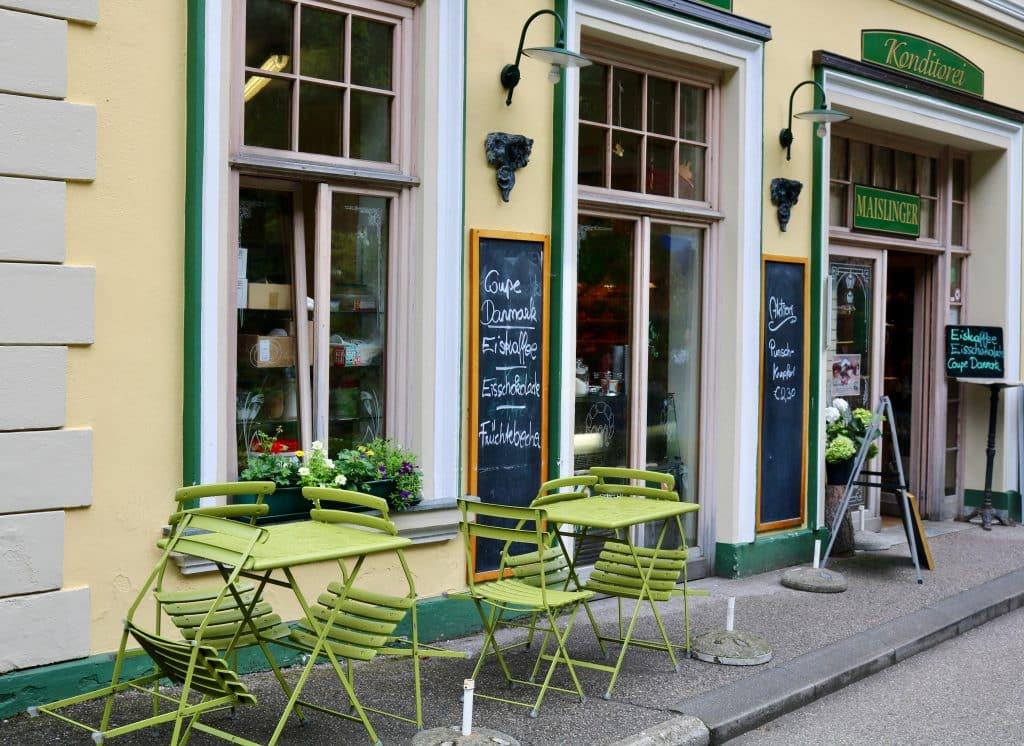
Konditorei (pastry shops with café seating) specialize in this experience. German cakes are generous—unlike delicate French pastries, German cakes are known for their substantial portions and rich flavors. Regional specialties include Schwarzwälder Kirschtorte (Black Forest cake) from the Black Forest region, Prinzregententorte (seven-layered sponge cake) from Bavaria, and Frankfurter Kranz from Frankfurt.
Service can seem formal compared to southern Europe. Waiters expect polite greetings and clear orders. Tipping typically involves 5-10%, rounding up the bill.
I learned about this tradition properly in a small Konditorei in Salzburg, where an elderly Austrian couple at the next table explained that Sunday Kaffee und Kuchen was a family tradition stretching back generations. They came to this same café every Sunday after church. The waiter knew their order before they spoke. This wasn’t just coffee and cake—it was the rhythm of a life well-lived.
Practical details: – Traditional Konditorei: Café Sacher (Vienna), Café König (Munich) – Expect to pay around 4-6€ for coffee, 5-8€ for cake – Time needed: 45-90 minutes for proper Kaffee und Kuchen experience – For current cake selections and prices, check Konditorei websites

Scandinavia: The World’s Coffee Champions
Nordic countries rank among the heaviest coffee drinkers in the world, and the statistics are genuinely impressive. Finns consumed 7.8 kg of coffee per person in 2020, followed by Swedes at 7.6 kg and Norwegians at 6.6 kg. To put that in perspective, the average Finn drinks three and a half cups daily—more than almost any other nation on earth.
Swedish Fika: More Than a Coffee Break
Fika is one of those untranslatable Swedish words that loosely means “a coffee and cake break” but captures so much more. It’s the Swedish ritual of slowing down—always social, never something done alone. At workplaces across Sweden, fika breaks are often scheduled into the day, sometimes with two breaks: one mid-morning and another in the afternoon.
Swedes prefer strong, dark roast drip coffee, and the numbers tell the story: 46% choose black drip coffee, followed by 27% who add milk. Interestingly, not a single person in major polls preferred decaf—Swedes want their coffee strong and serious.
The most popular fika companion is kanelbullar (cinnamon buns)—nearly one in three Swedes prefer them with their coffee. The cultural significance runs so deep that Sweden celebrates Kanelbullens dag (Cinnamon Roll Day) on October 4th, when approximately 7 million cinnamon rolls are consumed across the country in a single day. That’s nearly one cinnamon bun for every Swedish resident.
Norwegian Kaffepause
In Norway, the tradition is called “kaffepause”—a time when you step back with colleagues, friends, or family for coffee and a baked good. Some regions also enjoy “kaffekarsk”—a boozy coffee made by placing a sugar cube in a cup, filling with strong coffee until the cube disappears, then adding alcohol until you can see it again. The ritual involves precise measurements determined by the visibility of that sugar cube, turning coffee preparation into a folk ceremony.
I experienced authentic fika in Stockholm at a small neighborhood café where a group of Swedish colleagues gathered for their afternoon break. They’d clearly been doing this ritual together for years—same time, same table, same comfortable rhythm of conversation. No one rushed. No one checked phones excessively. They were simply present with each other over coffee and cinnamon buns. That’s fika in its truest form: a mandated pause in the productivity culture, a reminder that humans need connection as much as they need caffeine.
Practical details: – Traditional cafés: Vete-Katten (Stockholm), Fuglen (Oslo) – Expect to pay around 30-40 SEK for coffee, 40-50 SEK for kanelbullar – Time needed: 15-30 minutes for workplace fika, longer on weekends – For current prices, check café websites
The Netherlands: Gezellig and Direct
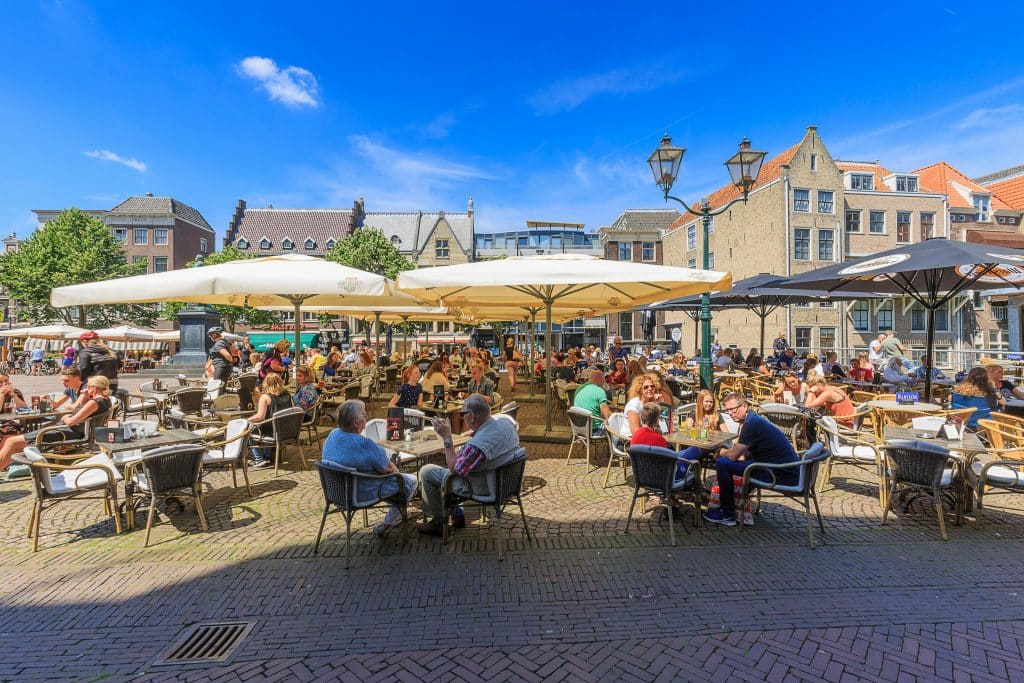
Dutch café culture emphasizes “gezelligheid,” a concept that combines coziness, conviviality, and warmth in a way English doesn’t quite capture. Amsterdam’s “brown cafés” (bruine kroegen) with their dark wood interiors and centuries of tobacco-stained walls embody this atmosphere perfectly.
The phrase “Zullen we een bakkie doen?” (Shall we have a coffee?) is embedded in daily Dutch life as a symbol of togetherness. The Dutch drink coffee as a daily rhythm—around 10 a.m. and again at 3 p.m.
How to order
Koffie is regular coffee. Koffie verkeerd—literally “wrong coffee”—is mostly milk with coffee, latte-style. Espresso is available but less traditional.
Cultural protocol
Dutch directness extends to cafés. Service is efficient rather than warm by southern European standards, but this isn’t rudeness—it’s cultural style. The gezellig atmosphere doesn’t mean rushed. You can linger. Many cafés serve alcohol alongside coffee, particularly the traditional brown cafés. Splitting bills (the origin of “going Dutch”) is completely normal—ask for separate checks. Tipping involves rounding up or adding 5-10%.
When visiting a Dutch home, expect a kopje koffie (small cup of coffee), often with a single cookie. This isn’t stinginess—the tradition of “één koekje bij de koffie” reflects Dutch values of simplicity and modesty. Expect strong filter coffee, possibly with milk and sugar—no fuss, no foam art.
The first time I experienced true gezelligheid was in a brown café in Amsterdam’s Jordaan neighborhood during a rainy November afternoon. Candles flickered on wooden tables. Locals played cards in the corner. The bartender knew everyone’s names. Rain streamed down the windows. I stayed for hours, and nobody seemed to notice or care. That’s gezelligheid—the art of coziness elevated to cultural value.
Practical details: – Traditional brown cafés: Café ’t Smalle (Amsterdam), Café Hoppe (Amsterdam) – Expect to pay around 2.50-3.50€ for coffee – Time needed: 30 minutes to several hours depending on gezelligheid factor – For current café hours, check official websites

Eastern Europe: Old Traditions, New Coffee Cultures
Prague, Budapest, and Warsaw blend historic café traditions with vibrant contemporary coffee scenes. The old imperial coffee houses that survived communist eras now coexist with third-wave specialty coffee shops staffed by baristas who take their craft as seriously as any Italian.
Notable traditions
Prague: Historic cafés like Café Louvre, where Kafka and Einstein once sat, maintain old-world elegance. The typical Czech café is “bare and stripped-down, with wooden tables, old furniture, some art on the walls, and usually a piano lurking in a dark corner.” Kavárna Slavia famously served as a meeting place for dissidents during the Communist period, including future president Václav Havel. Meanwhile, modern specialty coffee shops in neighborhoods like Vinohrady and Karlín rival any in Western Europe.
Budapest: By the late 1800s, Budapest was revered as one of Europe’s café capitals, with over 500 coffeehouses. Grand cafés like New York Café—often celebrated as “the most beautiful café in the world”—deliver stunning Belle Époque interiors (albeit with tourist crowds and prices). Hungarian coffeehouses featured waiters who provided ink and paper, allowing writers to rent tables for hours and create literary masterpieces. More authentic experiences happen in neighborhood “eszpresszó” culture—simple coffee bars where locals gather.
General protocol
Eastern European café culture mixes Western European customs with local traditions. Historic cafés follow formal service traditions—table service, newspapers available, lingering encouraged. Modern coffee shops adopt international specialty coffee culture. English is often spoken in tourist areas, but attempts at local language earn genuine appreciation.
I spent a morning in Budapest’s Café Gerbeaud, one of the grand historic cafés, and watched the full spectrum of café culture. Tourists photographed the chandeliers and ornate ceilings. Meanwhile, elderly Hungarian ladies occupied corner tables, speaking softly over coffee and cake, probably continuing conversations they’d been having in this exact spot for decades. That’s what I love about European cafés—they hold space for both the momentary and the eternal.
Practical details: – Historic cafés: Café Louvre (Prague), New York Café (Budapest), Café Bristol (Warsaw) – Expect to pay around 3-5€ for coffee in historic cafés, 2-3€ in neighborhood spots – Time needed: 30 minutes to several hours – For current prices and hours, check official café websites
Greece: The Kafenio Tradition
Greek coffee culture transcends mere consumption—the kafenio (traditional coffeehouse) dates back centuries and serves as hubs for social interaction. By the 17th century, there were more than 300 coffee shops in Thessaloniki alone.
The Essence of Greek Coffee Culture
In Greece, coffee isn’t just a drink—it’s a way of life rooted in community, friendship, and hospitality. The concept of “filoxeneia” (friend to a stranger) is central to Greek coffee culture, making hospitality not just a duty but a matter of pride.
Greek coffee is prepared in a briki (small long-handled pot) and served with the characteristic foam called kaimaki. A glass of cold water always accompanies the cup—partly to cleanse your palate, partly because Greeks are connoisseurs of water itself and take pride in serving it.
How to order and drink
Order “Greek coffee” (ellinikós kafés), never “Turkish coffee” unless you want to start a political discussion. The coffee comes in three sweetness levels: skétos (no sugar), métrios (medium sweet), or glykós (very sweet). You order the sweetness level upfront because the sugar is added during preparation, not after.
Here’s the critical rule: drink slowly, and never, ever drink the last sip. The bottom of the cup contains the grounds—thick, muddy sediment that’s meant to stay in the cup. Drinking it marks you immediately as someone who doesn’t understand Greek coffee.
Cultural protocol
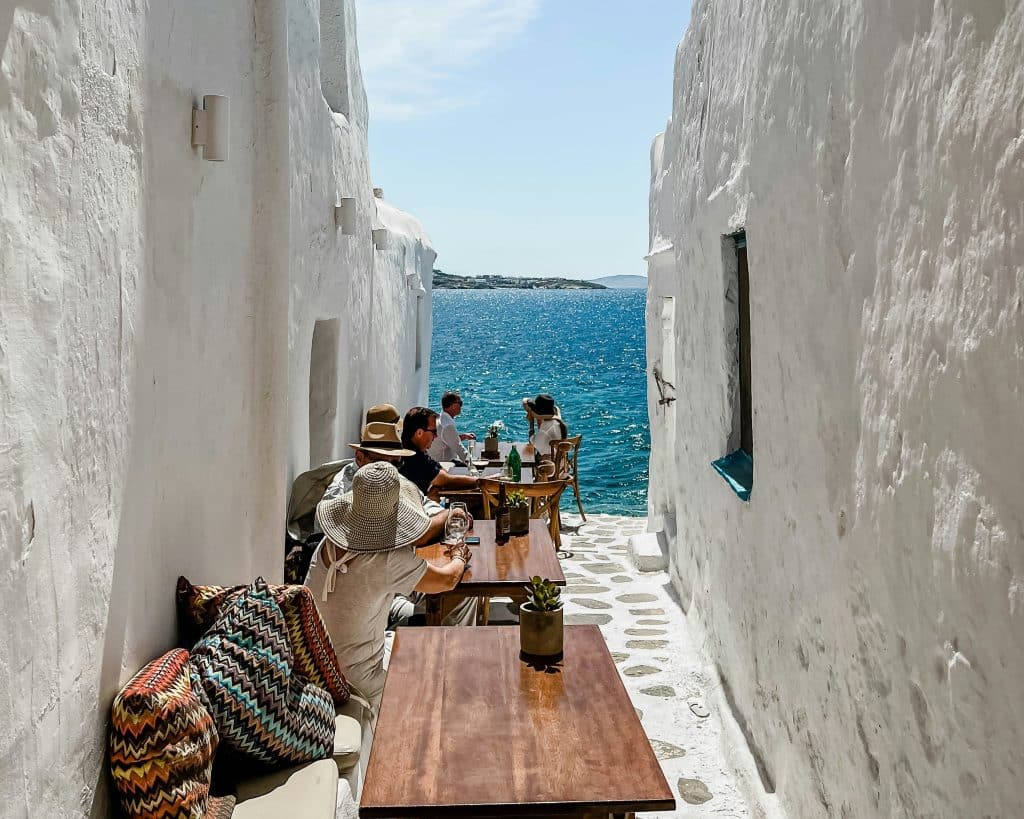
Traditional kafeneia serve as community gathering places where people engage in conversation, backgammon (tavli), card games, and passionate debates. These aren’t rushed coffee stops—they’re social institutions where time moves differently.
The frappé—an iced coffee drink—emerged in Greece in the 1960s and became a cultural phenomenon. The freddo cappuccino and freddo espresso are also popular modern Greek innovations for hot summer days, and you’ll see Greeks nursing these drinks for hours at outdoor cafés along the harbor.
I once spent an afternoon at a kafenio on a small island in the Cyclades, watching elderly Greek men play backgammon with an intensity that suggested the fate of nations hung in the balance. They’d been there since noon. It was now 4pm. Their coffee cups sat empty, but no one suggested they should leave. That’s the kafenio—a place where the coffee is almost secondary to the community it creates.
Practical details: – Traditional kafeneia: Found in every Greek village and neighborhood – Expect to pay around 2-3€ for Greek coffee, 3-4€ for frappé – Time needed: 30 minutes minimum, though locals stay for hours – For island kafenio hours, check locally as they vary by season
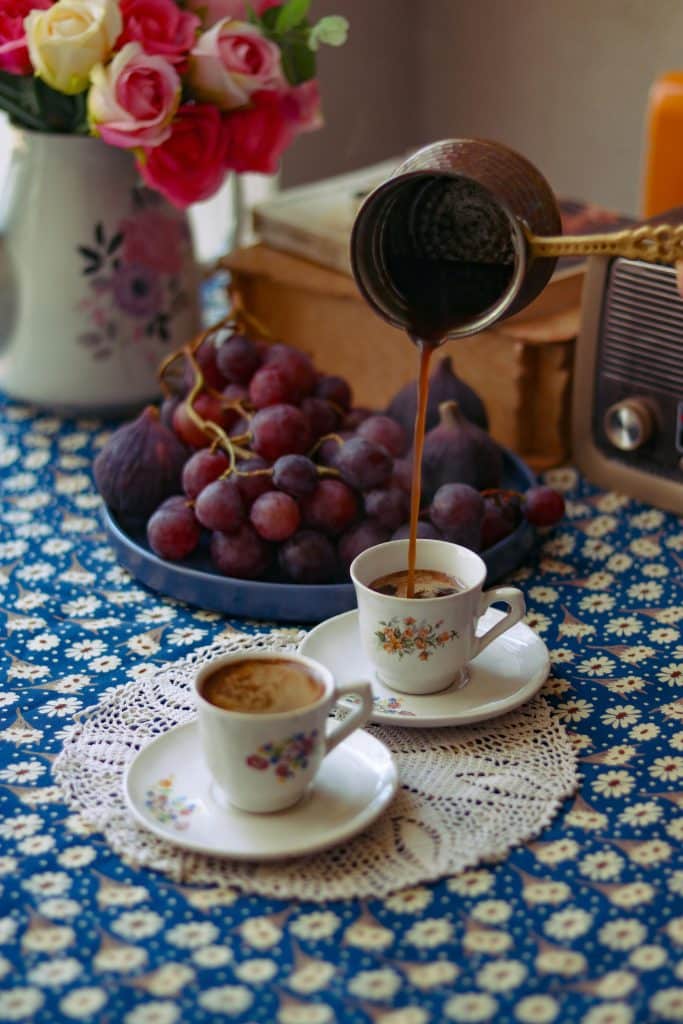
Turkey: UNESCO-Recognized Ceremonial Coffee
Turkish coffee culture was inscribed on UNESCO’s list of Intangible Cultural Heritage of Humanity in 2013. The tradition combines special preparation techniques with rich communal culture dating to the 16th century.
The Turkish Coffee Ceremony
Turkish coffee requires freshly roasted beans ground to fine powder, combined with cold water and sugar in a cezve (coffee pot) and brewed slowly on a stove to produce the desired foam. The beverage is served in small cups called fincan, accompanied by a glass of water and often Turkish delight or chocolate.
Essential etiquette
A Turk sips the water first—partly to prepare for the coffee, but also because they’re connoisseurs of water. The coffee cup is lifted by the saucer, whether it has a handle or not. Upon entering a traditional Turkish coffeehouse, it’s customary to salute each person present, often with hand to heart and the greeting “Merhaba.”
The Fortune-Telling Tradition
After finishing coffee, the grounds left in the empty cup are used to tell fortunes in a practice called tasseography. The cup is rotated, a wish is made, and the cup is turned upside down on the saucer to cool. The patterns formed by the grounds are then interpreted, revealing messages about your future, current concerns, or hidden desires.
This isn’t just tourist entertainment—it’s a genuine tradition that continues in Turkish homes and cafés. I’ve watched Turkish friends spend twenty minutes analyzing the patterns in coffee grounds with complete seriousness, finding symbols and meanings in the swirls and shapes.
Wedding Traditions
During the Turkish engagement ceremony (isteme), the bride-to-be serves the groom coffee with salt instead of sugar. If the groom drinks it politely without complaint, it demonstrates patience and suitability for marriage. This tradition tests his temperament—if he can handle salty coffee with grace, he can handle life’s difficulties with the same equanimity.
Practical details: – Traditional coffeehouses: Found throughout Turkey, especially in historic districts – Expect to pay around 15-25 TL for Turkish coffee – Time needed: 20-30 minutes for proper coffee ceremony – For current prices, check with individual establishments
What Locals Notice (and What You Should Know)
✓ You greet staff before ordering (“Bonjour,” “Buongiorno,” “Grüß Gott”) ✓ In Italy, you pay first, drink at the bar, and don’t expect coffee to go ✓ In Vienna and Paris, you linger without pressure and ask for the bill when ready ✓ You understand that cafés are social spaces, not efficiency operations ✓ You respect the unwritten rule that once you’ve paid for a seat with a drink, that seat is yours for as long as you like ✓ You observe how locals order, pay, and behave before acting
Practical Considerations
Understanding pricing
Bar vs. table pricing is standard in many European countries, particularly Italy, France, and Spain. A €1 espresso at the bar might cost €3-4 at a table—sometimes even more for outdoor terrace seating. Price lists are usually posted near the bar or cash register, showing two- or three-tiered pricing.
Tipping etiquette
Tipping Etiquette in Europe differs dramatically from American customs. In most countries, 5% is adequate and 10% is considered generous. Locals often just round up the bill or leave coins on the table. In Germanic countries, it’s considered slightly rude to leave coins on the table—instead, hand money directly to the server stating the total you’d like to pay.
Service charges are often already included in European bills, making additional tips optional but appreciated.
Famous Historic Cafés Worth Visiting
Café | City | Founded | Notable History |
|---|---|---|---|
Venice | 1720 | Oldest café in continuous operation worldwide; served Casanova and Byron | |
Paris | 1686 | Meeting place for Voltaire, Rousseau, and Diderot | |
Vienna | 1876 | Frequented by Trotsky, Freud, and Hitler | |
Budapest | 1894 | “Most beautiful café in the world” | |
Porto | 1921 | Where J.K. Rowling wrote early Harry Potter chapters | |
Lisbon | 1905 | Haunt of poet Fernando Pessoa, bronze statue of him sits outside | |
Rome | 1760 | Hosted Goethe, Byron, Keats, and Wagner | |
Prague | 1884 | Meeting place for dissidents including Václav Havel during Communist era |
Why This Matters
European café culture represents one of the continent’s most enduring gifts to the world—a tradition that values conversation over commerce, presence over productivity, and community over convenience. Whether you’re standing at an Italian bar for a quick caffè, lingering over Kaffee und Kuchen in Germany, or practicing the art of the flâneur in a Parisian café, understanding these traditions transforms coffee from mere caffeine into a gateway for authentic cultural connection.
The next time you step into a European café, remember: you’re not just ordering a drink. You’re participating in a centuries-old ritual that has shaped intellectual movements, sparked revolutions, and provided the stage for countless human connections. Take your time. Watch. Listen. That’s the real gift of European café culture—not the coffee itself, but the permission to simply be present in the moment.
For travelers venturing alone, cafés offer particularly valuable opportunities for safe, authentic cultural immersion. They’re welcoming spaces where solo travelers can comfortably observe local life, practice language skills, and experience genuine community rhythms without the vulnerability of other social settings.
Frequently Asked Questions About European Café Culture
How long can I sit in a European café after ordering one coffee?
In most European countries, once you’ve ordered, your table is yours for as long as you’d like. This is especially true in Vienna, Paris, and cafés throughout Germany and Austria. Italy is the exception—espresso at the bar is meant to be quick. If you sit at a table in Italy, you can linger, but expect higher prices.
Should I tip in European cafés, and if so, how much?
Tipping customs vary by country. Generally, 5-10% is considered generous, and many locals simply round up the bill. Service charges are often included, making additional tips optional. In Germanic countries, hand the money directly to your server rather than leaving it on the table.
Why do Italians only drink cappuccino in the morning?
Italians believe milk-heavy beverages are difficult to digest after meals and should only accompany breakfast. Ordering a cappuccino after 11 a.m. marks you as a tourist. After morning hours, locals order caffè (espresso) or caffè macchiato instead.
What’s the difference between sitting at the bar versus a table in Italian cafés?
Sitting at a table can double or triple your bill compared to standing at the bar. In Rome, a €1 espresso at the bar might cost €3 or more at a table. Most Italians consume their coffee standing at the counter, which is both cultural preference and economical choice.
Is it rude to work on a laptop in European cafés?
This varies by country and type of café. In traditional Viennese coffee houses and historic Parisian cafés, laptop work is less common and might seem out of place. Modern specialty coffee shops in cities like Prague, Amsterdam, and Berlin generally welcome laptop users. When in doubt, observe what locals are doing.
How do I know when to pay—before or after ordering?
In Italy, you always pay the cashier first, receive a receipt (scontrino), then take it to the bar to order. In most other European countries—France, Austria, Germany, Spain, Netherlands—you order first and pay afterward, usually asking for the bill when you’re ready to leave.
What does “service compris” mean on French café menus?
“Service compris” means service charge is included in the prices. You’re not obligated to tip beyond this, though leaving a small amount (€1-€5) is a nice gesture if you received good service.
Why do café prices differ so much between bar, table, and terrace seating?
European cafés charge for the space and experience as much as the beverage. Standing at the bar is cheapest. Sitting inside at a table costs more because you’re occupying space. Terrace seating commands premium prices because of prime people-watching real estate, especially in cities like Paris and Vienna.
What’s the correct way to drink Greek coffee?
Greek coffee is prepared in a briki and served with grounds at the bottom. Drink slowly, savoring the coffee, but never drink the last sip—the grounds are meant to stay in the cup. The coffee always comes with a glass of water, which you sip first to cleanse your palate. Order by sweetness level (skétos, métrios, or glykós) because sugar is added during preparation.
Is Turkish coffee fortune-telling real or just for tourists?
Fortune-telling from coffee grounds (tasseography) is a genuine Turkish tradition practiced in homes and cafés, not tourist entertainment. After finishing your coffee, the cup is turned upside down on the saucer. Once cooled, someone interprets the patterns formed by the grounds. Many Turks take this practice seriously as a way to reflect on current concerns and future possibilities.
Related Reading:
The Art of Cultural Immersion: How to Travel Like a Local in Europe
A Magical Hungarian Christmas: Traditions and Celebrations
European Dining Hours and Customs: When and How to Eat Like a Local
The Art of European Market Shopping: A Guide to Cultural Immersion
Solo Travel & Safety in Europe: Your Complete Guide
Explore more cultural immersion guides and travel insights at Pieterontour.com, where every moment of your journey is designed to be authentic and unforgettable.