
Quick Answer: How to Use Public Transport in Europe
Essential Steps:
- Download apps before arrival: Citymapper (major cities), Google Maps (universal), plus city-specific apps like DB Navigator (Germany) or SBB Mobile (Switzerland)
- Understand ticket types: Time-based (60-120 min), zone-based, or unlimited day passes
- Always validate paper tickets in yellow/orange machines before boarding—fines start around €40-60 if you forget
- Watch for terminus stations to know which direction trains are heading
- Follow local etiquette: Let passengers exit first, keep noise low, offer seats to those who need them
Budget: Single tickets €2-4, day passes €7-15, with excellent value on multi-day tourist cards in most cities. For complete details and city-specific guidance, continue reading below.
This guide is for travelers visiting Europe who want to move around cities confidently, save money, and experience daily life the way locals do—using public transportation. For a broader look at how to navigate social customs beyond just transit—like dining etiquette, café culture, and tipping—read my Art of Cultural Immersion: How to Travel Like a Local in Europe.
If cafés are Europe’s living rooms, then its trams, metros, and buses are the continent’s arteries. I’ve spent over twenty years guiding travelers through European cities, and I can tell you this: mastering public transportation doesn’t just save you money. It lets you slip into the daily rhythm of the city, ride alongside students heading to class and commuters heading home, and discover neighborhoods that tour buses never reach.
When you step onto a Vienna tram at rush hour or catch the last metro in Paris, you’re not just getting from point A to point B. You’re participating in the ordinary magic of European life. And once you understand how these systems work, you’ll move through cities with the ease and confidence of someone who belongs there.
Let me walk you through exactly how to navigate European public transportation like a pro and help you with Navigating European Public Transportation Like a Pro.
A quick note on planning: Prices and opening hours are mentioned to help you budget and plan, but they can change often. I always recommend checking the official websites (which I’ll link to) for the most current information before your visit.
On this page
Understanding Europe’s Transit Networks
European public transportation is famously efficient, but it can feel overwhelming at first if you’re coming from cities where driving is the norm. The good news? These systems are well-developed, generally safe, and clearly signposted—often with English translations in major hubs.
Here’s what you need to know about the different types of transport you’ll encounter.
Metros and Subways: Fast and Frequent
Cities like Paris, Vienna, Berlin, Madrid, and Rome have extensive metro systems that can whisk you across town in minutes. Trains run frequently during the day, stations are clearly marked, and once you understand the line numbers and colors, navigation becomes second nature.
Metros are ideal when you need to cross a city quickly or when you’re traveling during rush hour and surface streets are clogged with traffic.
Trams and Streetcars: Scenic and Surface-Level
Trams glide through cities like Lisbon, Amsterdam, Vienna, and many Central European towns. They’re slower than metros but offer something metros can’t: windows on street-level life. You’ll see shopfronts, outdoor markets, and neighborhood squares roll past. Locals often have strong feelings about their tram routes, and for good reason. They’re beloved.
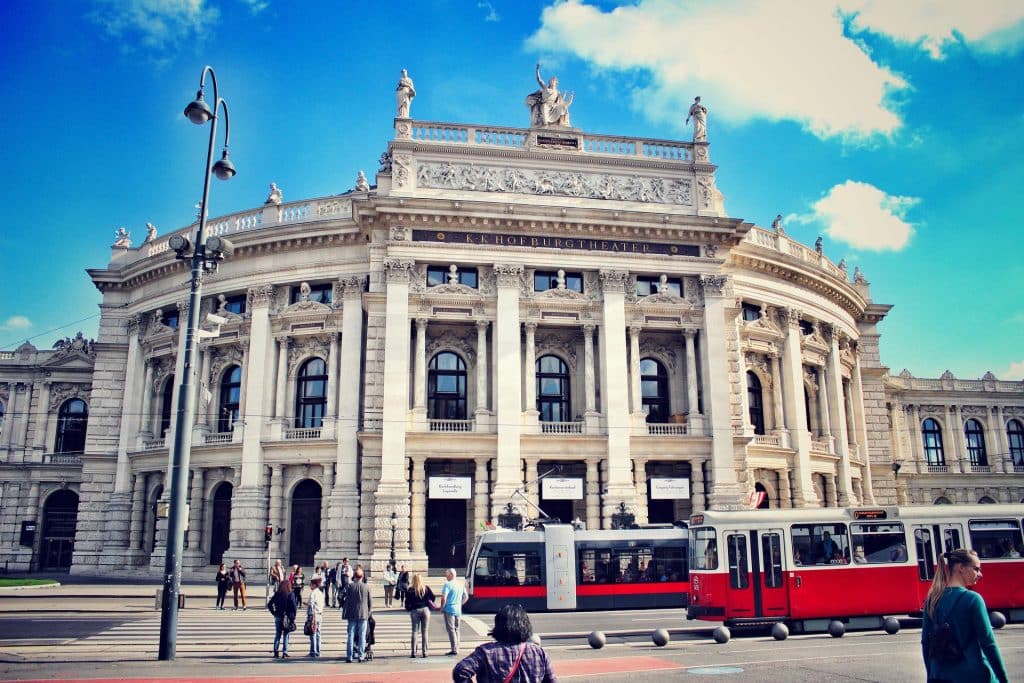
Buses and Trolleybuses: Filling in the Gaps
Buses reach places where metros and trams don’t go—hilly neighborhoods, suburbs, and smaller towns. They’re essential if you’re staying outside the city center or exploring beyond the main tourist districts. In some Eastern and Southern European cities, buses are more frequent and practical than trains for intercity travel.
Regional and Suburban Trains: Beyond the City Center
S-Bahn in Germany, RER in Paris, Cercanías in Spain—these regional rail systems connect city centers with suburbs, airports, and nearby towns. They’re perfect for day trips to castles, smaller villages, and countryside destinations. If you want to visit Dachau from Munich or Fiesole from Florence, regional trains are your best option.
Long-Distance Trains and Coaches
High-speed trains like the TGV, ICE, AVE, and Frecciarossa connect major cities across Europe. For budget-conscious travelers, intercity buses—especially FlixBus—offer affordable alternatives, particularly in Eastern and Southern Europe where buses can be cheaper or more frequent than trains.
For comprehensive timetables, route planning, and insider tips on international rail travel across Europe, The Man in Seat 61 is the definitive resource trusted by experienced travelers worldwide.
Planning Like a Local Before You Go
The difference between feeling lost and feeling confident often comes down to preparation. Before you even arrive, take a little time to research the local transit system. This small investment pays off the moment you step off your flight.
Research the Local System
Before your trip, visit the city or national transit authority website. Look for:
- Network maps showing metro lines, tram routes, and bus connections
- Ticket types (single rides, time-based passes, zone systems, day passes)
- Information about airport-to-city connections
Most major cities have official apps where you can buy tickets, check live arrival times, and plan routes. Download these before you leave home: BVG for Berlin, ATAC for Rome, GVB for Amsterdam.
Use the Right Apps
A small toolkit of reliable apps can transform your experience. Here’s what I recommend:
Google Maps is excellent for route planning and walking connections in most European cities. It integrates transit schedules and shows you exactly where to transfer.
Citymapper covers major cities like Paris, Berlin, Barcelona, and London with impressive detail. It tells you which car to board for the easiest exit, provides live delay updates, and even suggests alternative routes when disruptions occur.
Moovit works as a solid backup in cities where Citymapper isn’t available.
For city-to-city travel, Omio, Rail Europe, and operator-specific apps like DB Navigator (Germany) or SNCF Connect (France) help you book tickets and track schedules.
Top Transit Apps by Country
Having the right apps downloaded before you arrive makes everything easier. Here’s a quick reference guide:
Country/Region | Essential App | What It Does | Official Link |
|---|---|---|---|
Universal | Google Maps | Route planning, walking connections, integrated transit schedules across Europe | Standard on most phones |
Universal | Detailed routing in major cities (London, Paris, Berlin, Barcelona, etc.), live delays, which car to board | citymapper.com | |
Germany | German rail + pan-European timetables, ticket booking, real-time updates | bahn.com | |
Switzerland | Swiss rail network, ticket purchase, precise timing (Swiss trains run on time) | sbb.ch | |
France | French rail booking, metro integration in Paris, live updates | sncf-connect.com | |
Italy | Italian rail network, high-speed trains, regional connections | trenitalia.com | |
Austria | Austrian rail, excellent for Vienna and regional travel | oebb.at | |
Netherlands | Amsterdam transit (GVB), Dutch rail (NS), integrated journey planning | ns.nl | |
Multi-country | Backup option for cities not covered by Citymapper | moovitapp.com |
One more tip: download offline maps and take screenshots of key routes before you head out each day. Mobile data can be patchy underground or in older parts of cities, and you don’t want to be standing at a platform trying to figure out which direction to go without internet.

Tickets, Passes, and Validation: Avoiding Rookie Mistakes
This is where many North American visitors stumble. European ticketing systems work differently depending on the city, and understanding the basics keeps you from paying fines or feeling frustrated.
Understanding Ticket Types
Time-based tickets are common in many cities. You buy a ticket valid for 60, 90, or 120 minutes, and you can transfer between buses, trams, and metros as many times as you want within that window.
Zone-based systems divide cities into rings or sections. Berlin uses AB and BC zones. Paris has numbered zones. If you’re traveling from the city center to the airport or suburbs, you may need a ticket that covers multiple zones.
Unlimited passes simplify things if you’re doing a lot of sightseeing. A 24-hour, 48-hour, or 72-hour pass lets you hop on and off without worrying about individual rides. Vienna’s 72-hour ticket is a favorite of mine—you validate it once and forget about it for three days.
Some cities offer tourist cards that bundle unlimited transit with free or discounted entry to museums and attractions. These can be excellent value if your plans align with what they offer.
National and regional deals exist too. Germany’s Deutschlandticket, for example, costs around 49 euros per month and gives you unlimited access to all regional and local transport nationwide. If you’re spending more than a few days in Germany, it’s worth considering.
Important note: The Deutschlandticket is a subscription model, so you’ll need to remember to cancel it before the next billing cycle if you only need it for one month. Tourists sometimes forget this step and end up with recurring charges.
A good rule of thumb: if you’re taking more than three or four rides in a day, a day pass usually makes sense. For longer stays with heavy sightseeing, multi-day passes reduce mental load and often save money.
Where and How to Buy Tickets
Buying tickets is easier than you might expect.
Ticket machines are located in metro stations and at major tram and bus stops. Most have English language options. They accept cash and cards, though some older machines are cash-only.
Kiosks and newsstands sell paper tickets and transit cards, especially in smaller towns where machines are less common.
Official apps are increasingly the simplest option. You buy a ticket on your phone, activate it when you board, and show the QR code or confirmation if a controller checks.
Onboard purchase from the driver is possible in some cities and on some buses, but not everywhere. When it is allowed, it’s often cash-only and sometimes more expensive than buying in advance. Check local rules before you rely on this option.
Validation: Tapping In and Tapping Out
This is critical. Pay close attention here, because not following the rules—even accidentally—can result in hefty fines.
Validation machines are often yellow or orange boxes located on platforms or inside buses and trams. In many cities across Italy, Germany, France, and Central and Eastern Europe, you must insert your paper ticket into one of these machines before your first ride. The machine stamps the date and time, activating your ticket.
In France, you’ll see signs saying “Compostez votre billet”—this means “validate your ticket.” It’s the phrase to watch for.
If you don’t validate, your ticket is technically invalid, even if you paid for it. Controllers check regularly, and fines are substantial. In Prague, for example, on-the-spot fines are around 1,000 CZK (approximately €40), and many other cities charge €40 to €60 or more. Controllers rarely show leniency, even for tourists who didn’t understand the system.

Tap-in and tap-out systems work differently. In London (Oyster and contactless cards), the Netherlands (OV-chipkaart), and some other cities, you tap your card or phone on a reader when you enter and again when you exit. The system calculates your fare based on distance traveled.
A note for London visitors: contactless payment using your credit card, debit card, or Apple Pay/Google Pay is now the easiest option for short-term tourists. You’ll avoid the deposit fee for an Oyster card and get the same fares. Just tap your card or phone on the yellow reader when you enter and exit.
Forgetting to tap out can charge you a maximum fare or flag your card as problematic. Always tap both ways.
The easiest way to learn the local system? Watch what locals do when they board. Do they tap a reader? Stamp a ticket? Copy that behavior, and you’ll be fine.
Reading the System: Maps, Signs, and Schedules
European transit maps can look intimidating at first glance, but they follow consistent logic once you understand the basics.
Line Colors and Numbers
Metro lines are usually color-coded and labeled with numbers or letters: M1, U2, Line A. Tram and bus routes work the same way. Learn the two or three lines that connect your hotel to major sights, and everything else falls into place.
Train designations like S-Bahn, RER, or regional express follow similar patterns. Once you know your key lines, you’ll navigate confidently.
Direction of Travel
Here’s a trick that confuses many first-time visitors: trains and metros don’t list “northbound” or “southbound.” Instead, they list the terminus station—the final stop on that line in that direction.
If you’re trying to get from your hotel to the cathedral, check your map to see which direction the cathedral is along the line. Then look for signs pointing toward the terminus in that direction. Platform screens will list all upcoming stops, so you can double-check that your destination appears on the list.
Day vs. Night Schedules
Most transit systems run reduced service after midnight on weekdays. Some cities have night buses or weekend all-night metro lines to compensate. Always check the last train or bus time, especially if you’re heading to dinner or a concert in the evening. Getting stranded at 1 a.m. because you missed the last metro is no fun.
Strikes and Disruptions
In some countries—notably France, and occasionally Italy—transport strikes can disrupt schedules with little warning. Check local news or the transit authority’s website for alerts on strike days, and have a backup plan. Walking, bike-sharing, or a taxi app can save the day when trains aren’t running.
Public Transport Etiquette: How to Blend In and Not Annoy Locals
This is where cultural immersion really begins. Europeans have unspoken rules about behavior on public transport, and following them shows respect and helps you blend in.
Universal Good Manners
These norms apply across nearly all European cities:
Let passengers exit first before you board. Stand to the side of the doors, wait for people to get off, then step on. Pushing or crowding the entrance is considered rude.
Queue loosely and avoid shoving. Europeans form less rigid lines than, say, the British, but pushing and elbowing your way onto a crowded tram will earn you glares.
Offer seats to those who need them. Elderly passengers, people with disabilities, pregnant women, and adults with small children should be offered seats. Many systems have designated priority seating, but the expectation extends to the whole vehicle.
Keep noise low. Quiet conversations with travel companions are fine. Loud phone calls, boisterous laughter, or shouting across the car are frowned upon. Europeans value a peaceful commute.
No loud music. Use headphones, and keep the volume low enough that others can’t hear it. Playing music from a speaker is considered deeply inconsiderate.
Mind your bags. Take backpacks off in crowded vehicles and hold them low or place them between your feet. Don’t block seats or aisles with luggage. Large suitcases should go in designated luggage areas when available.
Food and drink rules vary. Many systems explicitly ban eating and drinking. Others tolerate small snacks but not messy or smelly food. When in doubt, wait until you’re off the vehicle.
Cleanliness and respect. Don’t leave trash behind. Don’t put your feet on seats—it’s often fined and always frowned upon. Leave your seat as you found it.
Quiet Cars and Silent Spaces
On trains in Germany, Austria, Switzerland, the Netherlands, and Scandinavia, you’ll often find carriages designated as quiet zones. Signs indicate these areas, and the rules are taken seriously: no phone calls, no loud conversations, minimal talking.
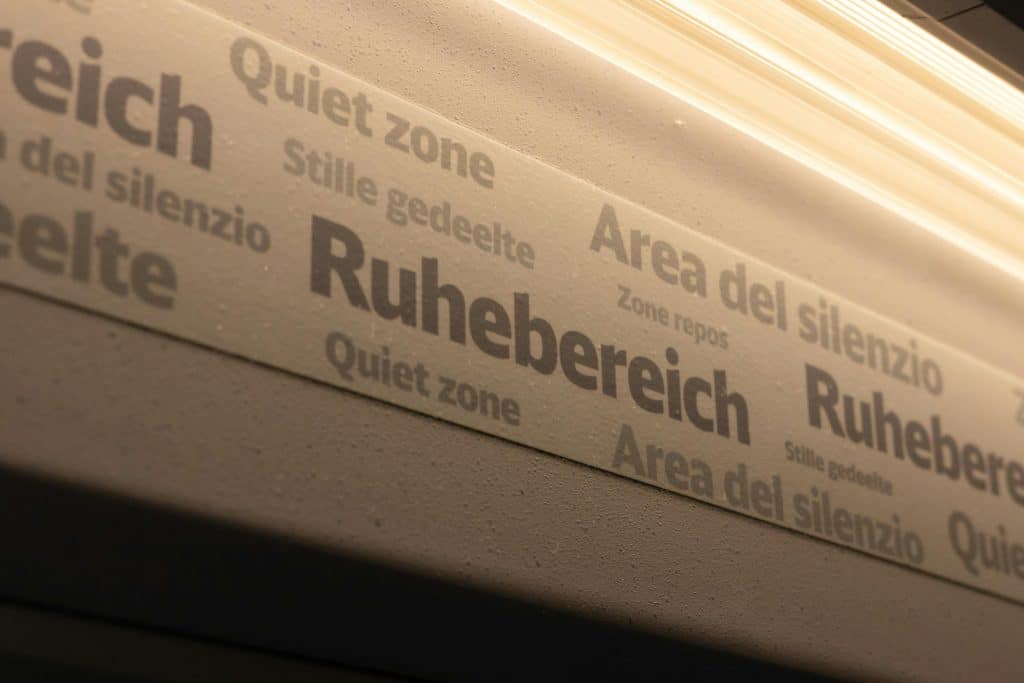
Headphones are fine, but no speaker audio. If you need to have a conversation, keep it brief and hushed.
Quiet cars are wonderful if you’re jet-lagged and craving peace, but only if you respect the rules. Locals have no patience for people who treat quiet zones as regular seats.
Interaction Norms
Small talk with strangers is rare on European public transport. Polite, quiet, and self-contained is the default. You’re not expected to greet the driver when you board in big cities, though in small towns a brief nod or “hello” is sometimes normal.
If you need to ask for directions or clarify which stop is yours, a brief, polite approach is fine and often welcomed. Just keep it short and respectful.
Safety, Comfort, and Common-Sense Security
Public transportation in most of Europe is safe. It’s how locals move around every day, and millions of people use it without incident. That said, a little awareness goes a long way.
General Safety
During the day, European metros, trams, and buses are very safe. Families, students, and elderly people use them constantly. You’re in good company.
Pickpocket Awareness
Crowded metros and tourist routes—particularly in Paris, Rome, Barcelona, and Prague—attract pickpockets. They’re skilled and fast, and they target distracted tourists.
Here’s how to protect yourself:
- Use a money belt or interior security pocket for passports, credit cards, and large amounts of cash.
- Carry a cross-body bag with zippers, and wear it in front of you in crowded spaces.
- Never place your bag on an adjacent seat or overhead rack where you can’t see it.
- Keep your phone in a secure pocket, not dangling in your hand.
Stay alert when boarding and exiting, when trains are crowded, and when someone bumps into you or creates a distraction. Most of the time, nothing will happen. But awareness is your best defense.
Night Travel
At night, stick to better-lit, busier carriages. The middle of the train is usually safest. When in doubt, sit near families, older couples, or other women—a strategy many locals use instinctively.
If a station or vehicle feels uncomfortable, trust your instincts. Wait for the next train or get off at a busier stop. For more comprehensive guidance on staying safe while traveling alone, including navigating metros and night trains, see my Complete Guide to Solo Travel & Safety in Europe.
Taxis and Rideshare vs. Public Transit
In Germany and Austria, licensed taxis are generally reliable and honest. In some Central and Eastern European cities, tourists occasionally face inflated fares or scams. Use reputable apps like Uber, Bolt, or Free Now, or ask your hotel to recommend a trusted taxi company.
One quick note: unlike in some taxi scenarios, you don’t tip public transit staff—drivers, conductors, or ticket validators. For complete guidance on when and how much to tip across different European situations, see my Essential Guide to Tipping Etiquette in Europe.
That said, public transportation is almost always cheaper, faster, and more interesting than taxis in European city centers.
Regional Nuances Worth Highlighting
You can’t cover every country in one article, but a few examples help you see patterns and prepare for what to expect.
Western and Central Europe (France, Germany, Austria, Benelux)
These regions have dense networks, clear signage, and many English translations in major hubs. Punctuality is generally good, especially in Germany and Switzerland, though delays do happen.
Germany’s Deutschlandticket is an excellent value for travelers spending more than a few days in the country. Paris requires understanding RER zones and airport connections, which can be tricky but manageable with a little research.
Southern Europe (Italy, Spain, Portugal, Greece)
Big cities have excellent coverage, but buses may be more subject to traffic and delays. Strikes and schedule changes are more common in some regions.
Rome’s 100-minute integrated ticket is a great example of a time-based system. Regional buses are critical for reaching hill towns and coastal villages that trains don’t serve.
Eastern and Southeastern Europe
Urban systems can be older but very functional. English signage may be thinner, so apps and offline preparation matter more. Buses and minibuses are often more frequent than trains for intercity travel in places like Ukraine, parts of the Balkans, and the Caucasus.
The great news? Public transport in these regions offers incredible value for money and a chance to experience truly local daily life. For comprehensive guidance on navigating trains, buses, and rental cars across Central and Eastern Europe specifically, check out my Complete Guide to Getting Around Central & Eastern Europe.
“Like a Local” Micro-Habits: Little Things That Make You Blend In
Here are the small behaviors that signal you’re paying attention to local norms:
- Stand to the side on escalators. In many cities, people stand on the right and walk on the left. Follow the local pattern.
- Move into the interior of the vehicle instead of crowding near the doors. This makes boarding and exiting easier for everyone.
- Be ready to board efficiently. Have your ticket or card in hand, manage your luggage, and know where you’re going before the doors open.
- Press the stop-request button in time on buses and trams. Don’t wait until the last second.
- Watch which doors locals use. In some cities, front doors are for entry and back doors for exit. In others, all doors work both ways.
These little cues show you’re paying attention and respecting the flow of the system.
Using Public Transport for Deeper Exploration
Public transportation isn’t just about getting to museums and monuments. It’s a gateway to neighborhoods, markets, and experiences that most tourists never see.
Take a suburban line or regional train for an easy day trip to a smaller town, a castle, or the countryside. Munich to Dachau, Florence to Fiesole, Vienna to the Wachau Valley—these journeys are simple, affordable, and deeply rewarding.

Use local buses to reach residential neighborhoods where locals shop, eat, and live. You’ll find cafés with no tourists, markets full of seasonal produce, and a pace of life that feels entirely different from the city center.
Here’s an assignment I often give travelers: spend one morning riding a tram end-to-end just to watch the city wake up. Or use a regional train to reach a small town, sit in a local café, and observe. These quiet moments are when travel transforms from sightseeing into something deeper.
Frequently Asked Questions
How much does public transport typically cost in European cities?
Single tickets usually range from 2 to 4 euros depending on the city. Day passes cost between 7 and 15 euros. Multi-day passes and tourist cards offer better value if you’re doing a lot of sightseeing. Always check the official transit authority website for current prices
Do I need to speak the local language to use public transport?
No. Major cities have English signage and English options on ticket machines. Apps like Google Maps and Citymapper work in English. That said, learning a few basic phrases—hello, thank you, excuse me, “Does this train go to…?”—goes a long way and shows respect. For the key phrases that open doors and make locals smile, check out my guide to Essential Phrases That Make Locals Smile.
What happens if I forget to validate my ticket?
You can be fined, even if you purchased the ticket. Fines are substantial: in Prague, on-the-spot fines are around 1,000 CZK (approximately €40), and many other European cities charge €40 to €60 or more. Controllers check regularly and rarely show leniency, even for confused tourists. Always validate unless the system uses tap-in/tap-out cards.
Is public transport safe at night?
Yes, in most cities. Stick to busier, well-lit carriages, sit near other passengers, and trust your instincts. Night buses and weekend metro lines run in many cities to help people get home safely.
Can I use the same ticket on buses, trams, and metros?
In most cities, yes. Integrated tickets allow transfers between all modes of transport within a time window or zone system. Check the local rules, as some cities require separate tickets for regional trains or airport connections.
How do I know which direction the train is going?
Trains list the terminus station—the final stop in that direction. Check your map to see which terminus is in the direction you want to go, then follow signs pointing to that station.
What if there’s a strike on the day I’m traveling?
Check the transit authority website or local news for strike announcements. Many systems provide reduced service during strikes. Have a backup plan: walking, bike-sharing, or rideshare apps can fill the gap.
Are contactless credit cards accepted on European public transport?
In some cities, yes. London, for example, accepts contactless payment on the Tube and buses. Other cities still require you to buy a ticket or use a transit card. Always check the local system before you rely on contactless payment.
How do you use public transportation in Europe?
o use European public transport, download city-specific apps like Citymapper or DB Navigator before arriving. Buy time-based or zone-based tickets, and always validate paper tickets in the yellow machines to avoid fines. Check “terminus” stations for direction , and follow local etiquette like offering seats and keeping noise low.
From Tourist to Temporary Local: One Ride at a Time
Mastering public transportation in Europe isn’t just a practical skill. It’s a way of seeing cities from the inside, of moving through daily life alongside the people who call these places home.
When you board a tram in Lisbon at sunset and watch the light spill over the Tagus River, or when you take the S-Bahn to a small Bavarian village and sit in a café where no one speaks English, you’re not just traveling. You’re participating. You’re learning. You’re becoming, for a little while, part of the rhythm of the place.
The confidence you gain from navigating these systems on your own opens doors—literally and figuratively. You’ll go farther, see more, and connect more deeply with the places you visit.
So take a breath, download the apps, study the maps, and step onto that first metro or tram with curiosity instead of anxiety. You’ll be moving through Europe like a local before you know it.
For more guides on traveling with confidence and cultural insight, explore the destination guides and cultural immersion tips here on Pieterontour.com.
Internal Cross-Links to Add:
- Solo Travel & Safety in Europe: Your Complete Guide to Confident Independent Exploration (linked in night travel safety section)