
The Ultimate Guide to Austrian Food: 25 Traditional Dishes You Must Try
This guide is for travelers seeking authentic Austrian culinary experiences—from Vienna’s refined coffee houses to Tyrolean mountain restaurants. Here’s everything you need to navigate Austria’s food landscape with confidence and appreciation.
Standing in a crowded Viennese Würstelstand at midnight, mustard dripping onto cobblestones, I realized something: Austrian food isn’t about impressing you. It’s about satisfying you so completely that the memory stays with you long after you’ve gone home.
After two decades guiding travelers through Austria, I’ve watched the same transformation happen countless times. People arrive expecting “just schnitzel and strudel.” They leave talking about dumpling varieties, the perfect Tafelspitz, and why they need to return during apricot season for Marillenknödel.
Austrian cuisine draws from centuries of Habsburg empire influence, Alpine mountain traditions, and a philosophy that values time, quality, and Gemütlichkeit—that untranslatable concept of cozy conviviality that shapes how Austrians approach every meal. This isn’t complexity for its own sake. It’s masterful simplicity: transforming humble ingredients into dishes that become part of your travel story.
A quick note on planning: Prices and opening hours are mentioned to help you budget and plan, but they can change often. I always recommend checking the official websites (which I’ll link to) for the most current information before your visit.
Understanding Austrian Cuisine: Philosophy Before Recipes
Before we dive into the 25 essential dishes, let’s talk about what Austrian food actually represents.
This cuisine reflects an empire that stretched across diverse geographies and cultures, refined over centuries, and made accessible to everyone from emperors to mountain farmers. You’ll find five core preparation methods: frying, boiling, braising, roasting, and stewing. No molecular gastronomy. No foam. Just techniques perfected over centuries to coax maximum flavor from beef, pork, fresh vegetables, mountain cheeses, and seasonal fruits.
Regional diversity matters tremendously. A dish eaten in Vienna tastes different from its Tyrolean cousin not because of culinary pretension but because of what grows locally, what the mountains provide, what each region’s farms produce. Austria’s nine federal states each tell their own culinary story.
The Austrian approach centers on Gemütlichkeit. Meals aren’t rushed. A coffee house visit involving a single cup and a slice of cake might last two hours—and this isn’t just acceptable, it’s the entire point. Time slows down. Conversation matters. The quality of the ingredient matters more than technical manipulation.
Understanding this philosophy transforms Austrian food from a tourist experience into genuine participation in a culture that values deliberation, quality, and the pleasure of gathering around tables.
Main Courses: The Foundation of Austrian Tables
1. Wiener Schnitzel (Vienna Schnitzel)
Let’s start with Austria’s most iconic dish—and let’s get it right, because most versions served internationally betray the original.
Authentic Wiener Schnitzel represents an exercise in restraint and technique. A thin veal cutlet, beaten until nearly translucent, breaded with a precise three-layer method (flour, beaten egg, breadcrumbs), then fried briefly in clarified butter until the breadcrumb exterior crisps to mahogany perfection while the veal beneath remains tender and juicy.
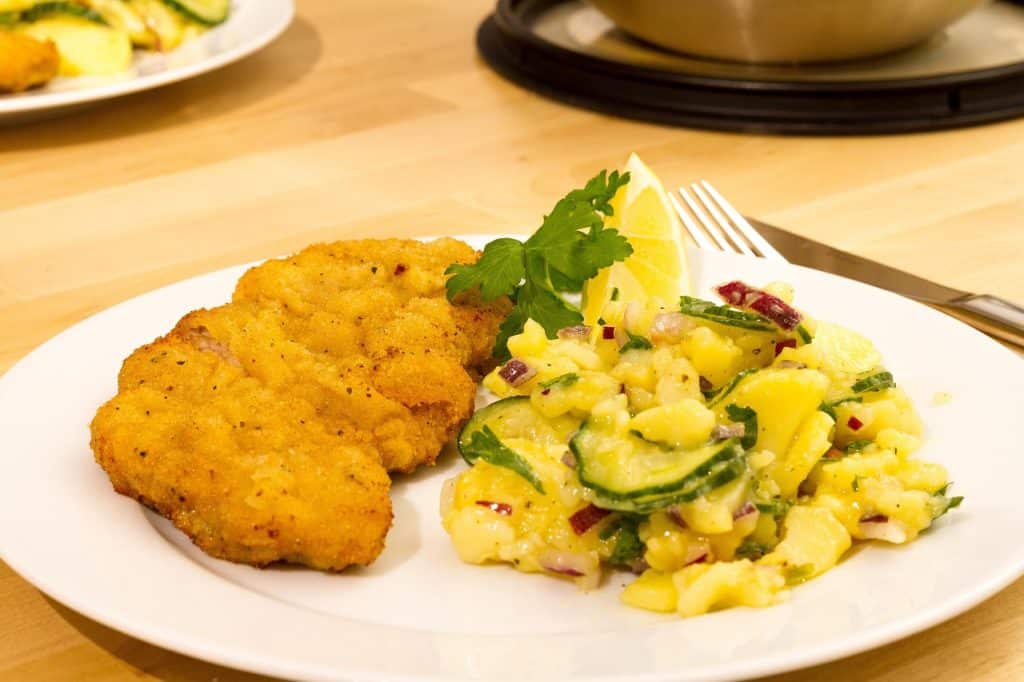
Here’s the critical point: it must be veal for the authentic version. Pork schnitzel—delicious in its own right—earns the designation “Schnitzel Wiener Art” (Wiener-style schnitzel). This acknowledges that while prepared using the same technique, it’s not technically Wiener Schnitzel.
The origin traces to Milan’s cotoletta alla milanese, refined during Habsburg rule when Vienna commanded one of Europe’s great empires and imported culinary sophistication along with administrative bureaucrats.
Properly made, Wiener Schnitzel arrives with nothing more than a lemon wedge and perhaps Austrian potato salad. If you encounter sauce—mushroom, paprika, cream, or otherwise—the kitchen has made an error. The schnitzel stands alone.
Where to find it done well: Figlmüller in Vienna (the gold standard, established 1905), traditional Gasthofs in the countryside, proper Viennese restaurants near Stephansplatz. For planning your visit to these establishments, check out my Vienna 2026: Tour Director’s Guide for current transport information and neighborhood logistics.
Practical details:
- Expect to pay around 22-35€ for authentic Wiener Schnitzel in Vienna (prices at top establishments like Figlmüller may exceed 30€)
- The cutlet should be larger than your plate
- Budget 20-30 minutes for preparation when ordering
- Traditionally served with potato salad or parsley potatoes
2. Tafelspitz (Boiled Beef)
If Wiener Schnitzel is Austria’s national glory, Tafelspitz represents its soul.
Emperor Franz Joseph I ate this nearly every day for over 60 years, establishing it as the dish of imperial Vienna. The name derives from the German word for the cut of beef used—Tafel (table) + Spitz (point)—and the preparation seems almost absurdly simple until you taste it executed properly.
Beef (typically the topside cut, chosen for its lean tenderness) is boiled gently in vegetable broth with celery root, parsnip, carrot, and onion for about 90 minutes, yielding meat so tender it yields to a fork. The genius lies here: slow boiling in vegetable broth infuses deep savory notes rather than leaching flavor as harsh boiling would.
Traditionally, Tafelspitz arrives in courses. First comes the broth, served in a cup and sipped, warming you from inside. Then the beef appears, sliced, arranged alongside boiled vegetables and perhaps some roasted potatoes. The sauces matter: apple-horseradish sauce provides brightness and slight heat; chive sauce adds herbaceousness and depth.
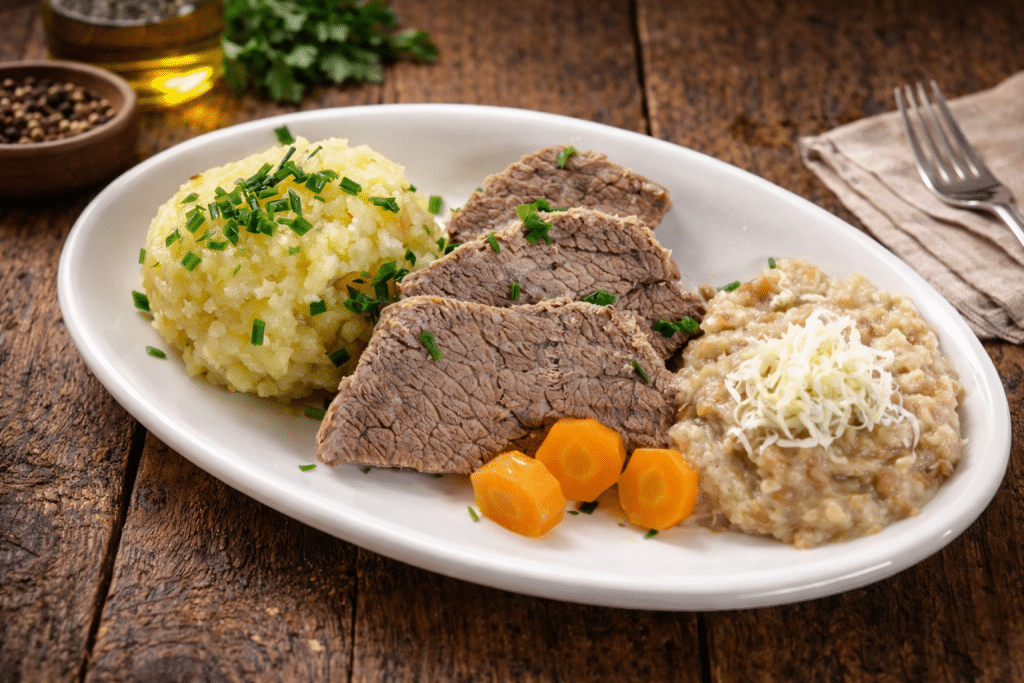
What makes Tafelspitz special to Austrians extends beyond taste to cultural resonance. This was the emperor’s favorite, eaten in the imperial apartments, prepared by palace chefs, and now available to anyone willing to enter a traditional restaurant. The dish democratizes empire.
Best experienced at: Zum Weissen Rauchfangkehrer near Stephansdom, Gasthaus Zur Oper, or Tafel Spitz restaurant. Visit their websites for current hours and booking information. If you’re visiting the area around Stephansdom, my guide to religious customs and church etiquette will help you navigate the neighborhood’s sacred spaces respectfully.
Practical details:
- Expect to pay around 26-38€ for complete Tafelspitz service
- Allow 30-40 minutes for preparation
- Often served as a two-course meal (broth first, then meat)
- The beef should be tender enough to cut with a fork
3. Tiroler Gröstl (Tyrolean Pan-Fried Potatoes)
Travel to Tyrol’s ski resorts and you’ll encounter Tiroler Gröstl on nearly every mountain restaurant menu, particularly after morning runs when cold air has sharpened appetites.
This is mountain food in its purest form: potatoes thinly sliced and pan-fried in butter until edges crisp and turn golden; diced onions cooked until caramelized; beef or pork cooked separately and combined with the potatoes and onions; the whole mass seasoned with salt, pepper, perhaps caraway seeds; and crowned with a fried egg that slowly melts into the hot potatoes below.

Originally born from necessity—a way for Tyrolean farmers to transform yesterday’s boiled potatoes into today’s meal—Gröstl has evolved into a dish respected enough to anchor restaurant menus. The technique matters: potato slices should crisp, not just soften. The egg should be fried until the white sets but the yolk remains liquid.
Regional variations are worth understanding. In the Zillertal valley, you’ll find versions emphasizing beef. In other Tyrolean valleys, pork or even bacon takes the starring role. Some restaurants add cheese (making it Käsegröstl), while purists argue this corrupts the original simplicity.
For comprehensive coverage of Tyrolean dining and regional specialties beyond Gröstl, explore my Tyrol and Innsbruck Travel Guide, which includes detailed itineraries for experiencing authentic Alpine cuisine.
Practical details:
- Expect to pay around 13-19€ at mountain restaurants
- Perfect for lunch after morning skiing
- Budget 15-20 minutes for preparation
- Often large enough to share
4. Schweinebraten (Roast Pork)
Roast pork might seem a dish without particular Austrian credentials, but Schweinebraten prepared in the Austrian manner represents a complete expression of the country’s culinary values.
A large cut of pork (typically the loin or shoulder) is seasoned simply—salt, pepper, perhaps a bit of caraway—and roasted slowly in the oven until the exterior develops deep caramelization while the interior remains moist and tender.
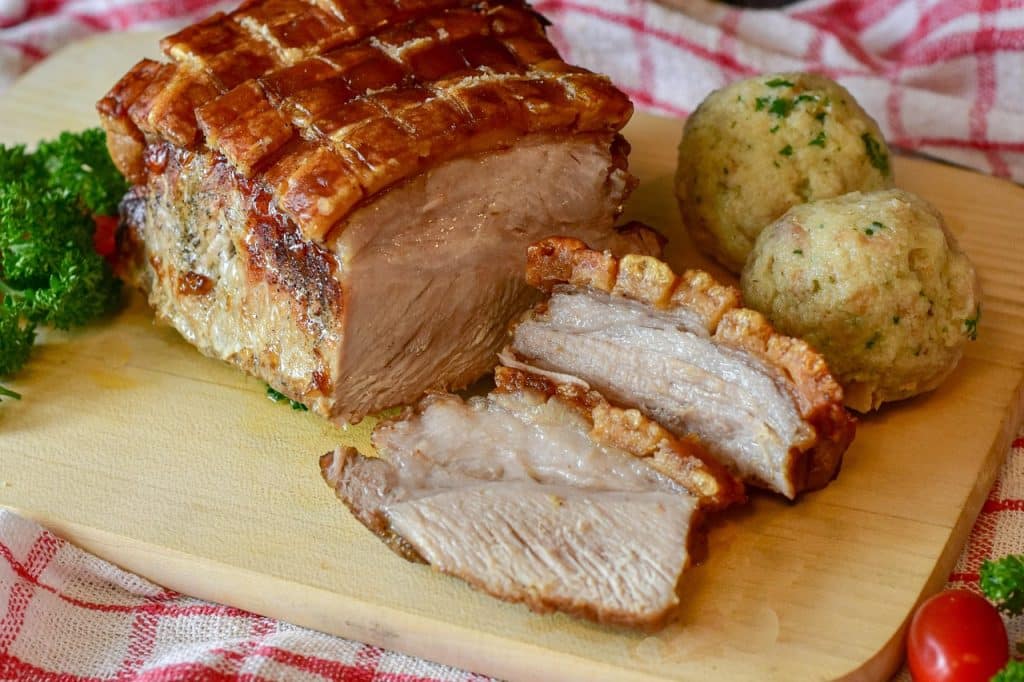
The dish arrives with bread dumplings (Semmelknödel) that soak up the pan drippings transformed into gravy, and sauerkraut—fermented cabbage that provides acid brightness and digestive comfort. Together, they form a complete meal that speaks to Alpine farming traditions: meat from animals raised on Alpine pastures, preserved cabbage from harvest season, bread from daily baking.
Schweinebraten appears on every restaurant menu, but its truest expression comes in family settings and traditional Gasthofs (countryside inns) where recipes pass through generations. The roasting technique, the exact seasoning, the texture of the gravy—these details vary from kitchen to kitchen.
Practical details:
- Expect to pay around 18-26€ with sides
- Sunday lunch is traditional serving time
- Allow 25-35 minutes for preparation
- Often available as daily special (“Tagesgericht”)
5. Gulasch (Austrian / Hungarian Beef Stew)
While Hungary rightly claims goulash as its national treasure, Austria developed its own distinct interpretation that tells its own compelling story.
Austrian Gulasch differs from the Hungarian version in crucial ways: no vegetables beyond onions go into the pot; the sauce remains thick and rich rather than brothy; paprika provides depth rather than heat; and caraway seeds add a digestive warmth that transforms the dish from simple stew into something more complex.
The meat—beef chuck or brisket—is seared in butter or lard until deeply browned (crucial for developing flavor), then combined with sliced onions that caramelize slowly. Tomato paste adds umami depth. Paprika is stirred in, followed by beef broth, and the whole pot braises for 2-3 hours until the meat reaches that perfect tenderness where it dissolves against your palate.
What distinguishes Austrian Gulasch is its richness without heaviness—the way the paprika-dark sauce coats the meat, how caraway seeds provide a subtle counterpoint, how the long slow cooking melds all flavors into something greater than its components. Serve it over egg noodles (Spätzle) or with bread dumplings to soak up the glorious sauce.
This is the dish you’ll encounter at Heuriger (wine taverns), at mountain restaurants, at family celebrations. Its accessibility—built from humble ingredients—never compromises its dignity.
Practical details:
- Expect to pay around 15-22€
- Available year-round but especially comforting in winter
- Often served in traditional ceramic bowls
- Perfect with Austrian beer or young wine
6. Backhendl (Austrian Fried Chicken)
Don’t mistake Backhendl for American fried chicken, though the concept shares ancestry.
Austrian Backhendl represents a more refined approach: chicken pieces are marinated in buttermilk with garlic and perhaps herbs for at least an hour (usually overnight), which tenderizes the meat and infuses subtle flavor. The breading follows the schnitzel template: flour, beaten egg, fresh breadcrumbs, applied just before frying.
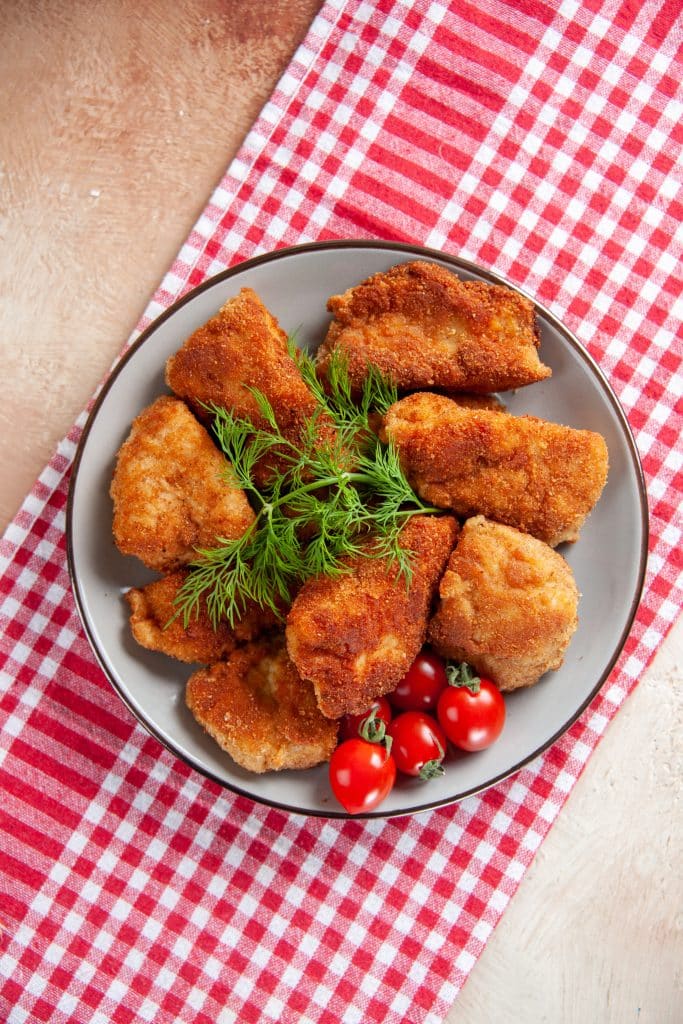
The critical difference from American versions lies in thickness and crispness. Backhendl cutlets are sliced thin, then pounded gently to even thickness—creating faster, more even cooking and a crispier exterior relative to meat thickness. The fried chicken arrives at the table with a thin, delicate crust that cracks cleanly under your fork, revealing meat that remains moist rather than stringy.
Backhendl particularly represents Styrian pride—”Steirisches Backhendl” indicates chicken prepared in the Styrian manner, though the technique has become popular throughout Austria. It’s served with potato salad, fresh lemon wedges for brightness, and parsley for visual appeal and freshness.
The dish represents accessible elegance: technically refined yet humble in ingredients, requiring skill to prepare well yet completely unpretentious.
Practical details:
- Expect to pay around 17-24€
- Often served as half or whole chicken portions
- Budget 20-30 minutes for preparation
- Typically available Friday through Sunday
7. Käsespätzle (Cheese Noodles)
If Wiener Schnitzel represents Austrian sophistication, Käsespätzle embodies Austrian comfort food in its purest form—essentially Austria’s answer to American mac and cheese, except built on handmade egg noodles and melted cheese that creates a texture unlike any prepared dish you’ve encountered.
Spätzle themselves deserve understanding. These aren’t pasta in the Italian sense but rather egg noodles formed by pushing thick batter through a special grater or squeezed through a colander, creating short, irregular noodles that cook quickly in boiling water. The resulting noodles have a tender, almost cloud-like interior with a slight chew to the exterior.
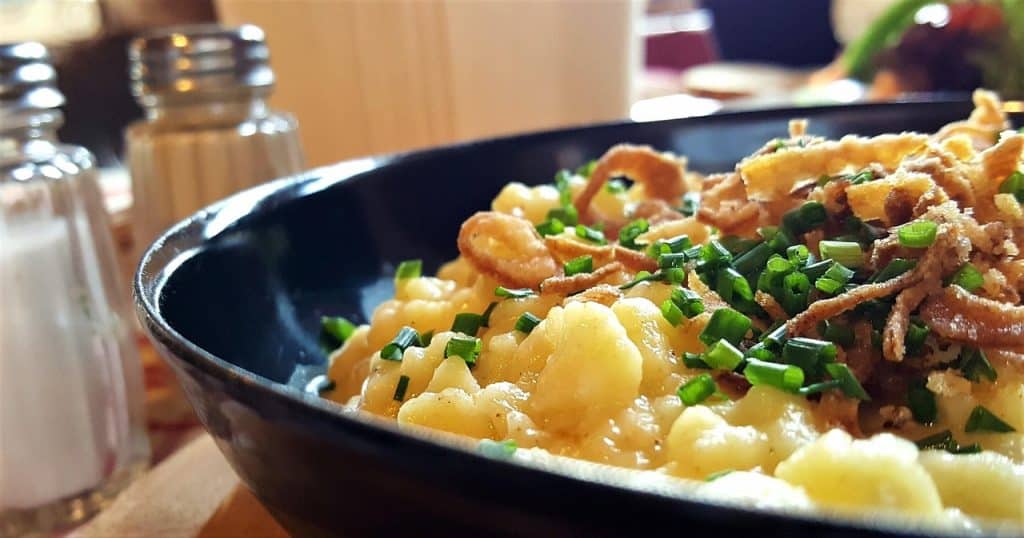
The assembly is deceptively simple: cooked spätzle are mixed with melted cheese (traditionally Emmentaler or Gruyere), then topped with caramelized onions that have cooked slowly in butter until deep golden brown and slightly sweet. Chives scattered across the top provide a fresh note. Some versions include a drizzle of browned butter as final enrichment.
The beauty of Käsespätzle lies in its elemental simplicity and how flavor builds from restraint. The cheese isn’t heavy cream sauce but rather properly melted solid cheese clinging to the noodles. The caramelized onions provide umami depth and slight sweetness against the mild cheese. The chives add herbaceous brightness.
Regional variation: In Vorarlberg (Austria’s westernmost state), Käsespätzle becomes Käsknöpfle and uses three traditional regional cheeses—creating a more complex flavor profile. In some Vorarlberg regions, it’s served with applesauce on the side for a sweet-savory contrast.
Practical details:
- Expect to pay around 13-17€
- Often large portions suitable for sharing
- Available year-round
- Some restaurants offer half-portions
8. Krautfleckerl (Cabbage Pasta)
This humble Viennese dish, originally from Bohemia and now thoroughly adopted as Austrian comfort food, demonstrates how modest ingredients become something memorable through technique and patience.
Fleckerl (square pasta pieces) are combined with cabbage that has been cooked until deeply caramelized—a process taking 20-30 minutes as the natural sugars in cabbage develop and concentrate.

The dish often includes bacon or Speck (cured pork fat) that crisps during cooking, providing richness and umami depth. Caraway seeds, characteristic of Austrian cooking, add digestive warmth and subtle spice. Some versions include onions that caramelize alongside the cabbage, while others stay austere with just cabbage, bacon, and caraway.
What makes Krautfleckerl remarkable is how a dish built from winter storage ingredients achieves complexity and satisfaction without any sauce or heavy binding. The caraway seeds provide all the flavor needed; the caramelized cabbage provides sweetness and depth; the bacon provides richness.
This was traditionally budget food for Viennese working families—cabbage being inexpensive and abundant—yet it appears on sophisticated restaurant menus now because it achieves something increasingly rare: genuine flavor from genuine ingredients without pretense.
Practical details:
- Expect to pay around 11-15€
- Often available as a side dish or main course
- Especially popular in autumn and winter
- Traditional Gasthofs serve the most authentic versions
9. Leberkäse (Meatloaf)
The name deceives utterly. “Leber” means liver and “käse” means cheese, yet traditional Leberkäse contains neither significant liver nor any cheese.
Instead, this pink pâté-like baked meatloaf made from finely-chopped pork, bacon, and beef represents one of Austria’s most misunderstood and beloved dishes. Leberkäse is baked in a loaf pan until it achieves a distinctive pale pink interior and brown exterior.

It’s typically served warm or at room temperature in a roll (Leberkäsesemmel) with mustard, horseradish, or both, along with sliced onions and gherkins. The resulting sandwich offers richness from the meat paste, brightness from condiments, and crunch from fresh vegetables.

Modern variations expand the original: some include cheese (Käseleberkäse), others add spicy peppers for heat, wild boar variants exist for special occasions, and even horse meat versions appear in some regions. But the classic version remains the pale pink, finely-textured original.
The texture should be fine and creamy, not coarse. The meat should be fresh-tasting, not aged. When done well, Leberkäse achieves something simple yet sophisticated.
Practical details:
- Expect to pay around 4-7€ for a sandwich at Würstelstands
- Available throughout the day
- Best eaten fresh and warm
- Found at butcher shops and sausage stands citywide
Dumplings: Austria’s Dumpling Mastery
Austrians approach dumplings with an artistry that deserves its own respect. Unlike Italian pasta dumplings or Eastern European versions, Austrian Knödel represent a distinct category—starch-based pillows that can be savory, sweet, served in soup or as main courses, accompaniments or complete meals themselves.
The diversity is staggering: seven varieties appear in the essential 25 dishes, but Austrian cuisine contains perhaps twenty varieties depending on regional and family variations. Understanding these dumplings unlocks one of the most distinctive aspects of Austrian cuisine.

10. Semmelknödel/Serviettenknödel (Bread Dumplings)
The most traditional dumpling in Austria, Semmelknödel dates to times when bread couldn’t be wasted—stale bread cubes were moistened with milk, bound with eggs, combined with onions and perhaps parsley, formed into balls, and boiled until they floated and achieved a cloud-like texture.
The result absorbs gravy beautifully, making them the perfect accompaniment to roast pork (Schweinebraten) or Tafelspitz.
Serviettenknödel—literally “napkin dumplings”—represent a variation where the dumpling mixture is wrapped in a napkin, tied, and boiled in a tube shape that’s sliced before serving. This presentation serves restaurants more than home cooks, but the flavor remains the same: bread, eggs, milk, onion transformed through boiling into something comforting and deeply satisfying.

The quality depends entirely on ingredients: stale bread from real bakeries behaves differently than commercial white bread; the proportion of milk matters for texture; onions should be sautéed until golden before incorporating. Done well, Semmelknödel achieves lightness despite being bread-based—they should float like clouds, not sink like stones.
Practical details:
- Usually included with main courses rather than ordered separately
- Traditional accompaniment to roasted meats
- Some restaurants offer them as standalone dishes with mushroom sauce
11. Speckknödel (Bacon Dumplings)
Travel to Tyrol and Speckknödel appear frequently—darker than Semmelknödel due to bacon bits distributed throughout, more savory, equally at home in soup or as a standalone accompaniment.
The dumpling mixture builds on the bread dumpling foundation but substitutes some milk with the cooking liquid from bacon, and incorporates crisp bacon pieces throughout.

Regional variations exist by valley: the Zillertal, the Stubai Alps, the Karwendel mountains—each area claims its own authentic version, each making subtle variations to herb combinations or bacon ratios. What remains consistent is the satisfying chewiness of bread dumpling interior and the salty, savory depth from bacon.
These were originally peasant food—using leftover bread and bacon scraps—but have become restaurant specialties commanding respect. They’re equally at home in beef consommé or served alongside roasted meats.
Practical details:
- Expect to pay around 9-13€ when ordered as a main dish
- Often served in clear soup (Speckknödelsuppe) as a starter
- Most authentic in Tyrolean mountain restaurants
- Available year-round
12. Germknödel (Sweet Yeast Dumplings)
Germknödel represent the bridge between savory dumplings and Austrian sweet culture—technically dumplings but functioning as dessert or special midday meal.
These are sweet, fluffy yeast dumplings filled with spiced plum jam (Powidl), topped with poppy seeds and sugar, then drizzled with melted butter.
The yeast dough requires proper rising time and technique, creating dumplings that are feather-light rather than dense. The plum jam filling provides tartness against sweetness; some versions add a whole sugar cube inside the plum filling that caramelizes during cooking and provides a sweet surprise when bitten.
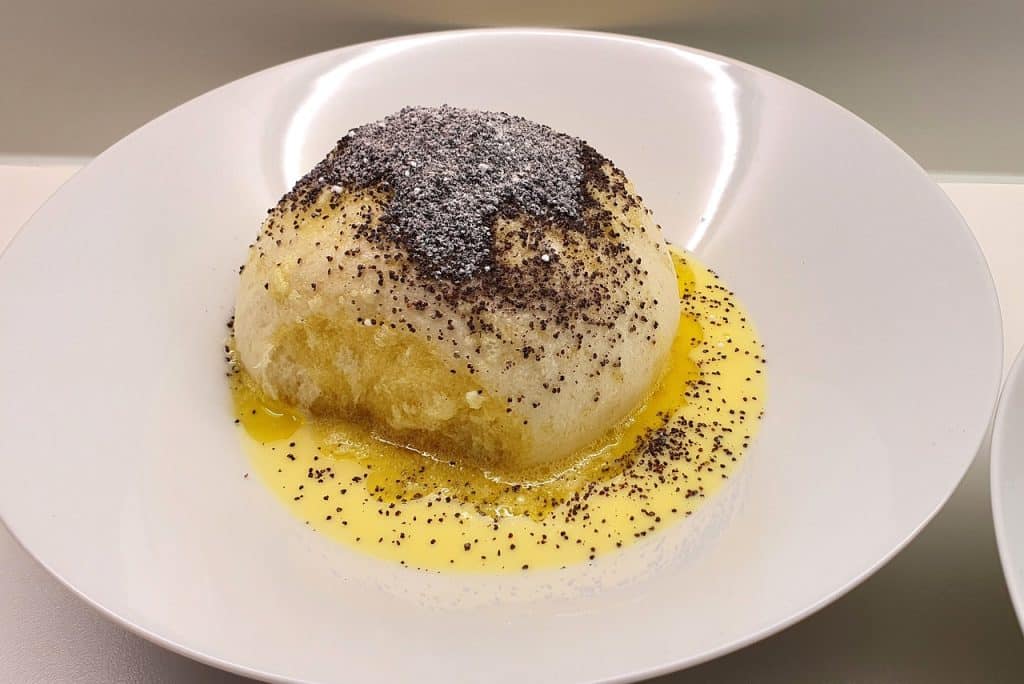
Germknödel belong to ski resort culture particularly—they appear on every mountain restaurant menu as a midday meal rather than dessert, often served alongside a small glass of plum compote on the side. They’re satisfying without being heavy, sweet but with enough acidity from plums to feel balanced.
The name derives from “Germ” (yeast in German)—reflecting the yeast-based dough that creates their characteristic lightness.
Practical details:
- Expect to pay around 9-12€
- Especially popular at ski resorts and mountain restaurants
- Often large enough to share
- Best eaten immediately while still warm
13. Marillenknödel (Apricot Dumplings)
Austria’s favorite fruit dumpling, Marillenknödel appear on summer menus throughout the country when fresh apricots reach peak ripeness.
These represent fruit dumplings at their most elegant—whole fresh apricots wrapped in quark (curd cheese) and potato dough, often with a sugar cube inserted into the apricot pit cavity that melts during cooking.

The preparation matters: the dough must be tender but strong enough to encase the fruit without tearing; the apricots must be perfectly ripe but still firm. The dumplings are boiled in lightly salted water until they float, then rolled in toasted breadcrumbs that have been cooked in butter until golden brown and fragrant, then dusted generously with powdered sugar.
What distinguishes Marillenknödel is the textural experience: the delicate dough exterior, the tender apricot interior, the slight firmness from the sugar cube, the toasted breadcrumb coating that provides crunchy counterpoint. Some serve them with a dollop of vanilla ice cream or whipped cream, though traditionalists argue the fruit dumpling stands alone.
Important note for travelers: Marillenknödel are served as a main course at lunch, not as dessert. This confuses many visitors expecting sweet courses to arrive only after savory meals. In Austria, fruit dumplings often constitute a complete midday meal.
Practical details:
- Expect to pay around 10-14€
- Available primarily June through August (fresh apricot season)
- Often served as 2-3 dumplings per portion
- Traditional lunch option, not dessert
14. Topfenknödel (Curd Cheese Dumplings)
These delicate white dumplings, served dusted with powdered sugar or rolled in toasted breadcrumbs, represent curd cheese (quark) at its most elegant.
Topfen (the Austrian word for quark, a cultured dairy product) provides the protein and slight tang. The dough—built on eggs, bread, and Topfen—requires a light hand and proper ratio of ingredients to achieve the cloud-like texture that distinguishes them from dense potato dumplings.

Topfenknödel often appear alongside fruit compote, particularly plum compote (Zwetschkenröster), which provides brightness against the mild creaminess of the quark dumplings. They can also be served as a dessert course rolled in cinnamon sugar or topped with apricot jam.
The base dough also serves as foundation for fruit dumplings (like Marillenknödel), making Topfenknödel themselves an important dumpling category in their own right.
Practical details:
- Expect to pay around 9-13€
- Available year-round
- Often served with fruit compote or melted butter
- Can be ordered as main course or dessert
15. Leberknödel (Liver Dumplings)
Smaller than other dumplings, Leberknödel appear in clear broth (Leberknödelsuppe) as a traditional soup course, representing how Austrians approach offal and nose-to-tail eating with respect and skill.
The dumplings are formed from minced bread, onions, liver (and sometimes other offal), bound with egg, and boiled in beef consommé.

The liver provides iron and distinctive flavor; the bread provides structure; the broth transforms them into something light and elegant rather than heavy. Leberknödelsuppe appears as an opening course at formal dinners, demonstrating the Austrian appreciation for using all parts of the animal in ways that honor both the ingredient and the diner.
Practical details:
- Usually ordered as a soup course
- Expect to pay around 7-10€
- Traditional starter at formal meals
- Found at traditional Austrian restaurants
16. Kaspressknödel (Cheese Dumplings)
From western Austria, Kaspressknödel represent a different dumpling philosophy—the dough incorporates cubes of cheese throughout, which melt during cooking.
The result is a dumpling that’s simultaneously dense and rich, often served in clear soup where the melted cheese imparts subtle richness to the broth.
These dumplings occupy a middle ground between bread dumplings and cheese dumplings—built on bread dough foundation but enriched with cheese cubes that melt into the interior.
Practical details:
- Expect to pay around 8-11€ in soup
- Particularly popular in Tyrol and Vorarlberg
- Sometimes pan-fried and served with sauerkraut
- Available year-round
Desserts and Pastries: The Heart of Austrian Sweetness
If Austria’s savory cuisine speaks to its geography and history, its desserts represent something more intimate—generations of bakers perfecting their craft, emperors commissioning creations, families gathering around tables of pastries.
The complexity of Austrian desserts shouldn’t be misunderstood as kitchen fussiness; rather, these are desserts refined through centuries of tradition where every element serves a purpose.
17. Sachertorte (Sacher Torte)
Perhaps Austria’s single most famous culinary export, Sachertorte originated in 1832 when a 16-year-old apprentice named Franz Sacher created it for an important dinner at the home of Prince Metternich.
The resulting cake—dense chocolate sponge, thin layer of apricot jam, dark chocolate glaze—became the defining Austrian chocolate cake, and its creation sparked a legal battle between Hotel Sacher and the Demel confectionery that lasted decades, each claiming possession of the “original” recipe.
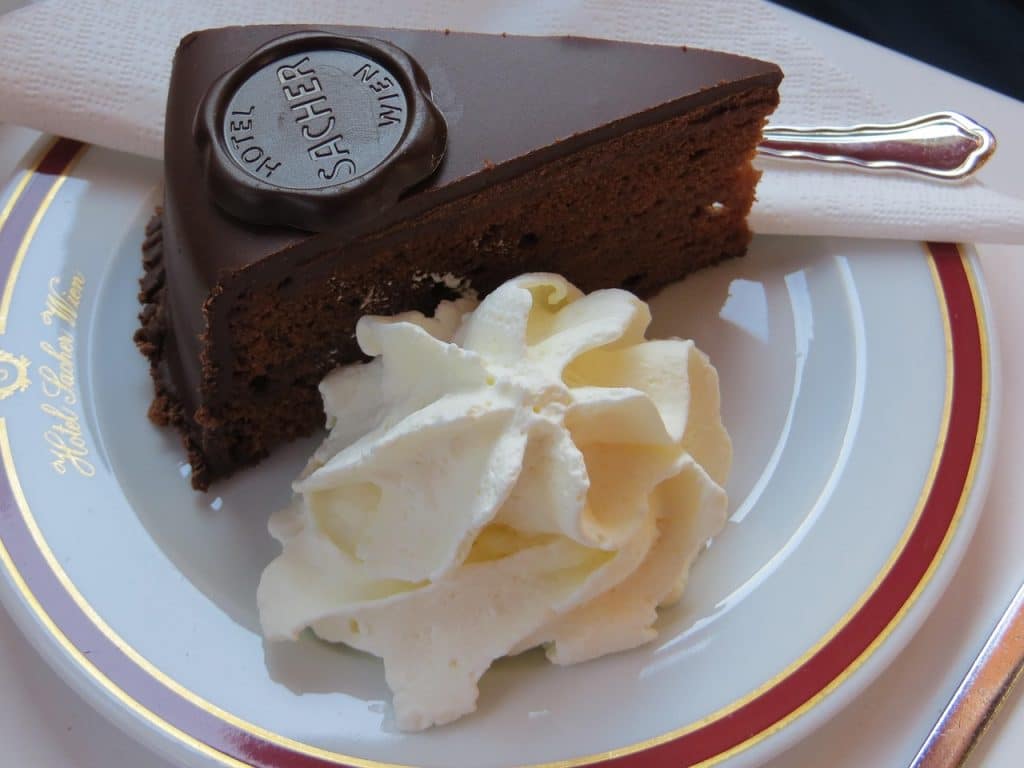
The recipe remained secret in both establishments for generations, though modern bakers have reverse-engineered reasonable approximations. The essential elements remain: chocolate cake that achieves density through technique (not excessive flour), a thin layer of apricot jam providing bright tartness against chocolate richness, and a dark chocolate glaze that sets to a slight snap.
Sachertorte is always served with unsweetened whipped cream (Schlag in Austrian), which provides coolness and slight astringency that balances the richness. The combination of dense chocolate, tart jam, and cool cream demonstrates how a seemingly simple three-element cake achieves complexity through balance rather than complication.
The cakes sold in supermarkets or by bakeries claiming “authentic” status remain just approximations—the true versions exist only at Hotel Sacher and Demel, each making theirs slightly differently, each claiming authenticity.
Where to experience it: Hotel Sacher Wien and Café Demel in Vienna. Check their official websites for current café hours and booking information.
Practical details:
- Expect to pay around 9-13€ for a slice with coffee
- Always served with unsweetened whipped cream
- Available at cafés throughout Vienna (quality varies)
- The “original” versions are at Hotel Sacher and Demel
18. Apfelstrudel (Apple Strudel)
To understand Apfelstrudel is to understand Austrian baking philosophy. This isn’t a pie—which relies on butter-based pastry and filling separated by a crust.
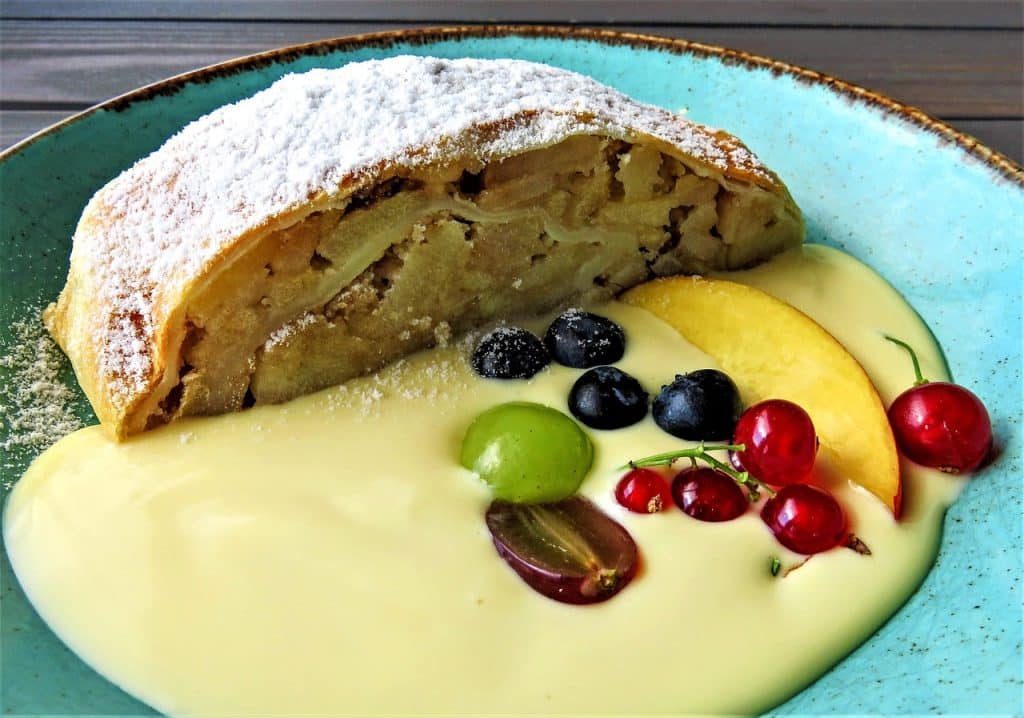
Instead, Apfelstrudel represents a thin pastry, nearly translucent, hand-stretched to nearly the size of a bed sheet, filled with sliced tart apples and raisins, rolled tightly, and baked until the exterior crisps while the interior remains tender.
The pastry dough—flour, eggs, water, oil, salt—develops through kneading and resting into a smooth, elastic dough that tolerates stretching without tearing. The stretching technique itself requires practice and confidence: the dough is worked gently from underneath, gradually expanding until it becomes paper-thin and covers the work surface entirely.
The filling showcases ingredient philosophy: tart apples (Granny Smith or similar varieties, never sweet apples) are sliced thin, combined with raisins soaked in rum, toasted breadcrumbs (crucial—they absorb fruit juices while cooking and prevent a soggy bottom), cinnamon, sugar, and sometimes lemon zest. The breadcrumbs are toasted in butter before incorporating, imparting richness and preventing the pastry bottom from becoming waterlogged.
The strudel is rolled tightly, shaped in a spiral to fit the baking pan, and baked at moderate temperature until the exterior crisps and browns, revealing the apples through the transparent pastry. The finished strudel is dusted generously with powdered sugar and served warm with vanilla ice cream or whipped cream.
Apfelstrudel represents Austrian baking at its most refined—technique creates excellence, not novelty. The hand-stretching creates a pastry that crisps properly; the breadcrumb layer prevents sogginess; the rum-soaked raisins provide depth; the cinnamon and lemon provide balance. Every element serves function beyond mere inclusion.
Practical details:
- Expect to pay around 7-11€ with ice cream or cream
- Best eaten warm
- Available at cafés and restaurants year-round
- Some establishments make it fresh daily
19. Kaiserschmarrn (Emperor’s Pancake)
Named after Emperor Franz Joseph I, Kaiserschmarrn represents perhaps the most indulgent approach to breakfast that still remains technically pancake.
This is not a plated pancake with toppings but rather a light, fluffy pancake made with rum-soaked raisins, torn into pieces during cooking, caramelized with butter and sugar, and served with plum compote (Zwetschkenröster) or applesauce.
The technique matters crucially: the batter is thin enough to pour like crepe batter but enriched with eggs and occasionally beaten egg whites to create fluffiness. As it cooks, raisins distributed throughout provide sweetness and chewy texture. Rather than flipping intact, the pancake is torn apart with two forks or by tilting the pan, creating irregular pieces that brown and caramelize in the butter and sugar as they tumble around the pan.

What emerges is something between pancake and candy—pieces of tender pancake with crispy, caramelized edges, sweetened with the butter-sugar mixture, balanced by slightly tart plum compote on the side. The texture contrast between tender interior and caramelized exterior, the sweetness balanced by tart compote, the lightness despite rich preparation—these elements combine into something that feels both indulgent and elegant.
I first understood Kaiserschmarrn’s true place in Austrian culture at a small mountain hut above St. Anton after a morning of skiing. The place was packed with locals, and nearly every table had ordered it—not as dessert, but as their main lunch. Watching families tear into these caramelized pancakes while fog rolled past the windows, I realized this wasn’t indulgence but tradition: fuel for the mountains, comfort for cold days, and a dish substantial enough to carry you through an afternoon on the slopes. The hut’s version arrived in a cast-iron pan still sizzling from the stove, the edges dark with caramelization, the plum compote sharp enough to cut through the butter-sweetness. That’s when Kaiserschmarrn stopped being “fancy pancakes” and became what it truly is: alpine soul food.
Kaiserschmarrn occupies an interesting place in Austrian meals: it can serve as a substantial breakfast, as a midday main course, or as dessert. Mountain restaurants serve it regularly as a lunch item.
Practical details:
- Expect to pay around 11-15€
- Often large portions suitable for sharing
- Allow 15-20 minutes for preparation (made to order)
- Especially popular at ski resorts and mountain restaurants
20. Topfenstrudel (Quark Strudel)
Like Apfelstrudel, Topfenstrudel demonstrates mastery of the hand-stretched strudel dough, but the filling represents an entirely different approach to sweetness.
Quark (a mild cultured dairy product), eggs, lemon zest, and vanilla combine with raisins soaked in rum to create a creamy, tangy filling.
The technique parallels Apfelstrudel: the thin, hand-stretched dough is layered with the quark mixture, rolled tightly, and baked until the exterior crisps. The result is a strudel that can be served warm or cold, whose quark filling becomes slightly firm when cool but remains creamy when warm.
Topfenstrudel appeals to those who find fruit strudels’ tartness overwhelming—the mild creaminess of quark combined with bright lemon and vanilla suggests sweetness without shouting it. The raisins provide textural contrast and slight chewiness. The exterior crisps properly when baked, providing textural contrast to the creamy interior.
Practical details:
- Expect to pay around 7-10€
- Available at most traditional cafés
- Can be served warm or at room temperature
- Often dusted with powdered sugar
21. Krapfen/Faschingskrapfen (Carnival Donuts)
Krapfen appear year-round but reach peak importance during Fasching (Carnival season), the weeks before Lent when traditional foods become richer and sweeter.
These yeast dough donuts are deep-fried and filled with apricot jam (most traditionally), though modern variations include vanilla cream, chocolate, and Nutella.
The dough is enriched with eggs, butter, and sometimes rum, creating something richer than basic bread dough. After rising, portions are formed and rise again, then deep-fried until golden. The critical technique moment: donuts are only fried once, meaning the temperature, timing, and dough fermentation must all combine perfectly.
The jam filling is injected after frying using a small syringe or piping bag, ensuring it distributes evenly. The white line visible on the sides of properly made Krapfen indicates where the hot oil created a slight seal—purists use this as a quality indicator. Krapfen are dusted generously with powdered sugar and often served with jam on the side for additional sweetness.
Faschingskrapfen specifically appear in bakeries starting in January, reaching peak availability in February, and disappearing by Ash Wednesday. The tradition reflects the pre-Lenten indulgence that gave rise to carnival celebrations throughout Europe.
Practical details:
- Expect to pay around 2-5€ per donut
- Peak season: January through February (Fasching)
- Best eaten fresh
- Found at bakeries throughout Austria
22. Punschkrapfen (Punch Cake)
Distinctive for their shocking pink fondant glaze, Punschkrapfen appear in nearly every Austrian bakery’s pastry case—small cubes of sponge cake infused with rum, coated in apricot jam, and covered in bright pink fondant that tastes vaguely of punch.

The name comes from the “punch” flavoring in the fondant, though modern versions sometimes substitute artificial flavorings.
The construction is simple: sponge cake is cut into small cubes, the cubes are assembled with apricot jam and chocolate coating (or sometimes apricot jam without chocolate), and the assembled cakes are dunked in pink fondant glaze. The result is a perfectly portable, visually striking pastry that provides sweetness, slight structure, and visual delight.
The pink color, once achieved through cochineal (a scale insect-derived dye), now typically comes from standard food coloring, yet “Punschkrapfen” specifically means pink-glazed punch cake—other colorings wouldn’t be authentic.
Punschkrapfen represent Austrian pastry culture’s democratic aspect: they’re affordable, beautiful, delicious, and accessible—the pastry equivalent of how Tafelspitz represents food democratization in Austrian cuisine.
Practical details:
- Expect to pay around 2-4€
- Available year-round at bakeries
- Shelf-stable for several days
- Popular take-away pastry
23. Linzer Torte (Almond Raspberry Tart)
One of the oldest named cakes surviving with a continuous tradition, Linzer Torte originates from the city of Linz but has become ubiquitous throughout Austria.
The tart is constructed from an almond or hazelnut-based pastry—buttery and crumbly—filled with raspberry or redcurrant jam, and decorated with a lattice pattern on top.
The pastry is spiced with cinnamon, cloves, and lemon zest, which distinguishes it from simple butter tart dough. The spices are subtle but essential—they provide warm notes that prevent the jam from tasting one-dimensional. The jam serves as filling but also shows through the lattice pattern, creating visual appeal.

The construction requires precision: the pastry must be sturdy enough to support the lattice without becoming tough from overworking. The jam should be thick enough not to leak during baking. The spice proportions must balance—cinnamon dominant but clove restrained, lemon zest bright but not overwhelming.
Linzer Torte appears frequently on Austrian tables, particularly during holidays, and remains one of the few traditional Austrian tortes regularly made at home rather than exclusively by professional bakers.
Practical details:
- Expect to pay around 5-8€ per slice
- Available year-round
- Often sold whole for special occasions
- Traditional Christmas and holiday pastry
Sides and Specialty Items
24. Erdäpfelsalat (Austrian Potato Salad)
Don’t arrive in Austria expecting mayonnaise-based potato salad in the American tradition—Austrian Erdäpfelsalat operates on completely different principles.
The name itself reveals philosophy: “Erdäpfel” (earth apple) is the Austrian term for potato, and this salad builds from vinegar and broth, not mayo.
Hot boiled potatoes are dressed immediately with a warm vinegar-based dressing—thin and light, not creamy—that allows the potatoes to absorb the dressing while they’re still warm. Red onion (thinly sliced), good quality mustard (tarragon mustard preferred), oil, and fresh broth create the dressing. As the potatoes cool, the starch released from their surfaces thickens the dressing naturally, creating a slightly creamy texture without any mayo.
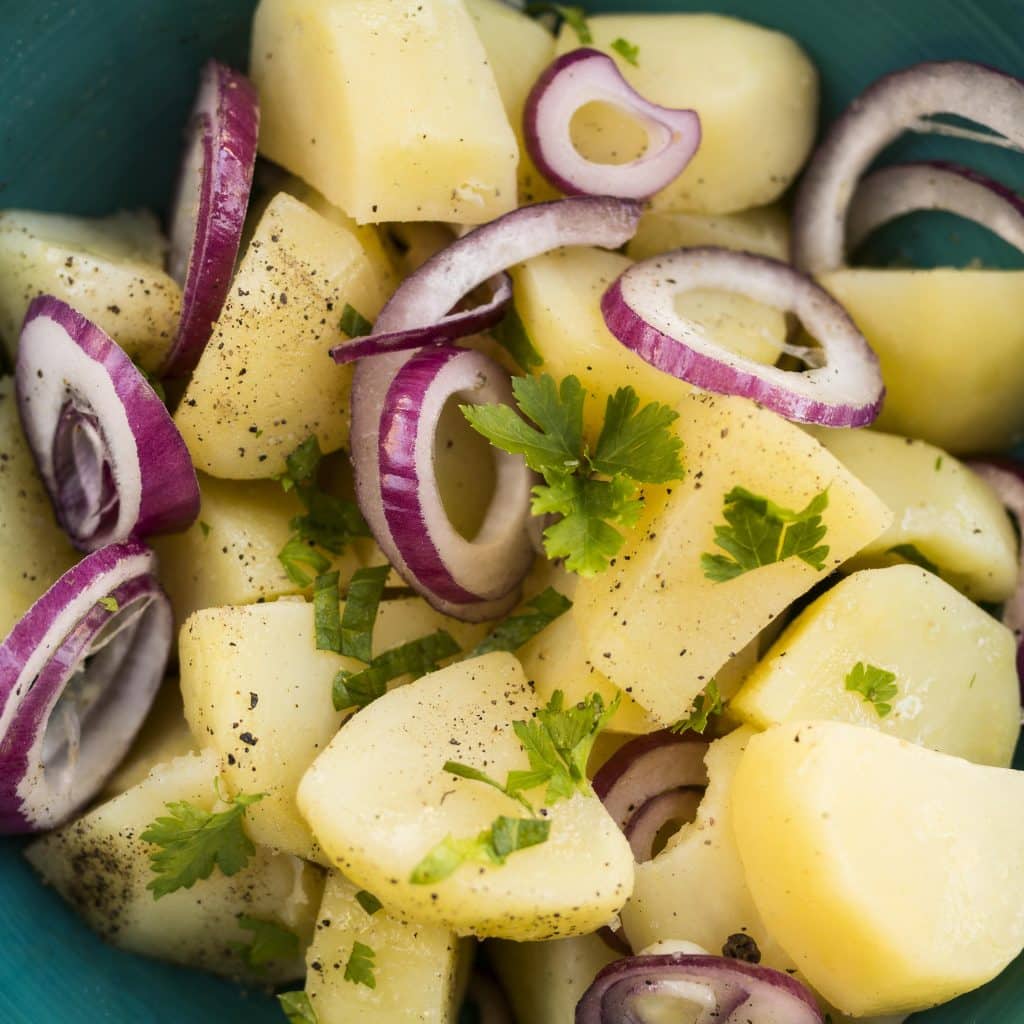
The key technique: never chill the salad before serving. Room temperature or slightly warm is correct. The dressing should lightly coat each potato slice without excess pooling at the bottom. The potatoes should remain distinct (not mushy) but tender enough to cut easily with a fork.
Regional variations exist: Vienna often includes apple slices for sweetness; different regions favor different mustards or broths. But the fundamental philosophy remains: a light, vinegar-based dressing that complements roasted or fried meats, particularly schnitzel.
Practical details:
- Usually included as a side dish with schnitzel or roasted meats
- Rarely ordered separately
- Best at room temperature
- Traditional accompaniment to Wiener Schnitzel
25. Zwetschkenröster (Plum Compote)
This traditional accompaniment for Kaiserschmarrn appears frequently enough as a side to deserve mention as a signature element of Austrian cuisine.
Zwetschkenröster are Italian plums cooked with cinnamon, cloves, lemon, and sugar until they break down into a thick compote that ranges from chunky to smooth depending on desired texture.
The flavor should balance: sweetness from sugar and ripe plums tempered by cinnamon and lemon acidity, deepness from cloves without spice dominating. The compote can be made fresh daily, jarred for storage, or prepared in larger batches during plum season and preserved for winter enjoyment.
Zwetschkenröster provide brightness and tartness against rich, sweet dishes—the counterpoint to Kaiserschmarrn’s indulgence, the balance against Germknödel’s sweetness, the complement to certain meat dishes.
Practical details:
- Usually included with dishes like Kaiserschmarrn and Germknödel
- Not typically sold separately
- Sometimes available jarred at specialty food shops
- Peak season: late summer when plums are fresh
Beyond These 25: The Supporting Cast
The 25 dishes above represent the essential Austrian culinary repertoire, but understanding Austrian food requires acknowledging dishes deserving mention: Wiener Saftgulasch (meat sauce served with noodles), Mopp (tripe stew), Hirn (brain served breaded and fried), various sausages at the Würstelstand (Käsekrainer with cheese, Debreziner with paprika), Mohnnudeln (poppy-seed gnocchi), and countless regional specialties that vary by Austrian state and valley.
The point isn’t comprehensiveness but rather understanding that Austrian cuisine extends far beyond the most famous dishes, with depth available in every direction you explore.
The Heuriger Tradition: Where Food Meets Culture
No discussion of Austrian food achieves completeness without addressing Heuriger—the traditional wine taverns that emerged from an August 1784 decree by Emperor Joseph II allowing residents to sell self-produced wine and juice without permit.
The name “Heuriger” derives from “this year”—the wine is fresh, young, still fermenting slightly, carrying the flavor of the current season.

Originally operating only during wine season (November 1 through St. Martin’s Day, November 11), Heuriger have evolved into year-round establishments, though the seasonal tradition remains important. The tradition distinguishes itself from restaurants through several key elements: Heuriger serve only wines produced on their premises; food remains primarily cold (originally to avoid competition with restaurants); and the atmosphere emphasizes community and Gemütlichkeit over service formality.
The food at Heuriger centers on Brettljause—Austrian charcuterie boards featuring cold cuts, various cheeses, pickled vegetables, spreads (Liptauer—a paprika-cheese spread, Grammelschmalz—rendered pork fat with meat bits), dark bread, and marinated items like gherkins and olives. Guests often create their own combinations from the buffet, building snacks according to preference while wine flows freely and conversation grows progressively more animated.
The Heuriger experience defines Austrian sociability and food culture in ways restaurant dining doesn’t capture. Locals and tourists intermingle at communal tables. Musicians often perform traditional Schrammelmusik (accordion-based folk music). The wine, rough and young, tastes perfect against fresh bread and salty cold cuts. Hours pass easily—this is exactly the point.
For travelers seeking authentic Austrian food culture beyond refined restaurant dining, Heuriger in Vienna’s wine-growing suburbs (Grinzing, Sievering, Neustift, Liesing) represent essential experiences. The food is simple, the wine is genuine, and the atmosphere is utterly Austrian.
Practical details:
- Expect to pay around 18-28€ per person for food and wine
- Open primarily evenings and weekends
- Look for a pine branch hung outside indicating they’re open
- Most accessible by tram or taxi from central Vienna
- Check individual websites for current opening times and seasonal schedules
Coffee House Culture: Where Food Becomes Ritual
The connection between Austrian food and coffee house culture deserves explicit acknowledgment. UNESCO recognizes Viennese coffee house tradition as “Intangible Cultural Heritage of Humanity,” acknowledging that this isn’t simply a place to drink coffee but rather a cultural institution.
The coffee house emerged fully formed by the late 17th century, legend claiming that retreating Ottoman forces left behind coffee beans that sparked Vienna’s love affair with coffee. The resulting institutions transformed into spaces where intellectuals gathered, newspapers were read for hours, and conversation became the primary activity rather than transaction.

Within these coffee houses exists an entire pastry culture. Historic establishments like Café Central, Café Demel, Café Hawelka, and Café Sacher serve pastries—Sachertorte at Sacher, Buchteln (yeast pastries filled with plum jam) at Hawelka, architectural confections at Demel—that have become synonymous with Vienna itself.
These aren’t takeaway pastries but rather elements of the coffee house experience where a single pastry accompanies two hours of reading, conversation, or contemplation.
For travelers, understanding that coffee house time is supposed to be leisurely—that ordering a single cup of coffee and remaining for hours is appropriate, even encouraged—transforms the experience from uncomfortable rushing to genuine participation in Austrian culture.
Famous coffee houses to visit:
- Café Central – Grand historic setting, perfect for people-watching
- Café Sacher – Home of the original Sachertorte
- Café Demel – Imperial and Royal Court Confectioner since 1786
- Café Hawelka – Bohemian atmosphere, famous for Buchteln
- Café Sperl – Unchanged since 1880
Check individual café websites for current hours and booking policies.
Quick Itinerary Overview: Your Austrian Food Journey
Day 1 – Vienna Classics:
- Morning: Coffee and pastry at Café Central or Café Demel (2 hours)
- Lunch: Wiener Schnitzel at Figlmüller
- Afternoon: Sachertorte at Hotel Sacher
- Evening: Tafelspitz at traditional Gasthof
Day 2 – Market & Heuriger:
- Morning: Naschmarkt food market exploration
- Lunch: Quick Leberkäsesemmel at a Würstelstand
- Afternoon: Museum visits
- Evening: Heuriger experience in Grinzing
Day 3 – Alpine Traditions:
- Travel to Tyrol or Salzburg
- Lunch: Tiroler Gröstl at mountain restaurant
- Afternoon: Kaiserschmarrn and coffee
- Evening: Traditional Gasthof for Schweinebraten
Frequently Asked Questions
What are the most traditional Austrian dishes and their costs?
The most traditional Austrian dishes are Wiener Schnitzel (€22–35), Tafelspitz (€26–38), and Tiroler Gröstl (€13–19). Expert Tour Director Pieter Reynolds notes that authentic Austrian cuisine is defined by Gemütlichkeit, prioritizing high-quality local ingredients and centuries-old techniques like frying, braising, and stewing over modern complexity.
How much time do I need to experience Austrian food properly?
At minimum, spend 3-4 days in Vienna to experience the coffee house culture, traditional restaurants, and a Heuriger. Add 2-3 days in the alpine regions (Tyrol or Salzburg) for mountain food traditions. A full week allows you to explore regional variations without rushing.
Is Austrian food expensive?
Traditional food ranges from very affordable (4-7€ for Leberkäsesemmel) to moderate (22-35€ for Wiener Schnitzel at quality restaurants). Coffee houses are reasonable (9-13€ for coffee and cake). Budget around 45-70€ per person daily for meals including one restaurant meal, one casual meal, and coffee house visits.
What’s the best season to visit for food?
Each season offers something special. Summer brings fresh apricots for Marillenknödel. Autumn brings game season and harvest foods. Winter features Christmas markets and hearty stews. Spring brings asparagus season and lighter preparations. Fasching (February) is ideal for Krapfen.
Can vegetarians enjoy Austrian cuisine?
Traditional Austrian cuisine is meat-heavy, but vegetarians will find options: Käsespätzle, various dumplings (Germknödel, Marillenknödel, Topfenknödel), Kaiserschmarrn, all pastries and desserts, and cheese-based dishes. Modern restaurants increasingly offer vegetarian adaptations of traditional dishes.
What about gluten-free or dairy-free options?
Austrian cuisine relies heavily on bread (dumplings, schnitzel breading, pastries) and dairy (cream, cheese, butter), making it challenging for those with dietary restrictions. However, larger cities like Vienna increasingly offer gluten-free alternatives. Restaurants are generally accommodating when informed in advance. Natural options include grilled meats without breading, roasted vegetables, and certain soups. Always communicate dietary needs clearly when ordering.
Do I need reservations for traditional restaurants?
For famous establishments like Figlmüller, reservations are essential, especially for dinner. Smaller Gasthofs often don’t take reservations but may have waits during peak times. Coffee houses traditionally don’t require reservations except for large groups.
What’s the difference between a Gasthaus, Gasthof, and Beisl?
All serve traditional food, but Gasthof typically includes lodging, Gasthaus is a country inn or tavern, and Beisl is a casual Viennese neighborhood pub. Food quality and authenticity can be excellent at all three.
Should I tip in Austrian restaurants?
Yes, but differently than in America. Round up or add 5-10% for good service. Hand cash directly to the server rather than leaving it on the table. Say the total amount you want to pay including tip when paying.
Can I find authentic Austrian food outside Vienna?
Absolutely. Some argue the most authentic food exists in small-town Gasthofs and mountain restaurants where recipes pass through families. Each of Austria’s nine federal states has distinct specialties worth exploring.
Are these Austrian food experiences included in guided tours?
It depends on your tour type and operator. Many European coach tours include some meals but leave lunches free for personal exploration. Understanding what’s included versus what you’ll experience independently helps you budget and plan. For guidance on evaluating tour inclusions, my article on how to decode a European coach tour brochure explains what to look for in tour descriptions and meal plans.
Dining Customs and Expectations
Experiencing Austrian food properly requires understanding dining customs and unwritten rules that demonstrate respect for tradition.
Before beginning to eat, wait for someone to say “Guten Appetit” (Good appetite). This isn’t said at every meal but typically at more formal dining.
Continental table manners apply throughout Austrian dining: no elbows on the table except wrists resting at the table’s edge; hands remain visible; utensils are held differently than American style.
Finishing your plate is polite—wasteful behavior is subtly disapproved.
Knives and forks placed together on the plate (handles pointing to approximately 5 o’clock position) signal that you’ve finished and the plate can be cleared. Leaving them crossed or separated suggests you’re still eating.
Toasting (“Prost”) requires maintaining eye contact with each person at the table as you clink glasses. This isn’t optional formality but rather a sign of respect and genuine engagement.
The person who extended the invitation traditionally pays the bill. If splitting occurs, it’s typically decided beforehand.
Regional Variations: Nine States, Nine Cuisines
Austria divides into nine federal states, each developing distinct culinary traditions reflecting local geography, climate, and cultural influences.
Vienna (Wien) centers on refined urban cuisine—Schnitzel, Tafelspitz, coffee house culture, and pastries. The imperial legacy shapes food as a reflection of cosmopolitan sophistication.
Lower Austria (Niederösterreich) embraces the Danube Valley with wine culture at its center. Wachau wines complement fresh produce and lighter preparations.
Upper Austria (Oberösterreich) favors hearty mountain food—dumplings, preserved meats, and filling dishes suited to colder climate.
Salzburg shows Bavarian influence—more bread dumplings, beer culture, but distinct Austrian character.
Tyrol (Tirol) represents mountain food at its most authentic—Gröstl, Speckknödel, hearty preparations, wild game, and alpine traditions.
Vorarlberg (Austria’s westernmost state) showcases the most distinct regional cuisine with Käsknöpfle using three regional cheeses.
Burgenland captures Austro-Hungarian influences with fish traditions from Neusiedler Lake, paprika use, and warmer-climate influences.
Styria (Steiermark) claims “Austria’s Tuscany” status with wine traditions, pumpkin seed oil (Kürbiskernöl), and Backhendl specialties.
Carinthia (Kärnten), Austria’s sunniest state, brings Mediterranean touches with mild winters and different agricultural products.
Austrian Food Philosophy: Gemütlichkeit in Every Bite
Austrian cuisine’s true character reveals itself not in specific dishes but rather in the philosophy underlying them: Gemütlichkeit—a concept embracing coziness, conviviality, unhurried time, and pleasure in simple excellence.
This philosophy explains why Austrian food prioritizes time over novelty, quality ingredients over complex techniques, and community over individual achievement. A bowl of Gulasch slow-cooked for hours, a slice of Apfelstrudel still warm from the oven with ice cream melting over it, a coffee house visit extending for three hours over a single cup and a pastry—these represent Austrian food values.
The food isn’t designed to impress through innovation but rather to satisfy through refinement. Techniques pass through generations because they work, not because they’re novel. Ingredients are valued for authenticity rather than rarity. Meals mark time and community rather than individual consumption.
For travelers and food lovers, understanding this philosophy transforms encounters with Austrian food from tourist experiences into genuine participation in a culture that values deliberation, quality, and the pleasure of gathering around tables with bread, wine, and time to spare.
Ready to experience Austrian food? The 25 dishes above represent your roadmap to the country’s culinary soul—from quick Würstel stands to refined coffee house pastries, from hearty Alpine mountain meals to elegant imperial traditions.
Start with Wiener Schnitzel and Tafelspitz to understand Austria’s savory foundation, but don’t miss the dumplings that represent Austrian artistry or the pastries that define refined sweetness. Visit a Heuriger for Brettljause and young wine. Spend hours in a coffee house with Sachertorte and strong coffee. Hike to a mountain restaurant and order Kaiserschmarrn at midday.
Let time slow down to Austrian rhythm, where meals mark moments and ingredients speak for themselves. This is Austrian food—not restaurant food, but rather the food that defines a culture and calls visitors back repeatedly to discover deeper layers each time they encounter it.
For more Austrian travel guides and insider tips on navigating Central Europe’s food landscapes, explore the destination guides at Pieterontour.com—where every recommendation comes from decades of professional experience and genuine love for the region.
Image Placement Suggestions with ALT Text:
- ![Golden-brown Wiener Schnitzel on white plate with lemon wedge and potato salad at traditional Viennese restaurant]
- ![Steaming Tafelspitz sliced beef with horseradish sauce and vegetables on elegant dining table]
- ![Mountain view of crispy Tiroler Gröstl with fried egg in cast iron pan at Alpine ski resort]
- ![Assortment of Austrian dumplings including Semmelknödel, Speckknödel, and Germknödel on rustic wooden board]
- ![Fresh Marillenknödel dusted with powdered sugar and toasted breadcrumbs on summer café table]
- ![Slice of original Sachertorte with chocolate glaze and whipped cream at Hotel Sacher Vienna]
- ![Traditional hand-stretched Apfelstrudel with visible apple filling through transparent pastry]
- ![Kaiserschmarrn torn into pieces with caramelized edges served with plum compote]
- ![Viennese coffee house interior with marble tables, bentwood chairs, and display of pastries]
- ![Heuriger wine tavern outdoor seating with Brettljause charcuterie board and young wine]