
Salzkammergut 2026: Lakes, Mountains, and Hallstatt—Your Updated Guide to Austria’s Alpine Lake District
This is your comprehensive 2026 guide for travelers exploring Austria’s Salzkammergut region beyond Hallstatt’s famous viewpoint. Here’s how to discover pristine alpine lakes, authentic mountain culture, and experiences that reveal why this UNESCO World Heritage landscape is genuinely special—with essential updates for the 2026 season.
Austria unfolds in layers, and nowhere is this truer than in the Salzkammergut. This is a region where Alpine grandeur meets lakeside tranquility, where centuries-old salt mining heritage blends with contemporary wellness culture, and where a single day can encompass glacier-fed swimming lakes, dramatic mountain caves, and villages that seem painted onto postcards.
I’ve been guiding travelers through Central Europe for over 25 years, and I’ve watched the Salzkammergut evolve from a well-kept Austrian secret into an increasingly popular destination. Yet unlike some regions that struggle with overtourism’s downsides, the Salzkammergut’s size and diversity mean you can still experience authentic Alpine culture without feeling like you’re navigating a theme park, if you know where to look and when to visit.
This guide goes beyond Hallstatt’s iconic beauty (though we’ll absolutely cover it properly) to help you discover the interconnected web of lakes, hiking trails, cultural traditions, and experiences that make this UNESCO World Heritage Cultural Landscape genuinely special.
What Makes the Salzkammergut Unique?
The Salzkammergut isn’t a single destination. It’s a region spanning roughly 4,000 square kilometers across three Austrian provinces (Upper Austria, Salzburg, and Styria) and encompassing 76 pristine alpine lakes. The name itself reveals the region’s foundation: “Salzkammer” means Salt Chamber, reflecting seven millennia of salt mining that funded emperors, enabled trade, and shaped the landscape you see today.
So what distinguishes the Salzkammergut from other Alpine regions?
Geographic diversity: Rather than a single valley system (like many Alpine regions), the Salzkammergut developed as a patchwork of distinct lake basins, each with its own microclimate, architectural traditions, and cultural character. You can swim in turquoise Wolfgangsee in the morning, explore glacier-carved Hallstätter See by afternoon, and stay in an imperial spa town by evening.
Water quality: Attersee’s water meets drinking standards without treatment. Multiple lakes support thriving populations of Arctic char (Saibling), whitefish, and trout that anchor the regional cuisine. This clarity reflects the region’s environmental stewardship. Nearly 30% enjoys protected status, preserving both ecosystems and traditional farming practices.
Cultural continuity: Habsburg emperors spent summers here. Mozart’s connections run deep. Composer Franz Lehár based himself in Bad Ischl. Yet the region never became an imperial playground for the wealthy alone. Traditional Alpine culture, local crafts, and seasonal festivals continue as living practices, not museum pieces.
Accessibility meeting authenticity: Unlike remote Alpine regions requiring serious mountaineering, the Salzkammergut’s cable car systems, well-marked hiking trails, and efficient public transport make high-mountain experiences accessible to anyone reasonably fit. Yet you can still find genuine solitude on lesser-known trails and in villages tourists haven’t discovered.
The Major Lakes: Each With Its Own Character
The Salzkammergut’s lakes vary dramatically in size, temperature, depth, and the activities they support. Understanding these differences helps you choose bases and plan activities that match your interests.

Traunsee: Austria’s Deepest Lake
At 191 meters deep, Traunsee impresses with sheer scale. The lake extends 12 kilometers, creating a microclimate that moderates temperatures even in winter. The distinctive Traunstein mountain (1,691m) dominates the eastern shore, rising dramatically from the water.
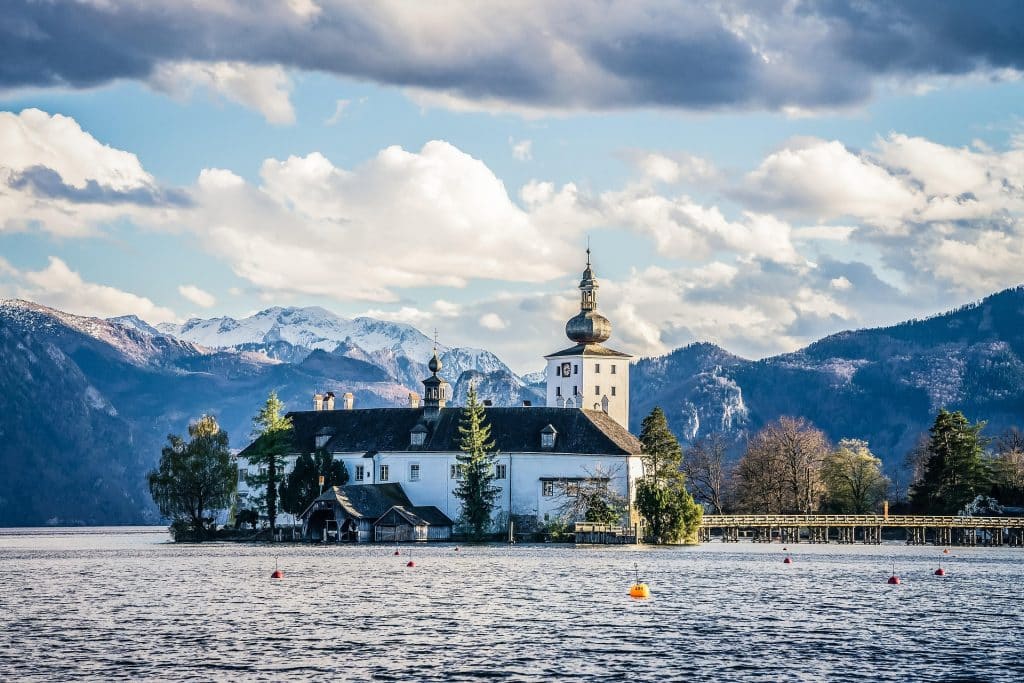
Why Traunsee stands out: This is the Salzkammergut’s activity lake, world-renowned for sailing and windsurfing. The predictable Rosenwind (northeast wind pattern) creates ideal conditions that attract major regattas including the Allianz Traunsee Woche and RC44 Austria Cup each May and June. If you’re planning water sports or seeking an athletic lake experience, Traunsee is your lake.
Water temperatures average 18°C in summer, reaching 21°C in August. It’s refreshing rather than warm, but perfect after a mountain hike. Diving enthusiasts find exceptional underwater terrain with rocky formations, clear visibility, and even a few wrecks.
Key towns: Gmunden anchors the northern shore with its 16th-century ceramics tradition (Gmunden porcelain remains hand-crafted today). The town hosts the Grünberg mountain with cable car access, summer toboggan run, adventure playground, and a treetop path with a 75-meter slide, which makes it ideal for families. Traunkirchen occupies a dramatic peninsula, while Ebensee provides water sports schools and access to the Langbathseen hiking area.
My recommendation: Base yourself in Gmunden or Traunkirchen rather than staying around Hallstatt. You’ll find authentic town life, better value, excellent restaurants, and genuine local atmosphere. The lake access makes swimming and water activities spontaneous rather than planned.
Wolfgangsee: The Cultural Heart
Wolfgangsee bridges Upper Austria and Salzburg province, its 27-kilometer shoreline dotted with three main towns and numerous smaller villages. At 114 meters deep with mid-to-high 20s°C summer temperatures, this lake combines swimming-friendly conditions with enough depth for dramatic mountain reflections.
What makes Wolfgangsee special: This lake epitomizes the Salzkammergut’s blend of nature and culture. The 12th-century pilgrimage church in St. Wolfgang, Mozart’s connections in St. Gilgen, and the legendary White Horse Inn create a storybook atmosphere reinforced by traditional architecture and mountain backdrops.
St. Wolfgang: The most picturesque lakeside village, St. Wolfgang (2,800 residents) centers on its pilgrimage church housing an extraordinary Gothic altar carved by Michael Pacher. The village’s painted facades and flower-bedecked balconies create an almost theatrical setting. The Schafbergbahn cog railway (Austria’s steepest) climbs from the village to the 1,783-meter Schafberg summit, offering a thrilling 6-kilometer ride and 360° panoramas revealing 13 lakes from the top.
Insider tip: Book Schafbergbahn tickets in advance during July and August. The early morning departure offers the clearest visibility and fewer crowds at the summit. The historic steam locomotive runs on special event days—check the schedule when booking if you want the authentic steam experience, as regular trains use modern diesel-electric locomotives.
St. Gilgen: Mozart’s mother was born here, and her childhood home now houses a small museum. The town occupies a sunny position on the northeastern shore with excellent swimming beaches, the Zwölferhorn cable car accessing hiking trails, and the charming Ochsenkreuz Island (locally called Metzgerinsel), the lake’s only island, accessible by boat rental.
Strobl: The quietest of the three main towns, Strobl serves as the connecting point between Wolfgangsee and Bad Ischl. It offers good-value accommodation and less crowded swimming areas, making it ideal for travelers seeking lake access without the tourist intensity of St. Wolfgang.
Boat experiences: The Wolfgangsee Schifffahrt operates regular ferry service connecting all three towns, with the historic paddle steamer RMS Kaiser Franz Josef I (built 1872-1873) offering nostalgic cruises. The ferries function as both practical transport and scenic excursions. A round-trip ticket lets you enjoy the water perspective at leisure.
Attersee: The Swimming Lake
Austria’s largest lake by surface area, Attersee stretches 20 kilometers with 42 kilometers of shoreline. Its distinguishing feature? Crystal-clear water of literally drinkable quality. You can dip a cup and drink directly from the lake.
Why Attersee stands out: This is the Salzkammergut’s warmest major lake, making it the top swimming destination for those who find mountain lakes too bracing. The eastern shoreline road hugs the water closely with multiple pull-offs for impromptu swimming stops. Artist Gustav Klimt spent summers here painting landscapes that captured the lake’s distinctive turquoise-blue color.
Stand-up paddleboarding has exploded in popularity. The lake’s size allows for genuine expeditions rather than just splashing near shore. The complete 42-kilometer shoreline circumnavigation makes an excellent cycling route, easily manageable with an e-bike.
Unique feature: An alpaca farm operates along the eastern shore, a quirky stop that delights families with children.
Where to stay: Attersee am Attersee anchors the western shore (reachable by train from Vöcklamarkt), while smaller villages like Unterach and Weyregg offer quieter bases with direct lake access.
Mondsee: The Sound of Music Lake
Mondsee gained international fame as the wedding location in The Sound of Music, though the filmmakers chose Mondsee’s baroque Basilica St. Michael purely for its photogenic appeal (Maria and the Captain actually married elsewhere). The lake itself combines warmth (mid-to-high 20s°C summer temperatures), easy accessibility from Salzburg (30 minutes by express bus), and a flat 25-kilometer cycling path that completely circles the shore.
The town of Mondsee: With under 4,000 residents, Mondsee village maintains an authentic feel despite tourism. The Basilica St. Michael, dating to the mid-700s with major 18th-century baroque renovations, dominates the town center with twin clock towers painted muted yellow. Entry is free, and the ornate interior justifies a visit even for non-film fans.
Adjacent museum gem: The Pile Dwelling Museum showcases artifacts from prehistoric stilt houses (5000-500 BC) that once dotted the lake’s shores. Rising water levels submerged these structures, but archaeological dives continue to recover remarkable artifacts from this UNESCO World Heritage site.
Swimming and recreation: Alpine Beach provides the main public swimming area with grass lawns, changing facilities, and a splash fountain for young children. The shoreline path offers level walking through shade, while the warm water makes Mondsee a favorite for extended swimming sessions. Beach volleyball courts attract pickup games on summer afternoons.
Best for: Families seeking warm-water swimming, Sound of Music fans, cyclists (the flat circumnavigation is perfect for casual pedaling), and travelers prioritizing relaxation over intense activity.
Hallstätter See: The Norwegian Fjord of the Alps
Hallstätter See stretches deep and narrow through the mountains, creating a fjord-like setting that distinguishes it from the Salzkammergut’s broader lakes. At 125 meters deep with steep mountain walls plunging directly into the water, this lake possesses a dramatic quality that explains Hallstatt village’s photogenic appeal.
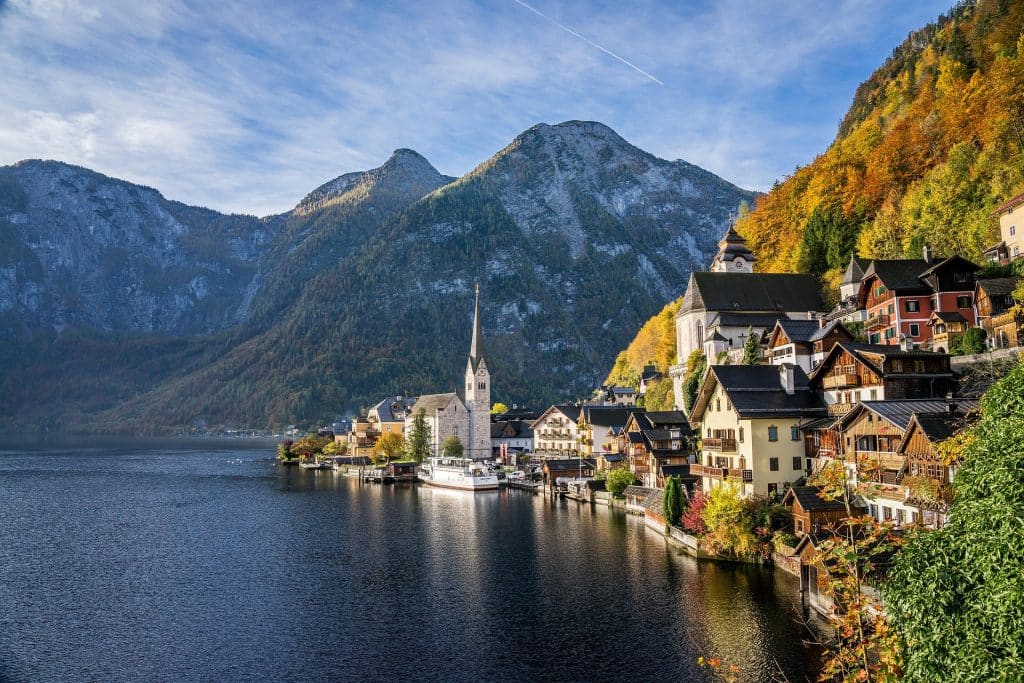
The ferry across the lake from Hallstatt Bahnhof (train station) to the village provides one of Europe’s most magical town entrances. I always recommend arriving this way if possible. The ferry schedule aligns with train arrivals, making the connection seamless for travelers using public transport.
Hallstatt: Beyond the Instagram Shot (Essential 2026 Updates)
Hallstatt’s photogenic qualities are undeniable. The compressed village architecture, the mountain backdrop, the lake reflections create a composition that seems almost too perfect. But the town’s significance runs much deeper than aesthetics.
The Salt Mining Legacy
Archaeological evidence confirms salt mining in Hallstatt dates back over 7,000 years, making this one of Europe’s oldest continuously inhabited settlements. The Hallstatt Culture period (800-450 BCE) takes its name from archaeological discoveries made here, influencing our understanding of Iron Age Europe. Salt was literally worth its weight in gold, the “white gold” that funded centuries of development.
Critical 2026 renovation update: Both the Hallstatt Salt Mine and the Hallstatt Skywalk viewing platform remain closed for major renovations until June 30, 2026.
During this closure period, the Altaussee Salt Mine (in Styria) provides an excellent alternative with similar guided tours through working salt galleries. A shuttle bus runs daily between Hallstatt and the Altaussee mine during the closure. For current shuttle schedules and ticket prices, visit the official Salzwelten website.
A quick note on planning: Prices and opening hours are mentioned to help you budget and plan, but they can change often. I always recommend checking the official websites (which I’ll link to) for the most current information before your visit.
What to See and Do in Hallstatt
Market Square (Marketplatz): The village heart features colorful facades, a central fountain, cafes with outdoor seating, and shops selling traditional crafts alongside tourist souvenirs. Arriving before 9:30 AM lets you enjoy coffee here without the later crush.
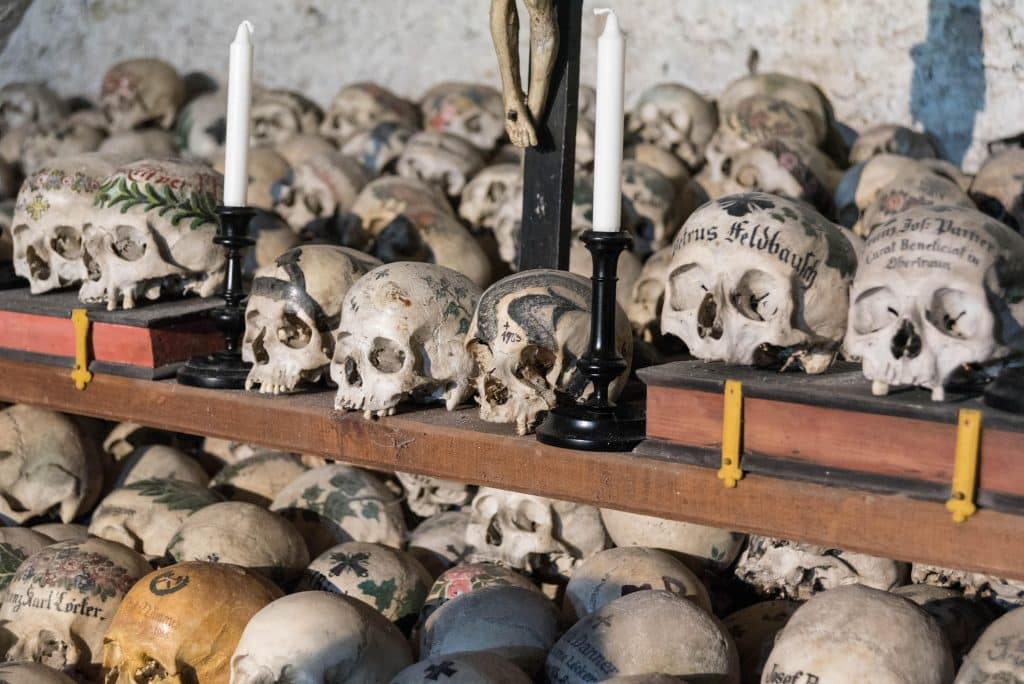
Maria am Berg Church and the Bone House: This Catholic church overlooks the village from above. More significantly, adjacent stands the Ossuary, perhaps Hallstatt’s most unique attraction. Space constraints in this mountain village created an unusual tradition: after burial for 10-15 years, remains were exhumed to make room for new burials. Skulls were preserved, cleaned, and artistically painted with the deceased’s name, dates, and often decorative floral patterns or religious symbols. Over 1,200 painted skulls fill the small chapel, creating a simultaneously macabre and strangely beautiful meditation on mortality and community memory.
Hallstatt Museum (Welterbemuseum): Open typically from 10 AM to 6 PM daily. This excellent small museum contextualizes the town’s 7,000-year history through prehistoric artifacts, mining tools, traditional costumes, and exhibits on daily life through the centuries. Plan 30-60 minutes. The museum helps explain why Hallstatt matters beyond its prettiness. For current opening times and entry fees, check the Hallstatt Museum website .
Lakefront and viewpoints: The shoreline promenade provides level walking with ever-changing perspectives on the village and mountains. For the classic postcard view (the one you’ve seen a thousand times), head to the Panoramic Viewpoint near the bus stop. For morning light and fewer people, arrive at sunrise.
Electric boat rental: Multiple operators near the ferry dock rent electric boats and traditional rowing boats. The water perspective reveals architectural details invisible from land and provides a welcome break from walking crowds. Expect to pay approximately €15-25 per hour depending on boat type.
Your Perfect Hallstatt Day (One Day Itinerary for 2026)
8:30-9:00 AM: Arrive by ferry from Hallstatt Bahnhof or by car (park in P2 lot south of town). Walk directly to the Panoramic Viewpoint for photos in soft morning light with minimal crowds.
9:00-10:30 AM: Explore the Old Town on foot—Market Square, lakefront promenade, painted facades. Stop for coffee and pastry at one of the cafes with lakeside views.
10:30-11:00 AM: Visit the Bone House at Maria am Berg Church. The walk up provides good views back over the village.
11:00 AM-12:00 PM: Hallstatt Museum for historical context about the salt mining heritage and prehistoric discoveries.
12:00-1:00 PM: Lunch at a lakeside restaurant. Fresh lake fish features on most menus.
1:00-3:00 PM: Rent an electric boat for a relaxing cruise on the lake, viewing Hallstatt from the water.
3:00-5:00 PM: Either hike the World Heritage Circular Trail (2.5-hour loop with viewpoints and information boards) or simply relax lakeside as day-trippers depart.
Alternative for longer stays: Dedicate a second day to the Dachstein caves and the Five Fingers viewing platform—these warrant a full day.
Bad Ischl: The Imperial Spa Town and 2024 European Capital of Culture
While technically not on a lake, Bad Ischl serves as the Salzkammergut’s cultural and historical heart. This spa town (14,000 residents) was where Emperor Franz Josef I spent summers, where he became engaged to Elisabeth (Sisi), and where Habsburg Austria’s fate was partially sealed when Franz Josef signed the declaration of war on Serbia in 1914, triggering World War I.
2024 Cultural Legacy: Bad Ischl recently served as a European Capital of Culture for 2024, which brought significant infrastructure improvements and cultural programming to the town. While the official designation year has passed, you’ll notice the refurbished feel of public spaces and enhanced cultural offerings that continue as part of this legacy.
The Kaiservilla: Franz Josef’s summer palace remains largely as he left it, a Victorian-era time capsule filled with hunting trophies (the Emperor was an avid sportsman), personal effects, and a museum documenting the imperial family’s Salzkammergut connections. The English-style park surrounding the villa includes Elisabeth’s “Marmorschlössl” (Marble Castle), a small teahouse she used as a private retreat.
The Kaiservilla operates as a museum from late March through early November. Tours run regularly in German, with audio guides available in English. Budget around 45-60 minutes. For current opening times and ticket prices, visit the Kaiservilla Bad Ischl website.
Lehár Villa: Composer Franz Lehár spent summers in Bad Ischl, composing many operettas including The Merry Widow. His villa now operates as a museum displaying original furniture, scores, and personal memorabilia. The guided tour takes about 45 minutes and offers insight into Central European cultural life during the empire’s final decades.
Traditional coffee culture: Bad Ischl’s coffeehouses maintain Viennese traditions with particular pride. Zauner, operating since 1832, holds imperial warrant status. The café’s Zaunerstollen (a sweet bread studded with candied fruit and nuts) has been the same recipe for nearly two centuries. Sit at a marble table, order a Melange, and spend an hour reading the newspaper—it’s what locals do.
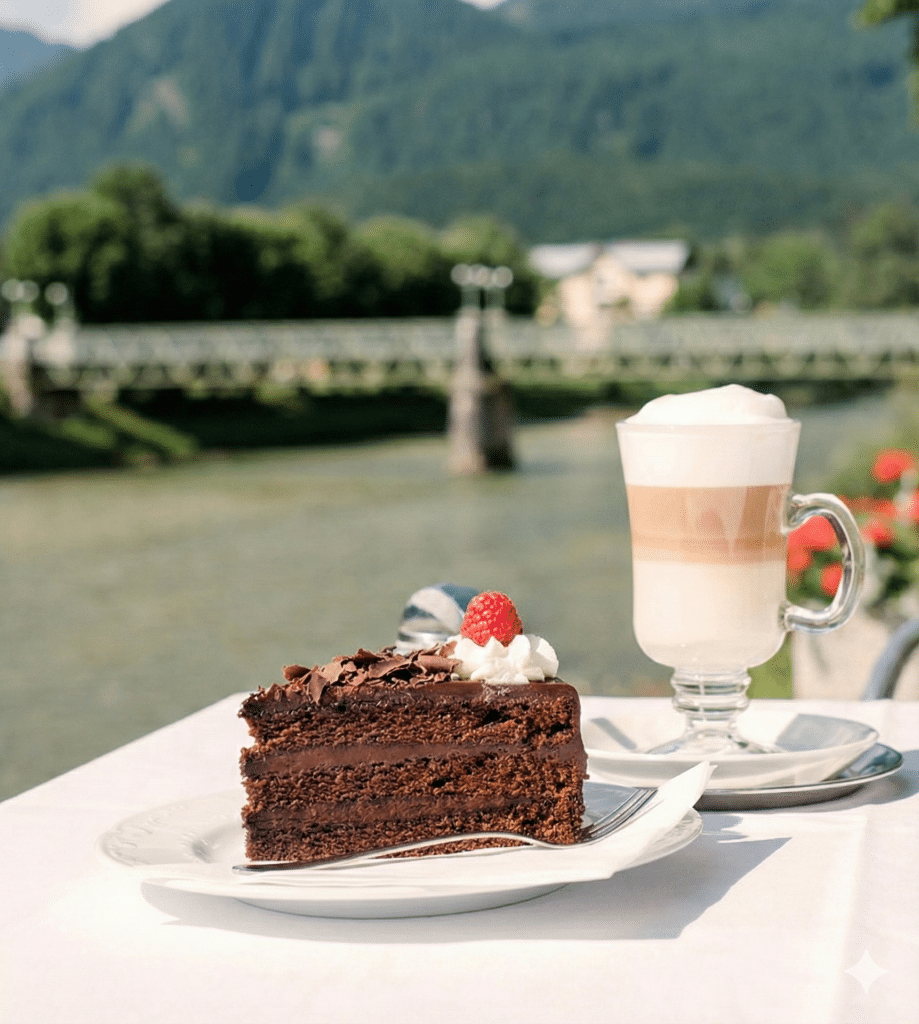
Understanding European café culture helps you appreciate why these establishments function as community gathering places rather than just coffee stops. For guidance on Austrian café customs and dining etiquette, understanding local traditions enhances the experience.
The Trinkhalle: The neoclassical Trinkhalle (pump room) sits in the Kurpark (spa park). Here, you can taste the natural salt spring water that made Bad Ischl famous. Fair warning: it’s heavily mineralized and definitely an acquired taste. But trying it connects you to the therapy-seekers who came here for centuries believing the water held curative properties.
Why Bad Ischl matters: This town provides cultural context for the entire region. The Salzkammergut wasn’t “discovered” by influencers in 2015—it’s been drawing visitors (albeit of a different sort) since the 1820s when Archduchess Sophie took the salt baths hoping to conceive. She subsequently had three sons, including Franz Josef, which launched Bad Ischl’s reputation as a fertility spa. The Habsburg connection elevated the town’s status, with aristocracy, artists, and intellectuals following.
Today, Bad Ischl balances heritage tourism with genuine spa town function. People still come for the baths, for medical treatments, for rest. This authenticity makes it a valuable base for travelers who want the Salzkammergut without constant tourist intensity.
Gosauseen and the Dachstein Massif
While the lakes define the Salzkammergut’s character, the Dachstein massif provides its dramatic backbone. This UNESCO World Heritage mountain range reaches 2,995 meters at its highest point, with glaciers, caves, and the region’s most spectacular hiking terrain.
The Gosauseen (Gosau Lakes)
Two alpine lakes, Vorderer Gosausee and Hinterer Gosausee, nestle at the foot of the Dachstein massif. The reflection of the glacier-clad mountain in Vorderer Gosausee’s waters creates one of the Alps’ most photographed scenes.

Vorderer Gosausee (Front Lake): Accessible by car with parking near the lake (arrive before 9:00 AM in summer, or expect to park further away and walk). The 3-kilometer circuit around the lake takes about an hour at a leisurely pace and requires no special fitness. The path crosses wooden walkways over marshy sections, passes through pine forest, and delivers that classic mountain-reflection view.
Swimming is possible, though the glacial water stays bracingly cold even in August (typically 12-15°C). But on a hot summer day after hiking, it’s unforgettably refreshing.
Hinterer Gosausee (Back Lake): This smaller, higher lake requires a moderate hike from Vorderer Gosausee. The trail climbs steadily for about 2.5-3 hours, gaining roughly 500 meters in elevation. The reward? A pristine alpine bowl with almost no visitors, surrounded by vertical rock faces and the rumble of distant avalanches in early summer.
Full-day hiking option: Experienced, fit hikers can complete the Drei-Seen-Tour (Three Lakes Tour) connecting Vorderer Gosausee, Hinterer Gosausee, and Gosaulacke. The full circuit takes 6-8 hours and involves steep sections with chain-assisted passages. This isn’t for casual hikers, but it ranks among the Salzkammergut’s finest day hikes for those with proper gear and experience.
Safety note: Check weather forecasts carefully before attempting the Hinterer Gosausee hike. The trail includes exposed sections where lightning is dangerous. Start early, bring layers, carry water and snacks, and turn back if weather deteriorates.
Dachstein Ice Caves and Five Fingers Viewing Platform
The Dachstein Krippenstein cable car ascends from Obertraun (on Hallstätter See’s eastern shore) to 2,100 meters, accessing a complex of ice caves, the famous Five Fingers viewing platform, and high-alpine hiking terrain.
The Giant Ice Cave (Riesen-Eishöhle): This cave system extends deep into the mountain, with portions filled with ice formations thousands of years old. The guided tour (required) takes about 50 minutes and involves stairways and some narrow passages. Temperatures inside stay around 0°C year-round, even in summer. Bring a warm jacket.
The cave’s scale impresses, particularly the Tristan Hall with its massive ice formations illuminated by colored lights. Yes, it’s touristy, but the natural phenomenon justifies it. The lighting reveals the ice’s blue depths, and the explanations of how these formations develop and persist add geological context worth appreciating.
The Mammoth Cave (Mammuthöhle): Connected by walkways to the Ice Cave, this dry cave system showcases the mountain’s internal structure with vast chambers and rock formations. Tours take about 50 minutes. Combined Ice Cave and Mammoth Cave tickets save money if you want the full underground experience.
Cave tours run from May through October (weather dependent). The cable car operates year-round with seasonal schedule variations. For current pricing, opening times, and to book tickets, visit the Dachstein Salzkammergut website.
Five Fingers Platform: This viewing platform extends from the cliff face with five metal “fingers” jutting out over 400-meter vertical drop. Each finger has a different floor material (glass, grating, etc.) offering various degrees of exposure to the void below. The views sweep across Hallstätter See, the surrounding peaks, and on clear days, extend to distant ranges.
It’s undeniably dramatic, and if you’re comfortable with heights, it provides extraordinary photography. If you’re not, the adjacent viewing areas offer equally spectacular vistas without the exposure.
Hiking from the cable car station: Multiple trails depart from the upper cable car station, ranging from 30-minute easy walks to multi-hour high-alpine routes. The Heilbronner Rundwanderweg (roughly 1.5 hours) offers a moderate circuit with varied terrain and excellent views. More ambitious hikers can continue to Gjaidalm mountain hut (2-3 hours) or connect to the Schönbergalm trail network.
Getting Around the Salzkammergut: 2026 Transportation Guide
The region’s transportation network deserves special attention because it significantly impacts your experience. Car rental seems obvious but isn’t always optimal.
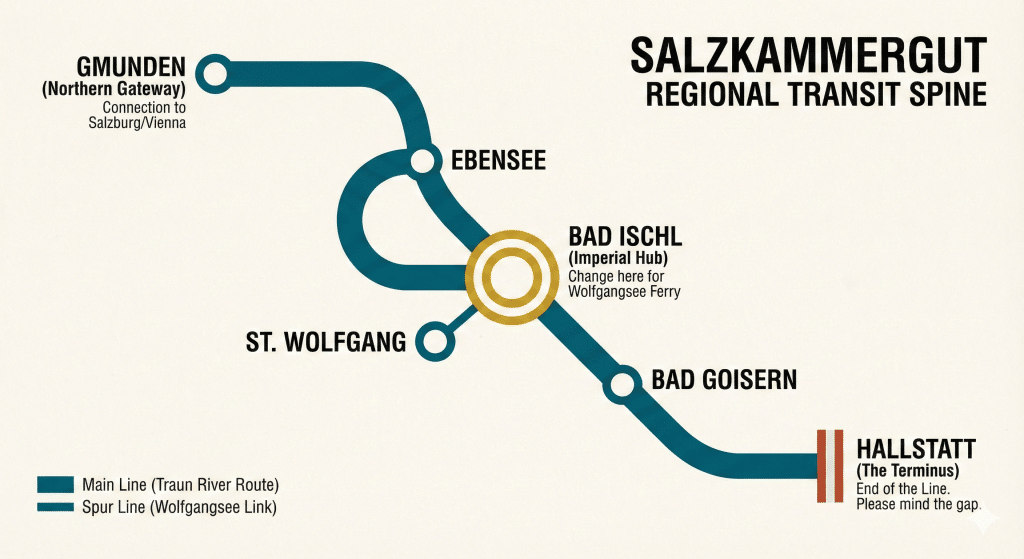
By Train and Bus (Recommended for Most Visitors)
The ÖBB (Austrian Federal Railways) network connects major towns efficiently. Regular trains run from Salzburg to Attnang-Puchheim (the regional hub), with connections to Gmunden, Bad Ischl, and Hallstatt. For comprehensive guidance on navigating Central European public transport systems, including ticket types and journey planning, I’ve created a detailed guide.
Key routes:
- Salzburg to Hallstatt: 2.5-3 hours with one change (typically at Attnang-Puchheim)
- Bad Ischl to Hallstatt: 20 minutes by train
- Salzburg to Bad Ischl: 90 minutes by bus or train
The Salzkammergut Erlebnis-Card: This regional card includes free public transport throughout the region plus discounts on cable cars, museums, and boat tours. If you’re staying 3+ days and planning multiple activities, it often pays for itself. Available at tourist offices and some accommodations.
Regional buses: The Postbus network fills gaps where trains don’t reach. Service frequency varies, with popular routes (like Salzburg to Mondsee via Bus 150) running every 30-60 minutes, while mountain villages may see only 3-4 buses daily. Check schedules carefully.
Salzkammergut Shuttle Service: For harder-to-reach hiking trailheads and villages, the on-demand shuttle system provides affordable connections. For schedules and booking, visit the Salzkammergut Shuttle Service page.
Benefits of car-free travel:
- No parking hassles (Hallstatt’s parking fills by 9:00 AM in summer)
- No stress navigating mountain roads
- Freedom to enjoy wine or beer with lunch
- More sustainable, supporting public transport infrastructure
Limitations:
- Less schedule flexibility, especially in smaller villages
- Some hiking trailheads require taxis or long walks from bus stops
- Grocery shopping becomes more involved
By Car: Essential 2026 Information
When a car makes sense:
- You’re traveling with family/children and lots of gear
- Your itinerary includes remote hiking trailheads or mountain huts
- You’re visiting off-season when bus frequency drops
- You want to explore multiple lakes and villages in a short time
Critical 2026 vignette information: Austria requires a digital vignette (toll sticker) for highway use. The 2026 rates are in effect:
- 1-Day Digital Vignette: €9.60
- 10-Day Digital Vignette: €12.80
- 2-Month Vignette: €32.00
- Annual Vignette: €106.80
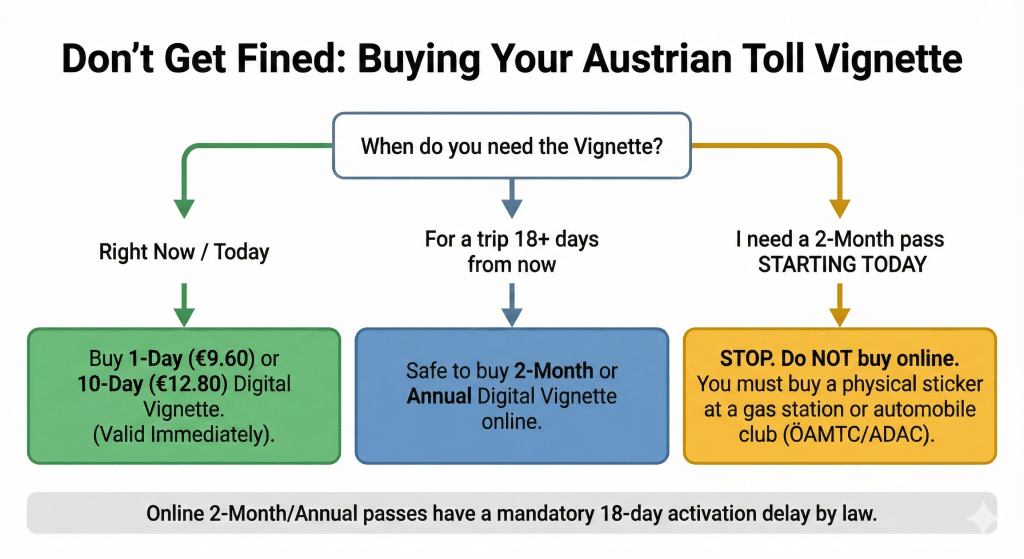
Important validity rule: The 1-Day and 10-Day digital vignettes are valid IMMEDIATELY when purchased online. You do not have to wait. However, for the 2-Month and Annual digital vignettes, there is an 18-day waiting period before they become valid (due to consumer protection laws regarding online withdrawals). If you need an Annual or 2-Month vignette instantly, you must buy it physically at a gas station or automobile club (like ÖAMTC or ADAC).
Where to buy: Purchase your vignette in advance through the official ASFINAG shop to avoid third-party surcharges. The digital system links to your license plate, so no physical sticker is needed.
Challenges to anticipate:
- Parking in Hallstatt: Nearly impossible in summer without early arrival. The main lot fills by 8:30-9:00 AM. Overflow parking requires shuttle buses.
- Narrow mountain roads: Many routes follow lakeshores on single-lane roads with tight curves and limited passing. Defensive driving is essential.
- Toll roads: Several scenic mountain roads charge tolls (usually €5-15). The Rossfeld Panoramastrasse and Loser Panoramastrasse are examples.
Practical car advice: If you do rent, base yourself in one location (like Bad Ischl or Gmunden) rather than changing accommodations every night. The packing/unpacking and parking challenges outweigh the convenience of moving frequently.
By Bicycle (Growing Option)
The Salzkammergut’s flat lakeside paths make cycling increasingly popular. E-bikes especially open up longer routes that would be challenging on conventional bikes.
Top cycling routes:
- Mondsee complete circuit: 25km, flat, family-friendly
- Attersee shoreline: 42km, some hilly sections
- Traunsee eastern shore: mixed flat and rolling terrain
Bike rentals: Most lakeside towns offer both conventional and e-bike rentals. Expect to pay approximately €15-25 for conventional bikes, €30-45 for e-bikes per day. Some accommodations provide guest bikes free of charge.
Combining bikes with trains/buses: Many regional trains and buses accommodate bicycles with a small additional fee. This lets you ride one direction and return by public transport.
Where to Stay: Regional Bases for 2026
Your accommodation choice fundamentally shapes your Salzkammergut experience. Rather than chasing the “perfect” location, choose based on what matters most to you.
For First-Time Visitors: Bad Ischl or Gmunden
Bad Ischl advantages:
- Central location with easy train/bus connections
- Authentic town life with genuine local services
- Good restaurant variety and grocery shopping
- Cultural sites (Kaiservilla, Lehár Villa) provide rainy-day options
- Mid-range accommodation costs
- Enhanced infrastructure from 2024 European Capital of Culture designation
Gmunden advantages:
- Direct Traunsee waterfront access
- Active town with year-round residents (not seasonal)
- Excellent value compared to lakeside resort villages
- Grünberg cable car for mountain access
- Good restaurant scene
Both towns give you a proper Austrian town experience rather than tourist-focused resort atmosphere. You’ll share streets with locals going about daily life, which adds authenticity many travelers seek.
For Nature Immersion: Altaussee or Grundlsee
Altaussee:
- Smaller, quieter than other bases
- Loser Panoramastrasse access for mountain activities
- Literary and artistic heritage creates refined atmosphere
- Limited dining options, so plan accordingly
- Higher accommodation costs for the quality
Grundlsee:
- Maximum tranquility with minimal tourist infrastructure
- Excellent swimming and easy hiking direct from accommodations
- Toplitzsee hiking access
- Very limited services, better for self-catering
These bases suit travelers prioritizing natural surroundings over convenience or nightlife. You’ll spend more time outdoors and less in cafés or shops.
For Families: Mondsee or St. Wolfgang
Mondsee:
- Warmest swimming water
- Flat cycling path
- Good range of accommodation from budget to upscale
- Easy Salzburg access for day trips
- Reasonable prices
St. Wolfgang:
- Postcard-perfect setting
- Schafbergbahn access
- More upscale with higher costs
- Can feel crowded in peak season
- Boat connections to other lake towns
Both provide family-friendly infrastructure (playgrounds, swimming beaches, easy walks) while maintaining Alpine charm.
For Budget-Conscious Travelers: Strobl or Unterach
Strobl:
- Significantly cheaper than St. Wolfgang (10 minutes away)
- Less crowded but still on Wolfgangsee
- Good bus connections
- Quiet atmosphere
- Limited restaurant variety
Unterach:
- Attersee location with lower prices
- Genuine village atmosphere
- Direct lake swimming access
- Train station connections
- Very limited tourist infrastructure
These villages provide access to major lakes without resort-town premiums. You’ll trade convenience and dining variety for authenticity and cost savings.
Food and Dining: What to Eat in the Salzkammergut
The Salzkammergut’s cuisine reflects its alpine location and traditional farming culture. This is hearty food designed for physical work in mountain terrain, and while it’s evolved to accommodate modern tastes, the foundations remain unchanged.
Lake Fish Specialties
Saibling (Arctic char): The region’s signature fish, typically served “gebacken” (breaded and fried) or “blau” (poached in court-bouillon that turns the skin blue-gray). The flesh is delicate with a subtle flavor between trout and salmon. Quality restaurants source from local lakes where fish still live in pristine conditions.
Reinanke (whitefish): More delicate than char, often prepared simply to showcase the flavor. Commonly smoked and served as an appetizer.
Forelle (trout): Found in streams and some lakes. Usually served whole, either fried or grilled with lemon and butter.
Dining tip: Ask where the fish comes from. Restaurants serving local catch take pride in mentioning specific lakes. If they can’t tell you, it’s likely farmed fish from elsewhere.
Traditional Alpine Dishes
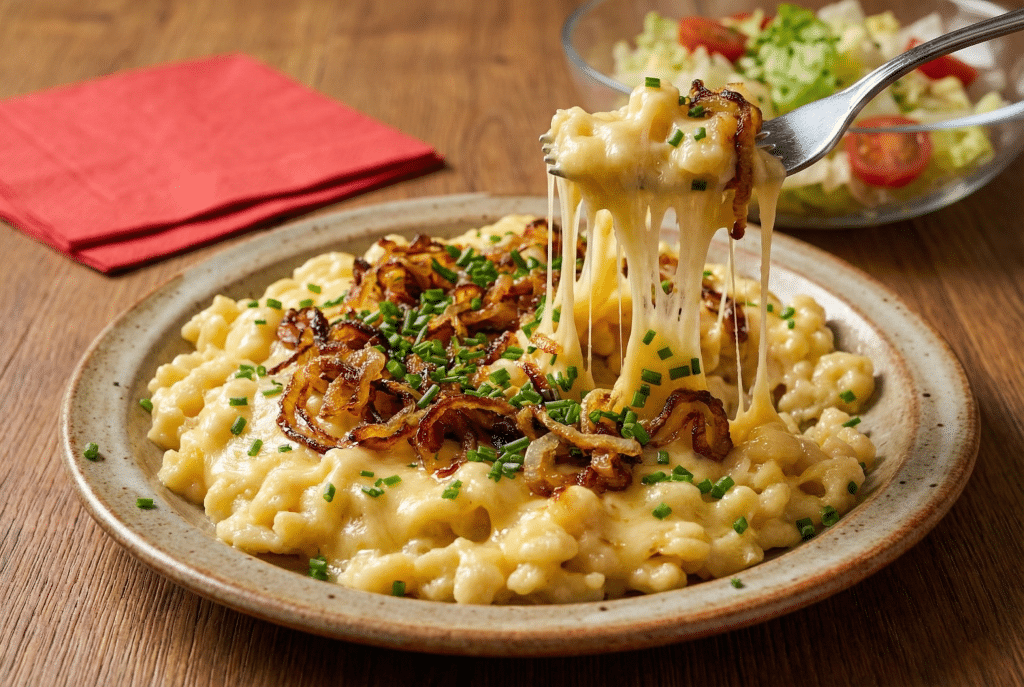
Kasnocken/Kasnockn: Pasta dumplings smothered in local cheese and caramelized onions. This is the ultimate comfort food, rich and satisfying after a day hiking. The cheese varies by region, with some versions using multiple types. I still remember the version I had at Gasthof Zauner in Bad Ischl one rainy October afternoon—three different mountain cheeses creating layers of flavor that made me understand why this dish has remained unchanged for generations.
Knödel (dumplings): Served as sides or mains. Varieties include:
- Speckknödel (bacon)
- Semmelknödel (bread)
- Germknödel (sweet steamed dumplings with plum jam and poppy seeds, served with vanilla sauce)
Schlutzkrapfen: Ravioli filled with spinach and cheese or potatoes. Found in western Salzkammergut restaurants with Tyrolean connections.
Gröstl: Pan-fried potatoes with meat (traditionally leftovers), onions, sometimes topped with a fried egg. Originally a Monday dish using Sunday roast leftovers, now a staple on traditional menus.
Regional Specialties
Pumpkin seed oil (Kürbiskernöl): Styrian Salzkammergut’s signature product. This dark green oil has a nutty flavor and appears drizzled on salads, soups, and even vanilla ice cream. The color comes from roasting seeds before pressing, not from additives.
Alpine cheese: Mountain huts produce cheese from cows grazing high Alpine pastures, developing complex flavors from diverse wildflower meadows. Look for “Alm” or “Berg” cheese designations. The texture ranges from semi-soft to firm, with aging developing more pronounced flavors.
Lebkuchen: Traditional gingerbread, particularly associated with Christmas but available year-round. Bad Ischl’s Zauner produces exceptional versions.
Where to Eat
Traditional Gasthofs: Family-run country inns with honest, traditional food. Restaurant Goldener Ochs (Bad Ischl) exemplifies this style, where the menu hasn’t changed in decades because locals wouldn’t allow it. Understanding European dining customs and tipping etiquette enhances these traditional dining experiences.
Mountain huts (Almhütten): Simple, hearty fare with panoramic views. Expect goulash soup, sausages, cheese plates, homemade cakes. The food isn’t fancy, but eating Kasnocken at 1,600 meters overlooking three lakes makes it memorable. Most huts operate only in summer (June-September).
Lakeside restaurants: Fresh fish, outdoor terraces, water views. Pricing tends higher at prime locations, but the setting justifies it for special meals. Make reservations in summer, especially for sunset tables.
Buschenschänke (wine taverns): Particularly in Styrian Salzkammergut, these establishments serve wine from their own production alongside cold buffets (cheese, ham, spreads, bread). It’s casual, convivial, and provides insight into local wine culture.
Sustainable Travel in the Salzkammergut
The Salzkammergut’s UNESCO designation recognizes not just natural beauty but a cultural landscape shaped by sustainable resource management over millennia. Visitors can support this legacy through conscious choices.
Choose rail and buses over cars: ÖBB trains run largely on renewable energy. The Salzkammergut Shuttle Service supplements traditional public transport while reducing individual car trips. Every journey taken on public transport rather than private vehicles reduces the region’s environmental pressure.
Stay in eco-certified accommodations: Several properties hold Austrian Ecolabel certification or belong to Alpine Pearls (car-free mountain resort network). These businesses implement energy efficiency, waste reduction, and local sourcing standards exceeding basic requirements.
Support local producers: Farm-direct sales (Ab-Hof-Verkauf), traditional Buschenschänke, and regional markets support farming families maintaining traditional agriculture rather than converting to more intensive methods or selling to developers. Your euros vote for landscape preservation.
Practice Leave No Trace hiking: Stay on marked trails (erosion from social trails damages fragile Alpine vegetation), carry out all waste (including organic matter like orange peels that take years to decompose at altitude), don’t pick wildflowers (many are protected species), respect wildlife (maintain distance, never feed animals), use designated camping areas only (wild camping is generally prohibited in Austria).
Reduce waste: Bring a reusable water bottle (tap water is safe throughout Austria), choose sit-down meals over takeaway when possible, support cultural initiatives through museum visits and concert attendance rather than only consuming natural resources.
Sample Itineraries for 2026
3 Days: Salzburg and Greatest Hits
Day 1: Salzburg Old Town exploration (Mozart’s birthplace, fortress, cathedral) Day 2: Bad Ischl (2 hours from Salzburg by train/bus), explore imperial town, spa experience Day 3: Early train to Hallstatt, Old Town walk, Bone House, boat rental, return to Salzburg evening train
Note: With the Salt Mine closed until summer 2026, this itinerary focuses on the village itself and accessible attractions.
5 Days: Lake District Exploration
Day 1: Settle in Ausseerland base (Altaussee or Bad Aussee) Day 2: Altausseer See circuit walk, lunch at Seewiese restaurant Day 3: Drive to Hallstatt, afternoon village exploration, overnight nearby Day 4: Gosauseen hiking (Vorderer then Hinterer, or full-day route for experienced hikers) Day 5: Dachstein caves OR Wolfgangsee/St. Wolfgang if weather doesn’t cooperate
This itinerary balances lake experiences, mountain activities, and Hallstatt without treating it as the only destination.
7 Days: Comprehensive Salzkammergut
Day 1-2: Salzburg base with day trip to Hallstatt Day 3: Dachstein caves and Five Fingers platform Day 4: Gosauseen hiking adventure Day 5: Wolfgangsee (Schafbergbahn, St. Wolfgang village, boat cruise) Day 6: Traunsee (Gmunden ceramics, Grünberg cable car, water activities) Day 7: Bad Ischl imperial sites and return OR extend with Ausseerland
This week-long itinerary covers major highlights while allowing flexibility for weather and energy levels.
Frequently Asked Questions: 2026 Edition
Is Hallstatt worth visiting in 2026 during the Salt Mine renovation?
Absolutely. While the Salt Mine closure is significant (it reopens June 30, 2026), Hallstatt’s appeal extends far beyond a single attraction. The village itself—with its compressed architecture, lakeside setting, and mountain backdrop—remains extraordinarily photogenic. The Bone House (Ossuary) with its painted skulls offers a unique cultural experience, the Hallstatt Museum contextualizes 7,000 years of history, and boat rentals provide water perspectives that reveal the village’s beauty from angles impossible on land.
The temporary closure actually creates an unexpected benefit: fewer day-trippers skip Hallstatt entirely when they hear the mine is closed, which means less crowding for visitors who understand the village offers much more. The Altaussee Salt Mine (30 minutes away) provides an excellent alternative with similar underground tours through working salt galleries—a shuttle bus runs daily between Hallstatt and Altaussee during the closure period. Think of 2026 as an opportunity to experience Hallstatt with slightly fewer crowds while still accessing authentic salt mining heritage nearby.
Do I need a car to explore the Salzkammergut?
Not at all—in fact, many travelers find public transport more relaxing than navigating narrow mountain roads and solving parking challenges. The ÖBB train network efficiently connects Salzburg to major towns like Bad Ischl, Hallstatt, and Gmunden. Regional buses (Postbus) fill gaps where trains don’t reach, with frequent service on popular routes like Salzburg to Mondsee.
The Salzkammergut Erlebnis-Card includes unlimited regional public transport plus discounts on cable cars and museums, often paying for itself within 2-3 days. For destinations the standard network doesn’t serve well, the on-demand Salzkammergut Shuttle Service provides affordable connections to popular hiking trailheads and villages.
Going car-free offers genuine advantages: no stress about parking (Hallstatt’s lots fill by 9:00 AM in summer), freedom to enjoy wine or beer with lunch, the ability to use scenic ferry services as transport rather than just excursions, and the environmental benefit of supporting sustainable public infrastructure. The main limitation is schedule flexibility in smaller villages, where buses might run only 3-4 times daily. But for most visitors exploring the major lakes and towns, public transport works beautifully.
Can I swim in the lakes in the Salzkammergut?
Yes, and it’s one of the region’s greatest pleasures! However, water temperatures vary significantly between lakes, so choosing the right one matters for your comfort level.
Warmest lakes (mid-to-high 20s°C in July-August): Mondsee and Attersee are your best options for comfortable swimming that feels genuinely warm. These lakes have earned reputations as the region’s premier swimming destinations, with Mondsee offering the additional benefit of a flat cycling path and family-friendly beaches.
Moderate temperatures (18-21°C in summer): Traunsee and Wolfgangsee offer refreshing but pleasant swimming once you acclimate. The water feels bracing initially but wonderful after mountain hiking or on hot summer days.
Cool lakes (15-18°C even in August):Hallstätter See, Grundlsee, and Altausseer See stay quite crisp due to their depth and glacier-fed sources. These are for hardy swimmers or quick dips rather than extended water lounging.
All lakes meet high water quality standards—Attersee’s water is literally drinkable without treatment. June offers the compromise of pleasant weather with cooler water and fewer crowds. September extends the swimming season as lakes retain summer warmth while air temperatures moderate. Most lakes have designated swimming areas (Strandbäder) with facilities, though locals also swim from various access points along shorelines.
What is the “digital vignette” rule for Austria in 2026?
Austria requires all vehicles using its highways (Autobahns) to display proof of toll payment via a digital vignette system that replaced physical stickers. Here’s what travelers need to know for 2026:
How it works: Purchase the vignette online through the official ASFINAG shop, entering your license plate number. The system links the vignette directly to your vehicle registration—no physical display needed. You can buy vignettes from gas stations near borders, but purchasing online before your trip prevents any confusion.
Vignette options for 2026:
1-Day Digital Vignette: €9.60 (valid immediately upon purchase)
10-Day Digital Vignette: €12.80 (valid immediately upon purchase)
2-Month Vignette: €32.00 (18-day waiting period for online purchases)
Annual Vignette: €106.80 (18-day waiting period for online purchases)
Critical validity rule: The 1-Day and 10-Day digital vignettes become valid immediately when you purchase them online—there is no waiting period. However, the 2-Month and Annual vignettes have an 18-day waiting period before validity begins when purchased online (this is due to consumer protection laws regarding online purchase withdrawals). If you need a 2-Month or Annual vignette with immediate validity, you must purchase it physically at a gas station or automobile club (like ÖAMTC or ADAC) near the border.
Enforcement: Austria takes vignette violations seriously—fines start around €120 and can increase substantially. Rental cars should come with vignettes, but always verify with your rental agency. If driving your own vehicle, purchase before entering Austrian highways to avoid problems.
The Salzkammergut region requires highway use to reach efficiently from Salzburg or Munich, so budget for the vignette cost in your planning.
Final Thoughts
The Salzkammergut rewards those who look beyond surface beauty to understand deeper connections between landscape and culture, tradition and sustainability, imperial history and contemporary life.
Yes, Hallstatt will photograph beautifully. But your most meaningful memories may come from a conversation with a mountain hut keeper explaining how his family has operated the same Alm for five generations, or watching mist lift off Altausseer See while locals begin their morning, or sharing a table at a traditional Gasthof where the menu hasn’t changed in 40 years because why would it?
Plan well, pack layers, arrive early for famous spots, but also build in time for wandering. Leave room for discovering the lake nobody told you about, for the village that isn’t in guidebooks, for the hiking trail that doesn’t appear on Instagram.
The Salzkammergut doesn’t need to manufacture experiences. It simply needs to be itself, as it has been for millennia. Your role is to slow down enough to appreciate what you’re seeing, respect the communities allowing you to visit their home, and perhaps come away with a slightly different perspective on what makes a place genuinely special.
Ready to plan your 2026 Salzkammergut adventure? Start with my comprehensive Austria Travel Guide for regional context, then use this Salzkammergut deep-dive to craft your lake district itinerary. Whether you’re a first-time visitor drawn by Hallstatt’s beauty or a returning traveler seeking deeper exploration, this region offers authentic Alpine experiences increasingly rare in European tourism.
For more Central European travel guides and practical advice, explore related itineraries on Pieterontour.com, where every journey is designed to help you travel like a local, not a tourist.
Have you experienced the Salzkammergut? Share your favorite discoveries, hidden gems, and recommendations in the comments below. I’d love to hear what made your visit special.
Explore more Vienna guides and Central European itineraries on Pieterontour.com, where every journey is crafted to help you connect with the heart of a place.
Planning Your Austrian Journey:
- Austria Travel: Your Essential Guide to Alpine Elegance and Imperial Grandeur (comprehensive Austria pillar guide)
- Tyrol and Innsbruck Travel Guide: 2026 Update & Itineraries
- Salzburg Beyond the Script: A Tour Director’s Guide to Mozart’s City
- European Café Culture: More Than Just Coffee
- Tipping Etiquette in Europe
- European Dining Hours and Table Manners