
This post is for travelers planning a Central Europe trip who want to understand the real seasonal differences—weather, crowds, costs, and atmosphere—so they can choose the best travel window for their priorities according to Central Europe’s Seasonal Calendar.
Central Europe shifts with its seasons. Prague disappears into morning mist each spring. The Danube valley turns gold in September. Budapest’s thermal baths steam against winter snow. The magic extends far beyond December’s Christmas markets, though those certainly have their charm.
The real art of timing your trip lies in matching your travel dates to the experience you’re after. Do you want festival energy or quiet cobblestone streets? Alpine hikes or cozy café afternoons? Wine harvests or winter sports?
This guide breaks down Central Europe month by month, focusing on Vienna, Prague, Budapest, Kraków, and Salzburg. I’ll give you realistic weather expectations, practical packing advice, and crowd management strategies. No guesswork—just the information you need to plan with confidence.
Understanding the Three Broad Seasons
Before we walk through each month, it helps to see the year in three overlapping windows:
Peak Season (roughly June through August)
The warmth arrives, the days stretch long, and the festivals fill city squares. Mountain trails open completely, river cruises run full schedules, and outdoor dining becomes the default. You’ll also find the heaviest crowds, the highest prices, and increasingly frequent heat waves that can make city walking uncomfortable.
Shoulder Season (April through May, September through October)
These months deliver what many experienced travelers consider ideal conditions. The weather stays mild, crowds thin considerably, and prices drop. Spring brings blossoms and green hillsides. Autumn paints the vineyards and forests in amber and rust. The trade-off? Weather can be less predictable, and some alpine services operate on limited schedules.
Off-Season (November through March)
Winter transforms Central Europe into something quieter and more atmospheric. Christmas markets light up the squares, ski resorts open across Austria and Slovakia, and you’ll find the year’s lowest accommodation rates. The challenges are real though—short days, cold temperatures, and some rural attractions close entirely.
If you want pleasant walking weather with manageable crowds, aim for late April through early June or mid-September through mid-October. For guaranteed warmth and festival energy, plan for June through early September. Christmas markets and winter ambience peak from late November through December 24th. The lowest prices and quietest streets? January through early March.
Month-by-Month Guide
January – Deep Winter and Empty Streets
Temperatures regularly drop below freezing. Vienna, Prague, and Budapest see daytime highs around 0 to 3°C. Snow and ice are common, particularly in Austria and at higher elevations.
The cities feel almost deserted compared to summer. Accommodation prices hit rock bottom, and you’ll have major museums largely to yourself. This is excellent timing for winter sports in the Austrian Alps and High Tatras. The downsides matter though. Daylight often lasts just eight or nine hours. Some attractions reduce their hours significantly, and scenic mountain roads close.
Pack an insulated coat, thermal base layers, gloves, hat, scarf, and waterproof boots with solid grip. Bring extra socks and a compact umbrella for those wet transitions between slush and rain.
This month works beautifully if you’re combining ski trips with one or two city stays, or if you genuinely prefer cozy cafés and museum time over outdoor sightseeing.
February – Winter Sports and Quiet City Breaks
February stays solidly winter. Temperatures mirror January, though you’ll catch occasional thaws. Ski resorts hit their stride with excellent conditions and fewer crowds than the Christmas and New Year period. City breaks remain remarkably affordable.
The challenge is the grey. Skies stay overcast for stretches, and rural landscapes can feel bleak.
Your packing list stays similar to January. Add swimwear if you’re planning thermal bath visits in Budapest, Slovakia, or Slovenia.
February suits couples looking for budget-friendly city breaks and serious skiers who want quality slope time.
March – The Shoulder Season Preview
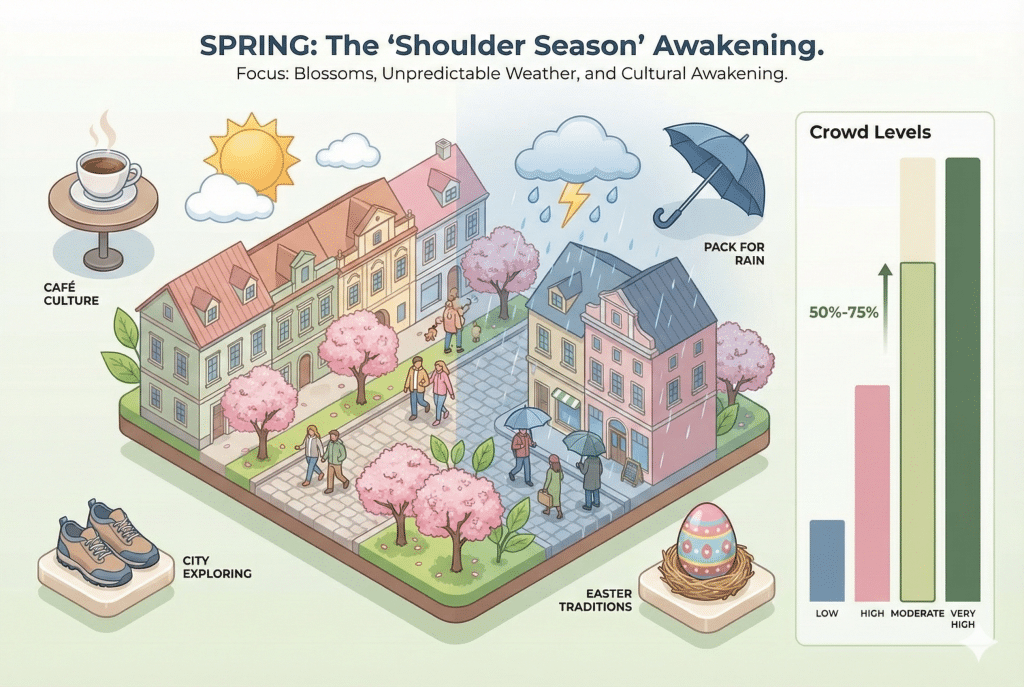
March marks the transition. By late month, Vienna, Prague, and Budapest often reach 8 to 15°C during the day, though nights can still hover near freezing. You’ll get sunshine mixed with rain and the occasional late snowfall.
Sightseeing becomes comfortable on the sunnier days. Crowds remain light, especially midweek. But the weather stays unpredictable, and some outdoor attractions haven’t fully opened yet.
Bring a light down jacket or warm coat, sweaters, and a scarf. Waterproof shoes and a compact rain jacket are essential. Think in layers you can add or remove as temperatures swing through the day.
March works for flexible travelers who don’t mind mixed weather and prefer cultural trips centered on museums, cafés, and concerts.
April – Blossoms, Easter, and True Shoulder Season
Daytime temperatures often reach 12 to 18°C, with cool nights and occasional showers. Parks and riversides wake up. Cherry blossoms appear, hills turn green, and café terraces begin opening. Easter markets and religious processions add cultural texture to many cities. Tourist numbers rise but stay manageable.
Higher alpine trails still carry snow, so mountain activities remain limited.
Pack a light waterproof jacket, mid-weight sweater, and long-sleeve layers. Comfortable waterproof walking shoes matter on wet cobblestones.
April is outstanding for first-time visitors who want good value combined with pleasant walking weather, and for photographers who love spring color without high-season crowds.
May – One of the Best Months to Visit
May often delivers temperatures between 15 and 22°C across Vienna, Prague, and Budapest. Daylight extends, and conditions stabilize, though you’ll still catch occasional rain showers mixed with many sunny days.
Cities bloom fully. Outdoor cafés and beer gardens buzz with energy, but they haven’t yet been overwhelmed. This is ideal timing for mixed itineraries that combine city exploration with light hiking on lower-elevation trails in Austria, the Czech Republic, and Slovakia.
One note: May brings several public holidays across Central Europe, including May 1st (Labor Day) and Ascension Day. These create mini-peak weekends where locals travel domestically, and prices can spike temporarily in popular destinations. Book accommodations early if your dates overlap these holiday periods.
Rain remains possible, so pack layers. Bring a light jacket or cardigan, T-shirts, and one warmer layer. Comfortable walking shoes, a small umbrella, or packable rain shell will serve you well.
May is near-perfect for classic Vienna–Prague–Budapest or Kraków loops, and for travelers who prioritize comfort and atmosphere over hot-weather activities.
June – Long Days and Festival Energy
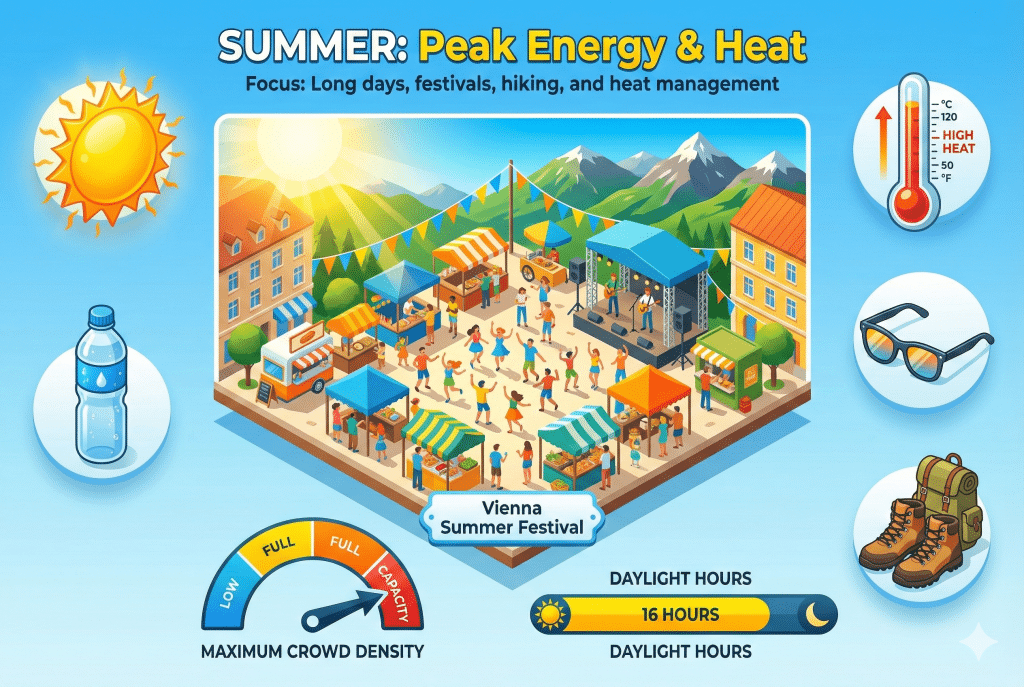
Temperatures warm considerably, often ranging from 20 to 27°C, occasionally hotter during early heat waves. Daylight can last up to 16 hours in some places, giving you extra sightseeing time.
Peak festival season begins. Open-air concerts, riverfront events, and city celebrations fill calendars. The energy is infectious. But crowds and prices begin their climb toward high-season levels, and heat waves are increasingly common, especially in cities where air-conditioning isn’t standard.
Pack short sleeves, breathable fabrics, a sunhat, sunglasses, and sunscreen. Keep a light cardigan for cooler evenings.
June suits travelers who love vibrant city atmospheres and cultural festivals, and itineraries that combine cities with lakes in the Salzkammergut or Czech and Slovak regions.
July – Peak Heat, Peak Crowds
July typically registers as the hottest month. Vienna, Prague, and Budapest can exceed 30°C during heat waves. You’re guaranteed warmth for outdoor dining, river cruises, and late-night wandering. Alpine regions across Austria, Slovakia, and Slovenia hit their hiking best—snow-free and intensely green.
The challenges are significant. Centers in Prague, Vienna, and Dubrovnik become genuinely crowded. Accommodation and flight prices peak. Many older hotels and apartments lack proper air-conditioning, which becomes a crucial booking detail during heat waves. This is particularly true for four-star historic hotels in Vienna and Prague—you must filter specifically for air-conditioning when booking for July and August. Don’t assume it’s included.
For crowd management, particularly in Prague and Dubrovnik, sightsee early (before 9:00) or late (after 18:00). Use midday for museums, long lunches, or rest breaks. In Dubrovnik, check local cruise-ship schedules and plan Old Town visits on lighter days—this dramatically affects crowd levels.
Pack very light clothing and strong sun protection. Carry a refillable water bottle. Consider electrolyte tablets during extreme heat.
July works for families bound to school holidays and for hikers and swimmers planning substantial outdoor time.
August – Still Busy, Slightly Shifting Light
August continues July’s pattern. Hot temperatures persist, especially in cities. Festivals keep running, and riverside scenes in Budapest, Vienna, and Prague stay vibrant and late-night. This remains prime time for Alpine and lake destinations.
One date worth marking: August 20th is St. Stephen’s Day in Hungary, a major national holiday featuring spectacular fireworks displays along the Danube in Budapest. If you’re in the city that week, it’s a memorable experience, but expect higher hotel prices and advance bookings.
Crowds persist throughout the month. Many locals take their own holidays, which can affect some businesses. Heat makes intensive walking days feel draining.
Crowd strategies mirror July. Book early morning timed entries for top sights. Walk quieter neighborhoods in the afternoon. In Dubrovnik and other Adriatic cities, time your city walls and Old Town walks for early morning or near closing, and plan around cruise-ship arrivals.
August suits travelers focused on mountains, lakes, and slower city sightseeing, plus nightlife-oriented trips.
September – The Sweet Spot for Many Travelers
Early September often delivers comfortable temperatures between 18 and 24°C, cooling gradually as the month progresses. Conditions tend to stay dry and stable. Peak crowds and prices ease off, but most services and festivals continue running.
Wine harvest season begins across regions like Wachau in Austria, Moravia in the Czech Republic, and Tokaj in Hungary. This creates ideal conditions for combining city trips with vineyard visits and moderate hiking.
Don’t miss the arrival of Sturm in Austria or Burčák in the Czech Republic—cloudy, semi-fermented young wine available only for a few weeks each autumn. It’s a local obsession, and you’ll find it served at wine taverns, festivals, and even some cafés. The slightly sweet, fizzy character makes it dangerously easy to drink, and locals treat its brief season as a celebration worth planning around.
For travelers interested in culinary experiences and wine-focused itineraries, see my guide to small group and specialty tours for more vineyard tour options.
Evenings grow cooler, so pack accordingly. Mix short and long sleeves, and bring a light jacket. Comfortable shoes matter—vineyards and countryside paths can be uneven.
September works for nearly everyone: first-timers, slow travelers, culture seekers. It’s particularly excellent for wine-focused itineraries and Danube valley trips through Melk, Wachau, and Krems.

October – Golden Autumn and Lower Prices
Temperatures range from 10 to 18°C with crisp air. Nights cool significantly, and early frosts become possible later in the month. Autumn foliage transforms city parks, vineyards, and forests—spectacular conditions for photography. Tourist numbers and prices drop significantly after early October.
Days grow shorter. Mountain weather becomes more unpredictable, and some seasonal lifts and trails in high alpine regions begin closing.
Pack a warm sweater or fleece and medium-weight jacket. Closed-toe shoes, a scarf, and umbrella help with changeable skies.
October is outstanding for travelers who value atmosphere over heat, and for slow city stays—Vienna cafés, Prague bookshops, Budapest baths—with day trips to vineyards and small towns.
November – Quiet, Atmospheric, and Occasionally Gloomy
November turns grey, cool, and often damp. Daytime temperatures hover between 5 and 10°C, colder at night. You’ll find very low prices outside the Christmas market windows, and excellent conditions for museum-heavy itineraries and café culture. But short days, bare trees, and potentially dreary weather can feel challenging.
Late November changes the energy completely. Many Christmas markets in Vienna, Prague, Budapest, and Kraków open during the last third of the month. This creates a “mini-peak” window—still cheaper than late December, with all the festive atmosphere intact.
Pack similar to March or early December: warm layers, water-resistant outerwear, hat, and gloves for evenings.
November works for budget-conscious culture trips and early Christmas market visits with fewer crowds than December.
December – Christmas Markets, Lights, and Winter Charm
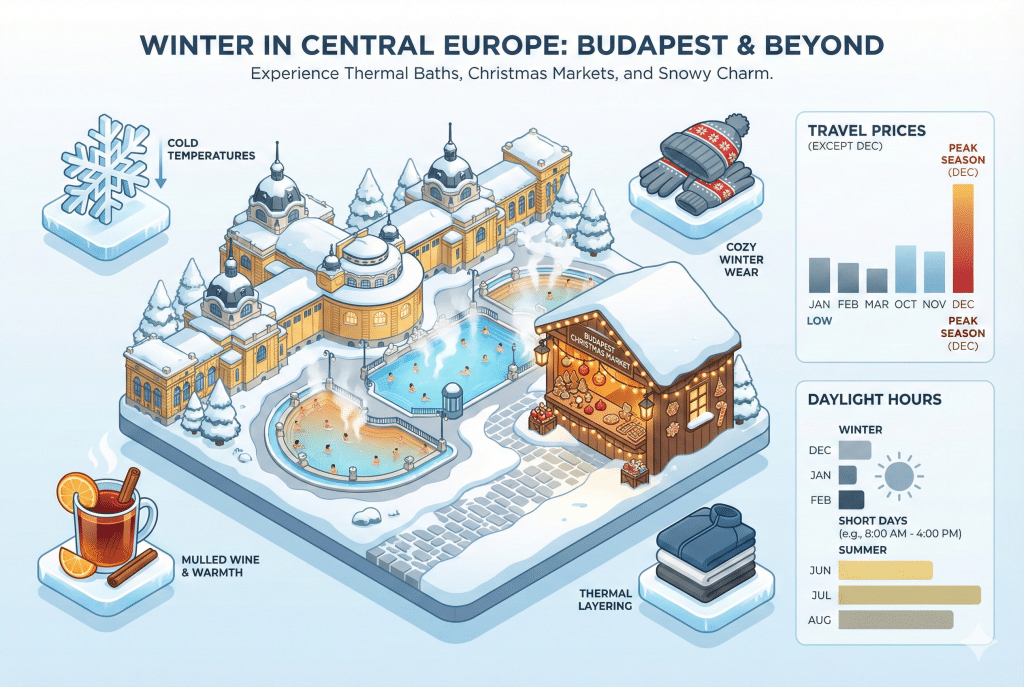
Cold settles in. Temperatures often hover around freezing in Vienna, Prague, and Budapest, with snow possible. Christmas markets transform city squares with lights, mulled wine, crafts, and food. Winter concerts, Advent events, and religious ceremonies enrich the cultural experience.
Days stay short, and temperatures stay cold. Late December—Christmas through New Year—becomes surprisingly pricey and busy, especially in famous market cities.
For crowd management at markets and Old Towns, visit major markets like Vienna’s Rathausplatz, Prague’s Old Town, or Budapest’s Vörösmarty tér on weekday afternoons when possible. Mornings stay quieter. Evenings deliver the most atmosphere but also the heaviest crowds. Bundle attractions geographically so you’re not crossing icy cities repeatedly.
For complete guides to navigating the markets, understanding what to buy, and discovering which cities offer the best holiday atmosphere, explore my posts on Vienna’s Christmas markets and Hungarian Christmas traditions.
Pack a winter coat, thermal layers, warm hat, gloves, and scarf. Good boots for snow and ice, plus warm socks, become essential.
December is perfect for Christmas market hunters and travelers who prioritize ambience over comfortable temperatures.
A quick note on planning: Weather patterns and typical temperatures are mentioned to help you prepare, but conditions can vary year to year. I always recommend checking current forecasts and seasonal trends closer to your travel dates.
Matching Your Month to Your Travel Style
Here’s how to connect your priorities with the right seasons:
Travel Priority | Best Window |
|---|---|
First-Time / Classic Trip | Late April–Early June OR Mid-September–Early October |
Hiking & Outdoors | June–Early September |
Christmas Markets | Late November–December 24 |
Lowest Crowds | January–March (avoid school holidays) |
Wine Harvest & Vineyard Visits | September–Early October |
Seasonal Packing at a Glance
Spring (March through May): Layers, light waterproof jacket, waterproof shoes, scarf, compact umbrella.
Summer (June through August): Breathable clothing, sunhat, sunglasses, sunscreen, reusable water bottle.
Autumn (September through October): Mix of short and long sleeves, light to midweight jacket, closed shoes, scarf.
Winter (November through February): Insulated coat, thermals, hat, gloves, scarf, waterproof boots, warm socks.
Managing Crowds (Especially Prague and Dubrovnik)
Even during busy months, smart timing and route planning can restore some of that quieter European atmosphere:
Time of day: Visit icons like Charles Bridge, Prague Castle, or Dubrovnik’s city walls at opening or near closing. Use late morning and early afternoon for quieter streets, cafés, or less-visited districts.
Day of week: Weekdays consistently stay lighter than weekends for popular old towns.
Cruise ship schedules (for Dubrovnik and coastal destinations): Check the local port authority’s published cruise calendar and avoid days with multiple large ships in port.
Side streets: During peak season, crowds concentrate on main routes like Stradun in Dubrovnik or Karlova in Prague. Turning one or two corners often transforms your experience completely.
What’s the absolute best month to visit Central Europe?
For most travelers, late May, early June, mid-September, or early October offers the best combination of comfortable weather, manageable crowds, and reasonable prices. If Christmas markets are your priority, late November through mid-December is ideal.
Is July or August too hot and crowded?
Not necessarily, but conditions have changed. Heat waves are more frequent, and Prague, Vienna, and Budapest can become genuinely uncomfortable during extreme weather. Crowds peak during these months. If you’re flexible, shoulder season offers better value and comfort. If you’re committed to summer travel, book accommodations with air-conditioning and plan intensive sightseeing for early morning and evening.
Can I visit in winter without focusing on Christmas markets?
Absolutely. January through early March delivers rock-bottom prices, empty museums, and atmospheric city streets. It works beautifully for travelers who genuinely enjoy cold weather, café culture, and indoor attractions. Combine it with winter sports for a complete trip.
How unpredictable is spring weather?
March and April can swing between sunny and cold, sometimes within the same day. Rain is common. By May, conditions stabilize significantly. Pack layers and waterproof gear, and maintain flexible expectations.
When should I avoid Central Europe?
There’s no universally “bad” time, but late July and August bring the highest prices, heaviest crowds, and most uncomfortable heat in cities. Late November (before markets open) can feel grey and dreary. Choose based on what you’re willing to trade—crowds versus weather, cost versus atmosphere.
Are shoulder seasons really worth it?
Yes, especially if you value comfort over guaranteed hot weather. September and May deliver excellent conditions with significantly fewer tourists and lower costs. You’ll have more authentic interactions and breathing room at major sights.
Do Christmas markets really close on Christmas Eve?
Most do. Many operate through December 24th and then shut down. A few notable exceptions continue through New Year’s Day, including Vienna’s Rathausplatz market and Budapest’s Vörösmarty Square market. Check specific market dates when planning December trips.
What about hiking in Central Europe?
June through early September offers the best conditions for alpine hiking. Lower-elevation trails become accessible in May, but higher routes may stay snow-covered until July. October can work for valley hikes, but mountain weather grows unpredictable.
When is the best time to visit Central Europe?
The ideal time to visit Central Europe is the shoulder season (May through mid-June and September through mid-October) for mild weather and fewer crowds. December is best for Christmas markets , while January through March offers the lowest prices. Avoid July and August if you dislike high heat.
Explore more seasonal guides and destination itineraries on Pieterontour.com—where every season reveals something worth discovering.
- The Perfect 2-Week Central Europe Itinerary Vienna, Prague, Kraków & Budapest
- 10 Authentic Cultural Experiences in Central Europe (That Aren’t Tourist Traps).
- Central & Eastern Europe Travel The Ultimate Guide for Culturally Curious Travelers.
- Central & Eastern Europe Travel: The Ultimate Guide for Culturally Curious Travelers
- Getting Around Central & Eastern Europe Trains, Buses, and Rental Cars.
- How Much Does a Trip to Central Europe Cost A Realistic Budget Guide.