
Zermatt and the Matterhorn: Your Complete Guide to Gornergrat, Glacier Paradise, and Village Life
Why This Guide Matters
This guide is for travelers planning their first visit to Zermatt, Switzerland‘s most iconic Alpine destination. Whether you have one day or a full week, you’ll discover exactly how to experience the Matterhorn, navigate the historic car-free village, ride Europe’s highest cable car to Glacier Paradise, and make the most of the legendary Gornergrat Railway. I’ve led tours through Zermatt for over two decades, and this guide shares the insider knowledge that transforms a mountain visit into an unforgettable Alpine experience.

Where Switzerland’s Greatest Icon Meets an Unforgettable Village
Few places capture Alpine grandeur quite like Zermatt. I’ll never forget my first arrival. The train climbed higher through meadows and mountain passes, passengers crowding to one side of the carriage to catch glimpses of what many call the most photogenic mountain on Earth. When the Matterhorn’s distinctive pyramid peak finally came into full view at 4,478 meters, the collective silence spoke volumes. No photograph quite prepares you for standing before it.
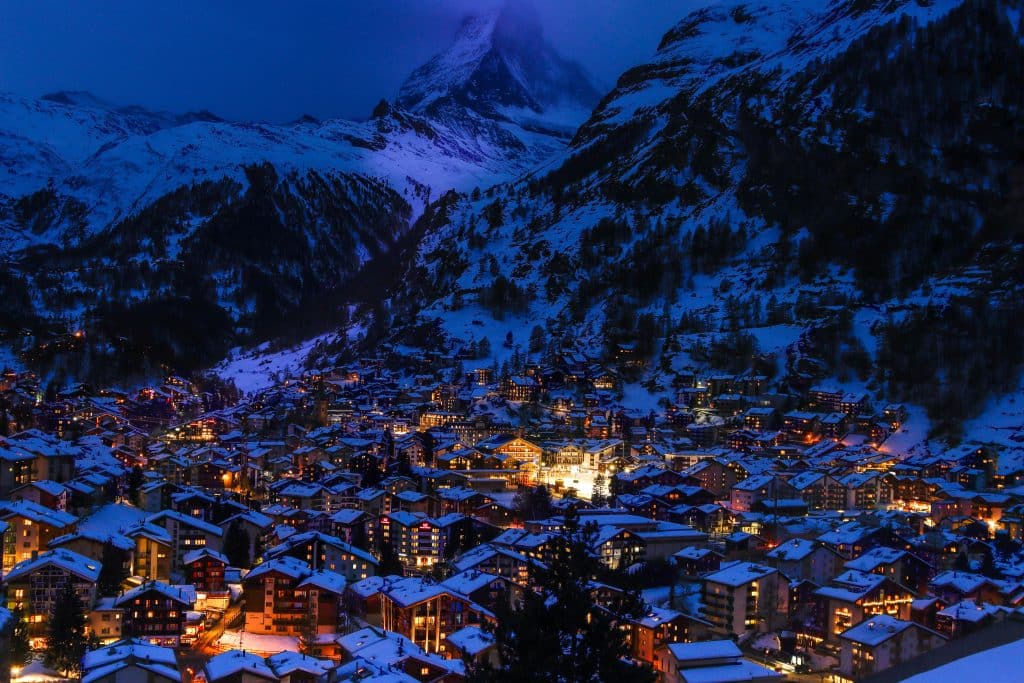
Zermatt has been my destination countless times across 25 years of leading tours through the Alps, yet it never loses its magic. This isn’t just a mountain village. It’s Switzerland’s most iconic mountain destination, where tradition and precision intersect in a car-free setting that feels almost frozen in time. The electric hum of taxis on cobblestone streets, the perfume of mountain air flowing down from glaciers, the silhouettes of 500-year-old Valais buildings against Alpine peaks create something entirely distinctive.
This guide explores what makes Zermatt exceptional: the Gornergrat Railway with its incomparable views of 29 four-thousand-meter peaks, the Matterhorn Glacier Paradise at Europe’s highest cable car station, and the traditional mountain village where local culture remains vibrant beneath the international visitor flow. Whether you’re planning one day, three days, or a week in Zermatt, you’ll find the practical details, insider tips, and strategic recommendations to make your Alpine adventure memorable and manageable.
Getting to Zermatt: Your Car-Free Alpine Journey Begins
Arriving by Train from Major Cities
Zermatt’s location in the Valais region of southwestern Switzerland makes it accessible from major hubs, though not quite as direct as you might hope. The journey itself, however, becomes part of the experience. Every train approach to Zermatt delivers increasingly dramatic Alpine scenery. For comprehensive tips on navigating European public transportation, see our detailed guide.
From Zurich: The most common starting point for international visitors. Plan for 3 hours 12 minutes to 4 hours depending on connections, with approximately 25 trains daily. With a Half Fare Card (approximately CHF 130-140 for 2026), you’ll pay roughly CHF 67 for a one-way ticket instead of the full CHF 134. The journey takes you through the Gotthard region, one of Europe’s most scenic train corridors.
From Geneva: Approximately 3 hours 45 minutes with a change in Visp. Around two trains per hour make this route convenient for visitors coming from the French side. This route hugs the Rhône Valley before climbing into the Valais.
From Zurich Airport: If arriving from an international flight, expect approximately 4 hours 36 minutes total. From CHF 81 with a Half Fare Card, making this feasible for day trips or short visits.
For current train schedules and ticket prices, check Swiss Federal Railways (SBB), the official rail operator.
The final 40-minute journey from Visp to Zermatt is particularly rewarding. You’ll notice the landscape shifting as the train climbs, with the Matterhorn growing larger and more dramatically positioned in your window. Pro tip: Sit on the right side of the train for the best viewpoints during the final approach.
Understanding Zermatt’s Car-Free Status
This is perhaps Zermatt’s most distinctive feature, and understanding how it works logistically makes your arrival smoother. Since 1930, the village has banned private cars, creating an environment where electric vehicles buzz quietly through cobblestone streets and horse-drawn carriages clip-clop between traditional chalets. This isn’t environmental theater. It’s genuine Alpine preservation.
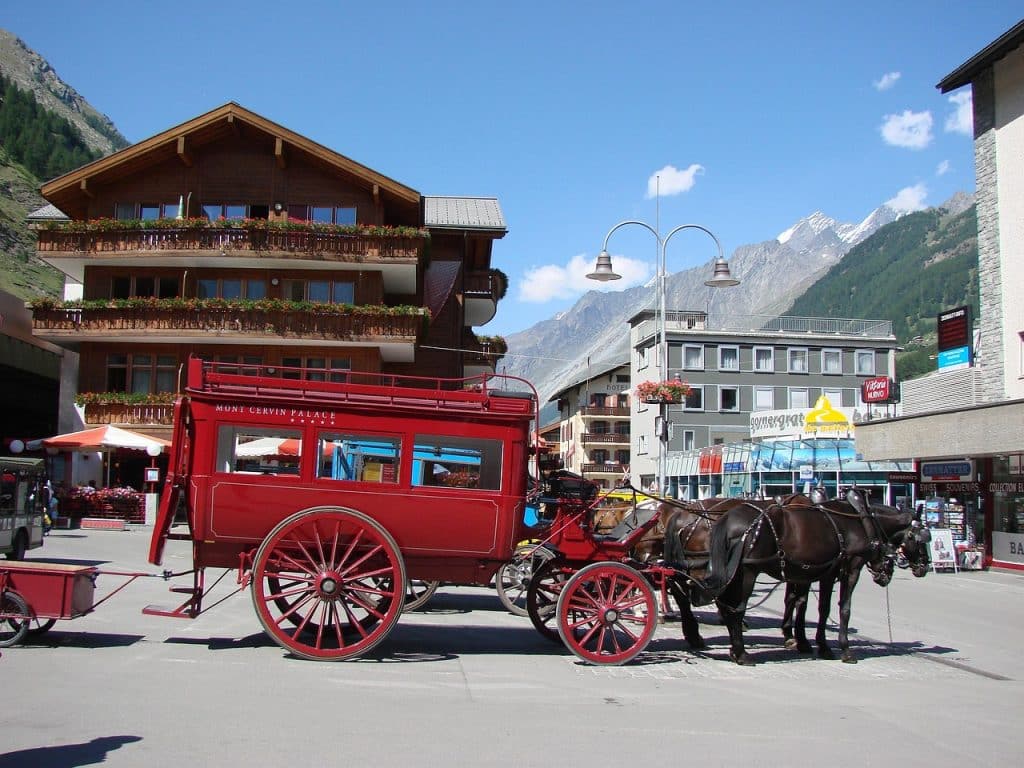
Arriving by car: You must park at Täsch, approximately 5 kilometers downhill from Zermatt. A 12-minute shuttle train departs frequently, transporting you and your luggage directly to Zermatt’s train station. The parking fee typically runs CHF 15-20 per day. Many hotels offer free electric taxi pickup from the station, so confirm this when booking.
Getting around the village: Zermatt covers roughly 2 square kilometers, with most attractions within a 15-minute walk. The village operates two free electric bus routes connecting the train station to mountain cable car stations and neighborhoods. Electric taxis are available 24/7 (remarkably efficient, though pricier than in standard towns at roughly CHF 8-15 for short trips). Horse-drawn carriages offer charming transportation throughout summer. Walking remains the primary way to navigate.
The practical advantage? You never worry about parking, traffic, or navigation logistics once you arrive. Your energy goes toward experiencing the village rather than managing vehicles.
Practical Planning Tips
A quick note on planning: Prices and opening hours are mentioned to help you budget and plan, but they can change often. I always recommend checking the official websites (which I’ll link to) for the most current information before your visit.
Best time to visit:
- Summer (June-September) offers hiking, wildflowers, and optimal Gornergrat/Glacier Paradise conditions
- Winter (December-March) brings skiing, snow activities, and festive village atmosphere
- Shoulder seasons (May, October-November) can offer quieter experiences but limited mountain access
Weather considerations: Mountain weather changes rapidly. Check webcams before booking excursions:
- Gornergrat webcam: gornergrat.ch
- Glacier Paradise webcam: matterhornparadise.ch
- Zermatt village: zermatt.ch
Time needed:
- Minimum: 1 full day (Gornergrat + village)
- Ideal: 2-3 days (both major excursions + hiking)
- Extended: 4-7 days (multiple hikes, slower pace, deeper exploration)
Zermatt Village: Where Tradition Meets Precision
The Historic Heart: Hinterdorf (Old Village)
Wandering through Hinterdorf on a quiet morning before crowds arrive is one of my most recommended Zermatt experiences. This cluster of approximately 30 traditional Valais buildings dates back 500+ years, constructed in the larch wood style unique to this region. The wood’s natural resins resist decay, and the dark patina from centuries of Alpine sun and weather stores heat efficiently (a practical innovation that became an aesthetic signature).
These buildings perch on stone stilts, an ingenious detail that originally kept mice from climbing into living spaces. Walk between the narrow lanes and notice how the structures lean slightly, how wooden window frames showcase careful craftsmanship, how small plaques indicate construction dates (many from the 16th and 17th centuries).

The Culture Trail (Kulturweg) offers guided interpretation through these historic spaces. This 26-station trail with brown signposts and QR codes takes approximately 4 hours to complete and costs nothing. Cultural stewardship, Zermatt-style.
Practical details:
- Self-guided walking time: 30-45 minutes
- Best time to visit: Early morning (7:00-9:00 AM) for quiet atmosphere
- Cost: Free
Sacred and Secular Icons
St. Mauritius Church, whose parish dates back to 1285, anchors the village spiritually. The current building, largely expanded and renovated in 1913, reflects the region’s enduring Catholic heritage. The Roman Catholic faith remains dominant in Zermatt (81% of the population), a legacy of this region’s deep Alpine roots. The church interior reflects centuries of donations and decorations from mountain guides who survived dangerous ascents.
Immediately behind the church lies the Mountaineers Cemetery, a sobering reminder of the Matterhorn’s unforgiving nature. Approximately 50 graves hold mountaineers from around the world, including guides from the famous 1865 first ascent. Reading headstones reveals stories: avalanche deaths, crevasse falls, rockfalls. Several graves honor entire families lost in a single tragedy. This isn’t morbid tourism. It’s respectful recognition of those who died pursuing Alpine dreams.
The Matterhorn Museum Zermatlantis occupies a village building and focuses on the mountain’s first ascent and mountaineering history. While modest in size, the exhibits provide crucial context for understanding the peak’s significance and the human drama surrounding its conquest.
To read more about the history of the Matterhorn First Ascent: The 1865 Tragedy & Real Story
Practical details:
- Museum hours: Typically 3:00-6:00 PM (hours vary seasonally)
- Entry: Around CHF 5
- Time needed: 45-60 minutes
- Check current hours at: [Official Matterhorn Museum website – Pieter to add link]
Fountains and Statuary
Traditional fountains punctuate village squares, many with particular stories. The Inderbinen Fountain honors a legendary mountain guide who lived over 100 years and climbed the Matterhorn more than 370 times. The Marmot & Capricorn Fountain at Church Square (dating to 1906) celebrates the wildlife inhabiting the surrounding mountains. These aren’t mere decorations. They’re community gathering points and historical markers.
Practical Village Navigation
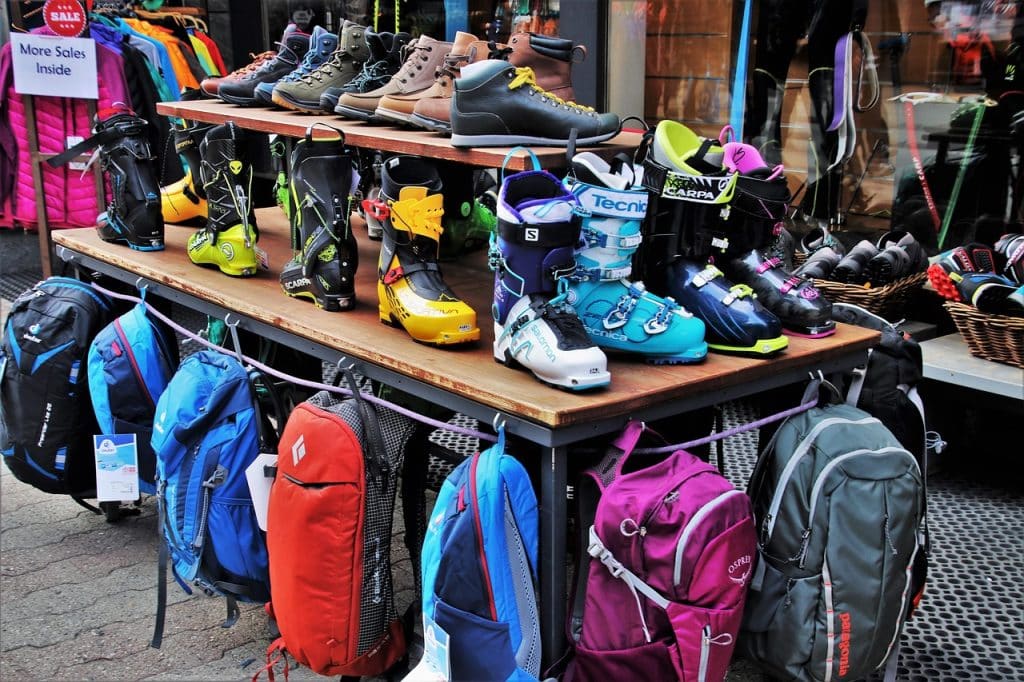
The main shopping street, Bahnhofstrasse, runs from the train station and offers restaurants, boutiques, souvenir shops, and bakeries. For genuine provisions, Coop (near the station) and Migros (in-town location) provide supermarket basics at reasonable prices. A self-catering strategy using sandwiches from bakeries (around CHF 7-10) instead of mountain restaurants (CHF 15-25) significantly reduces food costs while maintaining quality.
The village remains remarkably compact. You can walk from train station to any major location in under 15 minutes. The real pleasure comes from meandering through narrow lanes without worrying about vehicle traffic, stopping when something interests you, greeting locals with “Grüezi” (the Swiss-German greeting).
Gornergrat: The Matterhorn’s Greatest Stage
The Gornergrat Railway represents something remarkable in Alpine tourism: a cogwheel railway built in 1898 that still operates with the precision Swiss engineering promises. This isn’t a nostalgic experience. It’s genuine, functioning transportation that carries visitors from 1,608 meters (Zermatt) to 3,089 meters (Gornergrat) in precisely 33 minutes.
The Journey Up
The railway climbs 1,481 meters through continuously shifting landscapes. The journey passes four intermediate stops: Findelbach, Riffelalp, Riffelsee, and Rotenboden. Each offers opportunities to disembark for hiking or photography. The cogwheel mechanism allows the train to grip the track at gradient angles that would be impossible for standard rail, creating an experience of controlled ascent that somehow remains thrilling across multiple journeys.
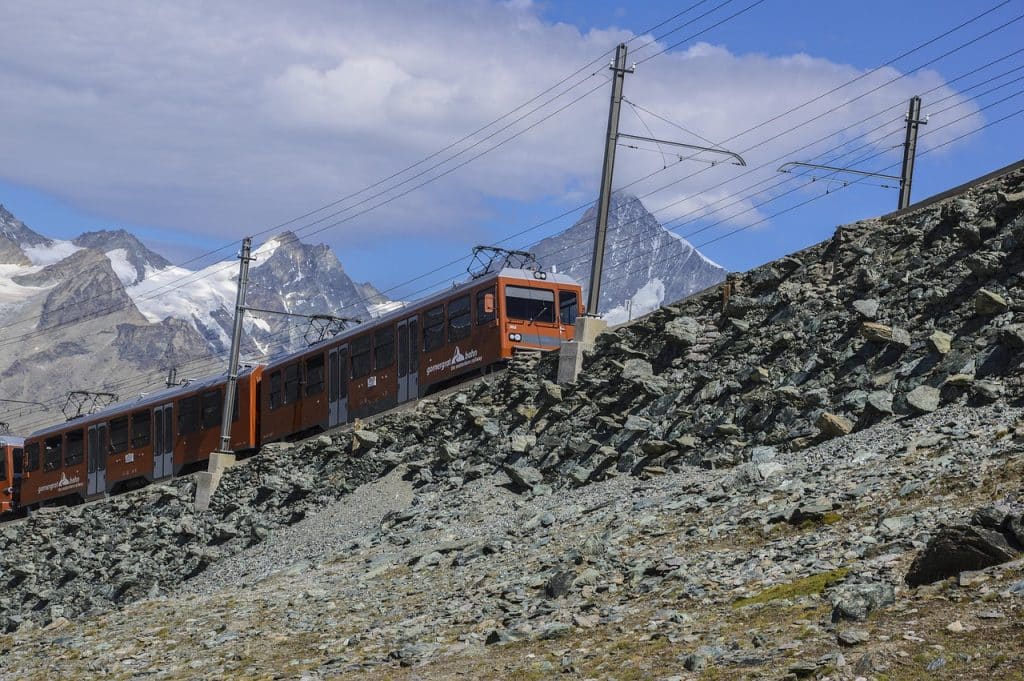
Pro tip from decades of guiding: Sit on the right side of the carriage ascending. As the train climbs, the Matterhorn reveals itself gradually through your window, first as a distant peak, then growing progressively larger and more dramatically positioned as altitude increases. The left-side passengers miss this gradual revelation.
Practical details:
- Journey time: 33 minutes each direction
- Elevation gain: 1,481 meters
- Departure frequency: Every 24 minutes during peak summer (July-August)
- Full price: CHF 100-220 (varies by ticket type and class)
- With Half Fare Card or Swiss Travel Pass: Approximately 50% discount
- Arrive: 15-20 minutes before desired departure to secure seating
- Check current schedules and book tickets at the official Gornergrat Railway website
Gornergrat Summit (3,089 meters)
Stepping out at the summit station delivers the promised Alpine theater. On clear days (and this matters, check the Gornergrat webcam before booking), the panorama reveals 29 peaks exceeding 4,000 meters. The Matterhorn dominates visually, but Dufourspitze (4,634m, Switzerland’s highest), Monte Rosa massif, and the Gorner Glacier create a 360-degree mountain world.
Key experiences at the summit:
The 360° Loop Trail: This paved, wheelchair-accessible 15-minute walk circles the summit building, offering constantly changing perspectives on the surrounding peaks. Each viewpoint provides different compositions, different light angles, different emotional impacts. This is where most visitors spend their initial 30 minutes after arrival.
The Gornergrat Kulm Hotel: Europe’s highest hotel (3,089m) offers breakfast, lunch, and afternoon refreshments. The breakfast buffet (around CHF 28-35) provides indoor seating with panoramic windows. Having coffee here while watching the Matterhorn’s shadow shift across the valley creates a moment worth the premium pricing.

The Golden Spot: At the summit’s eastern edge, a designated viewing platform offers what many photographers consider the best Matterhorn composition. Morning light (8:00-10:00 AM) provides optimal conditions, with the sun illuminating the east face while minimizing harsh shadows.
Practical details:
- Time needed at summit: 1-2 hours minimum
- Altitude considerations: Drink water frequently, move slowly, consider altitude sickness if prone
- Weather changes rapidly: Bring warm layers even in summer
- Restaurant hours: Typically 7:00 AM – 5:00 PM (seasonal variations apply)
The Riffelsee Hike: Zermatt’s Most Iconic Photo Location
The hike from Gornergrat summit down to Riffelsee lake ranks among Switzerland’s most rewarding short trails. This 35-45 minute descent (2.5km, 270m elevation loss) leads to an Alpine tarn that perfectly mirrors the Matterhorn on calm mornings. The image of the mountain reflected in still water has become one of Switzerland’s most reproduced photographs.
The experience: The trail follows clear, well-maintained paths through rocky Alpine terrain. Marmots frequently appear along the route (listen for their distinctive whistles). The landscape feels simultaneously harsh and beautiful, with glacial boulders, wildflower patches (summer), and constantly shifting mountain perspectives.
Upon reaching Riffelsee, the scene that unfolds explains why photographers arrive at dawn. When wind conditions cooperate, the lake’s surface becomes a perfect mirror, doubling the Matterhorn’s dramatic pyramid. The reflection adds depth and surreal beauty to an already extraordinary view.
Photography tips:
- Best reflection conditions: Early morning (7:00-9:00 AM) before wind picks up
- Cloudy days often provide softer light and better reflections than harsh sun
- Bring polarizing filter to manage reflections and enhance colors
- Patience matters: Reflections come and go as wind shifts
Practical details:
- Distance: 2.5 kilometers
- Elevation: 270 meters descent
- Time: 35-45 minutes (walking), allow 1-2 hours with photography stops
- Difficulty: Easy to moderate (rocky terrain, altitude)
- Best season: June-September (snow-free)
- Return option: Continue hiking down to Rotenboden station (15 minutes) or hike back up to Gornergrat (60 minutes)
Extended Gornergrat Hiking Options
Beyond the classic Riffelsee route, several longer trails begin from Gornergrat summit or intermediate stations:
Gornergrat to Rotenboden (30 minutes): An easy descent connecting to longer valley trails. This section offers close-up glacier views and connects to multiple hiking routes.
Gornergrat to Riffelberg (90 minutes): A more challenging descent through Alpine meadows and rocky terrain. This trail passes the Riffel Chapel and eventually connects to Zermatt via forest paths.
The Classic Matterhorn View Trail: From Rotenboden, follow signs toward “5-Seen-Weg” for extended hiking through the region’s most dramatic terrain. This connects to the famous 5 Lakes Trail system (covered in the Sunnegga section).

Practical hiking considerations:
- Trails are marked with yellow signs (standard Swiss trail system)
- Weather changes rapidly at altitude: Pack rain gear and warm layers
- Afternoon thunderstorms common in summer: Start early
- Water sources limited: Carry sufficient supply
- Emergency shelters available at stations
Matterhorn Glacier Paradise: Europe’s Highest Cable Car Station
The Matterhorn Glacier Paradise at 3,883 meters represents a different Alpine experience than Gornergrat. Where Gornergrat emphasizes panoramic viewing and accessible hiking, Glacier Paradise offers extreme altitude, year-round snow, and the technical achievement of reaching Europe’s highest cable car station.
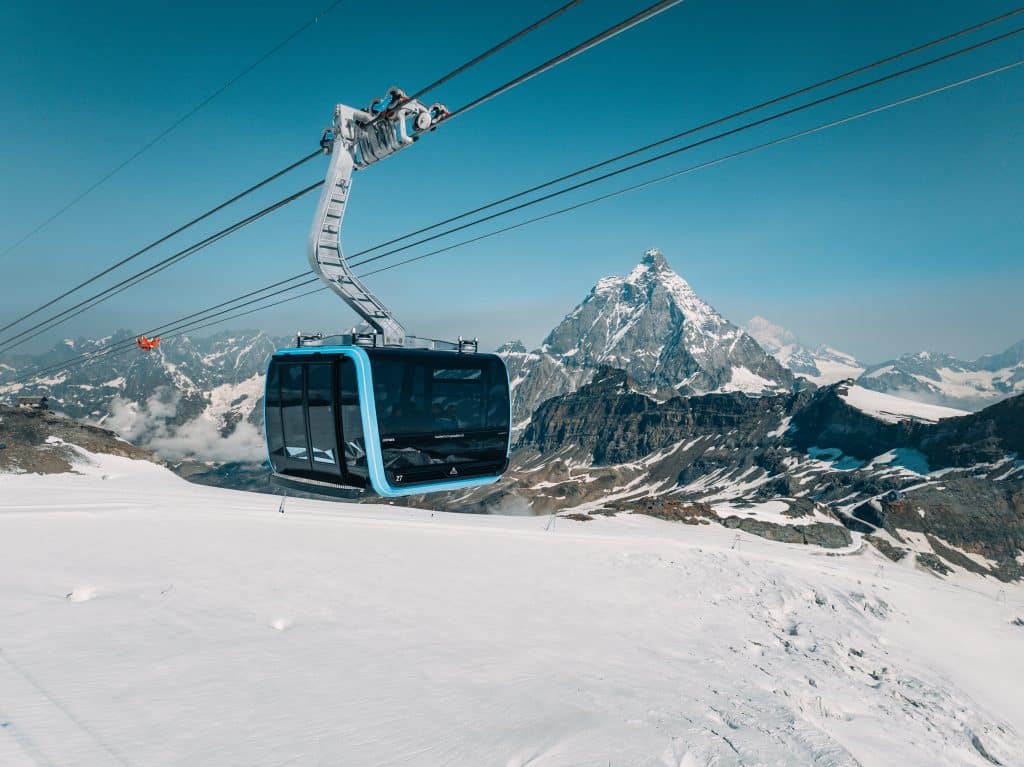
The Journey to 3,883 Meters
The ascent happens in stages, each revealing different landscapes and perspectives:
Stage 1: Zermatt to Furi (1,867m): The initial gondola climbs through forest and meadow. The Matterhorn’s north face dominates views. This 4-minute segment establishes the mountain’s overwhelming presence.
Stage 2: Furi to Schwarzsee (2,583m): This 6-minute ascent crosses the tree line, entering true Alpine terrain. The Schwarzsee (Black Lake) station offers the famous Hörnlihütte view, where climbers attempting the Matterhorn’s standard route begin their summit push.
Stage 3: Schwarzsee to Trockener Steg (2,939m): A 7-minute cable car journey across the Theodul Glacier. Below, crevasses create patterns of blue ice. Above, the Matterhorn’s pyramid grows larger and more imposing.
Stage 4: Trockener Steg to Glacier Paradise (3,883m): The final 4-minute ascent to Europe’s highest cable car station. The air here contains approximately 30% less oxygen than sea level. The temperature typically sits well below freezing year-round.
Practical details:
- Total journey time: Approximately 40-45 minutes (including transfers)
- Full price: CHF 100-220 (varies by season and ticket type)
- With Half Fare Card: Approximately 50% discount
- Operating hours: Typically 8:30 AM – 4:30 PM (seasonal variations)
- Last ascent: Usually around 3:30-4:00 PM
- Check current schedules and conditions at the official Matterhorn Glacier Paradise website
At the Summit: What to Experience
The Viewing Platform: Step outside onto Europe’s highest viewing platform and the altitude hits you immediately. The air feels thinner, breathing requires more effort, movement takes conscious attention. The panorama includes 38 Alpine peaks over 4,000 meters, with views extending to Mont Blanc (on clear days) and the Italian Alps.
The Glacier Palace: Carved directly into the glacier 15 meters below the surface, this ice tunnel system showcases frozen sculptures, ice formations, and glacier structure. The constant temperature of approximately -4°C keeps everything preserved. Walking through, you’re literally inside a living glacier.
The Matterhorn Crossing: From Glacier Paradise, experienced mountaineers can cross into Italy via the Theodul Pass (weather and conditions permitting). This historic route connects Switzerland and Italy at extreme altitude.
Cinema Lounge: A heated indoor space screens documentaries about the Matterhorn, glacier formation, and Alpine mountaineering. This provides respite from altitude and cold while deepening your understanding of the environment.
Practical details:
- Time needed at summit: 1-2 hours
- Temperature: Well below freezing year-round (bring warm clothing)
- Altitude effects: Common symptoms include shortness of breath, headache, dizziness
- Move slowly, hydrate frequently
- Indoor heated areas available throughout
Intermediate Stops Worth Exploring
Schwarzsee (2,583m): The “Black Lake” station offers several compelling reasons to stop:
The Hörnlihütte (3,260m) sits visible on the mountain face above, the starting point for most Matterhorn summit attempts. A 2-hour hike reaches the hut (experienced hikers only, requires proper equipment and fitness).
The Schwarzsee Chapel perches beside the dark Alpine tarn that gives the station its name. This small stone chapel offers a moment of reflection with the Matterhorn towering directly overhead.
A 30-minute easy walk around the lake provides accessible hiking with extraordinary mountain views. This represents the easiest Glacier Paradise hiking option.
Practical details:
- Stop duration: 30 minutes to 2 hours (depending on hiking ambitions)
- Lake walk: 30 minutes, easy terrain
- Hörnlihütte hike: 2 hours one-way, challenging
- Restaurant: Simple fare available
- Best for: Quick mountain lunch, photography, shorter mountain experience
Furi (1,867m): The lower station offers two notable attractions:
The Suspension Bridge (Hängebrücke) spans a dramatic gorge with the Matter Vispa river rushing below. At 160 meters long, this swaying footbridge provides adrenaline without requiring technical skills. The crossing takes approximately 5 minutes and tests nerve more than fitness.
Forest hiking trails begin from Furi, offering lower-altitude alternatives when weather closes higher elevations. These paths through larch and pine provide shadier, more sheltered hiking.
Practical details:
- Bridge crossing: 5 minutes, free access
- Best season: April-October
- Forest trails: Various lengths and difficulties
- Good option for: Afternoon activities, weather backup plans
Sunnegga-Rothorn: The Family-Friendly Alternative
The Sunnegga-Rothorn area offers Zermatt’s most accessible mountain experience. This sunny south-facing slope provides easier terrain, shorter access times, and family-oriented activities while maintaining spectacular Matterhorn views.
The Sunnegga Funicular: Five Minutes to 2,288 Meters
Unlike the longer Gornergrat Railway or multi-stage Glacier Paradise cable car, the Sunnegga funicular climbs from Zermatt village to 2,288 meters in precisely 5 minutes. This underground funicular burrows through the mountain rather than climbing its exterior, emerging at a sunny plateau that locals call “the place with guaranteed sun.”
The immediate accessibility makes Sunnegga ideal for:
- Families with young children
- Visitors with limited time
- Those seeking easier hiking terrain
- Afternoon excursions after morning Gornergrat/Glacier Paradise visits
Practical details:
- Journey time: 5 minutes
- Departure frequency: Every 20 minutes
- Full price: CHF 30-60 (varies by ticket type)
- With Half Fare Card: 50% discount
- Operating season: Year-round (longer hours summer, limited winter)
- Check schedules at: [Official Sunnegga website – Pieter to add link]
Leisee: Zermatt’s Swimming Lake
At Sunnegga station, a 5-minute walk leads to Leisee, a small Alpine lake with Matterhorn reflections and (remarkably) summer swimming. This man-made reservoir maintains temperatures reaching 18-20°C in high summer (July-August), making it one of the Alps’ highest swimmable lakes.
The grassy banks provide picnic spots, sun lounging areas, and children’s play zones. The Matterhorn towers directly ahead, creating a surreal backdrop for a mountain swim. This represents one of Zermatt’s most Instagram-worthy and unique experiences.
Practical details:
- Walk from Sunnegga: 5 minutes (easy, paved path)
- Swimming season: Late June to early September
- Water temperature: 16-20°C (cold but tolerable)
- Facilities: Changing areas, restaurants nearby
- Time needed: 1-2 hours
- Cost: Free (included with Sunnegga ticket)
The Marmot Observation Station
Sunnegga hosts a dedicated marmot observation area where these Alpine groundhogs thrive in protected habitat. Information boards explain marmot behavior, ecology, and the species’ importance to Alpine ecosystems. During summer months, you can typically spot marmots sunning on rocks, foraging in meadows, or standing sentinel (the distinctive pose that precedes their famous alarm whistle).
Early morning and late afternoon provide best viewing opportunities. Marmots are less active during midday heat.
Practical details:
- Location: 5-minute walk from Sunnegga station
- Best viewing: 7:00-9:00 AM, 5:00-7:00 PM
- Season: June-September (hibernation October-May)
- Cost: Free
The 5 Lakes Trail (5-Seen-Weg): Zermatt’s Most Famous Day Hike
This spectacular 9.5-kilometer trail connects five Alpine lakes, each offering Matterhorn reflections under optimal conditions. The route ranks among Switzerland’s most photographed hikes and represents the ideal Zermatt full-day hiking experience.
The route: Beginning at Blauherd (2,571m, reached via gondola from Sunnegga), the trail descends gradually past Stellisee, Grindjisee, Grünsee, Moosjisee, and Leisee before returning to Sunnegga. Total hiking time: 2.5-3 hours without stops, 4-5 hours with photography and lunch breaks.
The lakes:
- Stellisee (2,537m): First and most dramatic, this tarn provides classic Matterhorn reflections. Morning light ideal.
- Grindjisee (2,334m): Smaller, more intimate, often less crowded. Good picnic spots.
- Grünsee (2,300m): Larger, with clearer water and multiple viewpoints. Popular lunch stop.
- Moosjisee (2,260m): Surrounded by cotton grass in summer, creates a softer landscape.
- Leisee (2,232m): The swimmable lake, described above. Trail’s triumphant finish.
Practical details:
- Distance: 9.5 kilometers
- Elevation: 400 meters descent (minimal climbing)
- Time: 2.5-3 hours (hiking), 4-5 hours (with stops)
- Difficulty: Easy to moderate (well-maintained paths)
- Best season: Late June to early October
- Strategy: Start early (8:00 AM) for best light and fewer crowds
- Bring: Water, snacks, sun protection, camera, swimsuit (summer)
Rothorn (3,103m): The Alternative Summit
From Blauherd, a second gondola climbs to Rothorn at 3,103 meters. This summit provides different Matterhorn perspectives than Gornergrat, with the peak appearing more distant but framed against the Italian Alps.
The Rothorn Paradiso restaurant at the summit offers surprisingly sophisticated dining at extreme altitude. The terrace provides 360-degree views rivaling Gornergrat, with fewer crowds.
Practical details:
- Journey from Blauherd: 8 minutes
- Summit elevation: 3,103 meters
- Restaurant: Table service, CHF 25-45 mains
- Time needed: 1-2 hours
- Best for: Alternative summit experience, quieter than Gornergrat

Zermatt Dining: From Budget to Celebration
Budget-Conscious Strategies
Swiss dining costs shock many visitors. A simple lunch at a mountain restaurant easily reaches CHF 25-35 per person. Dinner in village restaurants starts around CHF 30 and climbs quickly to CHF 60+ for traditional fondue or raclette.
Money-saving approaches:
- Self-catering: Coop and Migros supermarkets offer sandwich ingredients, salads, and prepared foods at reasonable prices (CHF 10-15 per person for substantial meal)
- Bakery strategy: Fresh sandwiches (CHF 7-10) and pastries provide portable, affordable mountain lunches
- Breakfast included: Most hotels include breakfast buffets; eat substantially to reduce lunch expenses
- Happy hours: Some bars offer reduced drink prices 4:00-6:00 PM
- Mountain picnics: Bring food from valley, enjoy views without restaurant premiums
Village Restaurants Worth the Splurge
When you do spend on dining, these establishments deliver quality and atmosphere. For broader context on European dining hours and table manners, see our cultural guide.
Whymper-Stube: Traditional Swiss cuisine in a cozy 19th-century setting. Known for fondue, raclette, and rösti. The wood-paneled interior and candlelit atmosphere create classic Alpine dining. Expect around CHF 35-55 per person for mains.
Schäferstube: A bit more refined while maintaining traditional character. Their Valais lamb and local game dishes showcase regional ingredients. Around CHF 40-65 per person. Reservations essential during peak season.
Ferdinand: Modern Alpine dining with creative presentations of classic ingredients. The chef’s menu provides excellent value at approximately CHF 80-90 for three courses. More contemporary aesthetic appeals to those seeking updated Swiss cuisine.
Practical note: Most restaurants recommend reservations during summer and winter peak seasons. Book 1-2 days ahead for popular dinner times (7:00-8:30 PM).
Mountain Restaurants
Each major mountain area (Gornergrat, Glacier Paradise, Sunnegga-Rothorn) offers dining options ranging from basic self-service to table-service restaurants:
Gornergrat Kulm Hotel: Europe’s highest hotel serves breakfast buffets (around CHF 28-35) and lunch (CHF 20-35 for mains). The panoramic windows and altitude location justify the premium.
Rothorn Paradiso (3,103m): Table-service restaurant with surprisingly sophisticated menu. Main dishes typically CHF 25-45. The terrace offers views rivaling Gornergrat with fewer crowds.
Schwarzsee (2,583m): Simple mountain fare, self-service style. Soup and sandwich combinations around CHF 15-20. The location beneath the Matterhorn’s north face provides the real value.
General mountain dining strategy: Expect CHF 20-35 for simple meals at all mountain restaurants. Bring snacks and water for hiking. Reserve substantial dining for valley or special summit occasions.
Seasonal Considerations: When to Visit Zermatt
Summer (June to September)
Peak season advantages:
- All mountain facilities operating at full capacity
- Hiking trails snow-free and accessible
- Longest daylight hours (sunrise ~5:30 AM, sunset ~9:00 PM in June)
- Wildflowers blooming July-August
- Warmest temperatures (village: 15-25°C, Gornergrat: 0-10°C)
- Swimming possible at Leisee lake
Considerations:
- Highest prices for accommodation
- Largest crowds at major attractions
- Afternoon thunderstorms common (hike early)
- Book mountain restaurants and hotels weeks ahead
Best for: First-time visitors, families, photographers seeking classic summer Alpine scenes
Winter (December to March)
Peak season advantages:
- Skiing and snowboarding on Matterhorn Glacier
- Christmas markets and festive village atmosphere
- Unique snow-covered landscapes
- Fewer crowds at viewing platforms (more on ski slopes)
- Northern Lights occasionally visible from Gornergrat (very rare but possible)
Considerations:
- Some hiking trails closed or requiring winter equipment
- Shorter daylight hours
- Much colder temperatures (summit areas regularly -15 to -25°C)
- Some restaurants closed or operating reduced hours
- Higher accommodation costs during Christmas/New Year
Best for: Skiers, winter sports enthusiasts, those seeking snowy Alpine atmosphere
Shoulder Seasons (May, October-November)
Advantages:
- Lower accommodation prices (can save 30-50%)
- Fewer crowds at major attractions
- Still-operational mountain facilities (weather-dependent)
- Stable weather often better than peak summer
Considerations:
- Snow lingering on high hiking trails through May
- Some restaurants and hotels closed
- Shorter operating hours for cable cars
- Weather less predictable
- October-November can feel transitional (between seasons)
Best for: Budget-conscious travelers, those seeking quieter experiences, photographers interested in transitional landscapes
Weather Reality Check
Swiss weather proves notoriously unpredictable, regardless of season. The Matterhorn creates its own microclimate. Fog, clouds, and precipitation arrive with little warning.
Strategic approach:
- Check webcams (gornergrat.ch, matterhornparadise.ch) morning of planned excursions
- Build flexibility into itineraries (swap Gornergrat and Glacier Paradise days based on conditions)
- Don’t schedule mountain excursions for your only Zermatt day
- Pack layers regardless of forecast
- Morning generally offers better visibility than afternoon
Swiss Travel Passes and Money-Saving Strategies
Switzerland ranks among Europe’s most expensive destinations. Smart pass selection significantly impacts your budget.
The Swiss Travel Pass
What it includes:
- Unlimited train, bus, and boat travel throughout Switzerland
- Free admission to 500+ museums
- 50% discount on most mountain railways (including Gornergrat and Glacier Paradise)
- Available in 3, 4, 6, 8, or 15-day versions
Pricing (approximate 2026 rates):
- 3 days: CHF 254 (second class)
- 4 days: CHF 327
- 6 days: CHF 395
- 8 days: CHF 448
Best for: Travelers combining Zermatt with other Swiss destinations (Interlaken, Lucerne, Geneva, Bern). If you’re visiting 3+ destinations across 4+ days, this often provides the best value.
The Half Fare Card
What it includes:
- 50% discount on all train, bus, boat, and most mountain railway tickets
- Valid for one month
- No free museum admission
Pricing (approximate 2026 rates):
- CHF 150
Best for: Travelers with focused Zermatt visits or those making selective trips. If you’re primarily staying in Zermatt with one or two side trips, this often beats the Swiss Travel Pass.

Breaking Down Costs
Sample calculation for 3-day Zermatt visit from Zurich:
- Zurich to Zermatt round-trip: CHF 134 x 2 = CHF 268
- Gornergrat round-trip: CHF 110
- Glacier Paradise round-trip: CHF 100
- Total without passes: CHF 478
With Half Fare Card:
- Half Fare Card: CHF 150
- Zurich to Zermatt: CHF 67 x 2 = CHF 134
- Gornergrat: CHF 55
- Glacier Paradise: CHF 50
- Total with Half Fare Card: CHF 389 (saving CHF 89)
With 3-Day Swiss Travel Pass:
- Pass: CHF 254
- Gornergrat: CHF 55 (50% of CHF 110)
- Glacier Paradise: CHF 50 (50% of CHF 100)
- Total with Swiss Travel Pass: CHF 375 (saving CHF 103, plus free museum access)
Strategy: For trips combining Zermatt with other regions (Interlaken, Jungfrau, Lucerne, Geneva), a Swiss Travel Pass (available for 3, 4, 6, 8, or 15 days) often provides better overall value than individual Half Fare Cards.
Sample Itineraries: Planning Your Zermatt Experience
One Day in Zermatt: The Essential Experience
8:00 AM – Breakfast at your hotel or village café
9:00 AM – Gornergrat Railway departure (sit right side ascending)
10:30 AM – Summit views, 360° Loop, Golden Spot photography
11:45 AM – Hike to Riffelsee (35-minute descent)
12:30 PM – Photography at lake, lunch at Rotenboden station
2:00 PM – Return train to Zermatt
3:00 PM – Village exploration: Hinterdorf, St. Mauritius Church, Mountaineers Cemetery
4:30 PM – Matterhorn Museum
6:30 PM – Dinner at Schäferstube or Ferdinand
Why this works: Covers Zermatt’s two essential elements (mountain excursion and village culture) while allowing reasonable pacing. The Gornergrat provides the iconic Matterhorn experience, while afternoon village time delivers cultural context.
Time management: Total walking time in village: 60-90 minutes. Museum: 45-60 minutes. Allows buffer for photography and spontaneous discoveries.
Two Days in Zermatt: Mountain Immersion
Day 1: Gornergrat and Village Deep Dive
7:00 AM – First Gornergrat train (fewer crowds, best morning light)
7:30 AM – Breakfast at Kulm Hotel summit
8:30 AM – 360° Loop and Golden Spot photography
9:30 AM – Hike to Riffelsee with extended photography time
11:00 AM – Continue to Rotenboden, explore area
12:30 PM – Return to village via train
1:30 PM – Lunch with Coop picnic supplies, rest at accommodation
3:00 PM – Hinterdorf exploration, church, cemetery (quiet afternoon timing)
4:30 PM – Matterhorn Museum
6:00 PM – Rest or village wandering
7:30 PM – Dinner reservation (book ahead)
Day 2: Glacier Paradise and Lower Mountain Activities
8:00 AM – Matterhorn Glacier Paradise cable car departure (early avoids queues)
9:00 AM – Summit exploration, Glacier Palace, viewing platform
11:00 AM – Descend to Schwarzsee station
11:30 AM – Schwarzsee lake walk, Hörnlihütte viewpoint, lunch
1:30 PM – Cable car to Furi
2:00 PM – Suspension bridge crossing
2:30 PM – Return to Zermatt
3:30 PM – Village shopping, final strolls
Evening – Pack, rest, optional ice skating (winter season)
Why this works: Separates the two major mountain experiences across different days, allowing proper time for each. Early Gornergrat departure captures best light and smallest crowds. Second day’s lower-altitude activities provide recovery from extreme altitude exposure.
Three Days in Zermatt: The Complete Alpine Experience
Day 1: Gornergrat (as outlined above in two-day itinerary)
Day 2: Glacier Paradise (as outlined above in two-day itinerary)
Day 3: Sunnegga-Rothorn and 5 Lakes Trail
8:00 AM – Sunnegga funicular (5-minute journey)
8:15 AM – Marmot observation station
8:45 AM – Blauherd gondola
9:00 AM – Begin 5 Lakes Trail hike
9:30 AM – Stellisee (first lake, main photography stop)
10:30 AM – Grindjisee and Grünsee
12:00 PM – Lunch at Grünsee or packed picnic
1:30 PM – Complete trail to Leisee
2:30 PM – Swimming at Leisee (summer) or extended rest
4:00 PM – Return to Zermatt via Sunnegga funicular
Evening – Spa time if accommodation offers, packing, final village dinner
Why this works: Three days allows experiencing all major mountain areas (Gornergrat, Glacier Paradise, Sunnegga-Rothorn) plus Zermatt’s most famous day hike. The 5 Lakes Trail provides a different experience (active hiking versus primarily viewing) while maintaining spectacular scenery. Day three’s lower-altitude focus (starting at 2,571m versus 3,089m or 3,883m) gives your body recovery time after two days at extreme elevation.
Flexibility note: Weather dictates final scheduling. Check webcams each morning and swap days based on conditions. Gornergrat and Glacier Paradise require clear weather for value, while the 5 Lakes Trail can be enjoyable in partial clouds.
Connecting to Your Broader Switzerland Journey
Zermatt serves as a natural hub within a broader Switzerland itinerary. The village’s intensity (train arrivals, hike demands, mountain experiences) benefits from 2-4 day stays rather than brief visits.
Strategic itinerary placement: After experiencing Switzerland’s lake regions (Zurich, Lucerne, Geneva), a Zermatt visit provides Alpine concentration before returning to flatlands or heading toward Italy. The journey from Interlaken/Jungfrau Region to Zermatt takes 3-4 hours via scenic rail. From Zermatt, you can connect to Italian-speaking Ticino region, return to Geneva, or head toward St. Moritz via the famous Glacier Express scenic train.
Before Zermatt: Lake Geneva region, Bern, or Interlaken establish Swiss context
After Zermatt: Italian Switzerland (Lugano, Locarno), return to Zurich Airport, or continue to Italian Alps
Glacier Express connection: This legendary scenic train connects Zermatt to St. Moritz in approximately 8 hours, crossing 291 bridges and 91 tunnels through some of Switzerland’s most dramatic mountain terrain. The journey itself becomes a destination. Reservations required, book weeks ahead during summer.
For comprehensive Switzerland planning beyond Zermatt, see our main Switzerland travel guide, which provides context for how Zermatt fits within the broader Alpine experience and journey planning across the country.
Frequently Asked Questions
What is the best way to visit Zermatt and the Matterhorn?
To visit Zermatt, plan for 2–3 days to experience both the Gornergrat Railway (best for panoramic views) and Matterhorn Glacier Paradise (Europe’s highest cable car). Arrive via the shuttle train from Täsch, as the village is car-free. Visit in summer for hiking or winter for skiing, always checking morning webcams for visibility.
How much time do I need in Zermatt?
Minimum one full day for Gornergrat and village exploration. Ideal: 2-3 days allowing Gornergrat, Glacier Paradise, and hiking. Extended: 4-7 days for multiple hikes, slower pace, and weather flexibility. The village’s car-free nature and mountain accessibility reward longer stays.
Is Zermatt walkable for people with limited mobility?
The village itself is mostly flat and walkable. Electric taxis available for longer distances. Gornergrat’s 360° Loop at summit is wheelchair-accessible. Glacier Paradise has elevator access throughout. Hiking trails vary significantly (Riffelsee requires moderate fitness, 5 Lakes Trail is easier).
What’s the best time of year to visit?
Summer (June-September) offers best hiking conditions, warmest weather, and longest daylight. Winter (December-March) provides skiing and snowy atmosphere. Shoulder seasons (May, October) bring lower prices and fewer crowds but less predictable weather. July-August sees peak crowds and prices.
Do I need to book mountain trains in advance?
Not strictly required but recommended during peak season (July-August, Christmas-New Year). Gornergrat trains depart every 24 minutes, so you’ll get up eventually, but advance booking guarantees seating during preferred departure times. Online booking often provides small discounts.
Can I do Gornergrat and Glacier Paradise in one day?
Physically possible but exhausting and compromises both experiences. Early Gornergrat departure (7:00 AM), summit visit until 10:00 AM, then Glacier Paradise afternoon works logistically but provides minimal hiking time and forces rushed mountain visits. Better to separate across different days.
What should I pack for mountain excursions?
Layers (temperatures drop 6-7°C per 1,000m elevation gain), warm jacket even in summer, sun protection (stronger at altitude), water, snacks, camera, comfortable walking shoes. Gornergrat summit can be 15-20°C colder than Zermatt village. Glacier Paradise requires winter gear year-round. For tips on efficient packing for train travel, see our guide on mastering the one suitcase challenge.
Is altitude sickness a concern?
Can affect sensitive individuals at Gornergrat (3,089m) and Glacier Paradise (3,883m). Symptoms include headache, nausea, dizziness, shortness of breath. Ascend gradually, stay hydrated, move slowly at altitude, descend if symptoms worsen. Most visitors experience only mild breathlessness.
Are the mountain restaurants expensive?
Yes. Simple mountain meals cost CHF 20-35 per person. Summit restaurants charge premium prices (CHF 30-45 for mains). Budget strategy: Bring bakery sandwiches (CHF 7-10) or supermarket supplies. Save restaurant dining for special summit occasions or valley evening meals.
Final Thoughts: Why Zermatt Deserves Your Time
After guiding thousands of visitors through the Alps across decades, I’ve observed that certain places genuinely transform how people experience mountains. Zermatt ranks highest in this category.
The combination of the Matterhorn’s iconic presence, the car-free village’s authentic character, the Gornergrat Railway’s timeless precision, the Glacier Paradise’s technical achievement, and the hiking opportunities across difficulty levels creates something genuinely unique.
What distinguishes Zermatt from other Alpine destinations isn’t just the mountain (though the Matterhorn remains unmatched as an Alpine symbol). It’s the completeness of experience. You can view the mountain, climb toward it, ski on glaciers beneath it, photograph it in perfect light, hike through its surrounding valleys, dine on traditional cuisine while gazing at it, and sleep in a village that’s existed at its base for five centuries.
The village’s car-free status isn’t environmental virtue signaling. It creates genuine psychological and physical space for experiencing mountains without automotive distraction. The silence (genuine silence, uncommon in developed regions) allows you to hear wind, water, your own breath in thin air. The walkability forces you to move slowly enough to notice details: wildflowers, geological formations, the way light changes across an afternoon.
Come for the iconic Matterhorn. Stay for the village life, the hiking, the Alpine silence, the unexpected friendships formed at mountain restaurants, the pride in Swiss precision, and the recognition that some places simply matter. They change how you understand mountains, yourself, and your relationship to vast landscapes.
Zermatt awaits.
Ready to explore more of Switzerland? Discover our comprehensive guides to Swiss Alpine destinations, scenic train journeys, and cultural experiences across this extraordinary country at Pieterontour.com. Every journey deserves the insider knowledge that transforms a trip into an unforgettable adventure.
Related Reading on Pieterontour.com
- Switzerland Travel: The Ultimate Guide for Discerning Travelers
- Matterhorn First Ascent: The 1865 Tragedy & Real Story
- A Tour Director’s Complete Guide to Group Travel
- Central Europe’s Seasonal Calendar: Best Times to Visit (Beyond Christmas Markets)
- How Much Does a Trip to Central Europe Cost? A Realistic Budget Guide
- Solo Travel & Safety in Europe: Your Complete Guide to Confident Independent Exploration