Slovakia Travel: Your Essential Guide to Exploring Central Europe’s Hidden Treasure
Updated 1/1/2026
This guide is for travelers seeking authentic experiences in Slovakia—covering top destinations, cultural traditions, practical travel tips, and insider perspectives from years of exploring Central Europe.
Slovakia sits at the crossroads of Central Europe, quietly outshining its more famous neighbors with dramatic mountain landscapes, fairy-tale castles perched on hillsides, and medieval towns that seem frozen in time. From the alpine splendor of the High Tatras to thermal springs bubbling in valleys below, from the cobblestoned charm of Bratislava to remote folk villages where centuries-old traditions still breathe, this is a country that rewards curious travelers with authenticity, remarkable value, and unforgettable experiences.
Having spent considerable time exploring Slovakia and the broader Central European region, I’m consistently struck by how this small nation manages to pack such extraordinary diversity into its compact borders. The country feels both refreshingly undiscovered and surprisingly sophisticated—a place where you can hike alpine trails in the morning, soak in healing thermal waters by afternoon, and explore a UNESCO-listed medieval town by evening, all without breaking the bank or battling crowds.
A quick note on planning: Prices and opening hours mentioned throughout this guide are provided to help you budget and plan, but they can change. I always recommend checking official websites for the most current information before your visit.
Why Slovakia Should Be on Your Travel Radar
Quick Overview:
- Dramatic natural beauty: The High Tatras mountains, Slovak Paradise gorges, pristine national parks, and over 1,620 mineral springs
- Rich cultural heritage: Eight UNESCO World Heritage Sites including medieval towns, wooden churches, and Europe’s largest castle ruins
- Exceptional value: Typically 30-40% less expensive than neighboring Austria.
- Authentic experiences: Genuine hospitality, living folk traditions, and fewer international tourists
- Strategic location: Easily combined with Vienna, Budapest, Krakow, or Prague, bordering five countries
| Currency | Euro (€). Cards widely accepted in cities/hotels; Cash needed for small purchases & rural areas. |
| Language | Slovak (Official). English widely spoken in tourist areas; German/Russian common among older generation. |
| Tipping | Not obligatory but appreciated. Round up bills or leave 5-10% for good service. |
| Emergency | 112 (Police, Medical, Fire). |
Slovakia’s appeal lies in what it hasn’t become. While neighboring capitals swarm with tourist groups, Slovakia’s medieval squares remain refreshingly authentic. The country carries the complex layers of Habsburg empire rule, brief fascist collaboration during World War II, four decades of Communist dictatorship, and finally independence in 1993’s peaceful “Velvet Divorce” from Czechia. Today, as an EU member since 2004 and eurozone member since 2009, Slovakia balances European modernity with deep-rooted traditions that still shape daily life.
On this page
Slovakia’s Must-Visit Destinations
Bratislava: Compact Capital with Unexpected Charm
Slovakia’s capital surprises visitors with its manageable size and relaxed atmosphere. Perched along the Danube River and bordering both Austria and Hungary, Bratislava offers a perfect introduction to the country.
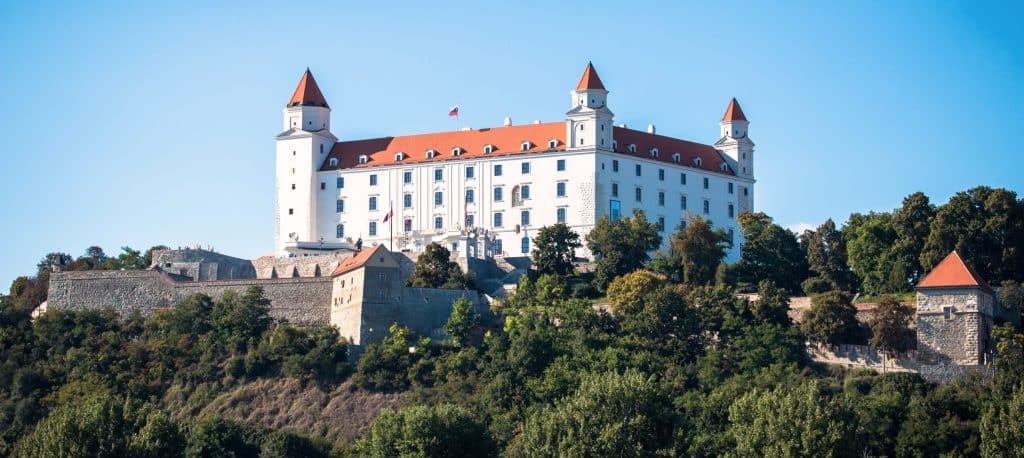
Bratislava Castle dominates the skyline from its hilltop perch, providing sweeping views over the Old Town and Danube. The 20-minute walk up rewards you with photo opportunities and historical exhibits that trace Slovakia’s journey through centuries of change. The Old Town unfolds below in a maze of pedestrian lanes radiating from Hlavné Námestie (Main Square), lined with pastel baroque buildings, cozy cafes, and quirky statues including the famous Čumil (the Watcher) peeking from a manhole.
Don’t miss the Blue Church (St. Elisabeth Church), an art nouveau masterpiece that looks like it escaped from a fairy tale with its powder-blue facade and rounded forms. For panoramic city views, ascend the UFO Observation Deck atop the Nový Most (New Bridge). At 95 meters, it offers 360-degree perspectives across three countries.
Practical details:
- Time needed: 2 days for comfortable exploration
- Walking distance: Most attractions within 10-20 minutes of each other
- Best value: Bratislava Card offers free public transport and museum discounts
- Entry fees: Castle approximately 14€, UFO Deck around 12-15€
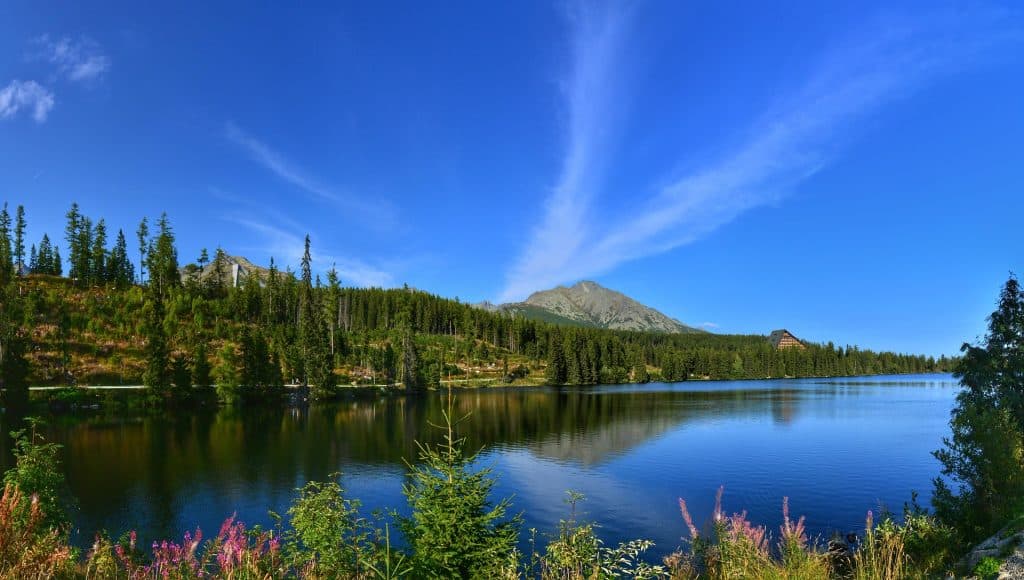
The High Tatras: Slovakia’s Alpine Crown
The High Tatras rise dramatically along Slovakia’s northern border with Poland, forming the highest peaks in the Carpathian mountain range. Despite being one of Europe’s smallest alpine ranges, these mountains pack extraordinary beauty into their compact expanse: jagged granite peaks, glacial lakes (called pleso in Slovak) reflecting mountain walls, cascading waterfalls, and hiking trails ranging from gentle lakeside walks to technical scrambles.
Štrbské Pleso serves as the most accessible base, with a scenic glacial lake surrounded by hiking trailheads. The easy loop around the lake suits all fitness levels, while more adventurous trails lead to Popradské Pleso (mountain lake) and the dramatic Veľké Hincovo Pleso, Slovakia’s largest and deepest mountain lake.
For challenging hikes, Kriváň Peak (2,494m) holds special significance as Slovakia’s symbolic mountain, while Rysy Peak (2,503m) marks the highest point accessible to individual hikers on the Slovak-Polish border. Technical routes involving chains and exposed sections reward experienced hikers with unforgettable alpine vistas.
The cable car from Tatranská Lomnica to Skalnaté Pleso and beyond to Lomnický Štít (2,634m) provides mountain access for non-hikers, with restaurants and observation points at various stations.
Practical details:
- Best season: Late May through October for hiking
- Trail opening: Mid-June (some routes open earlier at lower elevations)
- Trail closing: End of October
- Optimal weather: September offers most stable conditions
- Winter season: December through March for skiing
- Cable car cost: Around 25€ (short trips) to 60€+ (Lomnický štít return)
- Accommodation: Mountain huts 35-50€ per person (usually requires booking well in advance)
Slovak Paradise National Park: Adventure Playground
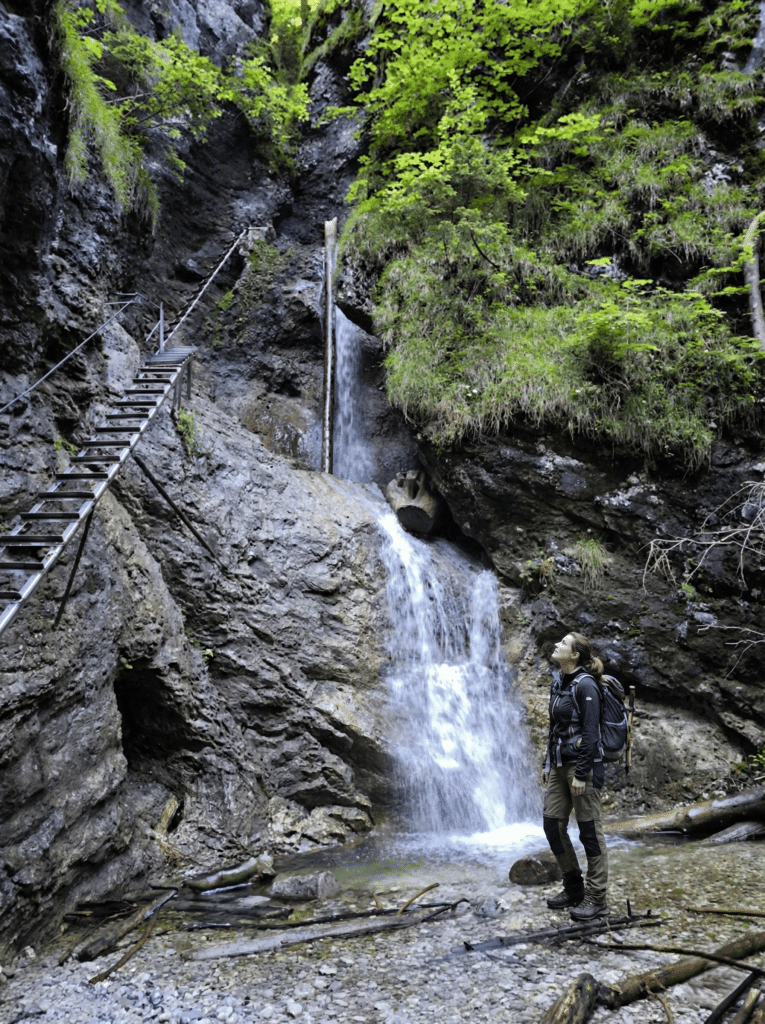
Slovak Paradise National Park delivers exactly what its name promises: a paradise for outdoor enthusiasts seeking dramatic gorges, cascading waterfalls, and unique hiking experiences. The park’s signature trails navigate waterfalls and rivers using metal ladders, chains, and walkways bolted to canyon walls.
The Suchá Belá Gorge ranks as the most popular route, threading through a narrow canyon with numerous waterfalls and requiring climbers to ascend ladders and traverse bridges over rushing water. Kláštorská Gorge and Prielom Hornádu offer similarly thrilling experiences combining natural beauty with adventure.
The nearby Dobšinská Ice Cave, a UNESCO World Heritage Site, preserves spectacular ice formations year-round, creating an otherworldly atmosphere.
Practical details:
- Trail type: Most gorges are one-way routes due to ladder systems
- Footwear: Proper hiking boots essential (trails get slippery)
- Time needed: 2-4 hours for most gorge routes
- Best timing: Early morning or September for fewer crowds
- Entry fees: Typically 5-8€ per person
- Safety note: Check weather before departure—flash floods possible
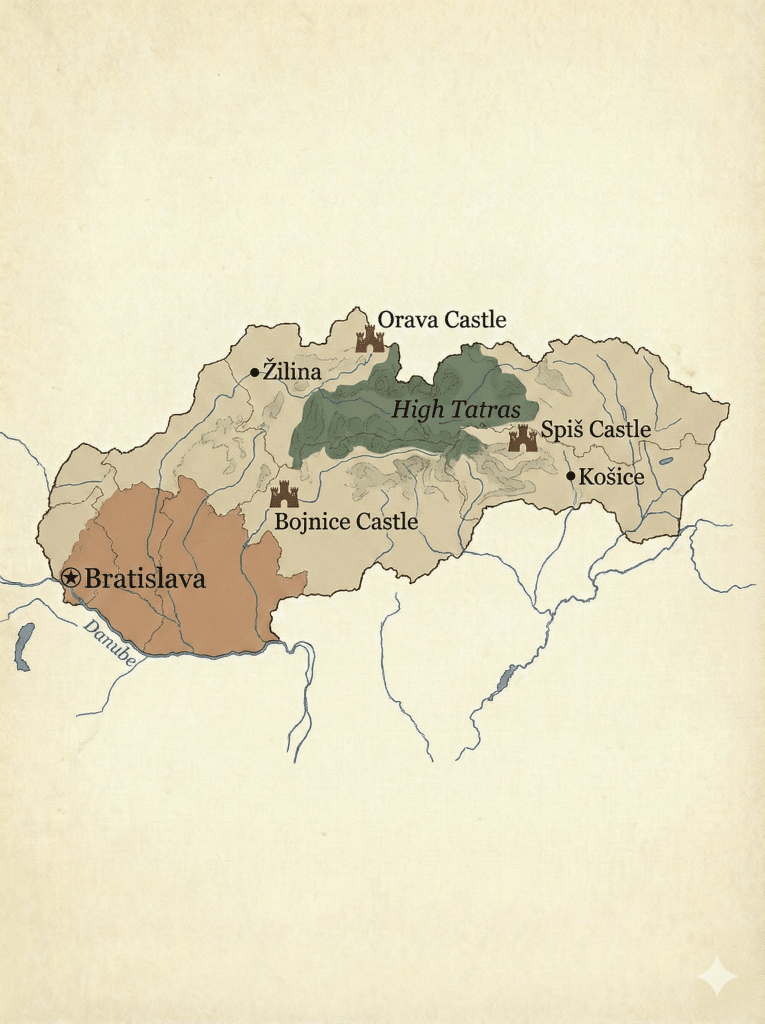
Slovakia’s Castle Triangle: Spiš, Bojnice & Orava
Slovakia boasts over 170 castles and manor houses, but three stand out for their historical significance, architectural beauty, and dramatic settings.
Spiš Castle sprawls across a hilltop in eastern Slovakia as one of Central Europe’s largest castle complexes. Dating from the 12th century, this UNESCO World Heritage Site served Hungarian kings during its golden age and now offers visitors the chance to wander among ruins with commanding valley views. An educational trail with eight stations helps interpret the castle’s history.
Bojnice Castle represents Slovakia’s fairytale castle—a 19th-century neo-Gothic renovation modeled after France’s Loire Valley châteaux. Surrounded by parkland and a moat, the castle features ornate interior rooms including the Golden Hall, Oriental Room, and caves carved from travertine rock. It’s one of Slovakia’s most visited and photographed castles.
Orava Castle commands attention from its vertical position above the Orava River. Built across multiple levels with 155 rooms connected by 754 stairs, exploring this medieval fortress feels like climbing through history. The castle gained cinematic fame as a filming location, adding to its atmospheric appeal.
Practical details:
- Time needed: 1-2 hours per castle for exploration
- Entry fees: Typically 10-16€ per adult
- Distances from Bratislava:
- Bojnice: Approximately 2+ hours by car
- Spiš: Near Košice (under 1 hour from city)
- Orava: Northern Slovakia, 3+ hours from Bratislava
- Best approach: 3-4 day Slovakia road trip for visiting all three

Medieval Towns Worth Your Time
Banská Štiavnica, a UNESCO World Heritage Site, showcases what happens when mining wealth meets Renaissance artistry. This historic mining town fills a mountainous landscape with elegant squares, castles, and churches. The urban center and natural surroundings achieve what UNESCO calls a “metallurgical union.” The Kalvária pilgrimage hill offers panoramic views over the town and surrounding volcanic hills.
Bardejov preserves one of Slovakia’s most beautiful medieval town squares, ringed by Gothic burgher houses and fortification walls. Despite UNESCO recognition, it remains surprisingly quiet, with nearby wooden churches reflecting the region’s Carpatho-Rusyn heritage.
Košice, Slovakia’s second-largest city, blends medieval charm with modern energy. The Gothic St. Elisabeth Cathedral anchors the historic center, surrounded by a vibrant cultural scene enhanced by the city’s 2013 European Capital of Culture designation.
Practical details:
- Banská Štiavnica:
- Time needed: Half-day to full day
- Entry fees: Most attractions 3-6€
- Bardejov:
- Time needed: 2-3 hours for town center
- Town square: Free to explore
- Košice:
- Time needed: 1-2 days for comprehensive exploration
- Cathedral entry: Typically 3-5€
![Medieval town square surrounded by colorful burgher houses with Gothic architecture]
Hidden Gems & Off-the-Beaten-Path
Čičmany village captivates visitors with its distinctive white geometric patterns painted on dark wooden houses. These intricate folk art designs were once believed to protect against evil spirits. Nestled in northern Slovakia’s mountains, this heritage village offers a living museum of traditional architecture.
Vlkolínec, a UNESCO site, preserves 45 traditional log houses in their original mountainous setting, depicting authentic central European village life across several centuries. The intact settlement remains a thriving community, offering rare glimpses into preserved rural heritage.
Poloniny National Park in Slovakia’s far eastern corner near Ukraine provides the country’s most remote wilderness: primeval beech forests, rare wildlife, and some of Europe’s darkest skies for stargazing. The UNESCO-listed ancient beech forests create an atmosphere of timeless solitude.
Practical details:
- Čičmany:
- Time needed: Half-day visit
- Best access: Personal vehicle recommended
- Vlkolínec:
- Time needed: 1-2 hours for village exploration
- Entry: Free to walk through village
- Poloniny:
- Time needed: Multi-day visit for serious hikers
- Access: Remote location, car essential
![Traditional wooden houses with white geometric patterns painted on dark walls in mountain village]
Slovak Culture & Living Traditions
Folk Heritage That Still Lives
Slovakia’s folk traditions aren’t museum pieces. They remain vibrant parts of community life, especially in smaller towns and villages. Each region maintains distinct folk costume styles (kroje), varying in color, embroidery, and materials. During festivals, weddings, and religious holidays, locals still don these traditional garments, accompanied by folklore ensembles performing dances passed down through generations.
Traditional festivals mark the seasons: Fašiangy carnival in February brings masked parades and folk costumes before Lent, while summer solstice celebrations feature bonfires (vatra) with music and dancing under open skies. Dožinky harvest festivals in autumn celebrate with wheat wreaths and communal meals.
Village handicraft markets showcase wooden spoons, woven textiles, painted ceramics, and sheep cheese—crafts made using techniques handed down across centuries. The painted wooden houses of Čičmany and carved shepherd’s axes of Detva exemplify this living folk art tradition.
Slovak Cuisine: Hearty Mountain Fare
Slovak food reflects the country’s agricultural heritage and mountain climate: filling, flavorful dishes built around staple ingredients.
Bryndzové halušky reigns as the undisputed national dish. Soft potato dumplings (similar to gnocchi) topped with bryndza (tangy sheep’s milk cheese) and finished with crispy bacon bits and drippings. The combination of smooth dumplings, salty cheese, and smoky bacon creates pure comfort food. An annual festival in Turecká celebrates this dish with eating contests.
Other traditional dishes worth trying include kapustnica (hearty sauerkraut soup, especially popular at Christmas), lokše (thin potato pancakes), and pirohy (dumplings filled with cheese or potatoes). Slovak meals often pair with local beer like Zlatý Bažant or a shot of borovička (juniper spirit) or slivovica (plum brandy).
For authentic experiences, seek out restaurants called salaš or koliba—rustic establishments decorated like shepherd’s cabins, often located near the mountains where bryndza is produced.
Practical details:
- Meal cost: Expect to pay around 9-15€ at local restaurants
- Bryndzové halušky: Typically costs 9-13€
- Beer: Around 2-3€ per glass
- Fine dining: Upscale dining typically ranges 45-80€ per person.
![Plate of bryndzové halušky topped with crispy bacon and melted sheep cheese]
Thermal Spa Culture
Slovakia’s 1,620+ mineral springs feed 26 thermal and health spas, making spa culture an integral part of national life. Slovaks don’t view thermal bathing as luxury. It’s a natural part of wellness and social life, a tradition stretching back centuries.
Piešťany ranks as Slovakia’s most famous spa town, specializing in musculoskeletal and rheumatic treatments using thermal mud and mineral water. Rajecké Teplice offers thermal pools and spa hotels in a picturesque setting, perfect for relaxation after mountain activities. Trenčianske Teplice combines beautiful architecture with thermal springs flowing at 38°C directly into spa pools.
Modern aquaparks blend thermal wellness with entertainment. Facilities like Aquapark Tatralandia and Thermalpark Dunajská Streda feature indoor and outdoor thermal pools, water slides, and relaxation zones. Unlike traditional spas, these offer family-friendly fun alongside thermal benefits.
Practical details:
- Day passes: Thermal parks typically 15-25€
- Premium parks (Bešeňová): €35-49 per day
- Spa treatments: Require advance booking
- Operating hours: Many facilities open year-round
- Winter experience: Magical to soak in 38°C water surrounded by snow
Wine Regions Worth Discovering
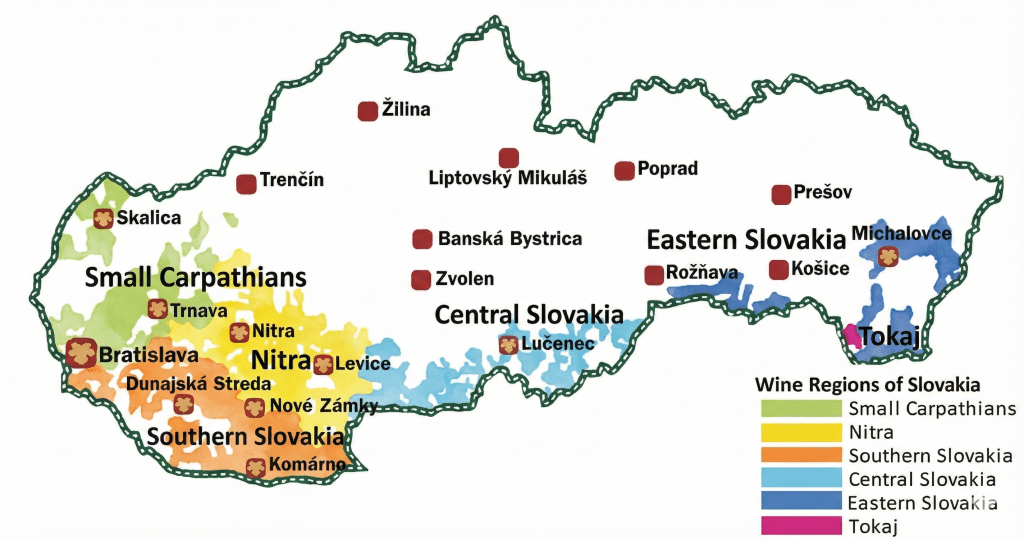
Slovakia’s six wine regions cluster along the southern borders, producing wines that remain Slovakia’s delicious secret. The warm climate particularly favors robust reds like Blaufränkisch and Cabernet Sauvignon, alongside aromatic whites including Grüner Veltliner and Riesling.
The Small Carpathians (Malokarpatská) region near Bratislava represents Slovakia’s most historic wine area, with vineyards planted on mountain slopes producing high-quality wines. The town of Modra hosts a viticulture school and numerous family wineries.
Tokaj wine region, shared with Hungary, specializes in sweet dessert wines made from Furmint and Lipovina grapes—wines that once graced European royal courts. The region holds protected designation of origin status, with Slovakia producing Tokaji in three villages along the Hungarian border.
South Slovakia benefits from the country’s warmest climate, creating ideal conditions for full-bodied reds while cooler nights preserve white wine freshness. Wine tourism infrastructure continues developing, with cellar tastings and harvest festivals growing increasingly popular.
Practical details:
- Tasting sessions: Typically 10-20€
- Best season: Harvest festivals September through October
- Winery visits: Advance booking recommended
Practical Information for Visiting Slovakia
Getting Around Slovakia (30-90 Minutes Between Major Cities)
By Train: Slovakia’s rail network efficiently connects major cities and many smaller towns. ZSSK (Slovak Railways) operates most services, with three train types: osobný (slow local trains), rýchlik (fast trains stopping at major towns), and InterCity (fastest service). The Bratislava-Košice route via Žilina serves as the main corridor.
I’ve personally found the InterCity trains reliable and comfortable for longer journeys—the Wi-Fi worked well enough for me to catch up on work during the trip from Bratislava to Košice, and the seats were spacious enough for a productive few hours.
RegioJet and Leo Express provide modern private rail services with mandatory seat reservations, offering comfortable alternatives to state railways. Tickets can be purchased at stations or online via company websites.
Rail connections link Slovakia with neighboring countries. Direct services run to Vienna, Budapest, Warsaw, and Prague. A Bratislava-Vienna journey takes under an hour, making day trips between capitals easily feasible.
By Bus: Bus networks reach destinations trains don’t serve, particularly in rural and mountain areas. FlixBus and regional carriers provide extensive coverage. Intercity buses often cost more than trains but offer more direct routes and schedules.
By Car: Renting a car opens access to remote villages, mountain regions, and multiple castles in a single day. All highways require an electronic vignette (toll pass) purchased online or at gas stations—mandatory for motorway travel.
Practical details:
- Daily car rental: Expect around 35-60€ depending on season
- Timetable resource: cp.atlas.sk for rail and bus schedules
- Best for rural exploration: Personal vehicle
- Best for city-to-city: Trains provide comfortable, scenic journeys
Budget Planning
Slovakia offers remarkable value compared to Western Europe, though costs have risen since euro adoption.
Daily budget estimates (per person):
- Budget travelers: Around 65-85€ (hostels, local restaurants, public transport, self-guided exploration)
- Mid-range travelers: Approximately 120-160€ (comfortable hotels, restaurant meals, some guided tours)
- Comfort travelers: From 175€+ (boutique hotels, fine dining, private experiences)
Accommodation: Bratislava hostels typically cost 25-35€ per bed, while 2-3 star hotels throughout Slovakia generally range 45-75€, 4-star €100-150 for doubles, usually including breakfast. Peak season adds 30-50% to these rates . High Tatras mountain huts charge around 25-30€ per bunk with breakfast. Airbnb apartments often provide better value than hotels, especially for couples.
Food & Drink: Local restaurants serve hearty meals for approximately 8-15€, while upscale dining rarely exceeds 25-30€ per person. Beer typically costs 2-3€, coffee around 2.00-3.00€. Supermarket shopping keeps costs low for self-caterers.
Attractions: Castle entry fees generally run 5-10€, museums 3-8€, thermal aquaparks 15-25€. Many churches and town squares remain free to explore.
Budget planning note: These ranges help you estimate costs, but prices fluctuate. For current pricing, always check official attraction and accommodation websites before booking.
Currency, Payments & Money
Slovakia adopted the euro (€) as its currency in 2009. ATMs are widely available in cities and towns—use them for the best exchange rates rather than exchange offices. Credit cards (especially Visa and Mastercard) are accepted in most restaurants, shops, and hotels, though cash remains necessary for small purchases, markets, and rural areas.
Tipping customs: In Slovakia, tipping is appreciated but not obligatory. Round up bills or leave 5-10% for good service in restaurants. Taxi drivers appreciate rounding up to the nearest euro. For exceptional service, 10-15% is generous but not expected.
Important: Notify your bank before traveling to Slovakia to prevent card blocks when foreign transactions appear.
Best Times to Visit Slovakia
Spring (April-May): Temperatures range 10-20°C with wildflowers blooming across meadows and forests. May Day celebrations bring traditional festivities. Hiking trails open by late April in lower elevations, though High Tatras routes may remain snow-covered until June.
Summer (June-August): Peak season brings 25-30°C+ temperatures, ideal for hiking, swimming in thermal pools, and outdoor festivals. July hosts major folk festivals like Detva’s celebration. Note that August can bring frequent afternoon storms.
Autumn (September-October): My personal favorite season. Comfortable 10-20°C temperatures, stunning fall foliage, harvest festivals, and mushroom foraging. September offers the most stable mountain weather, with crisp mornings that burn off into clear afternoons perfect for hiking. I’ve found the Tatras particularly magical when the larches turn golden against the grey granite peaks. Trails remain open through October.
Winter (November-March): December transforms towns into Christmas market wonderlands, particularly in Bratislava and Košice. January-March provides reliable snow for skiing in the Tatras. Thermal spas become especially inviting during cold months.
Practical considerations: Spring and autumn offer the best balance of pleasant weather, fewer crowds, and lower prices. Summer suits mountain activities but brings peak crowds. Winter appeals to skiing enthusiasts and Christmas market lovers.

Visa & Entry Requirements
Slovakia belongs to the Schengen Area, allowing visitors to enter once and travel freely across member states. Standard tourist visits permit 90 days within any 180-day period for most nationalities.
Important for 2025 and beyond: The European Travel Information and Authorization System (ETIAS) requires travelers from visa-exempt countries (including US, Canada, Australia, UK) to obtain electronic pre-authorization before entering Schengen countries. This online application costs approximately 7€, remains valid for three years, and must be completed before travel.
EU/EEA/Swiss citizens need only valid ID cards or passports for entry.
Always verify current entry requirements based on your citizenship well before travel—requirements can change.
Language & Communication
Slovak is the official language, part of the West Slavic language family closely related to Czech and Polish. While Slovak might challenge non-Slavic speakers, you’ll find communication manageable throughout your visit.
English proficiency in Slovakia surprises many visitors, particularly among younger generations and in urban areas. In Bratislava and major tourist destinations, English speakers work in hotels, restaurants, and attractions. University students often speak excellent English.
Outside cities and tourist zones, English becomes less common, especially among older Slovaks who may know German or Russian from previous eras. Learning basic Slovak phrases earns appreciation and opens doors:
- Dobrý deň (hello)
- Ďakujem (thank you)
- Prosím (please/you’re welcome)
Czech remains widely understood due to the shared Czechoslovak history, with mutual intelligibility between the languages. Many Slovaks consume Czech media and understand it perfectly.
Practical tip: Google Translate’s offline Slovak download helps in situations where English isn’t spoken. Most younger Slovaks appreciate when visitors attempt Slovak, even imperfectly.
Safety & Security
Slovakia maintains safety levels comparable to other Central European countries—generally very safe for travelers with standard precautions.
In tourist areas: Watch for pickpockets in crowded locations like Bratislava’s Old Town, bus and train stations, and public transport. Keep valuables secure and maintain awareness of surroundings.
Driving precautions: Park in secured lots when possible and avoid leaving valuables visible in vehicles. Foreign-registered vehicles sometimes attract theft attempts. Only stop in well-lit public areas if approached for help.
Outdoor activities: Mountain weather in the Tatras changes rapidly. Obtain trail information before hiking and carry proper equipment. Monitor avalanche warnings in winter. Tick-borne diseases exist in forests—use insect repellent and perform tick checks after outdoor activities.
For solo female travelers: Slovakia is generally safe for women traveling alone. Standard precautions apply: avoid poorly lit areas at night, keep accommodation details private, and trust your instincts. Locals are typically helpful and respectful. The country ranks well on safety indexes for solo female travel in Central Europe.
Emergency services: Dial 112 for police, medical emergencies, and fire services throughout Slovakia.
Slovakia’s overall crime rate remains low, violent crime against tourists is rare, and the country welcomes visitors warmly.
Slovakia’s Historical Context
Understanding Slovakia’s history enriches your experience of its castles, towns, and cultural resilience.
For centuries, the territory of modern Slovakia formed part of the Kingdom of Hungary, with Hungarian kings crowned in Bratislava’s St. Martin’s Cathedral when Bratislava served as Hungary’s capital during Ottoman occupation. The Austro-Hungarian Empire ruled until World War I’s conclusion.
In 1918, Slovaks joined Czechs to form Czechoslovakia, bringing development in education, culture, and infrastructure. During World War II, Slovakia became a Nazi puppet state led by Jozef Tiso, participating in the Holocaust by deporting 70,000 Jewish citizens to concentration camps. The Slovak National Uprising in August 1944 saw anti-fascist forces resist German occupation, though it was ultimately suppressed.
Post-war, Communist rule began in 1948, lasting 41 years under Soviet influence. The 1968 Prague Spring liberalization attempt was crushed by Warsaw Pact invasion. The Velvet Revolution of November 1989 peacefully ended Communist rule.
The Velvet Divorce of January 1, 1993 peacefully split Czechoslovakia into the independent Czech Republic and Slovak Republic. Slovakia joined NATO in 2004 and the European Union the same year, adopting the euro in 2009.
This complex history—empires, fascism, communism, and finally independence and democratic prosperity—shapes the resilient, proud character you’ll encounter throughout Slovakia today.
UNESCO World Heritage Sites in Slovakia
Slovakia’s eight UNESCO World Heritage Sites showcase the country’s cultural and natural significance:
Cultural Sites:
- Historic Town of Banská Štiavnica and the Technical Monuments in its Vicinity (1993)
- Vlkolínec folk village (1993)
- Levoča, Spišský Hrad (Spiš Castle) and the Associated Cultural Monuments (1993, extended 2009)
- Bardejov Town Conservation Reserve (2000)
- Wooden Churches of the Slovak Carpathian Mountain Area (2008)—eight historic wooden churches from the 15th-18th centuries
- Frontiers of the Roman Empire – The Danube Limes (Western Segment) (2021)—includes Gerulata and Kelemantia Roman military camps
Natural Sites: 7. Caves of Aggtelek Karst and Slovak Karst (1995, shared with Hungary)—cave systems featuring unique glacial and tropical formation combinations 8. Ancient and Primeval Beech Forests of the Carpathians and Other Regions of Europe (2007, shared with 17 countries)—primeval beech forests in Poloniny and Vihorlat
These sites provide excellent anchors for itinerary planning, each representing Slovakia’s outstanding universal value.
Sample Itineraries
Slovakia Highlights (5-7 Days)
- Day 1-2: Bratislava (Old Town, castle, day trip to Devín Castle)
- Day 3-5: High Tatras (Hiking, mountain lakes, thermal pools)
- Day 6: Spiš Castle & Levoča (Medieval UNESCO sites)
- Day 7: Optional: Slovak Paradise National Park or Košice
Castles & Culture Route (7-10 Days)
- Day 1-2: Bratislava
- Day 3: Bojnice Castle & spa town
- Day 4: Orava Castle & northern villages
- Day 5-7: High Tatras
- Day 8-9: Spiš Castle, Levoča & Bardejov
- Day 10: Košice
Nature & Wellness Focus (7 Days)
- Day 1-3: High Tatras hiking
- Day 4-5: Slovak Paradise National Park
- Day 6-7: Thermal spa town (Rajecké Teplice or Piešťany)
Cross-Border European Journey
Slovakia combines beautifully with neighboring countries. Vienna-Bratislava-Budapest, or Krakow-High Tatras-Košice-Budapest circuits work particularly well given short distances. Learn more about combining destinations in Central and Eastern Europe for efficient multi-country itineraries.
Frequently Asked Questions
How many days do I need in Slovakia?
For highlights including Bratislava and the High Tatras, plan 5-7 days. Add 2-3 days for castles and medieval towns, or a full 10-14 days to explore comprehensively. Slovakia rewards slower travel that allows time for hiking, thermal baths, and spontaneous discoveries.
Is Slovakia expensive to visit?
Slovakia offers exceptional value, typically 30-40% less expensive than Austria. Budget travelers can manage on around 65-85€ daily, while mid-range travelers should plan for 120-160€. Accommodation, food, and attractions cost significantly less than Western European destinations.
What’s the best base for exploring Slovakia?
Bratislava works well for urban exploration and day trips to nearby castles. For mountains and hiking, base yourself in the High Tatras region. Consider splitting time between Bratislava (2-3 nights) and Tatras (3-4 nights) for balanced experiences.
Can I visit Slovakia without speaking Slovak?
Yes, comfortably. English is widely spoken in Bratislava and tourist areas, especially among younger generations. Outside cities, communication becomes more challenging, but basic phrases and translation apps bridge gaps. German and Russian are also understood by older Slovaks.
Is it easy to combine Slovakia with other countries?
Very easy. Slovakia borders five countries and lies within 2-3 hours of Vienna, Budapest, and Krakow. Bratislava-Vienna takes under an hour by train. Many travelers successfully combine Slovakia with Austria, Czech Republic, Hungary, or Poland in single trips.
What should I pack for Slovakia?
Layer clothing for variable weather. Sturdy hiking boots for mountains, comfortable walking shoes for cobblestone towns. Rain jacket essential year-round. Summer: light layers, sun protection. Winter: warm coat, thermal layers. Don’t forget swimwear for thermal baths.
Are Slovakia’s hiking trails well-marked?
Yes, Slovakia uses a color-coded trail marking system (red, blue, green, yellow) that’s consistent throughout the country. Trail signs indicate distances and times. High Tatras require more caution due to alpine conditions, but lower elevation trails are straightforward to follow.
When is the best time for Slovak Christmas markets?
Christmas markets typically run from mid-November through December 23rd. Bratislava’s market is the largest and most atmospheric. First two weeks of December offer festive atmosphere with smaller crowds than the week before Christmas.
Is Slovakia safe for solo female travelers?
Yes, Slovakia is generally safe for women traveling alone. The country ranks well on safety indexes for solo female travel in Central Europe. Standard precautions apply: avoid poorly lit areas at night, keep accommodation details private, and trust your instincts. Locals are typically helpful and respectful. Women traveling solo will find Slovakia welcoming, with low crime rates and a culture that respects personal space.
What are the tipping customs in Slovakia?
Tipping in Slovakia is appreciated but not obligatory like in North America. In restaurants, round up bills or leave 5-10% for good service. Taxi drivers appreciate rounding up to the nearest euro. For exceptional service, 10-15% is generous but not expected. In cafes, leaving small change is common. Hotel porters appreciate 1-2€ per bag. Unlike some countries, service charges aren’t automatically added to bills.
Your Journey Through Slovakia Awaits
Travel through Slovakia offers more than dramatic mountains and medieval castles. It’s an immersion into authentic Central European culture where folk traditions remain living practices, where thermal waters still heal as they have for centuries, and where locals welcome travelers with genuine warmth rather than tourist-industry formality.
Whether you’re drawn to alpine adventures in the High Tatras, exploring fairy-tale castles perched above river valleys, soaking in therapeutic thermal springs, or wandering UNESCO-listed medieval squares, Slovakia rewards curiosity with depth and authenticity. The country hasn’t been homogenized by mass tourism. It remains genuinely itself, offering travelers that increasingly rare commodity: discovery.
Slovakia continues gaining recognition as a must-visit destination, with travel experts highlighting its combination of natural beauty, cultural richness, and exceptional value. Visit while Slovakia still feels like a treasured find, before it transforms into the next overcrowded European hotspot. The mountains, castles, and thermal waters will wait. The feeling of authentic discovery won’t last forever.
Ready to start planning your Slovak adventure? Explore more Central and Eastern European travel guides and practical travel planning resources on Pieterontour.com, where every destination is crafted from years of experience guiding travelers through Europe’s most authentic corners.
Related Reading: