
Poznań Old Market Square: A Guide to the Goats, Ghosts, and Croissants of Poland’s Birthplace
This post is for culturally curious travelers exploring Poznań for the first time—here’s your guide to the legends, architecture, and unexpected delights of one of Poland’s most historic squares.
My first visit to any Polish city outside Warsaw was Poznań, and I chose it deliberately. As someone fascinated by the deeper currents of European history, the birthplace of Poland felt like the right place to begin. My first stop was the oldest cathedral in Poland, built in the 10th century and tucked away on Ostrów Tumski island, where two branches of the Warta River meet the Cybina. Standing there, you can almost feel the weight of a thousand years beneath your feet.
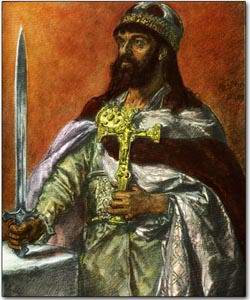
Poznań itself has been settled since the 8th century. By the 10th century, the Polans—the dominant tribe in what would become Poland—had made this their capital under Duke Mieszko, father of the Piast dynasty. On April 14, 966, Duke Mieszko converted to Christianity and was baptized. Much of his court followed, in what became known as the Baptism of Poland. Historians mark this moment as the beginning of both the Christianization of Poland and the formation of a Polish state.
But the soul of Poznań, for most visitors, lives in the Old Market Square.
A quick note on planning: Prices and opening hours are mentioned to help you budget and plan, but they can change often. I always recommend checking the official websites (which I’ll link to) for the most current information before your visit.
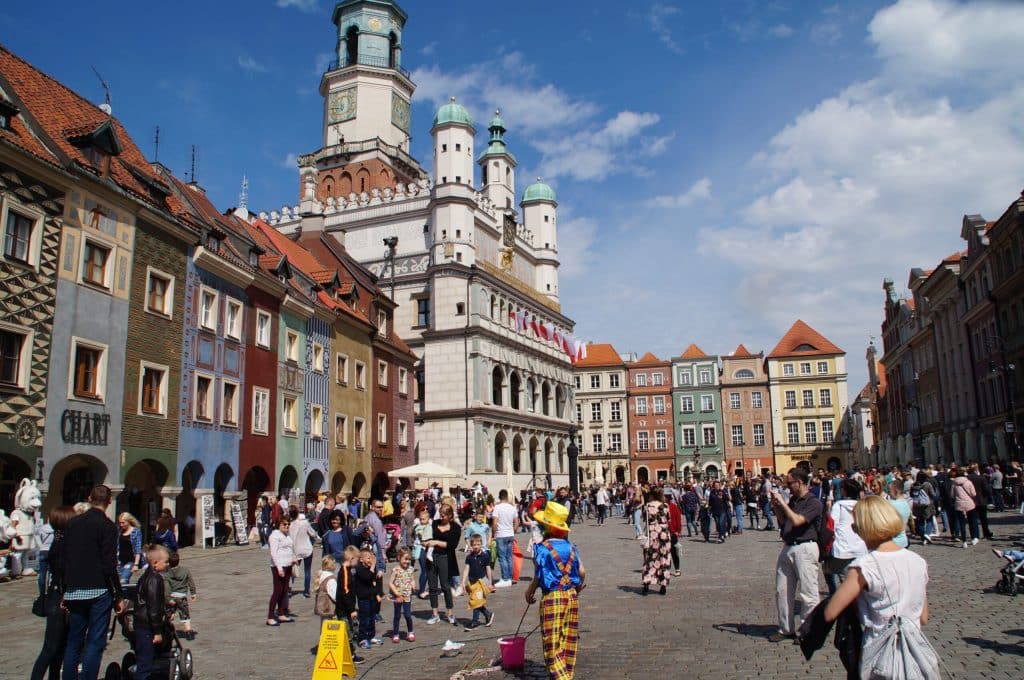
Poznań’s Stary Rynek (Old Market Square)
Marking the center of Poznań’s Old Town is the Stary Rynek, or Old Market Square in Polish. This stunning square—with its beautifully reconstructed Renaissance Town Hall and rows of pastel merchant houses—has been called the glory of Poznań. And after walking through it myself, I’d say that’s no exaggeration.
The square stretches roughly 500 feet (150 meters) on each side, defined by medieval and Renaissance buildings that frame the open space. In the center stand the Town Hall, historic merchant houses, and several municipal structures from the Middle Ages. As you wander, you’ll come across a pillory, an old guardhouse, a fountain, and a weighing house—all remnants of a vibrant commercial past.
Important Note for 2025 Visitors: The Old Market Square underwent a major, years-long reconstruction that was completed in mid-2024. The square you see today is beautifully restored, with refreshed paving, improved accessibility, and careful attention to historical authenticity. If you visited before 2024, you’ll notice the dramatic transformation.
For the most current information on events and accessibility, check the official Poznań tourism website.
On this page
The Town Hall and Its Renaissance Glory
The Town Hall you see today is worlds away from the modest one-story building first mentioned in Latin texts in 1310 as Domus Consulum. Over the centuries, it was extended, towers were added, and it grew into a symbol of civic pride.
Then, in 1536, a devastating fire left the building irreparably damaged. The city council turned to Giovanni Battista di Quadro to rebuild it entirely. Di Quadro extended the structure, added stories, and designed the three-story loggia. He also created the magnificent Great Hall, which served as the city court.
But the detail tourists love most? The clock and the mechanical goats, installed in 1551.
The tower and goat mechanism were destroyed in 1675 when lightning struck and started a fire. Damaged again in 1725 by a hurricane, the Town Hall needed serious work. In 1781, Bonawentura Solari began a major renovation, redesigning the tower into the form we recognize today. But it wasn’t until 1913 that the goats finally returned.
What we see now is the restored appearance of the Town Hall as it looked around 1784, thanks to a loving 2002 renovation that corrected damage from the final months of World War II—and the meticulous 2024 square reconstruction that brought everything back to life.

The Façade: History Written in Stone
The loggia is adorned with frescoes offering warnings to judges in Latin. Medallions depict famous figures from ancient history: Spartacus, Homer, Virgil, Archimedes, and many others.
On the ground floor, in the arcades, female figures represent virtues—Patience, Prudence, Charity, Justice, Faith, Hope, Courage, and Temperance. Cleopatra appears with snakes coiled around her arms; Lucretia with a spear to her chest.
Above the loggia, you’ll see rulers of the Jagiellonian Dynasty, under whom Poznań flourished as an important stop on the trade routes between Poland and Lithuania.
For more details on visiting the Town Hall interior (which houses a branch of the National Museum), see the National Museum in Poznań website.
The Legend of the Poznań Goats (Billy Goats at Noon)
At 12 noon sharp, the clock strikes and the hejnał—a traditional Polish bugle call—echoes across the square. Then, the mechanical goats emerge from the tower and butt heads twelve times, to the delight of waiting tourists.
Of course, there are legends to explain the goats.

The first tells of a cook who burned a roast deer while preparing a banquet for the city’s rulers. Panicking, he ran to a nearby field and stole two goats to cook instead. But the goats escaped, bolted up the tower, and began fighting on top. The spectacle drew such a crowd—and amused the rulers so much—that they pardoned the cook and had mechanical goats installed in the tower.
A second tale speaks of Bolko, the trumpeter’s son, who once nursed a crow with a broken wing back to health. One night, after the crow had recovered, a gnome wearing a cape and crown appeared to Bolko and thanked him for his kindness. The gnome gave him a trumpet, telling him to blow a call when he needed aid. Years later, when Bolko had become the town trumpeter, an army approached Poznań. Remembering his gift, Bolko ran to the tower and played the hejnał. Before the call finished, a dark cloud of crows descended on the army and forced it into retreat.
Legend or not, the goats are unmissable. Arrive a few minutes before noon and claim your spot.
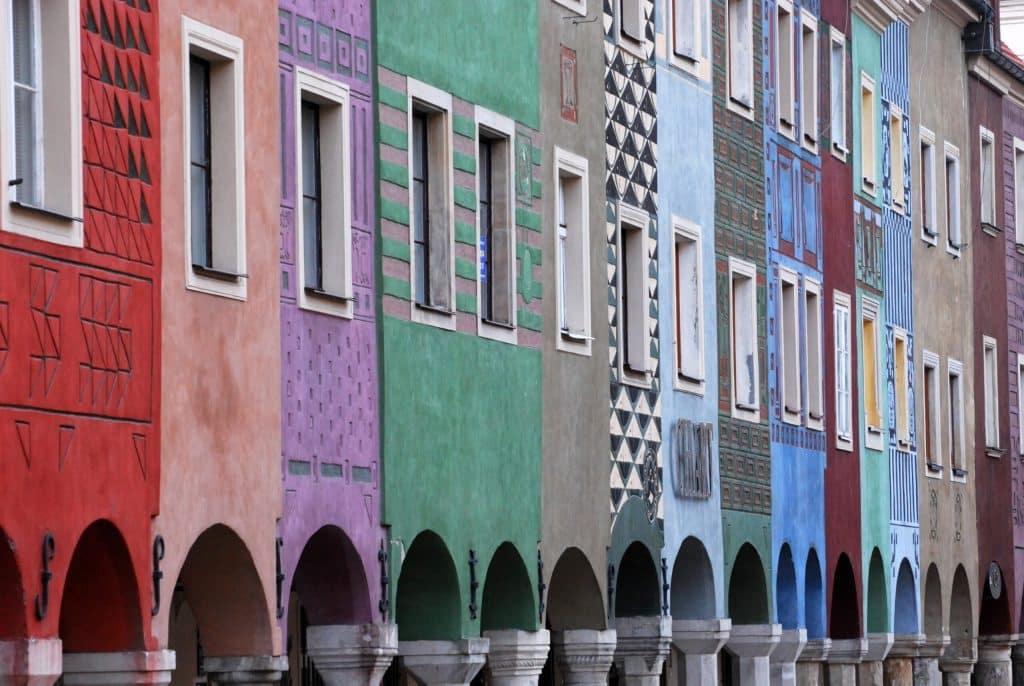
The Colorful Merchant Houses
In the center of the square, beside the Town Hall, stands a row of brightly painted buildings known as the Merchant Houses. Built around the end of the 15th century, they replaced earlier market stalls that sold candles, torches, and salted herring.
The row gets its name from tradition—and from the herring-and-three-palms coat of arms of the merchants’ guild, visible on number 17. The last house in the row is known as the House of Scribes, where the city scribe once lived and worked.
It’s only fitting that the Merchant Houses still serve their original purpose. Today, the arcades are filled with artists, restaurants, and shops—all eager to help willing tourists contribute to the local economy. If you’re interested in learning more about navigating European market culture, check out The Art of European Market Shopping: A Guide to Cultural Immersion.

Parish Church of St. Stanislaus (Poznań Fara)
Not far from the Old Market Square stands a Roman Catholic basilica simply known as Fara. Second in importance only to Poznań Cathedral, Fara is considered the finest example of Baroque architecture in Poland.
Built between 1651 and 1701, the church houses a stunning altar designed by Pompeo Ferrari around 1850, as well as an organ built by Frederick Ladegast in 1876.
But be warned: the organ is protected by a local celebrity—the ghost of the lady who donated a large sum for its construction. She’s often seen in a difficult-to-access alcove on the balcony beside the organ.
If you’re planning to visit Fara or any of Poland’s active churches, it’s worth reading up on proper etiquette. See Religious Customs and Church Etiquette: A Traveler’s Guide to Europe’s Sacred Spaces for guidance.

St. Martin’s Croissant: A Deliciously Protected Tradition
Poznań has one very tasty tradition: the St. Martin’s Croissant (rogal świętomarciński). Traditionally available on November 11th, you can now find them year-round in official pastry shops across the city—including at the Rogalowe Muzeum (Croissant Museum), a charming stop right near the square.
The story I was told traces back to 1891, when the priest of St. Martin’s parish asked his congregation to do something for the poor, as the patron saint would have done. Józef Mezler, a baker in attendance, convinced his employer to revive an old tradition.
On November 11th, they produced a sweet pastry filled with poppy seeds, vanilla, figs, dates, raisins, and cream, shaped like a horseshoe. Residents who could afford to pay did so; the poor received them for free.
Although the original tradition dates back to pre-Christian times, the Polish church adopted it and linked it to St. Martin. The tradition continues to this day, and in 2008, the St. Martin’s Croissant was granted Protected Geographical Indication (PGI) status by the European Union—meaning only croissants made in Poznań according to the traditional recipe can carry the name.
I had one during my visit, and it’s heavier than it looks … rich, sweet, and deeply satisfying. The kind of pastry that makes you understand why a city would protect it by law.
For more information and to plan a visit, see the Croissant Museum of Poznań.
Practical Tips for Visiting Poznań Old Market Square
- Getting There: The square is a 10-15 minute walk from Poznań Główny (main train station). Follow signs for Stary Rynek.
- Best Time to Visit: Arrive before noon to see the goats. Early mornings and weekday afternoons are quieter.
- Budget: Expect to spend around 15-20 PLN for a St. Martin’s Croissant. Restaurants around the square range from budget-friendly to upscale—budget around 50-80 PLN for a casual meal.
- Accessibility: The newly renovated square (2024) has improved accessibility, including smoother paving and ramps.
For the most current opening hours and event schedules, visit the official Poznań city tourism site.
Frequently Asked Questions
What time do the goats appear in Poznań?
The mechanical goats emerge from the Town Hall tower at exactly 12 noon every day. They butt heads twelve times while the hejnał (bugle call) plays. Arrive a few minutes early to get a good viewing spot.
Is the Poznań Old Market Square renovation finished?
Yes. The major reconstruction of the square was completed in mid-2024. The square is now beautifully restored, with improved paving, accessibility, and historical authenticity. It’s the best time to visit in years.
What is a St. Martin’s Croissant and where can I buy one?
A St. Martin’s Croissant (rogal świętomarciński) is a traditional sweet pastry filled with poppy seeds, vanilla, figs, dates, raisins, and cream. It’s shaped like a horseshoe and has Protected Geographical Indication (PGI) status. You can buy them year-round at official pastry shops in Poznań, including the Croissant Museum (Rogalowe Muzeum).
Is Poznań worth visiting for a day trip?
Absolutely. Poznań is compact and walkable, with the Old Market Square, Cathedral Island, and major museums all accessible within a day. If you have time, an overnight stay lets you explore at a slower pace and enjoy the evening atmosphere.
Can I go inside the Town Hall?
Yes. The Town Hall houses a branch of the National Museum in Poznań, with exhibits on the city’s history. Check the National Museum website for current opening hours and ticket prices.
Are there guided tours of the Old Market Square?
Yes. Both walking tours and private guides are available. Check the official Poznań tourism site or book through your hotel concierge.
What else should I see in Poznań?
Don’t miss Cathedral Island (Ostrów Tumski), where Poland’s first cathedral still stands. The Imperial Castle and the Museum of the Uprising of 1956 are also worth your time.
Is the square family-friendly?
Yes. Kids love the goats, and the square has plenty of space to run around. The Croissant Museum offers hands-on experiences that children enjoy.
Why Poznań Belongs on Your Poland Itinerary
Poznań is often overlooked in favor of Kraków or Warsaw, but that’s a mistake. This is where Poland began—not just as a political entity, but as a cultural identity. Walking through the Old Market Square, watching the goats butt heads at noon, tasting a croissant protected by European law… these are the moments that make travel feel like more than sightseeing.
If you’re exploring Central and Eastern Europe, Poznań deserves a spot on your itinerary. It’s history you can touch, legends you can laugh at, and pastries you won’t forget.
For more guides to Poland and the region, explore Central & Eastern Europe Travel: The Ultimate Guide for Culturally Curious Travelers.