
This guide is for travelers who want to experience European dining culture authentically—understanding when locals eat, how meals unfold, and the unwritten rules that help you blend in rather than stand out as a tourist.
Understanding European Dining Hours is crucial for travelers who want to immerse themselves in local culture.
Quick Answer: When Do Europeans Eat Dinner?
Here’s a Guide to European Dining Hours
Northern Europe (Scandinavia, Germany, Netherlands): 4:00–7:30 PM Central Europe (UK, Ireland, Poland, Czech Republic): 7:00–8:00 PM
France: 8:00–8:30 PM
Italy: 8:00–9:00 PM
Greece: 9:00–10:00 PM
Spain: 9:30–10:30 PM (restaurants often closed 4:00–8:00 PM)
Key Insight: The further south you travel in Europe, the later dinner begins. In Spain, arriving at 7:00 PM means dining in an empty restaurant—or finding the kitchen still closed.
A quick note on planning: Prices and opening hours are mentioned to help you budget and plan, but they can change often. I always recommend checking the official websites (which I’ll link to) for the most current information before your visit.
Familiarizing yourself with European Dining Hours can significantly enhance your experience.
One of the most authentic ways to experience European culture is through its dining traditions. After two decades of leading tours across Europe, I’ve learned that understanding local meal times and table customs transforms your travel experience from tourist to temporary local. Similar to the principles I share in my guide to The Art of Cultural Immersion: How to Travel Like a Local in Europe, adapting your schedule to match local rhythms is the first step to genuinely blending in. These aren’t just arbitrary rules—they’re windows into how Europeans structure their days, value their meals, and connect with each other.
On this page
When Europeans Actually Eat Dinner
Understanding European Dining Hours is essential for adapting to the local culture. Dinner times can surprise American travelers.
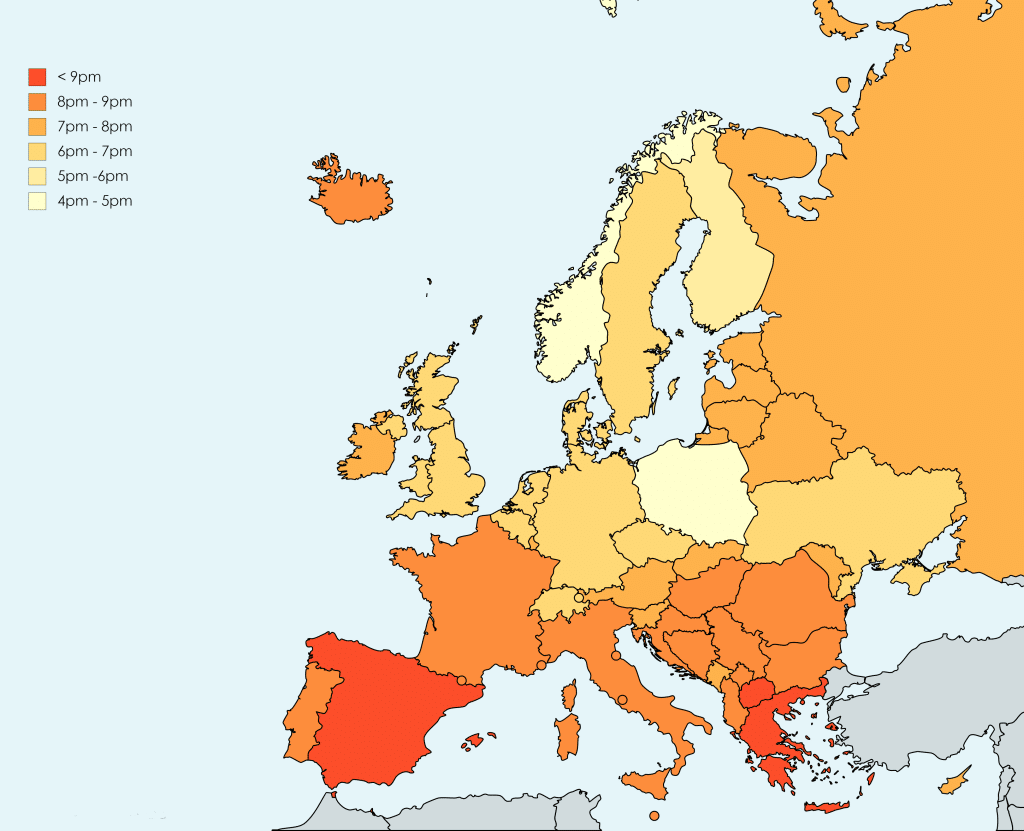
Northern Europe rises early and eats early. In Scandinavia, Germany, and the Netherlands, dinner happens between 4:00 and 7:30 PM. Norwegians and Finns often sit down for their evening meal as early as 4:00 or 5:00 PM—what many Americans would consider late afternoon. Germans, Swiss, and Austrians typically dine between 6:00 and 7:30 PM.
Central Europe follows a more familiar rhythm. In the UK, Ireland, Belgium, Poland, and the Czech Republic, dinner happens around 7:00 to 8:00 PM—closer to what feels natural for most Americans.
Southern and Mediterranean Europe follows unique European Dining Hours, with meals served much later.
Spain holds the European record for the latest dinner times: 9:30 to 10:30 PM is completely normal. This late schedule connects to both the siesta tradition and a quirk of history—Spain has been in the “wrong” time zone since Franco aligned the country with Germany during World War II. Here’s what catches travelers off guard: many Spanish restaurant kitchens close completely between 4:00 and 8:00 PM. If you’re hungry at 6:00 PM, you’ll struggle to find anything beyond tourist-trap restaurants near major attractions.
Understanding the Siesta and How It Shapes Dining Hours in Europe
The siesta helps explain why Mediterranean countries eat so late. In Spain, the traditional midday break runs from approximately 2:00 to 5:00 PM. During these hours, especially in smaller towns, shops and restaurants close completely. Streets become remarkably quiet as locals rest.
The Spanish workday typically splits into two parts: 9:00 AM to 2:00 PM, then a long lunch break, followed by work from around 4:00 or 5:00 PM until 8:00 PM. This explains why dinner happens so late—and why lunch is actually the main meal of the day in Spain, typically consisting of multiple courses eaten between 2:00 and 4:00 PM.
While the siesta tradition is fading in major cities like Madrid and Barcelona, where modern work schedules prevail, it remains common in smaller towns and rural areas. For travelers, this means planning accordingly: don’t expect to find restaurants open mid-afternoon in authentic Spanish neighborhoods.
The Italian Aperitivo: A Pre-Dinner Ritual Worth Understanding
Before that late Italian dinner comes aperitivo—a social ritual I’ve come to love. It typically takes place between 5:00 and 8:00 PM. The word comes from the Latin aperire, meaning “to open,” as these bitter, aromatic drinks are meant to stimulate your appetite before dinner.
Traditional aperitivo drinks include the Aperol Spritz (Aperol, Prosecco, and soda water), the Negroni (gin, Campari, and sweet vermouth), and the Campari Spritz. What makes aperitivo special is that drinks come with complimentary snacks called stuzzichini—olives, cheese, crackers, cured meats, and bread. In some establishments, the spread is substantial enough to constitute a light meal.
This tradition started in Turin in 1786 and has become an essential part of Italian social life. Unlike American happy hour, aperitivo emphasizes leisurely conversation and connection rather than rapid drinking.
Table Manners That Matter: A Country-by-Country Guide

France: The Art of Savoir-Vivre
French dining etiquette reflects centuries of refined culture—so much so that the gastronomic meal of the French is recognized by UNESCO as Intangible Cultural Heritage.
Wait for someone to say “Bon appétit” before eating—the host signals when to begin, and everyone responds in kind.
Keep your hands visible above the table, never in your lap. This tradition dates to medieval times when visible hands showed you weren’t concealing a weapon.
Here’s something that surprises many visitors: bread goes directly on the tablecloth, not on a plate (unless you’re at a Michelin-starred restaurant). Never butter the whole piece—tear off small portions and eat them with the meal, using bread to sop up sauces.
Never ask for substitutions. French chefs expect diners to trust their expertise, and requesting changes is considered an insult to their artistry.
One quirk I always mention: fold your salad lettuce with your fork, don’t cut it. Cutting lettuce implies criticism of how the salad was prepared.
Arrive fashionably late for dinner parties—5 to 10 minutes is expected, sometimes even 20 to 45 minutes for casual gatherings. And finish your plate. Leaving food suggests you didn’t enjoy the meal.
Understanding the Menu: One of the best-kept secrets I share with travelers is the Menu du Jour or Formule—the daily set menu. I remember sitting in a small bistro in Lyon, watching tourists order à la carte and pay €45 for their meal while I enjoyed a three-course Menu du Jour with wine for €18. The set menu typically includes an appetizer, main course, and dessert, all chosen by the chef based on what’s fresh that day. It’s not a “cheaper” option—it’s how locals eat, and it’s often the best food on the menu. Look for the chalkboard specials or ask your server about the plat du jour.
Italy: Galateo and the Sacred Menu
Italian dining follows its own code called galateo. Reserve your table in advance, even for casual trattorias, especially in tourist areas and during summer months. TheFork is widely used across Italy and makes booking simple.
Never order cappuccino after 11:00 AM or with a meal. Italians believe milk-based coffee after noon disrupts digestion. After meals, order espresso only. For more on this fascinating tradition, see my guide to European Café Culture: Understanding Coffee Like a Local.
Don’t ask for extra cheese, especially on seafood—this is considered a serious mistake.
Use your fork to twirl pasta, not a spoon. Let the curve of the plate help you manage long strands.
Understanding the Italian menu structure helps you order appropriately: antipasto (starter), primo (pasta or rice), secondo (meat or fish) with contorno (side dish), dolce (dessert), then coffee and digestivo. You don’t need to order everything, but don’t mix courses inappropriately—salad accompanies secondo, not primo.
Fare la scarpetta (mopping up sauce with bread) is acceptable in trattorias but may be too casual for fine dining.
A Common Pizza Mistake: If you ask for “peperoni” pizza in Italy, you’ll get bell peppers, not spicy salami. The spicy salami Americans call pepperoni is salame piccante or order a Diavola pizza. I learned this the hard way in Rome when my “pepperoni” pizza arrived covered in colorful bell peppers—delicious, but not what I expected.
Spain: Tapas Culture and Late-Night Dining
Spanish dining is uniquely social. Tapas are meant for sharing and bar-hopping. The tradition of tapear—moving from bar to bar sampling small plates—is central to Spanish social culture.
Understanding Spanish Portions: Know your sizes to order appropriately. Pintxos are small snacks, often on toothpicks, especially common in the Basque region. Tapas are small plates meant for individual enjoyment. Raciones are larger shareable plates for groups of two or more. When you’re exploring a new neighborhood, order a mix—a few tapas to start, then share raciones as you settle in.
Lunch is the main meal, running from 2:00 to 4:00 PM with multiple courses. The Menú del Día—the daily set menu offered at lunch—is one of Spain’s best values. For typically €12 to €18, you’ll get a starter, main course, dessert, bread, and often wine or coffee included. It’s how office workers and locals eat, and the quality is usually excellent. While dinner is typically lighter—often just tapas.
Don’t rush. Meals can last two to three hours with drinks and conversation flowing freely.
Germany: Precision and Practicality
German Esskultur emphasizes respect and order. Wait for “Guten Appetit” before eating—starting before everyone is served is considered rude.
Make eye contact during toasts (Prost! for beer, Zum Wohl! for wine). Germans joke that failing to do so brings “seven years of bad sex.”
Don’t order tap water in restaurants. While German tap water (Leitungswasser) is perfectly safe and drinkable, ordering it in restaurants is seen as stingy or impolite. Unlike in France where tap water is freely provided, Germanic dining culture expects you to order bottled still or sparkling water, or beer. Some restaurants may refuse to serve tap water entirely.
Cut with a fork when possible, not a knife. Using a knife for items like potatoes that can be cut with a fork is considered unnecessary.
Expect to share tables at busy restaurants (Stammtisch tables are often reserved for regulars).
Scandinavia: Punctuality and Skål
Nordic countries value precision. Arrive exactly on time—lateness is considered disrespectful.
Wait for the host to say Skål before drinking. Make eye contact with everyone at the table during the toast.
Use knife and fork for everything—even pizza, sandwiches, and foods eaten by hand elsewhere. Eating with your hands in public can draw disapproving looks in Norway.
Finish everything on your plate. Scandinavians hate food waste.
Greece: Communal Celebration
Greek dining is inherently social. Expect to share—dishes are placed in the center of the table for everyone to enjoy, meze-style.
Wait for the eldest person or host to begin eating.
Never rush. Greek meals are meant to last hours, with multiple toasts of Yamas!
Accept hospitality graciously. Refusing food may be seen as rejection of the host’s generosity.
Universal European Table Manners
These customs apply across most of Europe, regardless of which country you’re visiting.
The Continental Utensil Style
Throughout Europe, the “Continental” or “European” style of eating is standard. Fork stays in your left hand, knife in your right—no switching between bites as is common in America.
When you’re finished, place your fork and knife parallel at the 4 o’clock position on your plate. Crossing them signals you’re still eating.
Start from the outside with multiple utensils and work your way inward.
Bread Etiquette Varies Significantly
In France, place bread directly on the tablecloth. Break it with your hands, never slice it, and eat it with your meal, not before.
In Italy, bread isn’t a pre-dinner snack. Use it to sop up sauce at the end of your meal.
In Germany, bread isn’t automatically free, so savor it plain.
In Spain, bread is served with meals—use it to mop up dishes.

How to Ask for the Bill
![Restaurant server presenting a bill in a leather folder at a European café]
In European restaurants, the bill never comes automatically—you must request it. This is considered respectful; bringing the check unsolicited implies you’re rushing guests out.
Learn these essential phrases that make locals smile:
- French: L’addition, s’il vous plaît
- Italian: Il conto, per favore
- German: Die Rechnung, bitte (or simply Zahlen, bitte)
- Spanish: La cuenta, por favor
Making Reservations
Reservations are much more common and sometimes essential across Europe compared to the United States. TheFork is the most widely-used reservation platform across Europe and saves you the hassle of calling restaurants in another language.
In France, restaurants may give your table away if you don’t confirm by phone the day before.
In Italy, even casual trattorias benefit from booking ahead, especially during tourist season.
In the Czech Republic, reservations are increasingly expected even at casual spots and coffee shops.
Tipping in Europe Works Differently
Unlike in America, tipping in Europe is not obligatory but appreciated.
In France, service is included (typically 15 percent). Round up or leave small coins for good service.
In Germany and Austria, round up 5 to 10 percent. Tell your server your total when paying—for example, “Make it 20 euros” for a 17-euro bill.
In Italy, the coperto (cover charge) on your bill pays for your table, bread, and service. Leave 5 to 10 percent in cash for exceptional service.
In Spain, tipping isn’t mandatory. Leave 5 to 10 percent for good service.
In the UK and Ireland, the situation varies. In traditional pubs where you order at the bar, you pay as you order and tipping is informal—perhaps rounding up or buying the bartender a drink. At table-service restaurants, give 10 to 15 percent if service isn’t included. Check your bill first.
In Scandinavia, tipping isn’t expected. Rounding up is a polite gesture.
Important: In Germanic countries, don’t leave money on the table. Hand the tip directly to your server, stating the total you want to pay.
For a deeper dive into gratuity norms across different situations and countries, read my complete guide to Tipping Etiquette in Europe: Your Essential Guide to Gratuity Customs Across the Continent.
Solo Dining Strategies
If you’re traveling alone, sitting at the bar (where available) is often the most comfortable option. Bar seating in European restaurants isn’t just for drinks—it’s a legitimate dining spot where you can order full meals while watching the kitchen work and chatting with staff or other solo diners. For more strategies on confident independent travel, see my guide to Solo Travel & Safety in Europe.
How to Toast Like a Local
Toasting is taken seriously across Europe. Here are the essential phrases:
- France: Santé!
- Germany: Prost!
- Italy: Cin Cin! or Salute!
- Spain: ¡Salud!
- Greece: Yamas!
- Scandinavia: Skål!
- Czech Republic: Na zdraví!
- Poland: Na zdrowie!
- Portugal: Saúde!
Universal toasting etiquette: maintain eye contact, raise your glass to about eye level, clink gently (or not at all with wine), and take a sip before setting your glass down.
Coffee Culture: The Post-Meal Ritual
Europeans approach coffee very differently from Americans.
Espresso after dinner is standard in Italy, France, and Spain—it’s believed to aid digestion.
Never order cappuccino after breakfast in Italy. Milk is considered too heavy for afternoon or evening. For a complete exploration of this fascinating rule and other coffee customs, read my guide to European Café Culture: Understanding Coffee Like a Local.
Coffee comes after dessert, not with it.
A post-meal espresso signals the transition from dining to conversation. Lingering is expected and encouraged.
Quirky Rules You Should Know
Several lesser-known customs can surprise even experienced travelers.
In Spain, tradition holds you shouldn’t drink water with octopus or soup—it supposedly causes stomach pain. Wine or soft drinks are fine.
In Russia, wasting bread is especially taboo. Legend says wasted bread is weighed after death and affects your heavenly fate.
In Denmark, shared dishes must be divided equally until only crumbs remain. Never take the last bite for yourself.
In the UK, pass port to the left only. If someone forgets, the tradition is to ask, “Do you know the Bishop of Norwich?”
In the UK, tilt soup bowls and spoons away from you, sipping from the side of the spoon.
Practical Tips for Your Journey
Research restaurant hours before your trip. Many European restaurants close between lunch and dinner, often from 3:00 to 7:00 PM—particularly in Spain and Italy.
Make reservations, especially for dinner on weekends and during tourist season. TheFork makes this simple across most European countries.
Learn basic phrases in the local language. My guide to Essential Phrases That Make Locals Smile covers greetings, “please,” “thank you,” and how to ask for the bill—these small efforts show respect and usually earn you warmer service.
Slow down and savor your meals. European dining is a social occasion meant to be enjoyed leisurely, often lasting two to three hours.
Carry cash for tips. Many European credit card systems don’t include a tip line.
Respect local customs, even if they seem unusual. What feels odd to Americans is often deeply rooted in history and culture.
For high-end dining experiences, the Michelin Guide remains the gold standard, though don’t overlook their “Bib Gourmand” selections—restaurants offering excellent food at moderate prices.
Frequently Asked Questions
What time should I plan dinner reservations in Spain?
Book dinner reservations for 9:30 PM or later in Spain. Restaurants often don’t fill up until 10:00 PM, especially in Madrid and southern regions. Eating earlier marks you immediately as a tourist. Remember that many restaurant kitchens close completely between 4:00 and 8:00 PM, so plan accordingly.
Can I really put bread directly on the tablecloth in France?
Yes, in traditional French restaurants and bistros, bread goes on the tablecloth, not on your plate. This surprises many visitors, but it’s standard practice. In fine dining establishments, you may be provided a bread plate.
Why can’t I order cappuccino after lunch in Italy?
Italians believe milk interferes with digestion after meals. Cappuccino is strictly a breakfast drink. After lunch or dinner, order espresso, macchiato, or an amaro digestif instead.
How do I know if I need reservations at European restaurants?
In general, make reservations for dinner anywhere in tourist areas, on weekends, or during peak season (May through September). Even casual trattorias and bistros often require booking ahead, especially in Italy and France. TheFork makes reservations simple across most of Europe
Is it rude to ask for the bill in Europe?
Not at all. In fact, you must ask for the bill—it won’t come automatically. Servers consider bringing an unrequested check to be rushing guests. Simply catch your server’s eye and make a writing gesture, or use the local phrase for “the bill, please.”
How much should I tip in European restaurants?
Tipping varies by country. In France and Italy, service is typically included, so just round up or leave a few euros. In Germany, round up 5 to 10 percent. In the UK, leave 10 to 15 percent if service isn’t included. Always check your bill first. For complete guidance, see my Tipping Etiquette in Europe guide.
What’s the difference between tapas, pintxos, and raciones in Spain?
Pintxos are small snacks, often on toothpicks, typically from the Basque region. Tapas are small plates meant for individual enjoyment. Raciones are larger shareable plates for groups. When ordering, mix sizes based on your appetite and group size.
Why do Germans make eye contact during toasts?
Making eye contact during toasts is considered essential in German culture—it shows respect and connection. Germans joke that failing to make eye contact brings seven years of bad luck (or worse). Always look people in the eye when you say Prost!
What is the Menu del Día and should I order it?
The Menu del Día in Spain (or Menu du Jour in France) is the daily set menu offered at lunch. For typically €12–20, you get a complete meal with multiple courses, often including wine or coffee. It’s how locals eat, the quality is usually excellent, and it’s one of Europe’s best dining values.
Related Reading:
- The Art of Cultural Immersion: How to Travel Like a Local in EuropeThe Art of Cultural Immersion: How to Travel Like a Local in Europe
- European Café Culture: Understanding Coffee Like a Local
- Essential Phrases That Make Locals Smile: Your Key to Authentic European Connections
- Tipping Etiquette in Europe: Your Essential Guide to Gratuity Customs Across the Continent
- Solo Travel & Safety in Europe: Your Complete Guide to Confident Independent Exploration
Understanding European dining customs transforms your travel experience from surface-level tourism to genuine cultural immersion. These traditions aren’t arbitrary rules—they reflect how Europeans value their meals as social rituals, not just fuel stops. When you slow down, observe, and adapt to local customs, you’re not just eating differently. You’re connecting with a way of life that has evolved over centuries.
The next time you find yourself at a French bistro at 8:30 PM or a Spanish tapas bar at 10:00 PM, you’ll understand you’re not just keeping odd hours. You’re participating in rhythms that define how Europeans structure their days and connect with each other. That’s when travel becomes something deeper than sightseeing—it becomes understanding.
Explore more guides on authentic European travel experiences at Pieterontour.com, where every journey is designed to help you experience Europe the way locals do.