
Tyrol and Innsbruck Travel Guide: 2026 Update & Itineraries
Updated 1/1/2026
This guide is for travelers who want to experience Austria’s most authentic Alpine region—where medieval history meets outdoor adventure, and where you can ride a tram from your hotel to 2,000-meter mountain peaks in under an hour.
Tyrol represents everything that makes Austria magical. Dramatic Alpine peaks surround medieval towns, world-class outdoor adventures start from sophisticated cities, and the cuisine satisfies both mountain hunger and refined tastes. Innsbruck, the regional capital, serves as the perfect base for exploring this remarkable corner of the Alps.
I’ve guided countless groups through Tyrol over my 25+ years as a tour director, and this region never fails to deliver. Whether you’re standing beneath the Golden Roof in Innsbruck’s medieval Old Town, hiking past mountain lakes in the Stubai Valley, or savoring speckknödel at a rustic mountain hut, Tyrol offers an authentic Alpine experience that balances accessibility with genuine mountain culture.
This 2026 update reflects the latest developments in transportation (including Austria’s new 1-day digital vignette option), current pricing for major attractions, and refined restaurant recommendations based on recent visits.
On this page
Why Visit Tyrol and Innsbruck
The Alpine City Advantage
Innsbruck stands apart from other mountain destinations through its unique combination of urban sophistication and immediate mountain access. The Nordkette cable car system whisks visitors from the city center directly to 2,000+ meters in approximately 30 minutes, making serious Alpine hiking accessible even on a short city break. This seamless connection between urban culture and high-altitude wilderness creates possibilities found nowhere else in the Alps.
Beyond Tourist Austria
While Vienna and Salzburg command most visitor attention, Tyrol delivers a more authentic Austrian experience rooted in mountain traditions that have shaped regional identity for centuries. The Tyrolean dialect, architectural style, and cuisine remain distinctly different from Austria’s eastern regions. This is a place where medieval salt mining wealth, Habsburg imperial influence, and Alpine farming culture created something entirely unique.
Year-Round Mountain Destination
Unlike purely ski-focused resorts, Innsbruck and the surrounding Tyrol region excel in both winter and summer. Summer transforms the mountains into a hiking paradise with over 1,400 kilometers of marked trails in the Zillertal Valley alone, while winter offers world-class skiing with the added bonus of vibrant city culture and Christmas markets that rival Vienna and Salzburg.
Hub for Regional Exploration
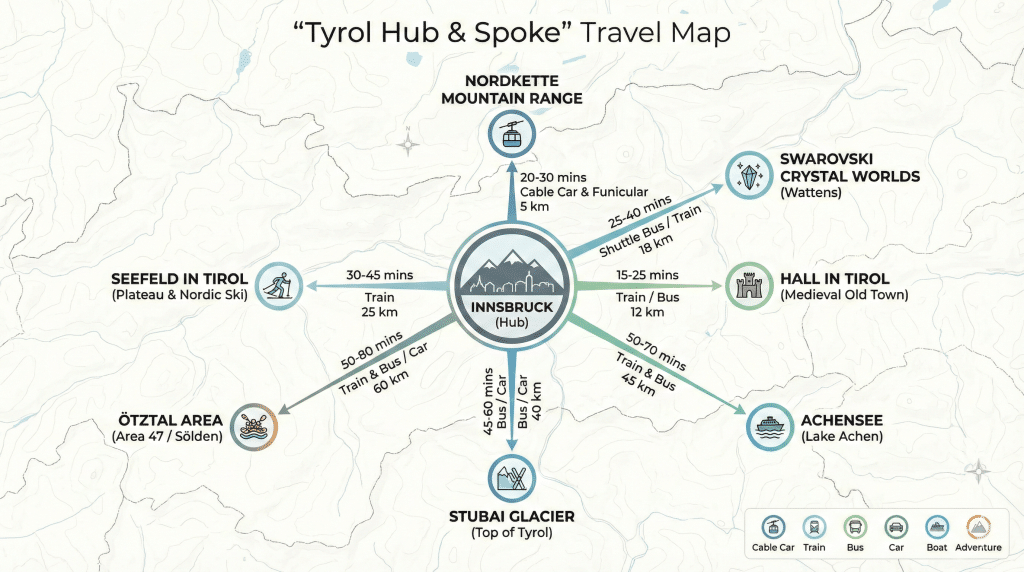
Innsbruck’s central location within Tyrol makes it an ideal base for day trips and multi-day excursions. Within 30 to 60 minutes by car or train, you can reach Hall in Tirol’s medieval old town, Lake Achensee’s fjord-like beauty, the Stubai Glacier’s year-round skiing, or Seefeld’s cross-country paradise.
Innsbruck: Where Mountains Meet History
The Old Town (Altstadt)
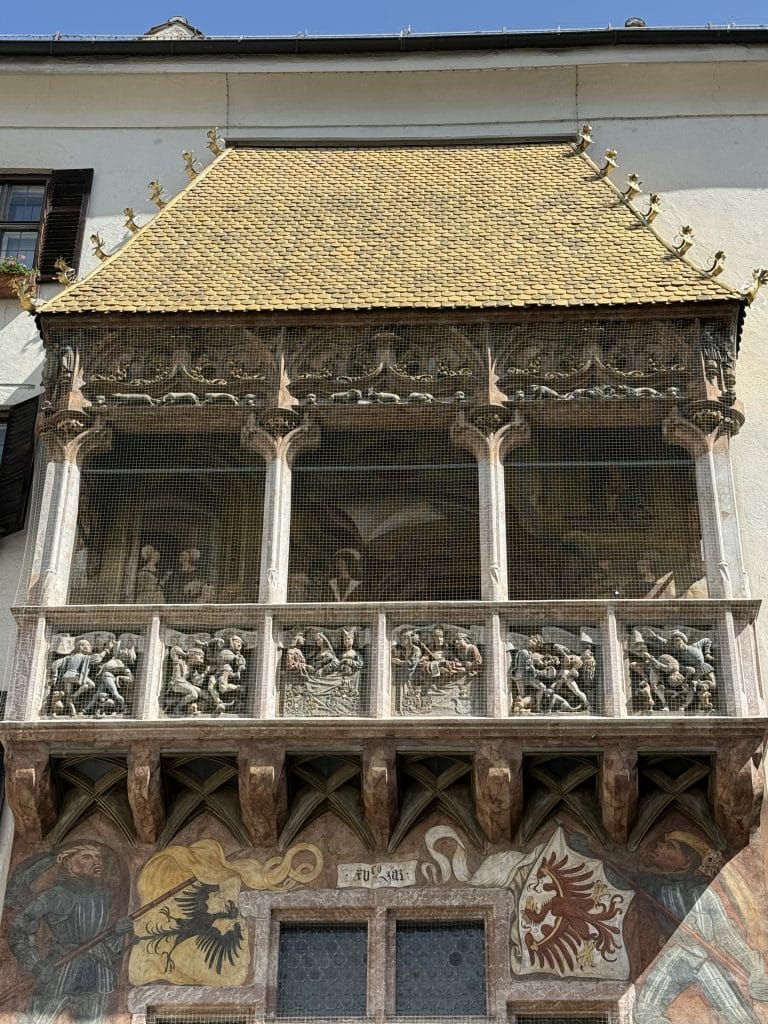
Innsbruck’s UNESCO World Heritage Old Town packs remarkable density into a compact, walkable area. The Golden Roof (Goldenes Dachl) remains the city’s most recognizable landmark. 2,657 gilded copper tiles installed in the early 1500s by Emperor Maximilian I still gleam above Herzog-Friedrich-Straße. The viewing balcony was built to allow the emperor and his court to watch tournaments and festivities in the square below. Today the building houses a museum dedicated to Maximilian’s reign.
Beyond the Golden Roof, the Altstadt rewards wandering. Maria-Theresien-Strasse stretches southward from the Triumphal Arch, lined with baroque facades, outdoor cafés, and the St. Ann’s Column commemorating Tyrolean resistance to Bavarian occupation. The Imperial Palace (Hofburg) showcases 18th-century baroque splendor through state rooms that once hosted the Habsburg court. The adjacent Imperial Court Church (Hofkirche) contains Emperor Maximilian I’s monumental cenotaph surrounded by 28 larger-than-life bronze statues, though Maximilian himself is actually buried in Wiener Neustadt.
Practical tip: Purchase tickets for major attractions in advance during peak season (July through August, December). The Old Town gets crowded midday, so arrive early morning or late afternoon for better photo opportunities and fewer tourists.
Mountain Access: The Nordkette Experience
The Nordkettenbahnen cable car system represents Innsbruck’s defining feature. Genuine Alpine wilderness is accessible without a car or long hikes. The journey begins at Congress Station with the Hungerburgbahn funicular, designed by renowned architect Zaha Hadid. At Hungerburg station (860m), you can visit the Alpine Zoo (Europe’s highest, at 750m), which specializes in Alpine wildlife including wolves, bears, eagles, and ibex.
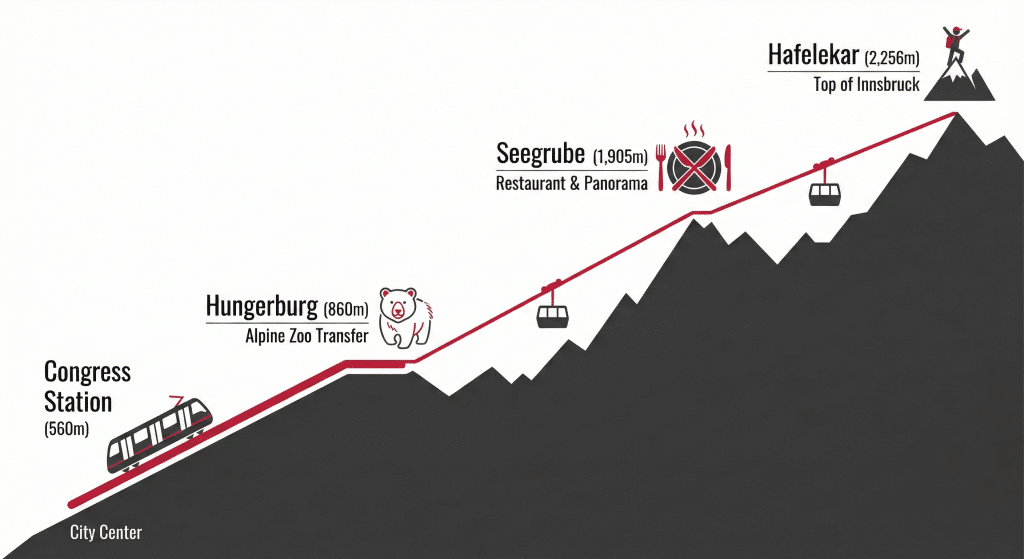
From Hungerburg, two additional cable cars ascend to Seegrube (1,905m) and finally Hafelekar (2,256m). At the top, you’re standing on the edge of the Karwendel Nature Park, one of Europe’s largest protected areas. Even non-hikers can enjoy the panorama, which stretches across Innsbruck below and encompasses dozens of peaks in the Stubai and Zillertal Alps.
Hiking from Nordkette: The Goethe Trail from Hafelekar offers spectacular ridge walking with alternating views of Innsbruck and the Karwendel wilderness (5 to 6 hours). For experienced hikers, the Nordkette via ferrata provides thrilling exposed climbing with cables and fixed protection. The easier Zirbenweg (Stone Pine Trail) at Patscherkofel features an 8-kilometer panoramic walk through ancient arolla pine forests with minimal elevation gain.
A quick note on planning: Prices and opening hours are mentioned to help you budget and plan, but they can change often. I always recommend checking the official websites (which I’ll link to) for the most current information before your visit.
2025/2026 Season Pricing: Nordkette cable car roundtrip (valid November 21, 2025 through November 1, 2026) ranges from approximately €50 to €56 for adults, depending on whether you’re traveling during winter or summer season. The Innsbruck Card includes one roundtrip and covers the Alpine Zoo, making it excellent value if visiting multiple attractions. For the most current pricing and operating schedules, check the official Nordkettenbahnen website.
Operating hours (2026 season): The Nordkette maintains different schedules for winter and summer. From June 1 through September 30, the Hafelekarbahn and Seegrubenbahn operate one hour longer.
Please note that the cable cars typically close for routine maintenance in spring and autumn. For 2026, spring maintenance is currently scheduled for April 20–24. However, these dates are weather-dependent. Always confirm the current operating status on the official Nordkette website before booking your trip.
Beyond the Old Town
The Bergisel Ski Jump, designed by Zaha Hadid, towers above the southern edge of Innsbruck. The viewing platform at the top (accessible by funicular) offers 360-degree panoramas and hosts a restaurant. Even if you’re not interested in winter sports history, the architectural experience and views justify the visit.
Ambras Castle (Schloss Ambras), located 2.5 kilometers southeast of the center, represents one of Austria’s most important Renaissance palaces. The castle houses armor collections, Habsburg portraits, and the famous Kunst- und Wunderkammer (Chamber of Art and Curiosities), one of the earliest museum collections in Europe. The grounds feature beautiful gardens and views across Innsbruck to the Nordkette mountains.
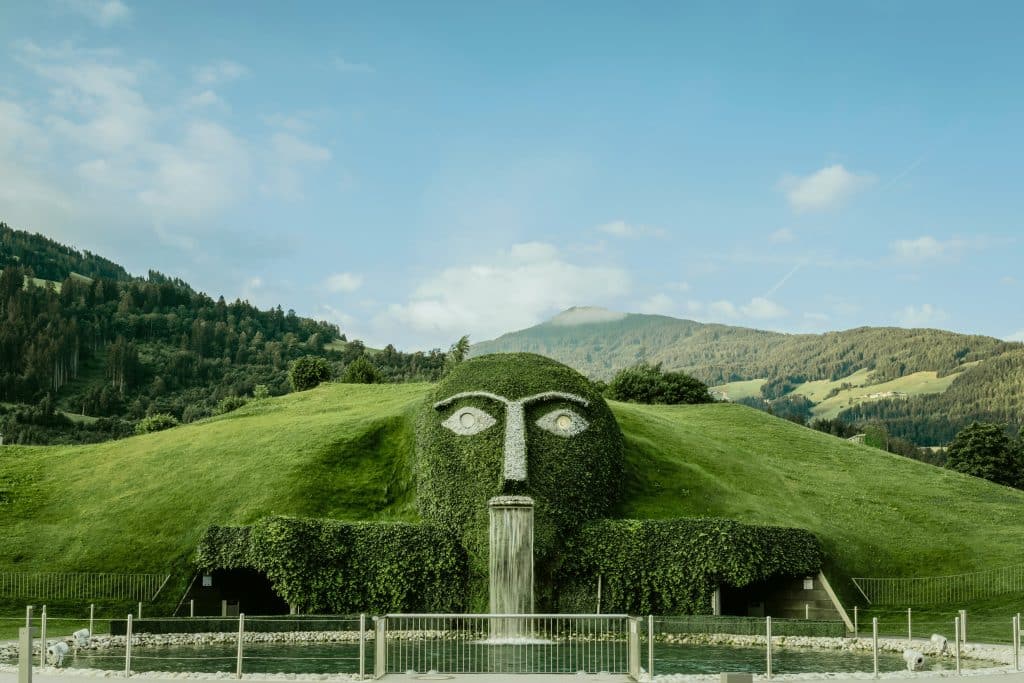
Swarovski Crystal Worlds in nearby Wattens (15 kilometers east of Innsbruck) attracts millions of visitors annually. The “Giant’s head” entrance leads underground to themed “Chambers of Wonder” where international artists have created installations exploring crystal in various forms. The garden features the Crystal Cloud (800,000 hand-mounted crystals suspended above a mirror pool) and a four-story Playtower that children adore. A free shuttle bus runs regularly from Innsbruck, and admission is included with the Innsbruck Card.
Beyond Innsbruck: Essential Tyrol Destinations
Hall in Tirol: Medieval Wealth Preserved
Just 10 kilometers east of Innsbruck, Hall in Tirol possesses the largest medieval old town in western Austria, larger even than Innsbruck’s Altstadt. Salt mining created enormous wealth here in the Middle Ages, and from 1477 to 1665, Hall housed the provincial mint that produced the “Haller Taler” (guldiner), which became the basis for the modern dollar.
The Hasegg Castle with its mint tower and museum tells this fascinating monetary history. The old town preserves beautifully decorated facades, covered arcades, and a network of narrow alleys perfect for exploration. Unlike Innsbruck, Hall sees far fewer tourists, creating a more authentic small-town Austrian atmosphere.
Getting there: IVB trams and buses connect Innsbruck and Hall frequently (15 to 20 minutes). The Innsbruck Card includes transport to Hall.
Lake Achensee: The Tyrolean Sea
At 9 kilometers long and 133 meters deep, Achensee claims the title of Tyrol’s largest lake. Its fjord-like setting between the Karwendel mountains and Brandenberg Alps creates a Nordic atmosphere unusual for the Alps. Water quality reaches near-drinking water standards with underwater visibility up to 10 meters, though temperatures rarely exceed 20 to 22°C.
The lake offers swimming, sailing, windsurfing, and hiking around its 25-kilometer circumference. The historic Achenseebahn (rack railway) connects the lake to Jenbach and the main railway line. This narrow-gauge route has operated since 1889 and still uses steam locomotives.
Villages: Pertisau on the west shore serves as the main resort village. Achenkirch to the north offers quieter accommodation and access to mountain streams feeding the lake. Maurach on the southeast shore connects to the rack railway.
Hiking: The surrounding Karwendel and Rofan ranges provide excellent hiking at all levels. Cable cars from both shores access higher trails.
Access: Expect approximately 40 to 45 minutes by car from Innsbruck via the B181. Buses connect regularly from Innsbruck Hauptbahnhof (approximately 1 hour).
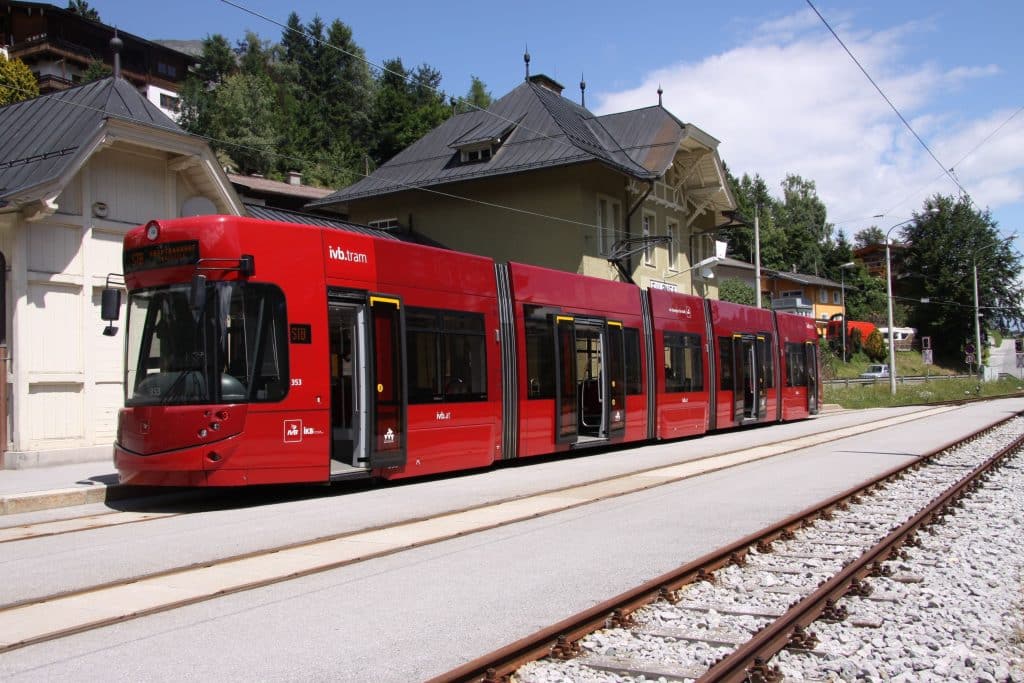
Stubai Valley: Hiking Paradise
The Stubai Valley stretches 35 kilometers south from Innsbruck, offering everything from gentle valley walks to serious high-alpine routes. The valley floor, accessible via the STB tram from Innsbruck, features traditional villages, working farms, and easy hiking.
The Stubai High Trail represents one of the Alps’ classic hut-to-hut treks. 80 kilometers circumnavigate the Stubai Alps across 8 days, staying in mountain huts each night. The route crosses multiple 2,500+ meter passes and requires good fitness, sure-footedness, and proper equipment. However, you can also hike individual stages as day trips, as each hut connects to the valley via marked trails or shuttle services.
For less demanding hiking, the WildeWasserWeg (Wild Water Trail) showcases spectacular waterfalls and mountain streams, including the Grawa Waterfall, the widest waterfall in the Eastern Alps. The Stubai Glacier at the valley’s head offers year-round skiing and high-altitude hiking accessible via cable car.
Insider perspective: When I take groups to the Stubai, we typically base ourselves in Neustift and do day hikes to different huts. The combination of well-maintained trails, excellent hut food, and spectacular scenery makes this ideal for people who love mountains but don’t want to commit to multi-day backpacking.
Zillertal: The World’s Most Active Valley
The Zillertal Valley earned its nickname “world’s most active valley” through an exceptional concentration of outdoor activities. Stretching 32 kilometers from the Inn River to the Hintertux Glacier (3,250m), the valley encompasses traditional villages, modern resorts, and the High Mountain Nature Park Zillertal Alps.
Hintertux Glacier continues operations through the 2025/2026 season (September 27, 2025 through July 31, 2026), though it’s worth noting that summer skiing operations have been affected by climate change in recent years. While Hintertux maintains Austria’s longest ski season, full 365-day operations are no longer guaranteed due to increasingly warm summer conditions. The glacier typically offers the most reliable skiing from late September through June, with summer operations (when available) on approximately 20 kilometers of slopes above 2,600 meters.
Important for 2026 travelers: Check current conditions before planning summer skiing visits. The glacier’s Nature’s Ice Palace remains open year-round, a natural underground ice cave system 30 meters beneath the glacier’s surface, complete with frozen waterfalls, ice chambers, and an underground river you can boat on.
Mayrhofen, the valley’s main tourist center (population 3,800), transforms from winter ski resort to “Ibiza of the Alps” in summer, hosting electronic music festivals including the famous Snowbombing event. The Penkenbahn cable car accesses Austria’s largest bike park (1,500 meters vertical drop) and numerous hiking trails.
Don’t miss the Olpererhütte hike with its famous suspension bridge suspended above the Schlegeisspeicher reservoir, arguably the most photographed spot in the Zillertal. The moderate 3 to 4 hour hike rewards with spectacular mountain scenery, azure alpine lakes, and hearty mountain hut food.
Getting there: Expect approximately 45 to 60 minutes by car from Innsbruck. ÖBB regional trains run regularly to Jenbach, where you connect to the Zillertal Railway (Zillertalbahn) serving valley villages.
Kitzbühel: Medieval Charm and Alpine Trails
Kitzbühel combines colorful Tyrolean architecture with sophisticated resort amenities. While famous for winter skiing (the legendary Hahnenkamm downhill race), summer transforms the area into a hiking paradise with 1,000+ kilometers of marked trails.
The KAT Walk (Kitzbüheler Alpen Trail) long-distance route crosses 100 kilometers over 6 stages, staying in mountain huts each night. Day hikers can tackle individual sections or circular routes like the popular 4 Lakes Hike (14 kilometers, 4 hours, moderately challenging), which passes four crystal-clear mountain lakes accessible via cable car.
Schwarzsee, at the town’s edge, ranks among Tyrol’s warmest swimming lakes, perfect for combining hiking with summer swimming. The old town features typically Tyrolean painted facades, charming squares, and numerous outdoor cafés.
Access: Expect 1 hour 15 minutes by train from Innsbruck via Wörgl. Driving takes approximately 1 hour via the A12 motorway.
Seefeld: Cross-Country Paradise
Seefeld established itself as a premier winter destination by hosting cross-country skiing events during the 1964 and 1976 Winter Olympics held in Innsbruck. The region maintains 245 kilometers of groomed cross-country trails ranging from easy valley routes to challenging mountain circuits.
Summer visitors enjoy hiking in the adjacent Karwendel Nature Park (Austria’s largest at 727 square kilometers). Wildsee lake at the village edge offers swimming, boating, and an easy lakeside walking trail suitable for families. The Rosshütte cable car accesses higher hiking trails and stunning Wetterstein mountain views.
Seefeld works particularly well for families with children or less adventurous travelers who want Alpine scenery without challenging mountain terrain. The pedestrian zone features shops, restaurants, and the impressive St. Oswald parish church.
Getting there: Expect 25 minutes by car from Innsbruck via the B177. Regular trains connect Innsbruck and Seefeld (approximately 25 to 30 minutes).
Tyrolean Cuisine: Mountain Food That Satisfies
Tyrolean cuisine reflects its mountain heritage. Hearty, filling, and built around local ingredients that sustained farmers and Alpine workers through long winters and hard physical labor. While not light, these dishes deliver incredible flavor and represent authentic regional tradition.

Essential Tyrolean Dishes
Tiroler Gröstl, the quintessential Tyrolean dish, combines pan-fried potatoes, onions, and beef or pork, topped with a fried egg. Originally created to use up leftovers, this dish now appears on every traditional menu and makes perfect mountain lunch fuel. The best versions achieve crispy potato edges while keeping the interior tender.
Speckknödel (bacon dumplings) appear either served in clear broth (Speckknödelsuppe) or alongside sauerkraut with a side salad. These bread-based dumplings incorporate generous amounts of bacon and herbs, creating comfort food that warms you from the inside.
Schlutzkrapfen resemble oversized ravioli, traditionally filled with spinach and curd cheese (Topfen), though potato and grey cheese versions also exist. Served with melted butter and sometimes chives, these deliver vegetarian sustenance without sacrificing heartiness.
Kaspressknödel (cheese dumplings) offer another vegetarian mountain staple. These pressed cheese dumplings get pan-fried until crispy outside while remaining soft inside, usually served in broth or with salad. When you see them on a menu, order them. They’re addictive.
Kaiserschmarrn technically counts as dessert but often functions as a main course given its size and richness. This “shredded pancake” gets torn into pieces while cooking, caramelized with butter and sugar, and traditionally served with plum compote or apple sauce. Expect to share portions, which are enormous.
Tiroler Marend appears on afternoon menus but works anytime as a cold plate. Served on a wooden board (Brettl), this combination of speck (smoked mountain ham), various mountain cheeses, Schüttelbrot (crispy spiced flatbread), and farmhouse bread showcases Tyrolean charcuterie and cheese-making traditions.
Where to Experience Tyrolean Cuisine
Traditional Gasthäuser (inns) in smaller towns and villages typically offer more authentic experiences and better value than tourist-oriented restaurants in resort centers. Mountain huts (Hütten) accessed by cable car or hiking serve excellent traditional food. The higher the hut, the more authentic the experience tends to be.
2026 dining recommendations: When guiding groups, I consistently recommend Hoadl-Haus near the Nordkette base station for solid Tyrolean fare with mountain views without requiring a long hike. For something more adventurous, the Pfeishütte accessible from Hafelekar serves traditional dishes in a genuine mountain setting. In Innsbruck’s Old Town, avoid the most touristy spots right at the Golden Roof. Walk two streets away and you’ll find better food at lower prices.
Understanding proper tipping etiquette enhances your dining experience in Austria. Round up bills or add approximately 5 to 10% for good service.
Budget considerations: Traditional Tyrolean restaurants range from moderate to expensive. Expect approximately €15 to €25 per person for a main course at typical Gasthäuser, €20 to €35 at mountain huts (with higher prices correlating to altitude and accessibility), and €30 to €50+ at upscale restaurants in resort towns. Lunch specials (Mittagsmenü) available weekdays at many restaurants offer three courses for approximately €11 to €15, providing exceptional value.
Practical Information for Visiting Tyrol and Innsbruck
Getting There and Around
By Air:
Innsbruck Airport (INN) lies just 4 kilometers west of the city center. Direct flights connect to Berlin, Brussels, Frankfurt, London, Rotterdam, Stockholm, and Vienna, with seasonal charters to other destinations. Bus line F runs every 15 minutes between the airport and Hauptbahnhof (main train station), taking 14 minutes. Tram line 5 offers similar frequency (15 minutes journey). For current fares and schedules, check the official IVB transport website.
Munich Airport (130 kilometers) and Salzburg Airport (170 kilometers) provide more international connections. Direct trains run from Munich Airport to Innsbruck (2 to 2.5 hours), while Salzburg requires a change at Salzburg Hauptbahnhof.
By Train:
Innsbruck Hauptbahnhof serves as a major European rail hub on the Vienna-Zurich and Munich-Verona routes. Journey times:
- Vienna: 4 to 4.5 hours via ÖBB Railjet or WESTbahn
- Munich: approximately 2 hours
- Zurich: 3.5 hours
- Verona: 3.5 to 4 hours
- Salzburg: 2 to 2.5 hours
Book Austrian rail tickets through the ÖBB website or WESTbahn for competitive pricing on the Vienna-Innsbruck route. Booking 3 to 7 days advance typically yields 20 to 40% savings compared to day-of-travel prices. For comprehensive guidance on getting around, see our dedicated transport guide covering trains, buses, and rental cars throughout Central and Eastern Europe.
Local Public Transport:
IVB (Innsbrucker Verkehrsbetriebe) operates Innsbruck’s efficient tram and bus network. Six tram routes (numbered 1, 2, 3, 5, 6, and STB) cover 44 kilometers. The Stubaitalbahn (STB) tram line extends 18 kilometers south into the Stubai Valley, sharing city-center tracks with regular trams.
Single tickets range from approximately €2.80 to €3.50 depending on zones. 24-hour tickets make sense if taking 3+ trips. The Innsbruck Card includes unlimited IVB travel. For current fares and route maps, visit the official IVB website.
Regional Transport:
VVT (Verkehrsverbund Tirol) coordinates buses and regional trains throughout Tyrol. The system integrates well. You can plan journeys combining trams, buses, and trains through the VVT SmartRide app. VVT operates excellent Postbus services connecting mountain villages, hiking trailheads, and ski resorts.
By Car:
Renting a car opens access to remote valleys, scenic mountain roads, and flexibility for multi-stop itineraries. Expect approximately €25 to €50 daily for compact cars, with higher rates in peak season.
NEW for 2026: Austrian Vignette Options
Austria requires motorway vignettes (toll stickers) for highway use. Starting in 2026, there’s an important new option:
1-Day Digital Vignette: Austria introduced a purely digital 1-day vignette (€9.60 for cars, €3.80 for motorcycles) available only through the ASFINAG toll shop or ASFINAG app. This option is perfect for day-trippers from Germany or Italy who only need brief motorway access. Unlike longer-duration vignettes, the 1-day option has immediate validity when purchased online.
10-Day Digital Vignette: Costs €12.80 for cars, also valid immediately when purchased online. This remains the most popular option for short visits.
Important note: The 2026 physical vignette (in “fire-red” color) is the last adhesive version. From 2027 onward, only digital vignettes will be available.
Purchase vignettes exclusively through official channels at the ASFINAG toll shop to avoid unauthorized resellers who charge additional fees.
The Grossglockner High Alpine Road charges a separate toll (approximately €46.50 per car) but ranks among Europe’s most spectacular drives. Check the official Grossglockner website for current toll rates and road conditions.
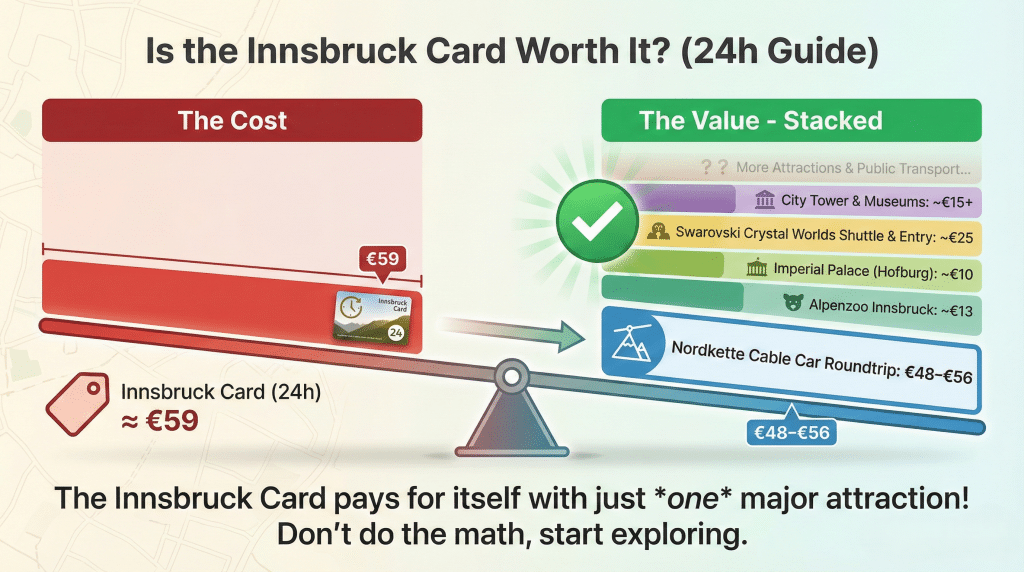
The Innsbruck Card: Worth It?
The Innsbruck Card includes:
- Unlimited IVB public transport (buses, trams) plus transport to Hall
- One roundtrip on Nordkettenbahnen OR Patscherkofelbahn cable car
- Free entry to 22+ museums and attractions (Alpine Zoo, Imperial Palace, Bergisel Ski Jump, Ambras Castle, etc.)
- Hop-on hop-off Sightseer bus
- Swarovski Crystal Worlds entry plus roundtrip shuttle
- 3-hour bike rental
Pricing: Card prices vary by duration and age. For current 2026 rates and to purchase online, visit the official Innsbruck Card website.
Value analysis: If you ride the Nordkette cable car and visit Swarovski Crystal Worlds plus use public transport, you’ve already exceeded typical 24-hour card costs. Adding the Alpine Zoo, a museum or two, and the Sightseer bus makes the 48 or 72-hour cards excellent value for active sightseers. However, if you plan mostly hiking or only want to see the Old Town, you can skip it.
When to Visit Tyrol
Summer (June through August): Peak season for hiking, with all high-altitude trails accessible by mid-July. Expect warm valley temperatures (20 to 28°C), afternoon thunderstorms in the mountains, long daylight (until 21:00+), and peak crowds at major attractions. Accommodation costs highest, but mountain experiences at their best.
Winter (December through March): Prime ski season with reliable snow in resorts. December transforms Innsbruck with Christmas markets but brings crowds and premium prices. January through February offer best snow conditions and fewer tourists (except during school holiday weeks). March provides longer days, warmer temperatures, and good spring skiing.
Shoulder Seasons: May and September through October deliver ideal conditions for many travelers. May brings wildflowers, snow-free lower trails (high routes may still be snowed in), pleasant temperatures (15 to 20°C), and manageable crowds. September through October feature stable weather, fall colors, comfortable hiking temperatures, and excellent value. Late October sees some attractions reduce hours or close for the season.
Budget Season: November and March through April offer lowest accommodation prices and thinnest crowds. November can be foggy and damp in valleys (though mountains rise above the clouds). Late March and April provide unpredictable weather but good last-season skiing and increasingly pleasant valley conditions.
My recommendation: For hiking and outdoor activities, aim for late June through September, with early September offering the best balance of weather, wildflowers, and fewer crowds. For winter sports without Christmas crowds, January through mid-February. For sightseeing and value, May or September prove ideal.
Budget Planning
Tyrol falls in the mid-to-upper price range for Austria, with costs varying significantly between cities and mountain resorts.
Accommodation:
- Budget hostels: approximately €20 to €50 per bed in dorms
- Budget hotels/pensions: approximately €50 to €90 per night
- Mid-range hotels: approximately €90 to €170 per night
- Upscale hotels: approximately €170 to €300+ per night
Accommodation costs spike during Christmas markets (late November through December) and peak ski season (January through February). Book well ahead for these periods.
Food:
- Supermarket picnic supplies: approximately €5 to €10 per person
- Bakery breakfast: approximately €4 to €8
- Lunch special (Mittagsmenü): approximately €10 to €15
- Casual restaurant meal: approximately €15 to €25
- Mid-range restaurant dinner: approximately €20 to €35
- Mountain hut meal: approximately €15 to €30 (higher for remote locations)
- Coffee and cake: approximately €5 to €8
Activities and Attractions:
- Museum entry: typically €8 to €15
- Major attractions: approximately €15 to €35 (Nordkette, Bergisel, Ambras Castle, Swarovski Crystal Worlds)
- Cable car rides: approximately €25 to €60 roundtrip
- Guided tours: approximately €40 to €80 per person
Sample daily budgets:
- Budget traveler: approximately €80 to €120 (hostel, self-catering, public transport, free/low-cost activities)
- Mid-range traveler: approximately €150 to €250 (comfortable hotel, restaurant meals, paid attractions, cable cars)
- Comfort traveler: approximately €300+ (upscale hotels, fine dining, private tours, flexibility)
Visiting with Children
Tyrol excels as a family destination through its combination of outdoor activities, interactive attractions, and child-friendly infrastructure.
Top family attractions:
- Swarovski Crystal Worlds Playtower: Four-story outdoor playground with climbing nets, slides, and crystalline design. Adjacent gardens feature labyrinths, water features, and plenty of space to run.
- Alpine Zoo Innsbruck: Europe’s highest zoo specializes in Alpine wildlife. Compact enough to avoid exhausting small legs while maintaining interest.
- Tirolland: Indoor adventure park features house-upside-down, dinosaur park with 70 life-size models, wax museum, and LEGO exhibitions. Perfect for rainy days.
- Stubaitalbahn tram: Riding the vintage tram into the Stubai Valley entertains children while accessing easy valley hikes and adventure playgrounds.
- Mountain huts: Many accessible huts feature playgrounds, farm animals, and wide meadows where children can play while parents enjoy the view.
- Cable car rides: Children love the novelty, and many cars offer spectacular views. The Nordkette journey includes three separate rides.
Practical tips: Austrian restaurants welcome families and many offer children’s menus. Public transport easily accommodates strollers. Many hotels provide family rooms or connecting rooms. Summer season (June through August) sees numerous family-oriented festivals and events.
Sample Itineraries
3-Day Innsbruck Intensive
Day 1: Old Town and Culture
- Morning: Explore Altstadt (Golden Roof, Imperial Palace, Court Church, Maria-Theresien-Strasse)
- Lunch: Markthalle for local specialties
- Afternoon: City Tower climb for views, then Hofgarten park
- Evening: Traditional Tyrolean dinner in the Old Town
Day 2: Mountains and Views
- Morning: Nordkette cable car to Hafelekar, short summit walk
- Lunch: Pfeishütte or return to Seegrube restaurant
- Afternoon: Alpine Zoo visit on descent to Hungerburg
- Evening: Bergisel Ski Jump for sunset views, dinner at the jump restaurant
Day 3: Day Trip
- Full day: Swarovski Crystal Worlds (shuttle from Innsbruck), with 2 to 3 hours at the attraction, then afternoon in Hall in Tirol exploring the medieval old town
- Evening: Return to Innsbruck for farewell dinner
5-Day Tyrol Explorer
Day 1 and 2: Follow 3-day itinerary above
Day 3: Stubai Valley
- Morning: STB tram to Neustift
- Day hike: WildeWasserWeg to Grawa Waterfall
- Lunch: Mountain hut
- Afternoon: Return valley walk or cable car to Stubai Glacier
- Evening: Return to Innsbruck
Day 4: Lake Achensee
- Morning: Drive or bus to Achensee
- Activities: Lake cruise, swimming, shoreline walk
- Lunch: Lakeside restaurant in Pertisau
- Afternoon: Cable car up to Rofan mountains for hiking or views
- Evening: Return to Innsbruck
Day 5: Grossglockner High Alpine Road
- Full day scenic drive (long day, depart early)
- Multiple photo stops at viewpoints
- Hike at Kaiser-Franz-Josefs-Höhe
- Return to Innsbruck evening
7-Day Tyrol Immersion
Days 1 through 5: Follow 5-day itinerary above
Day 6: Zillertal Valley
- Morning: Drive to Mayrhofen
- Hike: Olpererhütte and suspension bridge (moderate, 3 to 4 hours)
- Afternoon: Hintertux Glacier and Nature’s Ice Palace
- Evening: Explore Mayrhofen village
Day 7: Kitzbühel or Seefeld
- Option A (Kitzbühel): Medieval old town exploration, Schwarzsee lake, cable car to mountain for views/hiking
- Option B (Seefeld): Cross-country trail walking (summer or winter), Wildsee lake circuit, Karwendel Nature Park hike
- Evening: Return to Innsbruck or drive toward next destination
Insider Tips
Timing mountain activities: Start early. Most serious hikers hit trails by 8:00 to 9:00am to avoid afternoon thunderstorms (common July through August) and secure parking at popular trailheads. Cable cars get crowded 10:00am to 2:00pm. Ride up early, enjoy uncrowded mountains, then descend before peak crowds ascend.
Restaurant strategy: In Innsbruck’s Old Town, walk two streets away from the Golden Roof for better food at lower prices. Restaurants with multilingual menus and photos cater to tourists. Places with handwritten German menus attract locals. Weekday lunch specials offer exceptional value.
Weather preparation: Mountain weather changes rapidly regardless of season. Carry layers, waterproof jacket, sun protection, and sufficient water even on “easy” hikes. Check webcams and weather forecasts before committing to mountain activities. Resources like Bergfex provide mountain-specific forecasts.
Free experiences: The Hofgarten park offers peaceful gardens and mountain views without admission. River Inn waterfront paths provide pleasant walking and jogging routes. Many churches (St. James Cathedral, Court Church exterior) cost nothing to enter. Sunday morning markets in some villages offer local products and people-watching.
Mountain hut etiquette: If hiking to mountain huts for lunch, bring cash (many don’t accept cards). Greet other hikers with “Grüß Gott” or “Servus.” Don’t ask to use toilets without buying something. If staying overnight, bring a sleeping bag liner (required at most huts) and respect quiet hours (typically 22:00 to 6:00).
Sustainable choices: Tyrol leads Austria in sustainable tourism initiatives. Use public transport where possible. The network genuinely works well. Carry reusable water bottles (tap water is excellent throughout Austria). Choose accommodations with environmental certifications. Support small family-run Gasthäuser over chain restaurants.
Your Journey Through Tyrol Awaits
Tyrol delivers what many travelers seek but few destinations provide. Genuine mountain culture accessible without extreme effort, medieval history preserved in working towns rather than museum pieces, and outdoor adventures that don’t require specialized skills yet still feel authentic. Whether you spend a long weekend in Innsbruck or two weeks exploring the region’s valleys, Tyrol rewards visitors who appreciate both Alpine grandeur and the small details that make a place truly memorable.
The best visits combine structured sightseeing with spontaneous discoveries. The unplanned coffee stop that becomes a two-hour conversation with locals, the mountain hut meal that somehow tastes better than any restaurant, the detour that leads to a tiny chapel with views that rival the famous ones. Tyrol’s greatest asset might be that authentic experiences remain accessible here, not hidden behind paywalls or requiring insider connections.
Come with good walking shoes, an appetite for hearty mountain food, and openness to a pace that prioritizes quality over quantity. The mountains will still be there when you return, and you will want to return.
For more Austrian travel inspiration and detailed destination guides, explore Pieterontour.com, where 25+ years of guiding experience translates into practical advice that helps you travel like an insider.
Frequently Asked Questions
How much time do I need to explore Innsbruck and Tyrol?
For Innsbruck city highlights plus one mountain experience, plan 2 to 3 days minimum. A week allows you to explore the city thoroughly plus visit 2 to 3 surrounding valleys (Stubai, Achensee, Zillertal). Two weeks lets you experience the full diversity of Tyrol including day trips to Kitzbühel, Seefeld, and scenic drives like the Grossglockner High Alpine Road.
Is the Innsbruck Card worth purchasing?
If you plan to ride the Nordkette cable car and visit Swarovski Crystal Worlds, you’ve already covered most of the card’s cost. Adding public transport, museums, and other included attractions makes it excellent value for active sightseers. Skip it if you’re primarily hiking or only visiting the Old Town.
What’s the best time to visit Tyrol for hiking?
Late June through September offers the best hiking conditions, with all high-altitude trails accessible by mid-July. Early September provides the ideal balance of stable weather, wildflowers still blooming, and fewer crowds than peak summer months.
Can I visit Tyrol without a car?
Absolutely. Innsbruck’s public transport system is excellent, and regional buses and trains connect most major destinations. The Stubai Valley has its own tram line from Innsbruck. Many mountain huts and trailheads are accessible by bus. A car adds flexibility for remote valleys and scenic drives but isn’t necessary.
What’s the best base for exploring Tyrol?
Innsbruck serves as the ideal base with excellent transport connections, accommodation options at all price levels, and access to mountains, culture, and dining. The city combines convenience with authentic Alpine atmosphere.
Is Tyrol suitable for families with children?
Very much so. Tyrol excels as a family destination with attractions like the Alpine Zoo, Swarovski Crystal Worlds Playtower, easy valley hikes, cable car rides, and family-friendly mountain huts. Austrian infrastructure accommodates strollers and children well.
How do I get from Innsbruck Airport to the city center?
Bus line F and Tram line 5 both run every 15 minutes between the airport and Hauptbahnhof, taking 14 to 15 minutes. Both are affordable and efficient options.
What should I pack for a Tyrol trip?
Layers are essential regardless of season. Include waterproof jacket, sun protection, comfortable walking shoes, and for hiking, proper boots, water bottle, and weatherproof layers. Mountain weather changes rapidly even in summer.
Has travel to Austria changed for 2026?
Austria introduced a new 1-day digital vignette option in 2024, making short motorway trips more affordable (€9.60 for cars). The 2026 physical vignette is the last adhesive version before full digitalization in 2027.
Do i need a Visa To visit Innsbruck?
The new ETIAS travel authorization system is expected to be fully implemented for travelers entering the EU in 2026. As implementation timelines have shifted previously, we strongly recommend checking the official EU entry requirements 3–4 months prior to your departure to see if this €20 online registration is active for your trip
How to plan a trip to Tyrol and Innsbruck in 2026?
Plan 3 to 7 days based in Innsbruck to explore the Old Town and valleys like Stubai. For 2026, utilize the new 1-day digital vignette (€9.30) for driving and the Innsbruck Card for cable car savings. Visit late June through September for optimal hiking conditions across the region.
Related Guides:
- Austria Travel: Your Essential Guide to Alpine Elegance and Imperial Grandeur (comprehensive pillar guide)
- The Ultimate Guide to European Christmas Markets
- Tipping Etiquette in Europe: Your Essential Guide to Gratuity Customs
- Getting Around Central & Eastern Europe: Trains, Buses, and Rental Cars
- Central Europe’s Seasonal Calendar: Best Times to Visit Beyond Christmas Markets