Salzburg Beyond the Script: A Tour Director’s Guide to Mozart’s City
This guide is for travelers planning 2-3 days in Salzburg who want to experience the city’s authentic culture beyond The Sound of Music filming locations. You’ll discover the original Bosna sausage stand, learn the unwritten rules of Austrian café culture, and explore ecclesiastical treasures that most visitors miss entirely. (Updated for the 2026 travel season)
A quick note on planning: Prices and opening hours are mentioned to help you budget and plan, but they can change often. I always recommend checking the official websites (which I’ll link to) for the most current information before your visit.
Why Salzburg Deserves More Than a Day Trip
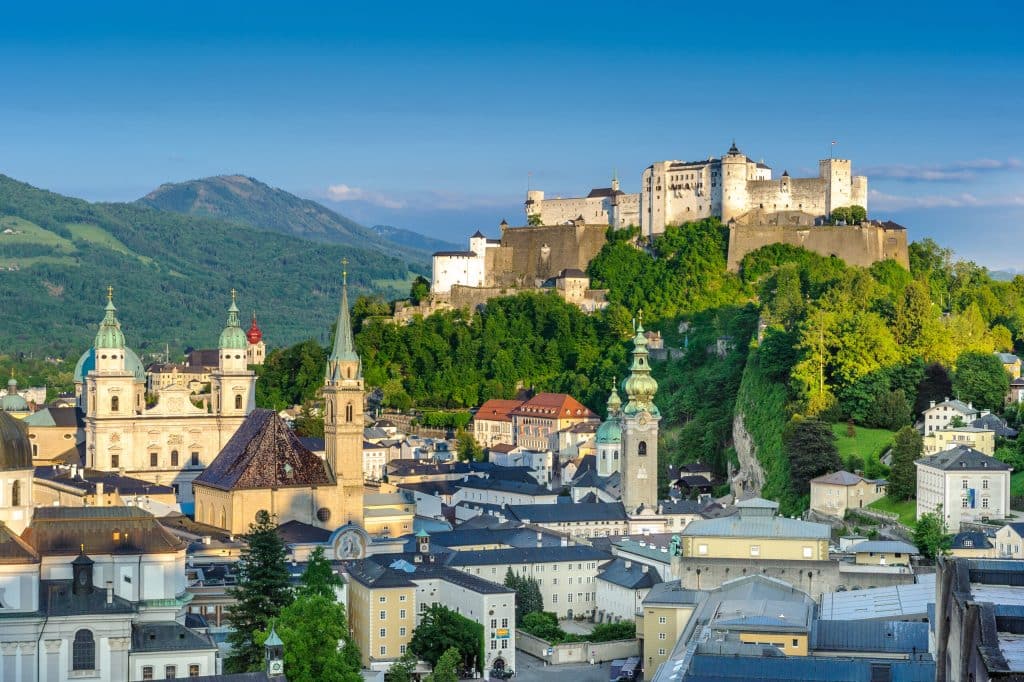
Ask most travelers about Salzburg, and you’ll hear about Mozart, The Sound of Music, and maybe the fortress. What often gets missed is that this compact UNESCO World Heritage city was once an ecclesiastical powerhouse that rivaled Rome itself.
The Prince-Archbishops who ruled here for centuries didn’t just leave behind baroque palaces and church bells echoing off Alpine slopes. They created a sophisticated cultural capital where street food tastes like history, where coffee houses operate on codes older than most nation-states, and where you can still taste the original Bosna sausage at a stall barely wider than a closet.
After two decades of guiding tours through Central Europe, I’ve learned something important: Salzburg rewards slow travelers. Two days here beats one hurried sunrise-to-sunset sprint every time. Here’s how to experience it like someone who actually lives here.
Quick Itinerary Overview: Your Perfect 48 Hours
Day 1: The Icons (Strategically Sequenced)
- 9:00 AM: Hohensalzburg Fortress (before tour buses)
- 11:00 AM: Petersfriedhof Cemetery & Catacombs (30 minutes)
- 1:00 PM: Lunch at the Original Bosna stand
- 2:30 PM: Getreidegasse guild sign walking tour
- 4:00 PM: Coffee at Café Tomaselli or Café Bazar
- 6:30 PM: Dinner at St. Peter Stiftskulinarium
Day 2: Mountains, Palaces & Local Life
- 9:00 AM: Mirabell Palace Gardens (arrive early)
- 10:30 AM: Kapuzinerberg OR Mönchsberg hilltop experience
- 1:00 PM: Day trip choice (Hellbrunn OR Untersberg)
- 7:00 PM: Evening beer at Augustiner Bräu monastery brewery
Day 1: The Icons (Strategically Sequenced)
9:00 AM: Hohensalzburg Fortress (Beat the Crowds)
Start by taking the funicular up to Hohensalzburg Fortress the moment it opens. This counterintuitive move pays dividends. You’ll reach the top before the bus tours arrive around 10:30 AM. The fortress itself won’t close until evening, but the crowds peak between 10 AM and 3 PM.
The insider move: Don’t ride the funicular back down. Instead, walk the footpath that descends through the fortress gardens and down the forested hillside to the old town. This 20-minute walk offers photographic views of Salzburg’s red-tiled rooftops and bell towers that you simply cannot capture from the cable car.
Practical details:
- Fortress entry: typically around €15-20 for adults
- Included free with the Salzburg Card
- Opening time: usually 9:00 AM (verify current hours on the official Hohensalzburg website)
- Time needed: 1.5-2 hours including the walk down

11:00 AM: Petersfriedhof (St. Peter’s Cemetery) & Catacombs
Walk down into the adjacent Petersfriedhof (St. Peter’s Cemetery), one of Europe’s oldest burial grounds. This is where Michael Haydn, Franz Xaver Gruber (composer of “Silent Night”), and Archbishop Rupert of Salzburg (the city’s founder) rest.
The cemetery is free, but pay the modest fee (typically €1-2) to descend into the Catacombs. These are early Christian caves carved into the Mönchsberg cliff face. They served not as burial sites, but as meeting places for the faithful in late antiquity. The narrow stone passages, the faint medieval inscriptions on the walls, and the view back over the cemetery create an authentic medieval atmosphere that most tourists miss entirely.
Practical details:
- Cemetery: free entry, open year-round
- Catacombs entry: typically €1-2 (free with Salzburg Card)
- Catacomb hours vary seasonally (May-September: 10 AM-6 PM daily; October-April: 10 AM-5 PM daily)
- Time needed: 30-45 minutes
- Check current hours on the St. Peter’s Abbey official website
1:00 PM: Lunch at the Original Bosna Stand
Now comes the most important meal of your Salzburg visit: the Original Salzburger Bosna.

Location: Balkan Grill Walter, Getreidegasse 33 (hidden in the “Stockhamer Durchhaus” passageway, a tunnel connecting Universitätsplatz to Getreidegasse)
What to order: Ask for “Nummer 1” (Number 1), the original combination: two grilled pork bratwurst in a white bun, dusted with curry powder, fresh parsley, and diced onions. It’s the invention of Zanko Todoroff, a Bulgarian immigrant, in 1949.
Why this matters: This isn’t contrived tourist food. The Bosna is a genuine Salzburg legend. Locals queue for it. You’ll likely wait 5-10 minutes, and it typically costs around €5-7. It’s cash only, and the stall operates in a space barely four square meters.
The historical detail: The recipe comes from Todoroff’s original 1950 formula, still made fresh daily by the Salzburg butcher Walter family. The “secret spice mixture” that defines the Bosna has never been publicly disclosed. Some regulars swear the Bosna tastes different depending on who’s making it that day.
Pro tip: If you’re not incredibly hungry, order an “Einspänner” (single Bosna) instead of the standard double. It’s the perfect size before your afternoon explorations.
Practical details:
- Price: typically €5-7 for a double Bosna
- Cash only
- Hours: usually open Monday-Saturday, mid-morning to early evening (closed Sundays)
- Time needed: 15-20 minutes including queue time
- Verify current hours at Balkan Grill Walter
2:30 PM: Getreidegasse & The Hidden Details
After your Bosna, explore the famous Getreidegasse pedestrian shopping street. Ninety percent of visitors shuffle through taking photos of storefronts and the Mozart birthplace. Instead, stop to study the wrought-iron guild signs hanging above the street. These are masterpieces of metalwork that mark centuries-old merchant houses. Look up.

The real photo opportunity: The ornate iron Guild Signs (Zunftzeichen) are far more beautiful than the gift-shop windows. These signs told medieval shoppers what business operated inside each house (a blacksmith, a baker, a silk merchant) in an era when most people couldn’t read. The craftsmanship is extraordinary.
Practical details:
- Time needed: 30-45 minutes
- Free to walk and photograph
- Mozart’s Birthplace entry: typically €12-15 (included with Salzburg Card)
- Best light for photography: late afternoon
4:00 PM: Coffee Break (The Coffeehouse Question)
This is where Salzburg’s café culture becomes a matter of choice. There are three major players, each with a distinct personality:
|
Café |
Vibe |
Best For |
What to Expect |
|---|---|---|---|
|
Café Tomaselli |
Historic & Touristy |
The “See and Be Seen” experience |
Go for the balcony overlooking Alter Markt square. The pastry tray is carried by hand, and you pay separately. Service is efficient but brisk. This is where you go to perform being in Salzburg. Budget €8-12 for coffee and pastry. |
|
Café Bazar |
Intellectual & Local |
The antidote to Tomaselli |
Marlene Dietrich and Thomas Mann sat here. The interior feels frozen in 1920s elegance. Sit for hours reading a newspaper. You’ll feel like a local intellectual, not a tourist. |
|
Café Fürst |
The Original Mozartkugel |
Sweet authenticity |
The only place to buy the authentic, original Mozartkugel (Mozart Ball) in its red and gold wrapper. The recipe is unchanged since 1884. Tourists buy industrial knock-offs elsewhere. The real thing tastes different. |
My recommendation: Visit Café Tomaselli for the view and the scene, but understand you’re paying for the location. Order a Melange (Austrian cappuccino) and one pastry.
Practical details:
- Café Tomaselli: typically €4-6 for coffee, €3-5 for pastry
- Usually open daily from early morning to evening
- No reservations needed for afternoon coffee
- Time needed: 30 minutes to 1 hour (or longer if you embrace café culture)
- Check current hours at Café Tomaselli official site

6:30 PM: Dinner at St. Peter Stiftskulinarium
For your evening meal, book a table at St. Peter Stiftskulinarium, located adjacent to St. Peter’s Cemetery. The restaurant claims to be Europe’s oldest, with monastic dining records dating to 803 AD.
The setting is atmospheric: vaulted stone ceilings, candlelit tables, and waitstaff in traditional Austrian costume. The food is traditional Salzburg fare (Tafelspitz, Wiener Schnitzel, seasonal vegetables, and rich desserts).
Reality check: This is tourist-oriented, but it’s a legitimate tourist experience, not a trap. The food is competent, the portions generous. The ambiance justifies the price.
Practical details:
- Price range: typically €80-120 per person for three-course dinner with wine or beer
- Reservations strongly recommended (especially weekends)
- Dress code: smart casual
- Time needed: 2-2.5 hours
- Book ahead at St. Peter Stiftskulinarium official website
Day 2: Mountains, Palaces & Local Life
9:00 AM: Mirabell Palace Gardens (Arrive Early)
Begin your second day at Mirabell Palace Gardens, specifically at the famous “Do-Re-Mi” marble steps where the von Trapp children danced in the 1965 film. Arrive by 9 AM, before the bus tours. The light at this hour is golden, and the space feels almost yours alone.

Walk the entire garden circuit: the Pegasus Fountain, the Dwarf Garden (with its whimsical baroque statuary), and the Orange Grove. These gardens are free and open year-round from dawn.
The Sound of Music note: Most of the “Do-Re-Mi” singing scenes were shot here, though some were recreated on Hollywood sound stages. The film did use Mirabell’s actual staircases, but most interior palace scenes were studio recreations.
Practical details:
- Entry: free
- Open: year-round, dawn to dusk
- Time needed: 45 minutes to 1 hour
- Best photo light: early morning (8-10 AM)
Alt text: Mirabell Palace Gardens Salzburg showing baroque marble Pegasus Fountain manicured hedges and historic palace building with Alpine mountains background
10:30 AM: The Viewpoint Decision (Mönchsberg vs. Kapuzinerberg)
Salzburg offers two distinct hilltop experiences. Choose one based on your energy level and interests:
Option A: Kapuzinerberg (Steeper, Wilder, Better Fortress Views)
Take the narrow lane from the old town up to Kapuzinerberg (Capuchin Mountain). This is less crowded than Mönchsberg. The views of Hohensalzburg Fortress from here are exceptional. You’re looking directly at it rather than standing on it.
The monastery at the summit is active, and pilgrims still walk this route. There’s a baroque church and a small beer garden with simple fare. The round-trip hike takes about 90 minutes at a leisurely pace.
Practical details:
- Entry: free
- Difficulty: moderate (steep cobblestone paths)
- Time needed: 1.5-2 hours round trip
- Wear comfortable walking shoes
Option B: Mönchsberg (Easier, More Tourist Infrastructure, Modern Art)
Alternatively, take the elevator up to Mönchsberg to visit the Museum der Moderne (contemporary art housed in a sleek building carved partially into the mountainside). If art doesn’t appeal, the café at the museum (M32 Café) offers the same views at half the effort. The viewpoint here is wider and shows the city spreading toward the Alps.
Practical details:
- Elevator: typically €3-4 one-way
- Museum entry: typically €10-15 (included with Salzburg Card)
- Time needed: 2-3 hours including museum visit
- M32 Café: budget €8-12 for coffee and light meal
- Verify current museum hours at Museum der Moderne official website
1:00 PM: The Day-Trip Choice
You now have a fork in the road. Choose based on your interests and the weather:
Option A: Hellbrunn Palace & Trick Fountains (Wasserspiele)
Hellbrunn, about 5 km south of the city, is famous for its Trick Fountains (baroque-era pranks where hidden mechanisms spray unsuspecting visitors). It’s whimsical, historical, and genuinely fun.
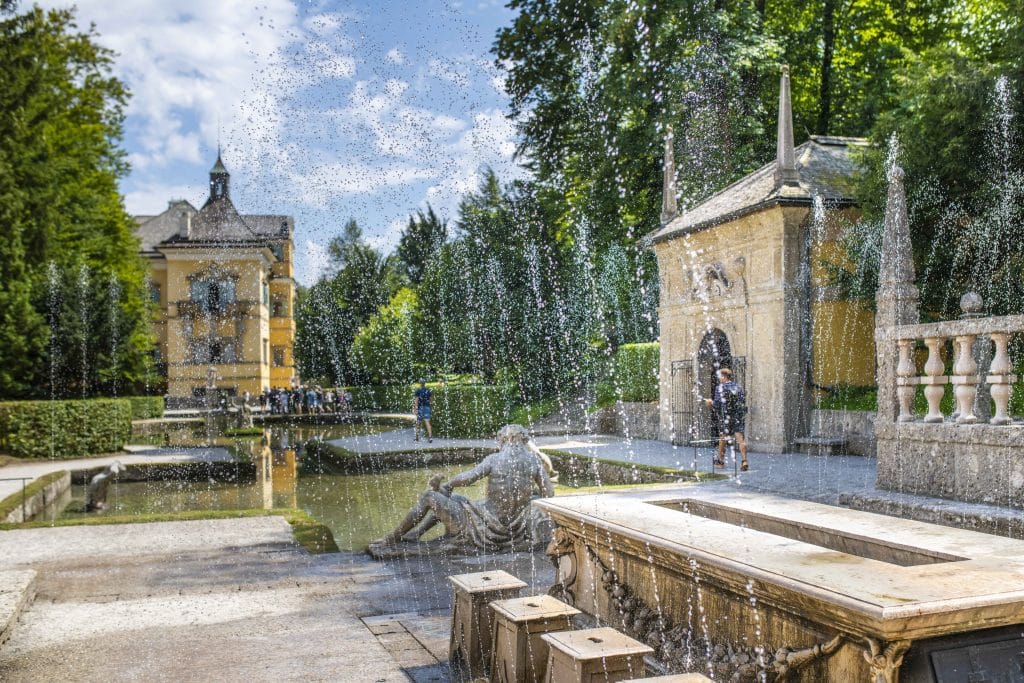
Tours run every 30 minutes and last about 45 minutes. The surrounding gardens are pleasant for a stroll.
This is where the lakeside scenes from The Sound of Music were filmed (the von Trapp children singing, Maria falling in the lake), though the original gazebo from the film has been moved to Schloss Leopoldskron.
Practical details:
- Entry: typically €13-18 depending on season
- Tours: every 30 minutes, approximately 45 minutes duration
- Distance from Salzburg: 5 km south (bus #25 from city center)
- Time needed: 2.5-3 hours including travel
- Seasonal operation: typically April-October (closed November-March)
- Verify current hours and prices at Hellbrunn Palace official website
Option B: Untersberg Cable Car & Alpine Panorama
Take the Untersbergbahn (Untersberg Cable Car) up 1,000 meters for panoramic Alpine views and access to marked hiking trails.
At the summit (1,972 meters), you’ll see three countries on a clear day: Austria, Germany, and Bavaria. There’s a small café, and numerous hiking trails of varying difficulty.
⚠️ 2026 Closure Alert: The Untersberg cable car typically undergoes maintenance closures in spring (usually April) and fall (typically November). Always verify current operation status before planning this excursion at the official Untersbergbahn website.
Practical details:
- Round-trip cable car: typically €28-36
- Distance from Salzburg: approximately 10 km south (bus #25 to Grödig, then connecting bus)
- Summit elevation: 1,972 meters
- Weather-dependent (check forecast; clouds obscure views)
- Time needed: 3-4 hours including travel and hiking
- Verify current operation status at Untersbergbahn official website
Alt text: Panoramic Alpine view from Untersberg mountain summit cable car showing snow-capped peaks and three-country vista across Austria Germany Bavaria
The Salzburg Card: Is It Actually Worth It? (2026 Analysis)
The Salzburg Card promises unlimited public transport and free admission to dozens of attractions. But does it deliver value, or is it tourist theater?
2026 Pricing:
- 24 hours: €35-38
- 48 hours: €41-45
- 72 hours: €44-49
What’s Included:
- Free entry to Hohensalzburg Fortress (saves €18)
- Petersfriedhof Catacombs (saves €2)
- Unlimited public transport (value depends on use)
- Museum der Moderne (saves €15)
- Hellbrunn Palace entry (saves €15)
- 30+ additional museums and attractions
What’s NOT Included:
- Untersberg cable car
- Guided tours (The Sound of Music bus tour, walking tours)
- Restaurant meals
- Concert tickets
- Cable car to fortress (walk instead)
The Math (48-Hour Card Example):
If you complete this itinerary, you’ll use:
- Hohensalzburg Fortress: €18
- Catacombs: €2
- Museum der Moderne: €15
- Hellbrunn OR day-trip transport: €15-18
- Total saved: €50-53

The 48-hour card costs approximately €41-46. You break even easily.
My verdict: If you’re following this 48-hour plan (or similar), the card pays for itself by Day 1 afternoon. It also eliminates the mental friction of deciding whether each attraction is “worth the entry fee.” You’ll explore more freely.
Where to buy:
- Online: Official Salzburg Card website (recommended; often slight discount)
- Tourist information offices
- Many hotels (concierge desk)
- Train station information desk
Pro tip: Activate your card first thing in the morning on Day 1 (not the night before). The clock starts when you first use it.
Understanding Austrian Coffee House Culture
Austrian café culture operates on social codes that date back centuries. If you understand the rules, your coffee break becomes a cultural experience rather than a transaction.
Rule 1: You’re Renting Space, Not Just Buying Coffee
In Vienna and Salzburg, ordering a coffee grants you a table for as long as you wish. One Melange can buy you three hours of reading, writing, or people-watching. The waiter will refill your water glass repeatedly but will never rush you to leave.
Rule 2: The Waiter is Not Your Friend (And That’s OK)
Austrian café waiters are professionals, not performers. They’re efficient, knowledgeable, and formal. A curt nod and “Bitte schön” is standard service. This isn’t rudeness; it’s professional detachment. They’re giving you space.
Rule 3: You Must Order From the Menu (No “Just Water”)
Cafés are businesses, not public parks. If you want to sit, you must order something (even if it’s just a small coffee). Asking for “just tap water” and occupying a table for an hour violates the social contract.
Rule 4: The Pastry Tray is Visual Theater
In traditional coffeehouses, the waiter presents a tray of pastries tableside. You point to what you want. This ritual is part of the experience. You can decline politely (“Danke, nein”), but the offer is made to every table.
Rule 5: You Signal When You’re Ready to Pay
The waiter will not bring your bill unless you request it (they assume you’re still “renting” the table). When you’re ready to leave, make eye contact and say “Zahlen, bitte” (check, please) or mime signing a receipt in the air.
Bonus Tip for Salzburg Specifically:
Café Tomaselli operates on a two-tier system: you pay separately for your coffee and your pastry (different sections of the bill). It’s not an error. It’s traditional. The pastry seller is technically a separate vendor who uses the café’s space.
Three Hidden Salzburg Experiences Most Visitors Miss
1. St. Sebastian’s Cemetery (Sebastiansfriedhof)
Located across the river in the “new town” (which is still 400 years old), this baroque cemetery is where Paracelsus (the Renaissance physician and alchemist) and members of the Mozart family are buried.
The cemetery features ornate family mausoleums, wrought-iron gates, and a quiet arcade of burial chapels. It’s rarely crowded, even in high season.
Practical details:
- Entry: free
- Location: Linzer Gasse 41 (10-minute walk from Mirabell Gardens)
- Open: daily, dawn to dusk
- Time needed: 20-30 minutes
2. The Kapitelplatz Geyser (Wasserspiel am Kapitelschwemme)
In the square behind Salzburg Cathedral stands a modern sculpture that doubles as a fountain. Designed by Stephan Balkenhol, it features a golden sphere balanced on a jet of water.
Every few minutes, the water pressure changes, and the sphere floats higher or lower. Children love it. Photographers love it. Tour groups somehow walk right past it.
Practical details:
- Location: Kapitelplatz (directly behind Salzburg Cathedral)
- Entry: free (public square)
- Best time: late afternoon light

3. Nonnberg Abbey (The Real Sound of Music Convent)
Perched on the Nonnberg hillside, this is the actual Benedictine convent where Maria von Trapp lived before joining the von Trapp family. The nuns still live here and maintain an active religious community.
The abbey church is open to visitors during limited hours, and the views from the hilltop path are stunning. Unlike many Sound of Music sites, this one feels genuinely peaceful and spiritual.
Important note: This is an active religious community. Respectful behavior, modest dress, and silence inside the church are required.
Practical details:
- Entry: free (church only; abbey interior is closed to visitors)
- Hours: typically mornings and late afternoons (verify at gate)
- Access: steep uphill walk from old town (15-20 minutes)
- Time needed: 30-45 minutes
Alt text: Nonnberg Abbey hilltop location in Salzburg Austria showing Benedictine convent where Maria von Trapp lived with fortress and old town views
The Sound of Music: What’s Real vs. What’s Hollywood
Let’s separate fact from film fantasy:
What Actually Happened in Salzburg:
- The von Trapp family did live in Salzburg (though not in the lakeside villa shown in the film; that’s Leopoldskron Palace, which was never their home).
- Maria did work as a governess before marrying Captain von Trapp.
- The family did leave Austria in 1938 to escape Nazi annexation.
- The real Maria von Trapp taught at Nonnberg Abbey before joining the family.
What’s Hollywood Fiction:
- The family did not escape by hiking over the Alps to Switzerland (the mountains south of Salzburg lead to Germany and Berchtesgaden, not Switzerland).
- Most of the iconic “Do-Re-Mi” scenes were filmed at real Salzburg locations (Mirabell Gardens, Pegasus Fountain), but several interiors were Hollywood sound stages.
- The gazebo scene (“Sixteen Going on Seventeen”) was filmed at Leopoldskron, but the gazebo has since been moved to Hellbrunn Palace grounds for safety reasons.
- The wedding scene was filmed inside the real Mondsee Cathedral (about 30 km from Salzburg), not in Salzburg itself.
For Sound of Music Fans: – I put together a guide to all the Sound of Music locations in Salzburg
If you’re a devoted fan, consider the official Sound of Music guided tour. These 4-hour bus tours visit the major filming locations, play the soundtrack, and provide historical context. It’s touristy, yes, but it’s also well-executed and fun.
Tours depart daily from Mirabellplatz and typically cost €40-50 per person. Book through major operators like Panorama Tours or Salzburg Panorama Tours.
Verify current tour schedules at official Sound of Music tour websites.
Getting to Salzburg & Public Transport Essentials
Arriving in Salzburg
By Train:
- From Vienna: 2.5 hours direct (ÖBB Railjet)
- From Munich: 1.5-2 hours direct
- From Prague: approximately 7 hours (with connection, usually via Linz)
By Air:
- Salzburg Airport (SZG): 4 km from city center
- Bus #2 or #10: €3-4, 20 minutes to city center
- Taxi: approximately €15-20, 15 minutes
By Car: Driving in Salzburg old town is impractical (pedestrian zones, limited parking). If arriving by car, park at Park & Ride facilities on the city outskirts and use public transport.
Public Transport in Salzburg
The Salzburg Card includes unlimited public transport. If you don’t have the card:
Single tickets:
- Standard ticket: approximately €2-3
- Day pass: approximately €6-8
- Purchase from bus drivers, ticket machines, or tobacco shops
Key bus routes for visitors:
- #25: City center to Hellbrunn Palace, Untersberg cable car
- #1, #4, #22: Various routes through old town and new town
- Most major sights are within 20-minute walking distance
Taxis: Available at ranks near train station, Mirabellplatz, and Alter Markt. Approximately €10-15 for most in-city journeys.
When to Visit Salzburg (The Honest Seasonal Breakdown)
Spring (April-May)
Pros: Mild temperatures (12-18°C / 54-64°F), fewer crowds than summer, Alpine meadows blooming, Easter markets
Cons: Occasional rain showers, some mountain cable cars still closed for maintenance
Best for: Moderate-weather hiking, museum visits, avoiding peak-season prices
Summer (June-August)
Pros: Warm weather (18-28°C / 64-82°F), Salzburg Festival (late July-August), longest daylight hours, all attractions open
Cons: Peak tourist season (crowds at major sights), highest accommodation prices, occasional afternoon thunderstorms
Best for: Sound of Music fans, festival-goers, families with school-age children
Festival Note: The Salzburg Festival (late July through August) is one of Europe’s premier classical music and opera festivals. Performances sell out months in advance. The 2026 program is typically announced in January. Book tickets through the official Salzburg Festival website starting as early as possible.
Fall (September-October)
Pros: Clear weather (10-20°C / 50-68°F), fall colors in surrounding mountains, fewer tourists than summer, excellent hiking conditions
Cons: Some attractions reduce hours in late October
Best for: Photographers, hikers, travelers seeking authentic local atmosphere
This is my personal favorite time to visit. The light is spectacular, the crowds have thinned, and the crisp mountain air makes walking through the old town feel like stepping into a painting.
Winter (November-March)
Pros: Christmas markets (late November-December 24), possibility of snow (magical when it happens), winter sports nearby, lowest accommodation prices
Cons: Cold temperatures (0-5°C / 32-41°F), shorter daylight hours, some outdoor attractions closed
Best for: Christmas market enthusiasts, winter sports lovers, budget travelers
Christmas Market Dates (Approximate):
- Opening: mid-to-late November
- Closing: December 24 or 26 (varies by market)
- Verify current dates on the official Salzburg tourism website
Essential Salzburg Food Experiences
Bosna (We Covered This, But It Bears Repeating)
The Original Salzburger Bosna at Balkan Grill Walter (Getreidegasse 33). Cash only. Queue expected. Worth it.
Augustiner Bräu (Monastery Brewery Beer Hall)
Located inside a functioning monastery, this is Salzburg’s largest beer hall. You’ll drink beer from stone mugs (Krüge) filled directly from wooden barrels. The atmosphere is communal, loud, and utterly authentic.
What to order: A Märzen (amber lager) in a half-liter or full-liter stein
Food: Bring your own or buy from stalls inside the beer garden (pretzels, roasted chicken, sausages, cheese)
Practical details:
- Location: Lindhofstrasse 7 (15-minute walk from old town)
- Hours: typically Monday-Friday from 3 PM, weekends from noon (verify current hours)
- Price: approximately €4-5 per liter
- Cash only
- Time needed: 1-2 hours
- Verify hours at Augustiner Bräu official website
Traditional Salzburg Dishes to Try
Salzburger Nockerln: A sweet soufflé dessert (three fluffy peaks representing Salzburg’s three hills) dusted with powdered sugar. Order it at St. Peter Stiftskulinarium or traditional restaurants.
Kasnocken: Small dumplings with cheese and herbs, pan-fried until crispy. Found at traditional Gasthäuser.
Apfelstrudel: Apple strudel served warm with vanilla sauce or ice cream. Try it at Café Tomaselli.
Mozartkugel: The original chocolate marzipan confection (only authentic at Café Fürst with red and gold wrapper).
Restaurant Recommendations Beyond What’s Listed
Triangel Restaurant
- Location: Wiener-Philharmoniker-Gasse 7
- Style: Modern Austrian cuisine, upscale casual
- Price: €25-40 per person
- Reservations recommended
Stieglkeller
- Location: Festungsgasse 10 (hillside below fortress)
- Style: Traditional beer garden with panoramic views
- Price: €15-30 per person
- Best for: Lunch or casual dinner with a view
Zum Zirkelwirt
- Location: Pfeifergasse 14
- Style: Traditional Salzburg Gasthof, family-run since 1730
- Price: €18-35 per person
- Best for: Authentic local experience away from tourist crowds
Frequently Asked Questions About Salzburg
How many days do I really need?
Two days minimum if you want to see the major sights without rushing. Three days is ideal. It allows for a day trip (Hallstatt, Eagle’s Nest in Berchtesgaden, or the Salzkammergut lakes) without feeling pressured.
Is Salzburg safe for solo travelers?
Absolutely. Salzburg ranks among Europe’s safest cities. Standard precautions apply (watch belongings in crowds, use official taxis), but solo travelers are common and face no particular risks.
Do I need to speak German?
English is widely spoken in hotels, restaurants, and tourist areas. Learning basic phrases (Grüß Gott, Danke, Bitte, Entschuldigung) is appreciated and enhances interactions. Younger Salzburgers speak excellent English; older residents may know some.
What’s the weather like?
Spring (April-May): 12-18°C (54-64°F), occasionally rainy
Summer (June-August): 18-28°C (64-82°F), warm and pleasant, occasional afternoon thunderstorms
Fall (September-October): 10-20°C (50-68°F), clear and beautiful, best hiking weather
Winter (November-March): 0-5°C (32-41°F), chance of snow, crisp air, magical if it’s snowy
Is a rental car necessary?
No. Salzburg’s old town is fully walkable. If you want to visit Hallstatt or Eagle’s Nest in Berchtesgaden, consider a day tour (included transport) rather than renting. If exploring the Salzkammergut independently, a rental is useful but not essential (buses also serve major destinations).
What about vegetarian and vegan options?
Traditional Austrian cuisine is meat-heavy. Major restaurants offer vegetable soups, cheese dishes (Käsespätzle), and salads. Salzburg has a growing vegan restaurant scene. Research ahead in smaller towns where options are limited.
Are there any major closures or events in Salzburg in 2026?
The Untersberg cable car typically undergoes maintenance in April and November (verify specific dates at the official website). The Salzburg Festival runs late July through August 2026, during which accommodation prices increase and advance booking is essential. Otherwise, all major attractions maintain regular operations year-round. For Christmas market dates (typically mid-November through December 26), check the official Salzburg tourism website in early fall for confirmed 2026 schedules.
Can I visit Salzburg as a day trip from Vienna or Munich?
Technically yes (2.5 hours from Vienna, 1.5-2 hours from Munich), but I don’t recommend it. You’ll spend 5-6 hours on trains and have maybe 4-5 hours in Salzburg. Stay at least one night.
Are credit cards widely accepted?
Major hotels, restaurants, and shops accept credit cards. Smaller establishments, market stalls, and some traditional cafés prefer cash. ATMs are readily available throughout the city.
What is the best way to spend 2 days in Salzburg?
For the perfect 48 hours, start Day 1 at Hohensalzburg Fortress before 9:00 AM to avoid tour buses. Visit the Catacombs and eat a Bosna sausage for lunch. On Day 2, explore Mirabell Gardens early and choose a hilltop view like Kapuzinerberg. This sequence avoids peak crowds.
Connecting Salzburg to Your Broader European Journey
The Austrian rail network makes Salzburg an easy stop on a broader Central European journey. From Vienna, it’s 2.5 hours by train. From Prague, it’s approximately 7 hours (with a connection). From Munich, it’s roughly 1.5-2 hours.
If building a multi-country itinerary, consider these sequences:
Classic Route: Prague (3 days) → Salzburg (2 days) → Hallstatt (1 day) → Vienna (2-3 days)
Salzburg-Focused: Salzburg (3 days) with day trips to Hallstatt, Eagle’s Nest in Berchtesgaden, or the Salzkammergut
Off-Season Alternative: Salzburg (2 days) → Graz (2 days, Austria’s lesser-known but equally charming second city) → Vienna (3 days)
For More on Austrian Travel:
This guide focuses on Salzburg specifically. For a comprehensive overview of how Salzburg fits into a full Austrian journey (including Vienna, the Salzkammergut, Tyrol, and Styria), see my Austria Travel: Your Essential Guide to Alpine Elegance and Imperial Grandeur.
The Salzburg That Remains After the Cameras Stop Rolling
Salzburg is intimate in a way Vienna never quite achieves. The compact old town, the ring of mountains, the relentless presence of church bells create an atmosphere that feels simultaneously historic and alive.
Yes, you’ll see other tourists. Yes, the Bosna queue is real. Yes, the Sound of Music references are unavoidable. But underneath the film tourism, Salzburg maintains an authentic character that rewards slow exploration.
The hidden squares, the cafés where locals actually sit, the Augustiner beer hall filled with Salzburgers on a Friday night, the early-morning light on Mirabell’s baroque fountains, these are the moments that linger long after you’ve left.
Salzburg doesn’t demand ten days. Two well-planned days, guided by an understanding of the city’s real identity rather than its Hollywood mythology, will give you more than you expect. The city’s ecclesiastical history, its musical legacy, its position at the meeting point of Alpine and baroque culture, these layers reveal themselves to travelers who move slowly and look carefully.
I’ve been leading tours through this city for over two decades, and I still discover something new each time I return. That’s the mark of a place worth visiting more than once.
Quick-Reference Salzburg Checklist
Must-Do (2 Days)
- [ ] Hohensalzburg Fortress (morning arrival, walk down)
- [ ] Petersfriedhof Cemetery & Catacombs
- [ ] Balkan Grill Walter (Original Bosna)
- [ ] Getreidegasse (focus on guild signs above shops)
- [ ] Coffee at Café Tomaselli or Café Bazar
- [ ] Mirabell Palace Gardens (early morning)
- [ ] One hilltop experience (Kapuzinerberg OR Mönchsberg)
- [ ] Untersberg OR Hellbrunn (weather/preference dependent)
- [ ] Evening beer at Augustiner Bräu
Nice-to-Have (Add 1+ Days)
- [ ] St. Peter Stiftskulinarium dinner
- [ ] Nonnberg Abbey
- [ ] Classical concert at Mirabell Palace
- [ ] Sound of Music guided tour
- [ ] Day trip to Hallstatt (via train, 1.5 hours)
- [ ] Day trip to Eagle’s Nest in Berchtesgaden (4-5 hours total)
Practical Bookings
- [ ] Salzburg Card (24-72 hour options)
- [ ] St. Peter Stiftskulinarium (dinner reservation if visiting)
- [ ] Any festival or concert tickets (if visiting July-August)
- [ ] Accommodation (2-3 months ahead for summer/Christmas season)
Related Guides on Pieterontour.com
Planning Your Austrian Journey:
- Austria Travel: Your Essential Guide to Alpine Elegance and Imperial Grandeur (comprehensive Austria pillar guide)
- The Ultimate Guide to European Christmas Markets (seasonal market guide covering Salzburg and beyond)
- European Café Culture: More Than Just Coffee (unwritten rules and regional customs)
- Tipping Etiquette in Europe (Austria-specific guidance included)
- European Dining Hours and Table Manners (cultural context for café protocol)
Explore more half-day itineraries, cultural insights, and practical travel guides on Pieterontour.com, where every recommendation comes from two decades of actually leading travelers through Europe’s most enchanting destinations.