
Romania Travel Guide: Your Gateway to Transylvania, the Carpathians, and Beyond
Updated 1/1/2026
This comprehensive guide introduces travelers to Romania—covering essential destinations, cultural experiences, practical travel advice, and insider perspectives for first-time visitors seeking authentic exploration in one of Europe’s most rewarding countries.
A quick note on planning: Prices and opening hours are mentioned to help you budget and plan, but they can change often. I always recommend checking the official websites (which I’ll link to) for the most current information before your visit.
Romania unfolds quietly, almost hesitantly, as if uncertain whether it wants to be discovered. Medieval fortresses crown Carpathian peaks where bears still roam. Painted monasteries tell stories in colors that have survived centuries of weather. Rural traditions pulse with life in villages where time moves differently. From Transylvania’s gothic spires to the Danube Delta’s pristine wetlands, from Bucharest’s Belle Époque grandeur to mountain trails where you might walk for hours without meeting another soul—this is a country that rewards the curious.
I’ve spent considerable time in Romania through 2024, and what strikes me most isn’t any single sight or experience. It’s the way the country balances dramatic natural beauty with deep cultural heritage while remaining refreshingly affordable and uncrowded. You can stand alone in a medieval citadel. You can hike through Europe’s last great wilderness. You can sip exceptional wine from indigenous grapes most wine lovers have never heard of. Romania offers that increasingly rare combination of accessibility and genuine discovery.
Quick Reference: Romania at a Glance
|
Aspect |
What Romania Offers |
|---|---|
|
Cultural depth |
Medieval Transylvanian towns, UNESCO-listed painted monasteries, fortified Saxon churches, living folk traditions |
|
Natural splendor |
Carpathian Mountains harboring Europe’s largest bear population, Danube Delta wetlands, dramatic gorges, pristine forests |
|
Value |
Typically 40-60% less expensive than Western Europe for accommodation, dining, and activities |
|
Authentic experiences |
Fewer international tourists, genuine village life, traditional craftsmanship, warm local hospitality |
|
Legendary allure |
Dracula’s castle, Vlad the Impaler’s history, and Transylvania’s mystique |
On this page
Why Romania Deserves Your Attention
Romania carries layers—Dacian fortresses, Roman influence, Saxon settlements, Ottoman border conflicts, Habsburg rule, communist legacy. Yet today it pulses with creativity, resilience, and pride. You’ll discover grand capitals and remote mountain villages, baroque architecture and wooden churches, sophisticated wine culture and hearty peasant cuisine, all within a country roughly the size of the United Kingdom.
The appeal lies in Romania’s remarkable authenticity. This isn’t a country that’s been smoothed and polished for tourists. Villages in Maramureș preserve centuries-old customs not as museum exhibits but as living traditions. Shepherds still drive their flocks through mountain passes. Artisans still carve elaborate wooden gates by hand. Markets sell produce from local gardens, not imported goods wrapped in plastic.
Exploring Romania by Region

Transylvania: Where Medieval Meets Mountain
Brașov
Brașov serves as Transylvania’s crown jewel, and I never tire of returning. This beautifully preserved medieval city sits dramatically at the foot of the Carpathian Mountains, founded by Teutonic Knights in 1211, with Saxons, who understood the value of a defensible position with good trade routes, settling in the 13th century afterward (first documented mention 1251).
The Council Square (Piața Sfatului) forms the atmospheric heart, surrounded by colorful baroque buildings and outdoor cafés where you can watch life unfold over excellent coffee. The Black Church—so named after a devastating 1689 fire—stands as Romania’s largest Gothic church. Inside, you’ll find one of Europe’s finest collections of Anatolian carpets, an unexpected treasure that speaks to centuries of trade connections.
The Hollywood-style “BRAȘOV” sign on Mount Tâmpa overlooks the city and can be reached by cable car or hiking trails. From the top, the view spreads across red-tiled rooftops toward the mountains, and you understand why this location has been valued for centuries. Rope Street (Strada Sforii), one of Europe’s narrowest streets at just over a meter wide, provides a quirky photo opportunity in the old quarter—though I’ve always wondered about the daily lives of people who actually lived here.
Practical details: Cable car tickets to Mount Tâmpa typically cost around 45-50 RON return. The Black Church charges a small entry fee and offers guided tours in multiple languages. Check the official Brașov tourism website for current opening times and prices.
Sighișoara
Sighișoara stands as one of Europe’s most beautifully preserved medieval citadels, and it earned UNESCO World Heritage status for excellent reason. Founded by Transylvanian Saxons in the 12th century, this walled city feels genuinely frozen in time—cobblestone streets, pastel-colored burgher houses, nine remaining defensive towers rising against the sky.
The 64-meter Clock Tower dominates the skyline and houses a history museum with views from the top that make the climb worthwhile. Each hour, mechanical figures emerge to mark the time, a tradition that’s continued for centuries.
Beyond its architectural charms, Sighișoara claims fame as the birthplace of Vlad Țepeș (Vlad the Impaler), the historical figure who inspired Bram Stoker’s Dracula. The house where he was allegedly born now operates as a restaurant with medieval ambiance. The Dracula connection is marketed heavily, but the city’s genuine medieval character stands independent of any vampire legends.
Practical details: Entry to the Clock Tower museum costs approximately 15-20 RON. The citadel itself is a living town, so you can wander the streets freely. For current museum hours and special events, check the official Sighișoara tourism website.
Sibiu
Sibiu consistently ranks among Romania’s most appealing cities, and spending time here reveals why. Named European Capital of Culture in 2007, this elegant city showcases well-preserved squares, baroque architecture, and the unique “eyes of Sibiu”—dormer windows that peer from colorful rooftops like the city itself is watching you explore.
The Upper Town features grand squares like Piața Mare and Piața Mică connected by narrow passages that open onto unexpected views. The Lower Town preserves medieval fortifications along the Cibin River, and walking the city walls offers perspective on how these defenses once protected thriving trade routes.
The Brukenthal Museum, housed in an 18th-century baroque palace, contains Romania’s oldest museum collection with impressive European art. But what I find most valuable about Sibiu is its role as gateway to the traditional villages of Mărginimea Sibiului, where shepherding traditions and folk customs remain genuinely vibrant rather than performed for tourists.
Practical details: Brukenthal Museum entry costs around 45-50 RON depending on exhibitions. The main squares are free to explore. Sibiu also makes an excellent base for day trips to surrounding villages. Check the Brukenthal Museum official website and official Sibiu tourism website for current museum schedules and village tour options.
Bran Castle & Peleș Castle
No Romania itinerary feels complete without visiting its legendary castles, though they represent very different architectural and historical visions.
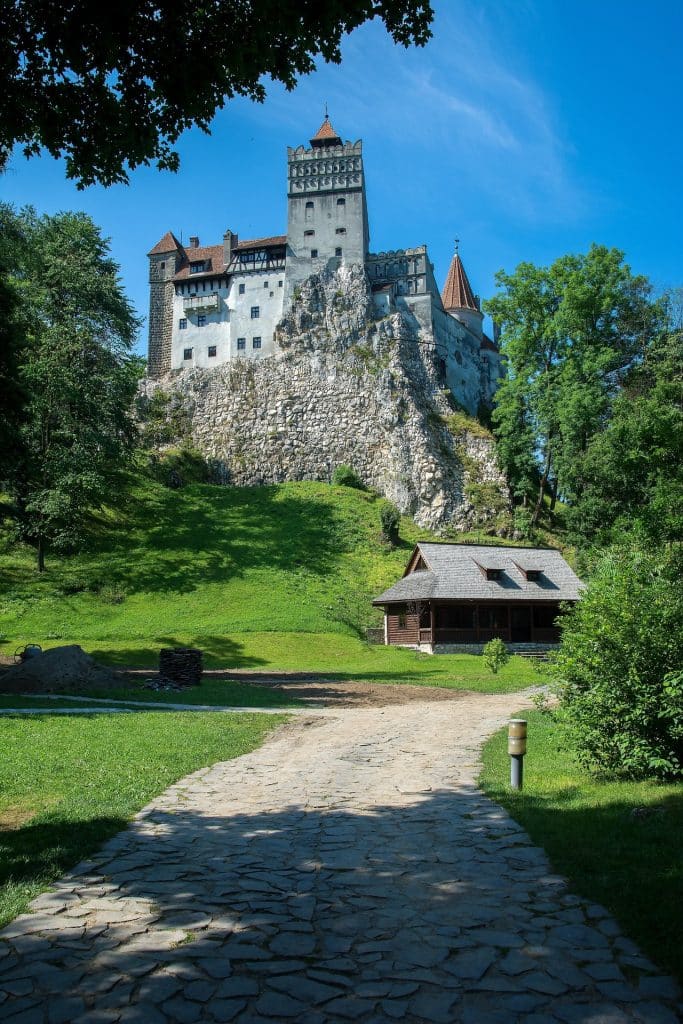
Bran Castle, perched dramatically on a rocky outcrop, markets itself as “Dracula’s Castle” due to its tenuous connection to Vlad the Impaler. The Dracula association is largely commercial—Vlad probably never actually stayed here—but the 14th-century fortress offers atmospheric medieval architecture and mountain views that justify the visit regardless of vampire legends.
Peleș Castle near Sinaia represents the opposite extreme—a stunning Neo-Renaissance masterpiece built between 1873-1914 for Romania’s first royal family. With 160 rooms decorated in various styles, modern amenities (it was the first castle in Europe to be powered entirely by locally generated electricity. The electrical system was completed in 1884.), and surrounded by lush forests, Peleș stands as one of Europe’s most beautiful castles. The craftsmanship and attention to detail throughout reveal the ambitions of a young nation establishing its royal identity.
Practical details: Bran Castle entry costs approximately 100 RON. Peleș Castle tours have increased in recent years and now range from 50-120 RON depending on the route chosen and access areas. Both castles can be crowded in peak summer—arrive early or visit in shoulder season for better experiences. Check the official Bran Castle website and official Peleș Castle website for current prices and tour schedules.
Bucharest: Romania’s Complex Capital
Bucharest defies easy categorization. Belle Époque elegance blends with communist brutalism. Historic churches neighbor modern tech hubs. This is a city that’s been destroyed and rebuilt multiple times, and the layers show.
Most travelers arrive at Otopeni Airport (OTP), located about 16 kilometers north of the city center. From there, you’ll find multiple transport options into the city—buses, taxis, and rideshare services all connect the airport to Bucharest’s various neighborhoods.
The colossal Palace of Parliament dominates the city—the world’s second-largest administrative building after the Pentagon and the heaviest building on Earth. This monument to communist megalomania required 3,000 rooms and consumed 700,000 tons of steel and bronze. Guided tours reveal its overwhelming scale and opulent interiors, and walking these halls offers profound insights into the megalomania of Nicolae Ceaușescu’s regime. The building is both architecturally impressive and deeply troubling, which makes it essential viewing.
The Old Town (Lipscani) pulses with life—cobblestone streets lined with 19th-century architecture, outdoor cafés, restaurants, and nightlife that runs late into the night. Stavropoleos Monastery, a tiny 18th-century jewel, showcases exquisite Brâncovenesc architecture with intricate stone carvings and peaceful courtyards that offer quiet refuge from the urban energy surrounding it.
Revolution Square marks where Romania’s 1989 revolution against communist rule began. Standing here, you can almost feel the weight of that moment when citizens finally said “enough.” The Romanian Athenaeum—an architectural masterpiece—hosts the George Enescu Philharmonic Orchestra in a concert hall renowned for exceptional acoustics. If you have the opportunity to attend a performance, take it. Ticket prices remain remarkably affordable compared to Western Europe.
For green escapes, Herăstrău Park (now King Mihai I Park) sprawls around a scenic lake in northern Bucharest and houses the open-air Village Museum, which displays traditional architecture from across Romania. It’s a peaceful counterpoint to the city’s urban intensity.
Practical details: Palace of Parliament tours must be booked in advance and cost around 50-80 RON depending on route. Concert tickets at the Romanian Athenaeum typically range from 40-150 RON. The Old Town is free to explore, though you’ll want budget for meals and drinks. Check the official Bucharest tourism website for current information.

The Carpathian Mountains: Europe’s Last Wilderness
The Romanian Carpathians form an arc of dramatic peaks, deep valleys, pristine forests, and alpine meadows harboring Europe’s largest populations of brown bears, wolves, and lynx. The Southern Carpathians contain Romania’s highest and wildest mountains, with over 70 peaks exceeding 2,000 meters.
This isn’t wilderness in the romanticized sense. These mountains have been used by shepherds, woodcutters, and hunters for centuries. But they remain genuinely wild in ways that most of Europe has lost. You might encounter bear tracks on mountain trails. You’ll hear wolves howling at night if you stay in mountain huts. This is the real thing.
Piatra Craiului National Park
The narrow, 25-kilometer limestone ridge of Piatra Craiului creates one of Romania’s most spectacular hiking destinations. The park features old-growth spruce forests, alpine meadows, and challenging ridge trails with exposed sections requiring good fitness and proper equipment.
The hike to Curmătura Cabin passes through dramatic Zărnești Gorges and rewards hikers with panoramic mountain views that extend for miles. This isn’t casual walking—the trails demand respect, proper gear, and realistic assessment of your abilities. But for those prepared, Piatra Craiului offers mountain experiences that rival anything in the Alps, with far fewer people.
Bucegi Mountains
The Bucegi plateau offers more accessible hiking with cable car access from Bușteni. The famous Sphinx and Babele rock formations—naturally sculpted by wind and weather—create an almost otherworldly atmosphere. These formations have inspired local legends for centuries, and standing among them, you understand why.
Several mountain huts provide accommodation for multi-day treks, while trails range from easy walks suitable for families to challenging summit ascents for experienced hikers. The accessibility makes Bucegi an excellent introduction to Romanian mountain hiking.
Făgăraș Mountains
The Făgăraș range contains Romania’s highest peaks, including Moldoveanu at 2,544 meters, and offers one of Europe’s longest continuous high-mountain traverses. This remote, challenging terrain attracts experienced hikers seeking wilderness solitude and dramatic alpine scenery.
The Făgăraș Traverse typically takes 7-10 days and requires proper equipment, mountain experience, and good physical fitness. But for those capable, it ranks among Europe’s finest wilderness hiking experiences.
Practical details: Mountain hut accommodation costs approximately 50-100 RON per night including meals. Cable cars in Bucegi cost around 200-250 RON return. Piatra Craiului and Făgăraș require no entry fees but demand proper hiking equipment and preparation. For current mountain conditions and hut availability, check Piatra Craiului National Park official website and Salvamont Romania for safety updates.
Northern Romania: Where Traditions Live
Maramureș
Maramureș represents Romania at its most traditional, where time genuinely seems to have slowed. This remote northern region preserves centuries-old customs, wooden architecture, and rural lifeways largely unchanged since medieval times.
Villages like Breb, Săpânța, and Bârsana welcome visitors with elaborately carved wooden gates—some rising 10 meters high with intricate rope designs, sun symbols, and forest animals. These gates aren’t historical artifacts. They’re modern creations following centuries-old patterns, carved by contemporary craftsmen using traditional techniques passed down through generations.
The region’s wooden churches, with their soaring Gothic spires and multiple gabled roofs, rank among Europe’s architectural treasures. Many date from the 17th-18th centuries and contain well-preserved frescoes depicting biblical scenes and local saints. The UNESCO-listed churches of Bârsana, Ieud, and Poenile Izei reward visits, but even smaller village churches offer remarkable craftsmanship.
Săpânța’s Merry Cemetery offers a uniquely Romanian perspective on death. Colorful wooden crosses feature carved scenes and humorous verses celebrating the deceased’s life—both virtues and vices—reflecting the local belief that death represents a beginning, not an end. It’s simultaneously touching and genuinely funny, which feels very Romanian.
Practical details: Maramureș is best explored by car or organized tour, as public transport connections are limited. Guesthouses in traditional villages cost around 100-150 RON per night including breakfast and often dinner. The Merry Cemetery charges a small entry fee (approximately 10 RON). For authentic village experiences, check Discover Maramureș tourism website.
Bucovina Painted Monasteries
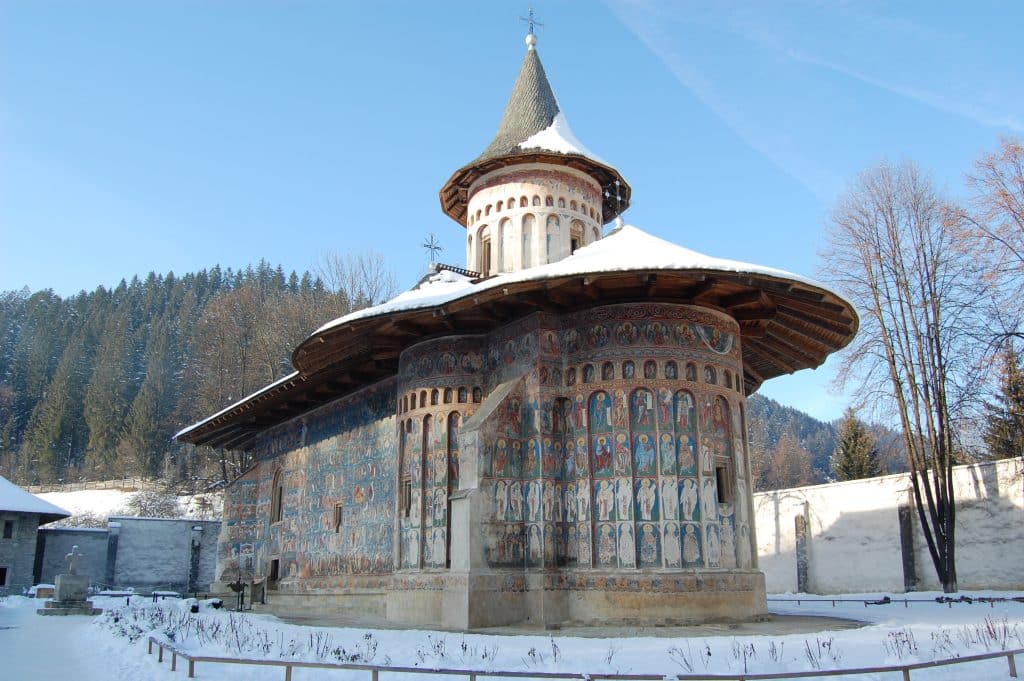
The painted monasteries of Bucovina constitute one of Romania’s most extraordinary cultural treasures. Built between 1487-1585 by Moldavian princes to celebrate victories against Ottoman invaders, these fortified monasteries feature exterior and interior frescoes in remarkably preserved condition despite centuries of weather exposure.
Voroneț Monastery, founded by Ștefan cel Mare in 1488, earned the nickname “Sistine Chapel of the East” for its vivid “Voroneț blue” pigment—a shade whose recipe remains mysterious despite scientific analysis. The western wall’s Last Judgment scene spans the entire facade with intricate detail showing saints, sinners, angels, and demons in a theological drama painted on stone.
Sucevița Monastery (1585) stands surrounded by fortress walls and towers, the last and largest painted monastery built. Its famous “Ladder of Virtues” fresco depicts angels and demons competing for souls ascending to heaven—a vivid medieval vision of salvation and damnation.
Moldovița and Humor monasteries showcase exceptional preservation, with vibrant reds, golds, and blues depicting biblical narratives, lives of saints, and the siege of Constantinople. Standing before these walls, you’re looking at medieval theology transformed into art that has survived half a millennium of weather.
Practical details: Each monastery charges modest entry fees (approximately 10-20 RON). Monasteries are active religious sites, so dress respectfully (covered shoulders and knees). The monasteries cluster within driving distance of Suceava or Gura Humorului, making day tours feasible. For current visiting hours and any temporary closures, check Romania Tourism official website.
The Danube Delta and Black Sea Coast
The Danube Delta—where Europe’s second-longest river empties into the Black Sea—forms the continent’s largest remaining natural wetland and earned UNESCO World Heritage status for its remarkable biodiversity. Over 300 bird species nest or migrate through this 5,800-square-kilometer maze of channels, lakes, and reed beds.
Boat tours from gateway towns like Tulcea, Sulina, or Sfântu Gheorghe navigate narrow waterways through floating reed islands, allowing close encounters with pelicans, cormorants, herons, and if you’re fortunate, rare species like the Dalmatian pelican. Traditional fishing villages preserve simpler lifestyles largely unchanged for generations. The delta’s remote beaches along the Black Sea remain gloriously undeveloped.
This isn’t pristine wilderness—people have lived and fished here for centuries. But it represents a functional ecosystem where human activity and natural processes still coexist, something increasingly rare in Europe.
Romania’s Black Sea coast extends 245 kilometers south from the delta to the Bulgarian border. While resorts like Mamaia cater to package tourists seeking sun and sand, smaller villages like Vama Veche and Doi Mai offer more independent, bohemian atmospheres with sandy beaches and affordable guesthouses.
Practical details: Danube Delta boat tours from Tulcea cost approximately 150-300 RON for full-day excursions. Guesthouses in delta villages range from 100-200 RON per night. Black Sea beach accommodation varies widely by location and season. For delta tours and accommodation, check Romania Tourism Danube Delta page.
Cultural Experiences Worth Seeking Out
These are the moments that transform a visit into genuine cultural immersion:
Attend classical performances at Bucharest’s Romanian Athenaeum or experience opera at the impressive Cluj-Napoca National Theatre. Tickets cost a fraction of Western European prices—often 40-150 RON for excellent seats—and the quality rivals anything in Vienna or Berlin.
Sample regional cuisines that vary dramatically across the country. Sarmale (cabbage rolls with pork and rice), mămăligă (polenta), mici (grilled meat rolls), ciorbă de burtă (tripe soup), and sweet papanași (fried dough with cream and jam) represent just the beginning. Romanian food is hearty, flavorful, and deeply satisfying. I had a memorable three-course lunch in Sibiu—soup, mici with mămăligă, and papanași for dessert—for just 45 RON. Note that this was a Meniul Zilei (Menu of the Day) special, which is the best way to eat affordably in Romania. For a standard à la carte dinner in 2025, expect to pay closer to 80-120 RON for a similar feast.
Visit traditional villages in Maramureș or Mărginimea Sibiului, where shepherding traditions, woodcarving, pottery, and folk costumes remain part of daily life rather than museum displays. You’ll witness living culture, not historical reenactment.
Explore fortified Saxon churches scattered across Transylvania—UNESCO-listed defensive churches built by German settlers centuries ago, with thick walls, towers, and grain storage to protect communities during invasions. These churches tell stories of communities that endured for centuries on a contested frontier.
Experience wine culture in Transylvania’s Târnave region or other Romanian wine areas, discovering indigenous grape varieties like Fetească Albă and Fetească Regală alongside international varieties thriving in Romania’s varied terroir. Romanian wine remains underappreciated internationally, which means exceptional quality at remarkably accessible prices.
Join local festivals celebrating everything from medieval history (Sighișoara Medieval Festival) to folk traditions (Dance at Prislop), Easter celebrations with painted eggs, and Mărțișor spring welcomes with red-white string talismans. These festivals offer authentic glimpses into Romanian cultural identity.
Practical details: Wine tastings at boutique Transylvanian wineries typically cost 40-80 RON and include tours of cellars and vineyards. Folk festivals occur primarily May-September, with village celebrations often free to attend. For current festival schedules, check Romania Festivals website. For winery visits, see Romanian Wine Tourism information.
Practical Travel Tips for Romania
Getting Around Romania
By Train
Romania’s extensive rail network connects all major cities affordably and relatively efficiently. InterRegio (IR) trains offer comfort and reasonable speed between regional centers, while Regio (R) trains stop at smaller stations—perfect for reaching mountain villages but considerably slower.
I find trains offer the best way to experience Romanian landscapes and meet locals. Book tickets online through CFR Călători or purchase at stations. Expect to pay around 40-60 RON for popular routes like Bucharest-Brașov (2.5-3 hours) or Bucharest-Constanța (2-2.5 hours).
Overnight sleeper trains connect distant cities like Bucharest-Timișoara or Bucharest-Oradea. Compartments with 4 bunks cost 120-200 RON and provide an economical way to cover long distances while saving accommodation costs.
Practical details: Check current train schedules and book tickets at CFR Călători official website. Trains can be delayed, especially in winter, so build buffer time into connections.
By Bus
Intercity buses often prove faster than trains for certain routes, with companies like FlixBus offering comfortable, affordable connections. Check Autogari.ro for comprehensive bus schedules, though information can sometimes be outdated—double-check with operators when possible.
By Car
Renting a car unlocks rural areas, mountain regions, and traditional villages inaccessible by public transport. Expect daily rental rates of 100-200 RON depending on season and vehicle type.
Romania requires highway vignettes (RoVinieta) for toll roads, purchasable online or at border crossings—costs range from approximately 250 RON (€50) annually for passenger cars.
Driving offers flexibility but requires awareness of variable road conditions, especially in rural and mountain areas. Main highways connecting cities have improved significantly, but secondary roads can be narrow and potholed. Drive cautiously and expect the unexpected.
Practical details: For highway vignettes, visit RoVinieta official website. For car rentals, compare prices through major international booking platforms.
Budget Planning
Important Budget Notes:
- All budgets are per person, per day
- Summer surcharge: Add 20-30% to accommodation costs for July-August travel
- Capital premium: Bucharest and Cluj-Napoca are approximately 15-20% more expensive than smaller towns
Romania delivers exceptional value, with daily costs significantly lower than Western Europe:
|
Traveler Type |
Daily Budget (RON) |
What It Covers |
|---|---|---|
|
Budget | 320-400 | Hostels, supermarket breakfasts, Meniul Zilei lunches, public transport, some attractions |
|
Mid-range | 600-800 | 3-star hotels or private rooms, sit-down restaurant dinners, museum entries, occasional Uber/Bolt rides |
|
Comfort | 1000+ | Boutique hotels, car rental, guided tours, fine dining experiences |
Accommodation ranges widely from hostels at 60-100 RON per night to mid-range hotels at 200-350 RON and luxury options at 500+ RON. Bucharest and Brașov tend toward the higher end, while smaller towns offer better value.
Restaurant meals cost approximately 50-90 RON for mains in mid-range establishments, 20-35 RON for casual cafés and Meniul Zilei specials, and 120+ RON for fine dining. Street food and local markets offer even better value.
Be aware of these additional expenses that can impact your budget:
Hidden Costs to Watch
- Intercity buses: Often 20-40% cheaper than trains but may be strictly cash-only on rural routes
- SIM cards: 25-50 RON for substantial data packages from providers like Digi or Orange
- Travel insurance: Essential for 2025 travel—budget approximately 50-100 RON per week
- ETIAS fee: €20 (approximately 100 RON) when the system becomes active—check current implementation status before travel
- Museum audio guides: Typically 10-20 RON extra at major attractions
- Public restroom fees: 2-5 RON at train stations and tourist sites
Currency & Payment
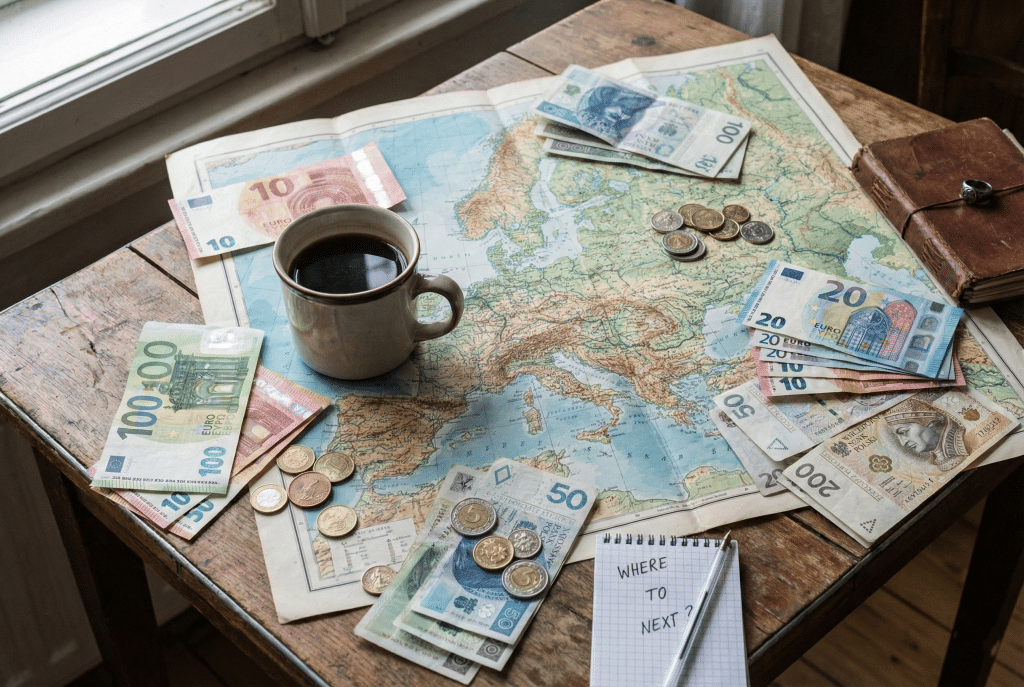
Romania uses the Romanian Leu (RON), not the euro. Exchange rates fluctuate around 4.9-5 RON per euro. While credit cards work widely in cities and tourist areas, carry cash for markets, small villages, traditional guesthouses, and rural restaurants.
ATMs (bancomat) from major banks like BCR, BRD, and Banca Transilvania offer fair rates—avoid airport exchange bureaus and hotel currency exchanges, which typically offer poor rates and high fees.
Notify your bank of travel dates to prevent card blocks. Many no-foreign-transaction-fee cards work well in Romania, saving significant money on purchases.
Practical details: Check current RON exchange rates at XE.com currency converter. For ATM locations from major Romanian banks, see bank websites or use your bank’s ATM finder app.
Best Times to Visit
April-May (Spring Shoulder Season) Spring brings blooming landscapes, pleasant temperatures (12-20°C), fewer crowds, and good value. Expect occasional rain, but Easter celebrations add cultural richness. This is my favorite time to visit—Romania emerges from winter with vibrant energy, and you’ll have many attractions largely to yourself.
June-August (Peak Summer) Peak summer brings warmest weather (25-30°C), longest days, mountain hiking, and Black Sea beach season. Major cities can be hot and crowded. Mountains and coastal areas see peak tourist numbers. Prices increase, especially in July-August, but the weather remains reliably good for outdoor activities.
September-October (Autumn Shoulder Season) Autumn delivers ideal hiking conditions, harvest festivals, fall foliage, and fewer tourists. Temperatures remain pleasant (15-22°C) through early October. This rivals spring for best overall visiting conditions—crisp mountain air, golden light, and locals relaxed after summer’s tourist rush.
November-March (Winter) Winter brings cold temperatures, snow in mountains (perfect for skiing), and lowest prices. Christmas markets in December create magical atmospheres in cities like Brașov and Sibiu. January-February see the quietest tourist season. If you don’t mind cold weather, winter offers Romania at its most authentic—when locals live their regular lives largely undisturbed by tourism.

Visa & Entry Requirements
Romania is part of the Schengen Area, allowing free movement to Romania across air, sea, and land borders. Standard tourist visits permit stays of 90 days within any 180-day period for most nationalities. US, Canadian, UK, and Australian passport holders do not require a visa for tourism.
The ETIAS (European Travel Information and Authorization System) travel authorization, which will require pre-authorization at approximately 20€ (valid for three years), is scheduled for implementation in mid-to-late 2026 or 2027. Always verify current entry requirements based on your citizenship well before travel, as these systems continue to be refined.
Practical details: Always verify current entry requirements based on your citizenship well before travel at Romania’s Ministry of Foreign Affairs and ETIAS official website. For the latest Schengen status updates, check official Romanian government sources.
Essential Romanian Phrases
Learning a few Romanian phrases enhances interactions and earns warm responses from locals. Romanian is a Romance language, so if you speak French, Italian, or Spanish, you’ll recognize patterns.
Greetings:
- Bună ziua (BOO-nuh ZEE-wah) – Hello (formal)
- Salut (sah-LOOT) – Hi (informal)
- Ce mai faci? (cheh my FAHCH) – How are you?
- La revedere (lah reh-veh-DEH-reh) – Goodbye
Courtesy:
- Mulțumesc (mool-tsoo-MESK) – Thank you
- Vă rog / Te rog (vuh ROG / teh ROG) – Please (formal/informal)
- Scuze (SKOO-zeh) – Sorry/Excuse me
- Da / Nu (dah / noo) – Yes / No
Useful Phrases:
- Cât costă? (kuht COAST-uh) – How much does it cost?
- Nu înțeleg (noo uhn-tseh-LEG) – I don’t understand
- Vorbiți engleza? (vor-BEATS en-GLEZ-ah) – Do you speak English?
- Unde este…? (OON-deh YES-teh) – Where is…?
Dining:
- Aș dori nota (ush dor-REE NO-tah) – I’d like the bill
- Foarte bun (FOAR-teh boon) – Very good
- Poftă bună (POFF-tuh BOO-nuh) – Enjoy your meal
Most Romanians under 40 in cities speak English, but attempting Romanian phrases shows respect and often leads to friendlier interactions and insider recommendations.
Inspiring Itineraries for Different Travel Styles
Classic Transylvania Loop (7-10 days) Bucharest → Brașov → Sighișoara → Sibiu → Bucharest
Perfect for first-time visitors, this route connects Romania’s most captivating medieval cities with Carpathian mountain scenery, iconic castles, and traditional culture. Allocate 2-3 days in Brașov for day trips to Bran and Peleș castles, 1-2 days each in Sighișoara and Sibiu, with remaining time in Bucharest.
This itinerary provides a comprehensive introduction to what makes Romania special—history, architecture, mountain landscapes, and accessible cultural immersion.
Mountains and Monasteries (10-14 days) Bucharest → Brașov → Bucegi Mountains hiking → Sighișoara → Sibiu → Bucovina painted monasteries → Suceava
For travelers seeking natural beauty combined with cultural depth, this itinerary balances mountain hiking with monastery visits, traditional villages, and medieval towns. You’ll experience Romania’s spiritual heritage alongside its dramatic landscapes.
Traditional Heritage Journey (12-16 days) Bucharest → Transylvania circuit (Brașov, Sighișoara, Sibiu) → Maramureș villages → Bucovina monasteries → Iași → Bucharest
This route explores Romania’s deepest cultural traditions—from Saxon fortified towns to wooden churches, folk customs, painted monasteries, and living village heritage. This itinerary rewards those genuinely interested in cultural immersion over quick sightseeing.
Complete Romania Circuit (18-21 days) Bucharest → Transylvania (Brașov, Sibiu, Cluj-Napoca) → Maramureș → Bucovina → Iași → Danube Delta → Black Sea coast → Bucharest
The ultimate Romanian journey spanning medieval cities, mountain wilderness, traditional villages, UNESCO monasteries, delta wetlands, and coastal relaxation. This comprehensive route reveals Romania’s remarkable diversity.
Frequently Asked Questions
How much time do I need to explore Romania properly?
A minimum of 7-10 days allows meaningful exploration of Transylvania’s highlights and Bucharest. Two weeks enables adding Bucovina monasteries or Maramureș villages. Three weeks permits comprehensive coverage including the Danube Delta or extended mountain hiking.
Most travelers find 10-14 days ideal for balancing depth and breadth. Romania rewards slower travel—rushing through diminishes the experience.
Is Romania safe for travelers?
Yes, Romania ranks as very safe for tourists, with crime levels comparable to Western Europe. Standard urban precautions apply—watch for pickpockets in crowded areas, use licensed taxis or rideshare apps, stay aware of surroundings.
Rural areas feel exceptionally safe. Women traveling solo consistently report positive experiences with respectful locals and genuine hospitality
Do I need to speak Romanian?
Not necessarily. English is widely spoken in cities, tourist areas, hotels, and restaurants, especially by younger Romanians. Older generations may know German or Hungarian in Transylvania.
Learning basic Romanian phrases enhances interactions but isn’t essential for getting by. That said, attempting even a few words in Romanian opens doors to warmer, more authentic exchanges.
What’s the best way to handle money while traveling?
Use ATMs from major banks (BCR, BRD, Banca Transilvania) for fair exchange rates when withdrawing lei. Credit cards work widely in cities but carry cash for rural areas, markets, and traditional establishments.
Avoid airport exchange bureaus and hotel currency services offering poor rates and high fees. Inform your bank of travel dates to prevent card blocks.
Can I travel comfortably as a vegetarian or vegan?
Major cities offer excellent vegetarian and vegan options with growing awareness. Traditional Romanian cuisine is meat-heavy, but vegetable soups (ciorbă), salads, mămăligă (polenta), brânză (cheese), and sarmale with mushroom fillings exist.
Dedicated plant-based restaurants operate in Bucharest, Brașov, Cluj-Napoca, and Sibiu. Smaller towns and villages offer limited options—research ahead and be prepared to explain dietary requirements.
Are the mountain areas accessible for non-expert hikers?
Yes, Romanian mountains offer trails for all levels. The Bucegi plateau provides cable car access and easy walks to rock formations. Moderate trails in Piatra Craiului National Park suit reasonably fit hikers. Challenging routes exist for experienced mountaineers.
Mountain huts provide accommodation and meals along popular routes. Always check weather, carry appropriate gear, and consider guided tours for remote areas. Respect the mountains—they’re genuinely wild and demand proper preparation.
How is the internet speed and Wi-Fi availability in Romania?
Romania boasts some of the fastest internet speeds in Europe and ranks consistently among the world’s top countries for broadband connectivity. Most hotels, cafés, restaurants, and guesthouses offer free Wi-Fi, even in smaller towns and rural areas. 4G and 5G mobile coverage is excellent in cities and generally reliable throughout the country, though mountain areas may have spotty service.
This makes Romania particularly attractive for digital nomads and remote workers seeking affordable destinations with reliable connectivity. Coworking spaces in Bucharest, Cluj-Napoca, and Brașov cater to this growing community.
Is tipping customary in Romania?
Yes, tipping (bacșiș) is expected. In restaurants, a tip of 10-15% of the bill is standard for good service. As of 2024-2025, many restaurants can add this to the card payment, but carrying small cash bills (5, 10, or 20 Lei notes) ensures the server actually receives it. For taxis, rounding up the fare is polite.
Are Uber and Bolt available outside of Bucharest?
Yes, ridesharing apps are widely available and often safer and more reliable than traditional taxis. Bolt is generally the leader in Romania, with excellent coverage in Bucharest, Cluj-Napoca, Brașov, Timișoara, Constanța, and Iași. Uber operates in major cities as well. I highly recommend downloading both apps before arrival to avoid language barriers and price haggling with taxi drivers.
What makes Romania different from other European destinations?
Romania combines dramatic natural beauty with deep authenticity—you’ll encounter living traditions, not museum exhibits. It offers Western European refinement at Eastern European prices, medieval architecture without overwhelming crowds, and wilderness experiences increasingly rare in Europe.
The blend of Gothic fortresses, painted monasteries, folk villages, bear-inhabited forests, and warm hospitality creates uniquely memorable experiences. This is Europe before it was smoothed for mass tourism.
How crowded are tourist attractions in Romania?
Major sites in Brașov, Bran Castle, and Bucharest see crowds during peak summer (July-August) and holiday periods. Visit early morning or late afternoon for better experiences.
Sighișoara, Sibiu, and especially Bucovina, Maramureș, and mountain areas rarely feel crowded. Romania remains remarkably uncrowded compared to Western European destinations—you can still find solitude at major attractions if you time visits thoughtfully.
Your Romanian Journey Awaits
Travel through Romania offers more than picturesque castles and affordable adventures. It provides immersion into authentic European culture where medieval traditions remain living practices, where Europe’s wildest mountains harbor brown bears and wolves, and where warm hospitality transforms visitors into friends.
Whether drawn to Gothic citadels, Orthodox painted monasteries, alpine hiking, traditional villages, or simply exploring beyond Europe’s well-trodden paths, Romania rewards curiosity with experiences that linger long after you return home.
The legends of Dracula may draw initial interest, but the genuine warmth of Maramureș villages, the artistic brilliance of Bucovina frescoes, the dramatic beauty of the Carpathians, and the sophisticated charm of Transylvanian towns create the lasting impressions that inspire return visits.
Ready to start planning your Romanian adventure? This guide provides the foundation for deeper exploration—each region, city, and experience mentioned here deserves fuller investigation as you craft your ideal journey through one of Europe’s most rewarding and authentic destinations.
Related Reading:
- Central & Eastern Europe Travel: The Ultimate Guide for Culturally Curious Travelers
- Central & Eastern Europe Travel Guides
- The Art of Cultural Immersion: How to Travel Like a Local in Europe
- How Much Does a Trip to Central Europe Cost? A Realistic Budget Guide
Discover more comprehensive travel guides and detailed destination insights at Pieterontour.com, where every journey is crafted with depth, authenticity, and the curiosity that transforms travel into genuine discovery.