
Wieliczka Salt Mine: A Journey into Poland’s Underground Wonder
This guide is for travelers visiting Kraków who want to understand what makes the Wieliczka Salt Mine worth visiting—here’s what to expect and how to prepare for this extraordinary underground experience.
For years, people have asked me why they should visit the Wieliczka Salt Mine. Honestly? I struggled to find the right words. How do you describe descending 327 meters underground into chambers that stretch for 180 miles? How do you capture the wonder of walking through halls carved entirely from salt, glowing with crystal chandeliers, reflecting in underground lakes?
The best I could manage was quoting Tolkien: “Full of light and splendor,” “shining lamps of crystal.” Because that’s what it feels like down there—stepping into another world entirely.
The Wieliczka Salt Mine operated continuously from the 13th century until 1996, bringing wealth to the Kings of Poland and financing much of Kraków’s development. It produced both rock salt and salt from brine, and its importance to Poland’s history cannot be overstated.
Today, it’s a UNESCO World Heritage Site and one of Poland’s most visited attractions. But it’s so much more than a tourist stop—it’s a living monument to human ingenuity, faith, and perseverance.
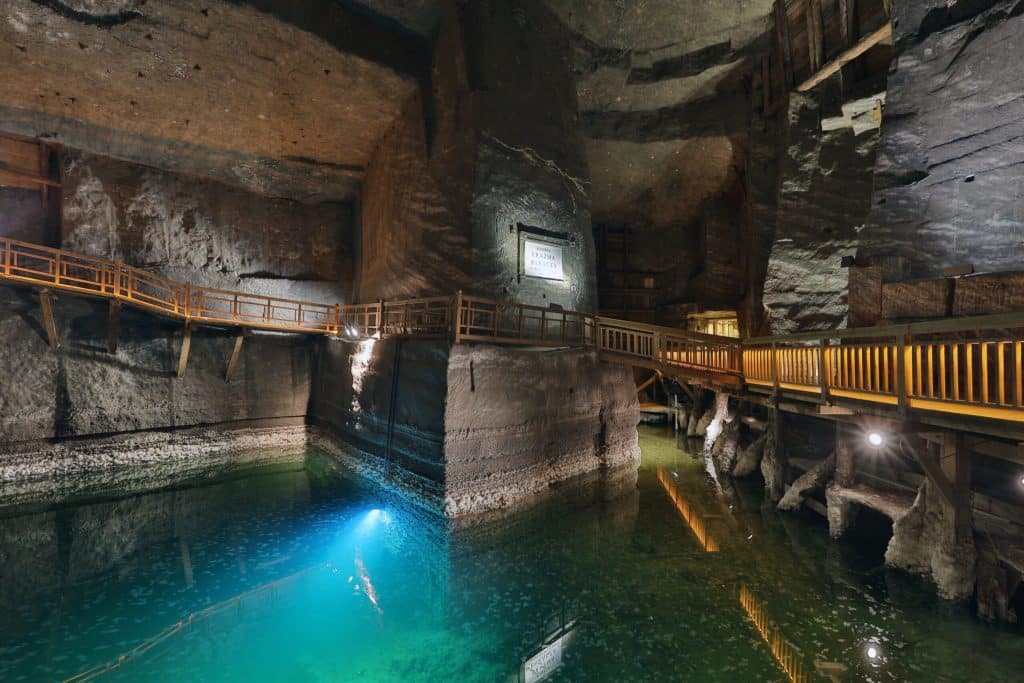
Table of Contents
The Legend of Princess Kinga
Every great place has its origin story, and Wieliczka’s is beautiful.
According to tradition, Princess Kinga prepared for her marriage to Bolesław V by asking her father for something unusual as part of her dowry: a lump of salt. Salt was valuable in Poland, practically worth its weight in gold. Her father took her to one of his Hungarian salt mines, where she threw her engagement ring down the shaft.
When Kinga arrived in Poland, she asked miners to dig a deep pit. There, embedded in a lump of salt, they found her ring.
This miracle led to Kinga becoming the patron of miners in the region. Later, she was canonized as the patron saint of miners.
The truth, as always, is a bit more practical. In 1239, the fifteen-year-old Kinga, daughter of Béla IV of Hungary, married Bolesław V. Her entourage included Hungarian miners who brought western mining techniques to the Bochnia and Wieliczka regions. The rest, as they say, is history—part fact, part legend, all meaningful.
History of the Mine
Neolithic people first used the briny water that surfaced in this area to produce salt. But by the early 13th century, salt production had become industrial. Wells and shafts were dug deeper and deeper to access more salt.
The Wieliczka salt mines were established by royal decree. By the end of the 13th century, labor and production had grown so much that the Saltworks Castle was built. The Żupy krakowskie—the Kraków Salt Mine Company—managed operations at both Wieliczka and the nearby Bochnia Salt Mine.

Casimir the Great and the Golden Age
Casimir III is famously said to have found a Poland made of wood and left a Poland made of stone. A large part of that transformation was financed by the salt mines, which contributed around a third of the royal income.
Under Casimir, the mine truly flourished. He passed laws supporting miners, granted them special privileges, and established a hospital for their care. Saline baths had been operating since around 1290, where barbers offered basic medical treatments alongside healing saltwater soaks.
The mines produced salt continuously from the 13th century onward. But as early as 1500, they began attracting visitors. One of the earliest was Nicolaus Copernicus, who toured the mine around 1493. Since then, a steady flow of travelers—with the king’s special permission—descended into the depths.

A Symbol of Polish Independence
During the partition of Poland from 1772 to 1918, when the country was divided between Russia, Prussia, and Austria, the mine became a focal point for the Polish independence movement. For many Poles, visiting Wieliczka was an act of patriotism.
In 1964, rock salt mining stopped in favor of a wet process better suited for large-scale production. Tourism grew alongside salt production through the following years. In 1978, the mine was added to the UNESCO World Cultural Heritage List. In 1994, it was declared a National Historic Monument by the President of Poland. Industrial salt production finally ceased in 1996.

The Art of Salt Carving
No one knows who first carved the salt. Throughout Wieliczka’s history, miners have shaped figures from this difficult, brittle material. Many carvings had religious significance—a testament to the miners’ faith.
It was common practice for miners to pray before starting work each day. The most likely explanation for the carvings is simple: miners wanted to beautify the places where they prayed.
When royal commissions banned wood in the mine due to frequent fires, miners could no longer build wooden chapels. So they began carving entire chapels from salt. In the 17th century, St. Anthony’s Chapel was carved out of the rock, complete with passion scenes, statues of saints, and royal imagery.

St. Kinga’s Chapel: The Crown Jewel
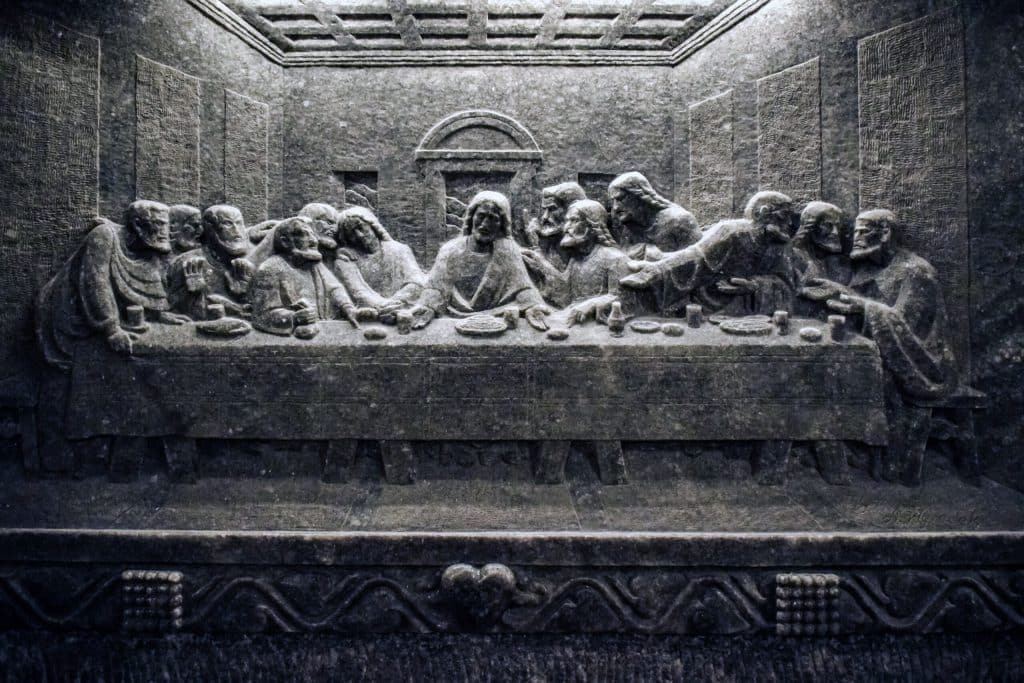
The most striking chapel is St. Kinga’s Chapel. This underground church is the work of three men: brothers Józef and Tomasz Markowski and their friend Antoni Wyrodek. At the end of the 19th century, these self-taught artists created a masterpiece illuminated by salt chandeliers.
The Last Supper carved in salt. Countless biblical scenes. All of it underground, all of it salt. It’s breathtaking.
Visiting the Mine Today
While Wieliczka no longer produces salt commercially, it still extracts small amounts as a byproduct of maintaining the mine’s structure. Today, miners help preserve this unique monument to Polish history and culture.
The mine offers several experiences beyond the standard tour:
- A health spa with overnight accommodation in the salt-air environment
- Wedding ceremonies in the underground church (yes, you can get married down there)
- Special pilgrimage tours of the chapels
- Mining “expeditions” where you use a lamp to explore the underground world
But most visitors, like Copernicus in his day, come for the tourist route.

The Tourist Route: What to Expect
During the tour, you’ll visit around 3.5 kilometers (approximately 2.2 miles) of passages. You’ll descend 135 meters (roughly 450 feet) into the oldest three levels of what is actually a nine-level mine.
Along the way, you’ll see the most famous chambers and chapels while learning about the mine’s history and the historic techniques used to excavate salt from the depths.
A quick note on planning: Prices and opening hours are mentioned to help you budget and plan, but they can change often. I always recommend checking the official websites (which I’ll link to) for the most current information before your visit.
Practical Tips for Your Visit
Going underground comes with unique challenges. Here’s what you need to know:
Temperature: It’s around 17°C (63°F) underground. Comfortable for some, cool for others. Bring a light jacket or sweater.
Steps: Depending on how your tour is organized, expect over 800 steps during your visit. This can be roughly halved by using the mine’s elevator system, so ask about this option when booking.
Claustrophobia: If you suffer from severe claustrophobia, chat with your tour director about available options. The mine is spacious in most areas, but it’s still underground.
Photography: You’re allowed to take pictures, but be aware that lighting conditions make it very difficult. Don’t expect perfect photos, but do bring your camera—some shots will still capture the magic.
Before all this puts you off, let me tell you a story.
Several years ago, I had the pleasure of bringing the oldest visitor in Wieliczka’s history to the mine. Frank Albert was 99 years old. He managed every step, enjoyed every minute, and the mine later sent him a certificate commemorating the occasion.
If Frank could do it at 99, you can too.

Frequently Asked Questions
How long does the tour take?
The standard tourist route takes approximately 2-3 hours, including the descent and ascent. Plan for a half-day excursion from Kraków.
How deep do you go?
You’ll descend to 135 meters (about 450 feet) below ground level, exploring the three oldest levels of the mine.
Is the mine safe for people with claustrophobia?
Most chambers are surprisingly spacious, with high ceilings and well-lit corridors. However, there are some narrower passages. If you experience severe claustrophobia or anxiety in enclosed spaces, consider discussing this with your guide beforehand. Many visitors with mild claustrophobia manage the tour without difficulty because the spaces don’t feel cramped. The constant airflow and illumination help considerably.
Is it accessible for people with mobility issues?
The tour involves many steps (up to 800), though elevator options can reduce this significantly. It’s not recommended for wheelchair users or those with severe mobility limitations. Contact the Wieliczka Salt Mine directly to discuss specific accessibility needs.
Can children visit?
Yes, children are welcome. However, parents should consider whether their child can handle the steps and time underground. There’s no minimum age, but younger children may find it tiring.
What should I wear?
Comfortable walking shoes with good grip are essential. Bring a light jacket or sweater—it’s cool underground year-round (around 17°C/63°F).
Can I take photos?
Yes, photography is allowed throughout the tour. However, lighting conditions are challenging, so don’t expect professional-quality shots without specialized equipment.
How far is it from Kraków?
Wieliczka is about 14 kilometers (9 miles) southeast of Kraków’s city center. You can reach it by bus, taxi, or organized tour (typically 30-40 minutes).
Do I need to book in advance?
Yes, absolutely. The mine is one of Poland’s most popular attractions. Book your tour several days (or even weeks) in advance, especially during peak season. Check the official Wieliczka Salt Mine website for current availability and booking.
Why It Matters
The Wieliczka Salt Mine stopped producing salt in 1996. But its significance goes far beyond commerce.
This is a place where faith and labor intertwined for centuries. Where miners carved beauty from darkness. Where Poland’s history—its wealth, its struggles, its independence—can be read in salt.
When you descend those steps, you’re not just visiting a mine. You’re entering a cathedral of human achievement, carved one prayer at a time over 700 years.
That’s why I keep going back. That’s why I struggle to find the words.
Some places you have to experience for yourself.
Related Reading:
- Poland Travel Guide: Beyond the Guidebooks in the Heart of Europe
- Religious Customs and Church Etiquette: A Traveler’s Guide to Europe’s Sacred Spaces
- The Perfect 2-Week Central Europe Itinerary: Vienna, Prague, Kraków & Budapest
- Central & Eastern Europe Travel: The Ultimate Guide for Culturally Curious Travelers
For more immersive travel experiences and cultural guides across Central and Eastern Europe, explore Pieterontour.com—where every journey is crafted to connect you with the heart and soul of a place.